 Bellingham Exterior
 Asphalt Shingle Roofing Built for Lynden's Weather
Lynden sits in the flat, open farmland of northern Whatcom County, a few miles south of the Canadian border. It's a different roofing environment than the wooded hillsides closer to Bellingham, but the underlying challenge is the same one that wears on roofs across this whole corner of Washington: long stretches of wet weather, slow-drying shade on the north and east sides of a roof, and stretches of wind that come through the open lowlands harder than they do in more sheltered neighborhoods. Add in the humid, moisture-heavy air that moves through this part of the county — from the salt air along Bellingham Bay to the open farmland around Lynden — and you get a climate that's genuinely tough on roofing material, even material that's rated to handle it.
An asphalt shingle roof done right for this area isn't just "a roof." It's underlayment, ventilation, flashing, and shingle selection all working together so the roof sheds water fast, dries out between storms, and doesn't give moss and algae the foothold they need to spread. Get any one of those pieces wrong and the roof will show it within a few wet seasons, not decades.
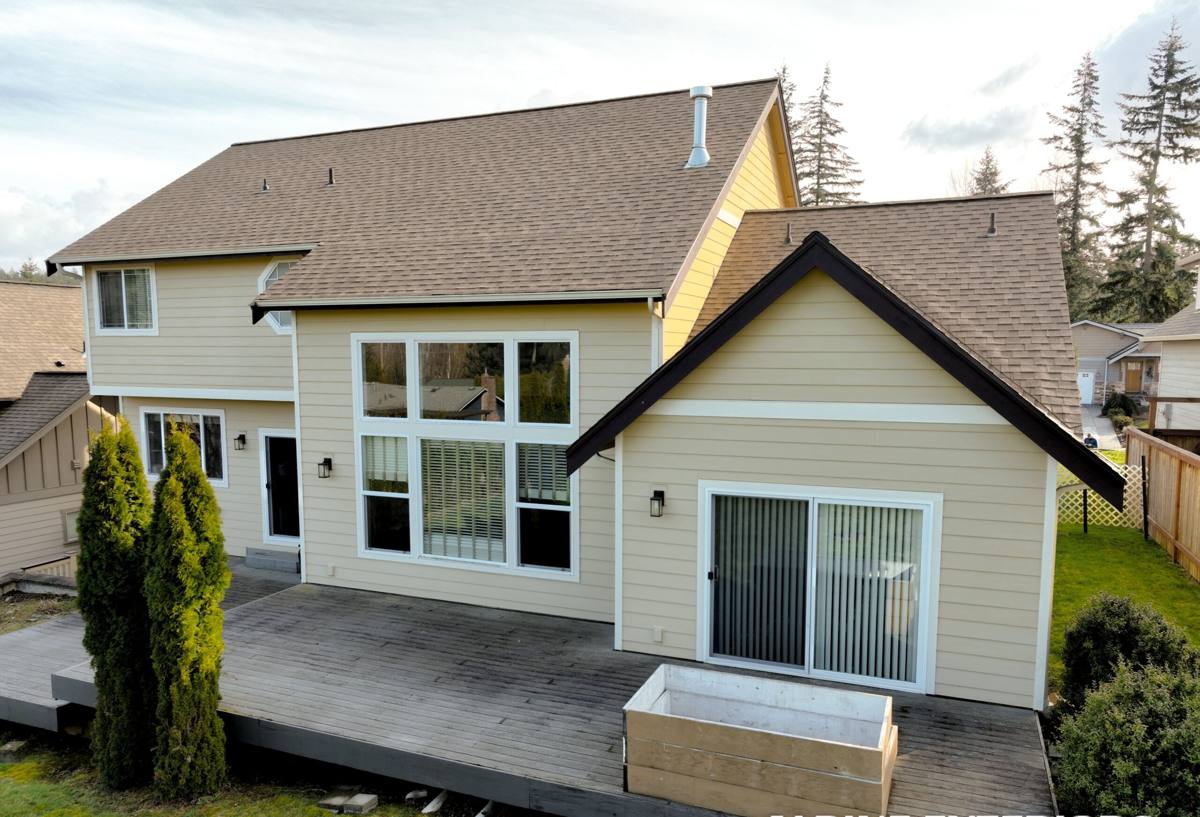
What a Correctly Installed Shingle Roof Actually Involves
A shingle roof is a system, not a single layer of material. Every layer underneath the shingles matters as much as the shingles themselves, especially in a climate that gives a roof this many wet days per year.
Underlayment and Ice-and-Water Protection
Synthetic underlayment goes down over the deck before a single shingle is installed, and it's the roof's real backup water barrier. In valleys, along eaves, and around any roof penetration, we add self-adhering ice-and-water membrane — the same product used in colder climates for ice dams, but just as valuable here for wind-driven rain that can push water sideways and up under shingle edges.
Ventilation
A shingle roof that can't breathe traps moisture in the attic, and trapped moisture shortens the life of the decking, the insulation, and the shingles from underneath. Balanced intake at the soffits and exhaust at the ridge keeps air moving, which matters even more here because the outside air is rarely dry enough to help an attic dry itself out.
Flashing and Valleys
Chimneys, skylights, sidewalls, and valleys are where the overwhelming majority of roof leaks actually start — not in the open field of shingles. Properly stepped and counter-flashed details, tied into new underlayment rather than reused or caulked over old metal, are what keep those areas dry through years of driving rain.
Nailing and Sealant Activation
Shingles are rated for wind resistance based on correct nail placement — the right number of nails, in the right spot, driven flush and not overdriven. Each shingle also has a factory sealant strip that bonds to the course below it once it's been warmed by the sun. A roof installed late in the season, in cooler weather, needs that detail watched carefully so the seal actually sets up before winter wind arrives.
Choosing the Right Shingle for a Lynden Home
Not every asphalt shingle is built the same, and the right choice depends on the roof's exposure, the home's style, and how much shade the roof sits under. Here's how the common options compare for this area:
| Shingle Type | Typical Lifespan | Wind Rating | Best For |
|---|---|---|---|
| 3-Tab | 15-20 years | Lower | Budget-focused re-roofs, simpler rooflines |
| Architectural / Dimensional | 25-30 years | Higher | Most Lynden homes; better wind and impact performance |
| Algae-Resistant (with copper/zinc granules) | 25-30 years | Higher | Shaded roofs, north-facing slopes, homes near mature trees |
For most Lynden properties — especially anything with tree cover or a shaded north slope — we recommend algae-resistant architectural shingles even though they cost a bit more up front. The extended moss and algae season here means a standard shingle will show staining and growth years before an algae-resistant one will, and cleaning a roof more often is its own cost over time.
Moss, Algae, and the Shade Problem
Moss doesn't grow because a roof is old or poorly built — it grows because a section of roof stays damp longer than the sun and wind can dry it out. In this part of Whatcom County, that's a longer window than most homeowners expect, often stretching from fall through spring on shaded slopes. Once moss establishes, it holds moisture against the shingle surface, lifts shingle edges as it grows, and accelerates granule loss underneath it.
A few things actually help long-term, and a few common fixes do more harm than good:
- Zinc or copper strips installed near the ridge let rainwater carry trace metal down the roof slope, which suppresses new moss growth over time.
- Trimming overhanging branches lets more sun and airflow reach the roof, which shortens how long each section stays wet after a storm.
- Soft washing with a low-pressure, roof-safe treatment removes existing growth without damaging the granule surface.
- Pressure washing is not recommended — it strips protective granules and can shorten a shingle's remaining life by years in a single cleaning.
Wind in the Lynden Lowlands
Lynden's open, low-lying terrain means roofs here can see stronger, gustier wind events than more sheltered parts of the county, particularly during fall and winter storm systems. Wind doesn't usually tear off a well-installed shingle roof outright — it finds the weak points first: a shingle that wasn't nailed in the manufacturer's designated zone, a sealant strip that never fully bonded, or a ridge cap that was cut short. That's why correct installation technique matters more here than the shingle's rated wind speed on the wrapper. A properly fastened, fully sealed roof performs well above its rating; a roof with even a handful of installation shortcuts can lose shingles in far milder wind.
Our Process for a Lynden Roofing Project
- Inspection. We walk the roof (or use a drone where pitch or access makes that safer), check the decking, flashing, and ventilation, and take photos of anything that needs attention.
- Written estimate. A clear, itemized quote — materials, labor, and any deck repair contingencies spelled out before work starts, not discovered afterward.
- Tear-off and deck check. Old shingles come off down to the deck, and any soft or water-damaged sheathing is identified and replaced before new underlayment goes down.
- Underlayment, flashing, and shingle installation. Ice-and-water membrane at vulnerable areas, new flashing where needed, and shingles installed to manufacturer nailing and sealant specifications.
- Ventilation check. Intake and exhaust venting confirmed or corrected as part of the job, not treated as an afterthought.
- Cleanup and magnetic sweep. Full site cleanup, including a magnetic sweep for stray nails around the house, driveway, and yard.
- Final walkthrough. We go over the finished roof with the homeowner before calling the job done.
Repair or Replace? A Practical Checklist
Not every roofing problem means a full replacement. Here's a general guide for what usually points which direction:
- Isolated leak around a chimney, vent, or skylight — usually a flashing repair, not a full re-roof.
- A handful of missing or lifted shingles after a wind event — typically a targeted repair if the rest of the roof is sound.
- Widespread granule loss visible in the gutters, especially on a roof past 20 years old — a sign the shingles are nearing end of life across the board.
- Moss or algae covering large sections despite cleaning — often a sign the shingles have lost enough protective coating that regrowth will keep outpacing maintenance.
- Soft spots, sagging, or visible daylight through the decking from the attic — deck-level issues that go beyond a shingle repair.
- Multiple existing layers of shingles already on the roof — most local building codes, including here in Whatcom County, cap it at two layers before a full tear-off is required.
If you're not sure which category your roof falls into, an honest inspection should tell you — and it should come with a straight answer, not an automatic push toward replacement.
Why Hiring a Crew That Already Works in Lynden Matters
Roofing crews that mainly work closer to Bellingham's core neighborhoods don't always have the same feel for Lynden's mix of properties — larger rural lots, older farmhouses with roof framing that predates current code, and newer subdivision homes with simpler, more uniform rooflines. Knowing which is which before the tear-off starts, rather than discovering it mid-project, keeps a job on schedule and on budget.
Local familiarity also matters for basics that are easy to overlook from a distance: knowing which local suppliers can get a specific shingle color or profile without a long delay, understanding how Whatcom County's permitting process works for a given scope of work, and being able to respond quickly if a wind event causes damage between now and your next scheduled service. A crew that treats Lynden as a regular part of its territory — not an occasional drive-out — is a crew that has a reputation in the area worth protecting.
If your roof needs an inspection, a repair, or a full replacement, we're happy to take a look and give you a straight, no-pressure estimate. Use the form below to get started.