 Bellingham Exterior
 South Hill's Climate Is Harder on Siding Than Most Homeowners Realize
South Hill sits close enough to Bellingham Bay that salt-laden air is a constant, low-grade stressor on exterior building materials, even on days that feel calm. Add Whatcom County's long stretch of driving rain from fall through spring, plus a moss and algae season that can run most of the year under the neighborhood's mature tree canopy, and you have a combination that punishes any siding product installed without real attention to moisture management. Wood siding checks and rots. Vinyl chalks, warps, and gives moss an easy foothold at every seam. The right material, installed the right way, is the difference between a wall system that sheds water for decades and one that's quietly failing behind the paint.
None of this is unique to any one house. It's a property of the hill itself — elevation, tree cover, and proximity to the water all working together on every home in the area, old and new.
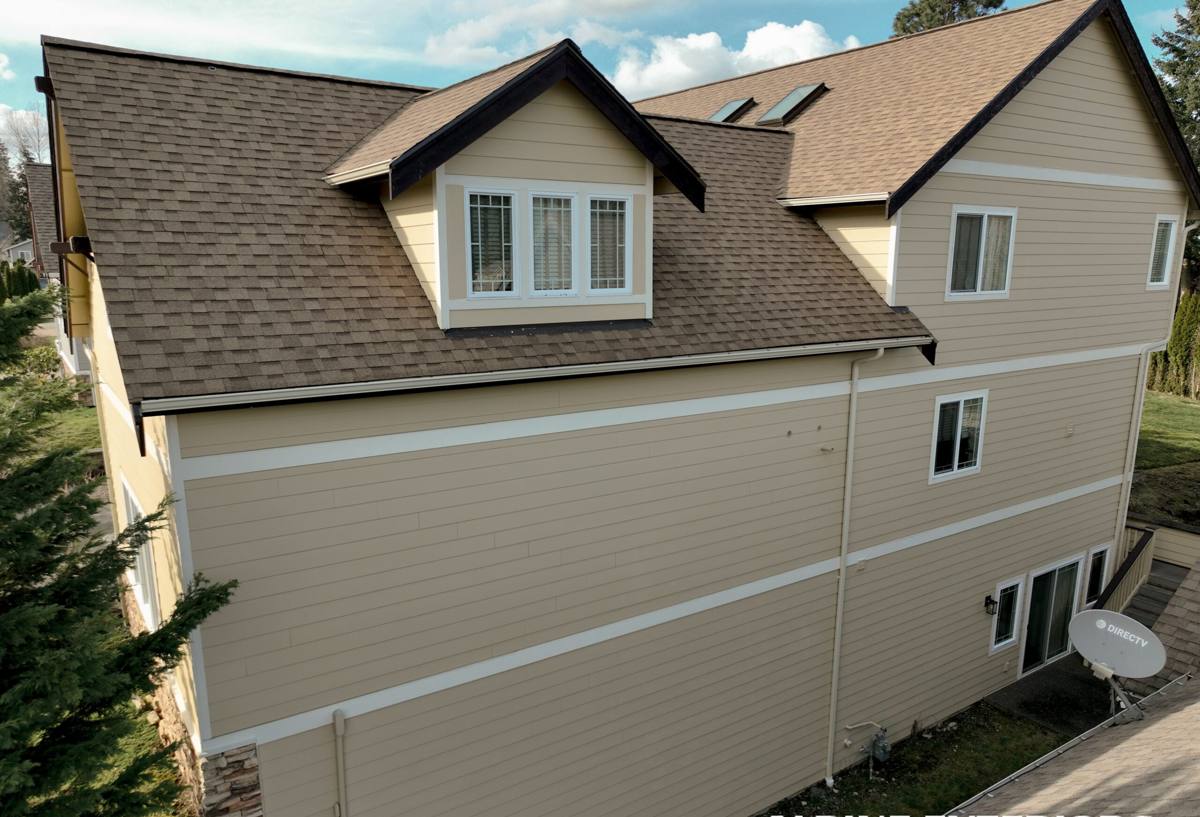
What South Hill's Housing Stock Means for a Siding Job
South Hill is one of Bellingham's older, established neighborhoods, and that history shows up in the siding work we get called out for. Many homes still have original wood lap siding or additions from different decades, layered with paint, caulk, and past patch jobs. Mature landscaping that gives the neighborhood its character also throws deep shade across large sections of exterior wall, which means those areas stay damp far longer after a storm than a south-facing wall in the open. That's exactly where moss and mildew take hold first, and it's exactly where a siding product's moisture tolerance gets tested hardest.
Before we quote a job, we look at how a home's age, additions, and tree exposure interact — not just the square footage. A house with heavy shade on one elevation may need different flashing and ventilation attention than the sunnier side of the same building.
Why We Only Install James Hardie Fiber Cement
We made a deliberate decision as a company to install James Hardie fiber cement siding exclusively, and not vinyl, not LP SmartSide, not cedar or primed spruce, not other fiber cement brands. That's not a marketing position — it's a standard we hold because of what we see in this climate over time.
- Non-combustible material — fiber cement doesn't feed a fire the way wood-based products can.
- ColorPlus factory finish — a baked-on finish that resists fading and moisture intrusion at the paint layer far better than field-applied paint on wood or engineered wood.
- Climate-engineered HZ product lines — Hardie manufactures different formulations for different climate zones, and Bellingham's marine, moisture-heavy conditions call for the HZ5 line built for wet, temperate regions.
- Dimensional stability — it doesn't swell, cup, or delaminate the way wood-based siding can when it takes on repeated moisture cycles.
- A strong, transferable warranty — backed by the manufacturer when the installation is done to their specification, which matters if you sell the home down the road.
We're upfront that other products have their own selling points — vinyl is inexpensive, LP SmartSide is lighter to handle, cedar has a look some homeowners love. But for a home that has to stand up to South Hill's salt air, rain, and moss for the next 30-plus years, fiber cement engineered for this exact climate is the material we're willing to put our name behind.
What a Correct James Hardie Installation Actually Involves
The Parts You Won't See Once the Job Is Done
Most siding failures we get called to fix aren't about the siding material at all — they're about what's underneath it. A correct install starts with the weather-resistive barrier, properly lapped and sealed at every penetration. On a shaded, damp lot like much of South Hill, we pay close attention to whether a rain screen or furring strip gap is warranted behind the siding to let trapped moisture and vapor escape instead of sitting against the wall assembly.
Flashing, Fastening, and Gaps
Flashing at windows, doors, and roof-to-wall transitions has to be layered correctly so water is directed out and down, never trapped behind the cladding. Fasteners need to hit framing at the manufacturer's specified pattern and depth — overdriven or underdriven nails are one of the most common defects we find on jobs we're asked to inspect or repair. Butt joints and panel edges need the gaps and sealants Hardie specifies, not just enough caulk to make it look finished.
Why the Spec Matters for Your Warranty
James Hardie's warranty coverage assumes installation to their published instructions. Skip a step — wrong fastener, missing clearance at grade, unsealed penetration — and a homeowner can end up with a product warranty that doesn't actually apply if a problem shows up later. Following the spec isn't optional detail work; it's what makes the warranty real.
Choosing the Right Hardie Profile for a South Hill Home
James Hardie makes several siding profiles, and the right choice depends on the home's style, trim details, and how much of the wall sits in shade.
| Profile | Best Fit | Consideration for South Hill |
|---|---|---|
| HardiePlank lap siding | Traditional and craftsman-style homes, most common choice | Wide range of exposures and textures to match an existing home's look |
| HardiePanel vertical siding | Modern styling, accent walls, gable ends | Fewer horizontal laps means fewer joints for water to test in heavy rain |
| HardieShingle | Homes wanting a cedar-shake look without the maintenance | Popular where homeowners like a traditional Pacific Northwest look but don't want real wood's upkeep |
| HardieTrim | Fascia, corner boards, window and door trim | Matched material and finish so trim ages at the same rate as the field siding |
We'll walk through which profile and exposure width fits your specific home during the estimate rather than defaulting to one option for every house on the hill.
Moss, Algae, and Shade: Managing the Long-Term Maintenance Side
Even the best siding needs some homeowner upkeep in a climate like this. ColorPlus finish resists mildew growth better than field-applied paint because the color and protective topcoat are baked on at the factory under controlled conditions, but shaded walls under mature trees will still collect more surface growth than sun-exposed walls. A periodic soft wash — not pressure washing, which can force water behind panels and damage the finish — keeps shaded elevations looking right and prevents organic buildup from holding moisture against the surface long-term. We'll tell you honestly which sides of your home will need more attention based on tree cover and orientation.
Our Process for a South Hill Siding Project
- On-site assessment — we look at existing siding condition, trim, moisture staining, and how shade and drainage patterns affect the specific home.
- Tear-off and sheathing check — old siding comes off and we inspect the sheathing underneath for rot or hidden moisture damage before anything new goes up.
- Weather-resistive barrier and flashing — installed and sealed at every window, door, and penetration before siding touches the wall.
- Rain screen consideration — evaluated based on the home's exposure and shade, not applied as a blanket default.
- James Hardie installation — panels and trim installed to manufacturer fastener and clearance specifications.
- Caulking, paint touch-up, and final inspection — joints sealed, cut edges field-treated per Hardie's guidance, and a final walkthrough with the homeowner.
- Site cleanup — old material and debris hauled off, yard and landscaping left as we found it.
What Drives Cost on a South Hill Siding Job
| Factor | Why It Matters |
|---|---|
| Home size and number of stories | More wall area and height affects material, labor, and equipment needs |
| Existing siding tear-off | Removing old wood or vinyl adds labor before new siding can go on |
| Trim and architectural detail | Multiple gables, dormers, or trim-heavy craftsman details take more time to finish correctly |
| Site access | Hillside lots, tight side yards, or limited street parking can slow material staging |
| Sheathing repair | Hidden rot found during tear-off adds material and labor not visible until the old siding is off |
| Profile and finish choice | Panel type, exposure width, and color selection all affect material cost |
We give a firm, itemized quote after the on-site assessment rather than a rough number sight unseen — hidden sheathing damage is common enough on older South Hill homes that we won't guess at it from the curb.
Why Hiring a Crew That Already Works This Neighborhood Matters
A contractor who's already worked on South Hill knows the housing stock's common age-related issues, understands how the hill's tree cover and drainage affect a given lot, and is familiar with the City of Bellingham's permitting process for exterior work. That familiarity shows up in fewer surprises mid-project — knowing to check for a particular era's sheathing type, or planning around narrow hillside access before the job starts rather than after a delivery truck can't get close to the house.
Before you hire anyone for a siding job on this hill, it's worth checking a few things:
- Do they carry proper Washington contractor licensing and insurance, and will they show you proof without being asked twice?
- Will they inspect and address sheathing condition, not just install over whatever is already there?
- Do they install to the manufacturer's actual fastening and flashing specification, or just "however it's always been done"?
- Can they explain, in plain terms, why they'd choose one Hardie profile over another for your specific home?
- Do they have local experience with Bellingham permitting and hillside site conditions?
If your South Hill home needs new siding — or you're just trying to figure out whether it does — we're happy to take a look and walk you through what we find. Reach out for a free, no-pressure estimate; there's no obligation, just a straight answer about your home's condition and what correct James Hardie installation would look like for it.