 Bellingham Exterior
 Siding in Happy Valley Has to Survive the Weather, Not Just Look Good in It
Happy Valley sits close enough to Bellingham Bay and the surrounding wetlands that homes here deal with a specific combination of punishment most siding products were never designed for: salt-tinged marine air, long stretches of driving rain off the water, and shaded lots where moss gets a head start every fall and doesn't let go until late spring. A siding choice that works fine in a drier inland climate can start showing problems within a few years out here — swelling seams, chalky paint, soft spots at the bottom courses, moss creeping up from the ground line. This page is about one material, in one part of Bellingham: James Hardie fiber cement siding, installed correctly, for homes in Happy Valley.
We don't install vinyl, LP SmartSide, primed wood, or other fiber cement brands. That's a deliberate standard, not an oversight, and we'll explain why below. First, it helps to understand exactly what this neighborhood's climate does to a wall assembly over time.
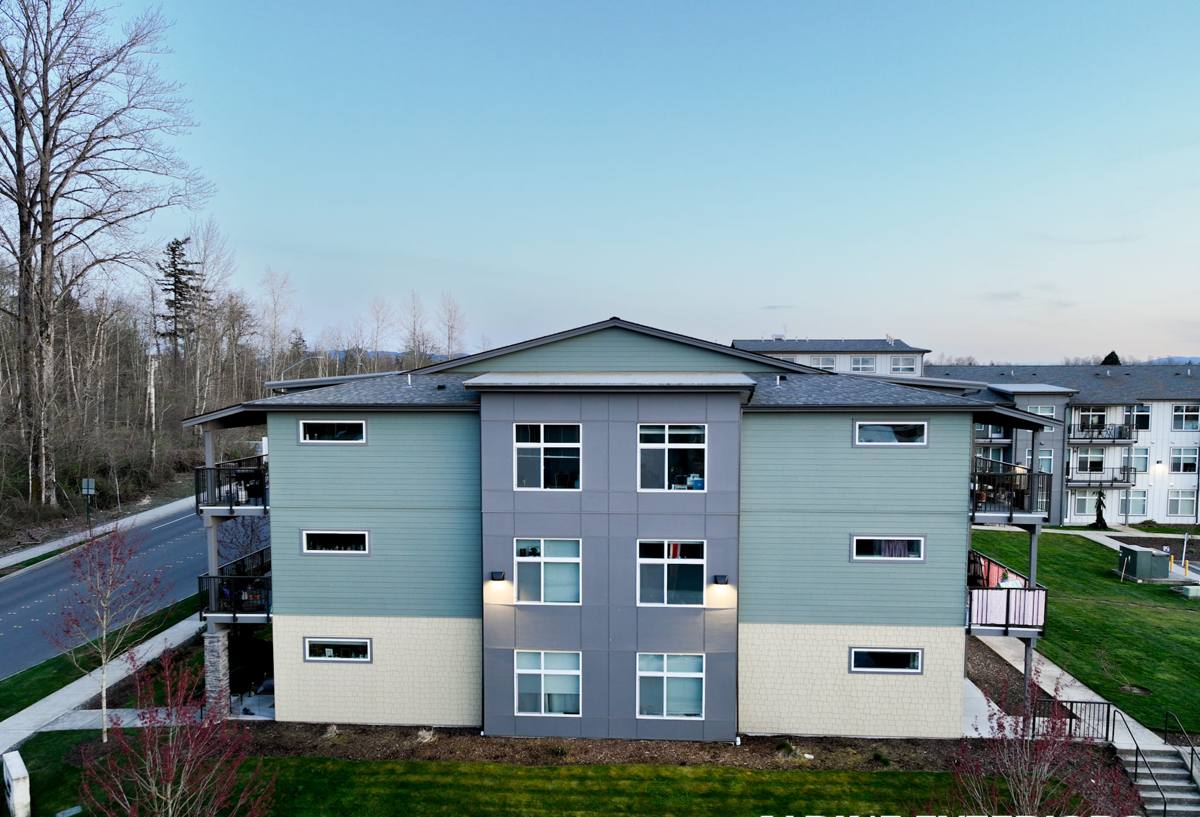
What Happy Valley's Microclimate Does to Exterior Walls
Wind-Driven Rain and Wall Saturation
Whatcom County doesn't get the heaviest rainfall totals in the state, but it gets a lot of low-pressure systems pushing rain sideways off Bellingham Bay, and Happy Valley's mix of older narrow lots and mature tree cover means wind can funnel rain against specific wall faces for hours at a stretch. Siding on the west and south-facing walls of these homes takes the brunt of it. Over years, wind-driven rain finds every gap in a poorly lapped joint, every nail that missed a stud, every spot where caulk was used to hide a flashing detail that should have shed water on its own.
Moss, Shade, and Slow-Drying Surfaces
A lot of Happy Valley's housing stock sits under mature evergreens and on lots with limited direct sun exposure, especially on north walls and anywhere close to fence lines or neighboring structures. That shade keeps siding damp longer after every rain event, which is exactly the condition moss and mildew need to establish. On wood-based products, prolonged dampness eventually softens fibers and lifts paint. On fiber cement, the surface itself resists that damage, but moss and algae can still build up on the surface if the siding isn't detailed with enough ground clearance and drainage behind it.
Marine Air and Coastal Corrosion
Being close to the water means airborne salt is a real factor for fasteners, flashing, and trim hardware, not just the siding face itself. Standard fasteners and lower-grade trim accessories corrode faster this close to the bay, which is why the metal components in a siding system matter just as much as the panel or plank material itself.
Why We Only Install James Hardie Fiber Cement
We get asked fairly often why we don't offer vinyl or LP SmartSide as a cheaper option. The honest answer is that we've made a professional decision to stand behind one product system because it's engineered for exactly the conditions Happy Valley homes face, and we don't want to install something on a customer's home that we know is a worse long-term bet for this climate.
Non-Combustible and Climate-Engineered
James Hardie fiber cement is cement-based, not wood-based, so it doesn't feed fungal growth the way wood or wood-composite siding can, and it's non-combustible — a real consideration during Washington's increasingly active wildfire seasons, even on the wetter west side of the state. Hardie also builds region-specific product lines (its HZ5 line is engineered for the Pacific Northwest's freeze-thaw and moisture cycle), which is a level of climate-specific engineering vinyl and most composite products simply don't offer.
ColorPlus Factory Finish vs. Field-Painted Siding
Most of the fiber cement and wood siding failures we get called out to inspect aren't failures of the base material — they're paint failures. A field-applied paint job is only as good as the weather on the day it was sprayed and the surface prep underneath it. Hardie's ColorPlus finish is baked on at the factory under controlled conditions, with a UV-cured topcoat, and it carries its own separate finish warranty. In a climate that gives painters a narrow dry-weather window, that matters more here than in drier parts of the country.
Warranty Structure
Hardie backs its siding with a long-term, transferable limited warranty when installed to its specifications. That transferability is worth pointing out directly to Happy Valley homeowners, since this is a neighborhood with a fair number of long-held family homes and turnover to new buyers — a warranty that survives a sale protects resale value, not just the current owner.
What a Correct Fiber Cement Installation Actually Involves
The siding material is only part of the equation. Most of the siding failures we're called to fix in this region trace back to installation shortcuts, not the product itself. A correct install is what actually keeps a wall dry through a Bellingham winter.
The Water-Resistive Barrier and Flashing Details
Every wall gets a continuous water-resistive barrier behind the siding, lapped correctly from bottom to top so water is directed outward at every seam. Window and door openings get properly integrated flashing — head flashing, sill pans, and side flashing that tie into the barrier rather than relying on caulk as the primary defense. Caulk is a maintenance item, not a waterproofing strategy, and any installer who's leaning on it to seal a gap that should have been flashed is setting the homeowner up for a callback in a few years.
Fastening, Clearances, and Ground Contact
Hardie specifies fastener type, placement, and spacing for a reason — done wrong, fasteners can split boards, back out over time, or create points where water tracks behind the siding. We also hold correct clearances at the ground, roofline, decks, and any hardscaping, because tight-to-grade siding in a shaded, damp lot is one of the fastest ways to invite the rot and moss buildup this neighborhood is prone to. Corrosion-resistant fasteners and trim hardware matter more here given the marine air, and we spec accordingly rather than using whatever is cheapest.
Caulking and Joint Treatment
Where sealant is appropriate — at butt joints and trim transitions — we use exterior-grade, paintable sealant rated for the product, applied correctly, not as a substitute for missing flashing.
Fiber Cement vs. Other Siding Options for Happy Valley's Climate
| Factor | James Hardie Fiber Cement | Vinyl | LP SmartSide / Wood-Based |
|---|---|---|---|
| Moisture resistance | Cement-based, does not rot or feed fungal growth | Won't rot, but can trap moisture behind it if installed too tight | Engineered wood strand core; vulnerable to swelling if moisture reaches cut edges or fastener points |
| Finish durability | Factory-baked ColorPlus finish, UV-cured | Color is through-body but can fade and chalk; can warp in reflected heat | Factory-primed or coated; still relies on field caulking and touch-up paint |
| Fire performance | Non-combustible | Combustible, can melt or deform near heat sources | Wood-based, combustible |
| Wind-driven rain performance | Rigid, holds tight laps and flashing lines | Can flex and gap in high wind, allowing water intrusion | Performs well when new, but edge swelling accelerates with repeated wetting |
| Warranty | Long-term, transferable when installed to spec | Varies by manufacturer, often prorated | Varies; moisture damage frequently falls outside coverage |
Our Process for Happy Valley Projects
The process itself isn't different neighborhood to neighborhood, but where we put our attention shifts based on what a given lot and orientation are up against. For Happy Valley, that means:
- On-site assessment — we walk the exterior, checking sun exposure, shade patterns, drainage around the foundation, and current siding condition wall by wall, since a north-facing wall under trees and a south wall catching bay wind often need different attention even on the same house.
- Existing siding and sheathing inspection — once old siding comes off, we check the sheathing and framing underneath for any moisture damage before anything new goes on. This is often where hidden problems from a prior install show up.
- Water-resistive barrier and flashing installation — installed and inspected before a single piece of siding goes up.
- Hardie installation to manufacturer spec — correct fastening, clearances, and joint treatment as described above.
- Final walkthrough — we go over the finished work with the homeowner, including what routine maintenance (if any) to expect.
Maintenance: What to Expect After Installation
One of the practical advantages of correctly installed Hardie siding in this climate is how little routine maintenance it needs compared to wood or vinyl. It won't need repainting on the same cycle a field-painted product does, and it won't warp or crack the way vinyl can after enough temperature swings. That said, no siding in a shaded, damp neighborhood like Happy Valley is completely maintenance-free. A homeowner should:
- Rinse siding periodically (garden hose is usually enough) to keep pollen, dust, and early moss growth from building up, especially on shaded walls
- Keep gutters clear so overflow isn't running down the siding face
- Trim back vegetation that's holding moisture against the wall or blocking airflow
- Watch for any caulk lines at trim or joints that have shrunk or cracked and get them addressed before water tracks behind them
- Have any impact damage (a stray branch, equipment bump) repaired rather than left, since a compromised panel is the one place water can get behind the system
Why Local Experience in Happy Valley Matters
A siding crew that's worked this specific part of Bellingham knows which walls in this neighborhood catch the worst of the bay wind, which lots hold moisture longest under tree cover, and where marine air makes corrosion-resistant hardware non-negotiable rather than optional upsell. That's the difference between a generic install and one that's actually built for the address it's going on. We're a Bellingham-based crew working Whatcom County homes, and Happy Valley's mix of mature trees, older lots, and proximity to the bay is a pattern we recognize before we even start the walkaround.
If your Happy Valley home needs new siding, or you're trying to figure out why your current siding is struggling, we're happy to take a look and give you a straight answer — no pressure, no upsell script. Request a free estimate below and we'll walk the property with you.