 Bellingham Exterior
 Building Decks for Happy Valley's Conditions, Not Generic Ones
Happy Valley is one of Bellingham's older, well-established residential neighborhoods, with a mix of mature tree cover, sloped lots, and homes ranging from decades-old builds to newer construction. A deck here has to deal with a specific combination of stresses: near-constant moisture for much of the year, shade from surrounding trees that keeps surfaces damp long after a storm passes, and the low-grade salt exposure that comes with living near Bellingham Bay and the Puget Sound corridor. None of that is exotic or unusual for Whatcom County — but it does mean a deck built the same way you'd build one in a drier inland climate will fail faster here, sometimes years faster.
We build and repair decks specifically with this neighborhood's conditions in mind. That shows up in the fasteners we choose, how we detail the ledger board, how we space and finish decking boards, and how we grade the ground underneath. None of it is complicated, but skipping any of it is exactly how a deck that looks fine at year two starts rotting, rusting, or heaving by year five.
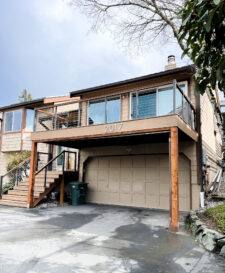
What Bellingham's Climate Actually Does to a Deck
Driving Rain and Standing Moisture
Whatcom County doesn't get flash flooding, but it gets long stretches of steady, wind-driven rain that finds its way into every gap, seam, and fastener hole. Decks that sit low to the ground, lack proper drainage slope, or have boards installed too tight to each other trap water instead of shedding it. That trapped water is what causes rot in framing, cupping in wood decking, and premature failure in ledger connections — the single most important structural joint on most decks.
Salt Air and Corrosion
Proximity to the bay means airborne salt is a real factor, even a few miles inland. Standard zinc-coated fasteners and connectors corrode faster under this kind of exposure than they would in a dry, inland climate. Once a fastener starts rusting, it loses holding strength long before it looks bad enough to notice from the surface.
Moss, Algae, and Extended Shade
Bellingham's moss season isn't a two-week nuisance — it's a multi-month reality, especially on shaded, north-facing, or tree-covered lots, which describes a good share of Happy Valley. Moss and algae hold moisture against the deck surface, make boards slippery, and can accelerate wood decay if left to build up over a season or two.
What a Correctly Built Deck for This Area Involves
Framing and Structure
Correct footing depth and sizing for our soil and frost conditions, joist spacing rated for the actual decking material chosen (composite and PVC often need tighter joist spacing than wood), and proper flashing at the ledger board where the deck attaches to the house. The ledger connection is the most common point of catastrophic deck failure nationally, and it's also the easiest to get wrong if the flashing detail is skipped or rushed.
Fasteners and Hardware
We use corrosion-resistant, coated or stainless structural screws and connectors rated for exterior and coastal-adjacent exposure — not standard interior-rated hardware. This costs a little more up front and is one of the cheapest ways to add years to a deck's life.
Drainage and Grading
The ground under and around a deck needs to shed water away from the house and framing, not pool underneath it. On sloped Happy Valley lots this sometimes means grading work or a simple drainage path as part of the build, not just the deck itself.
Gap Spacing and Board Selection
Correct gapping between boards lets water drain through instead of sitting on the surface. The right gap depends on the material — wood needs different spacing than composite, and getting it wrong either traps moisture or leaves gaps that are too wide and uncomfortable underfoot.
Decking Material Options: Honest Trade-Offs
There's no single "best" decking material — there's the right material for a given budget, maintenance appetite, and how much sun or shade the deck actually gets. Here's how the common options compare for our climate specifically:
| Material | Moisture & Moss Behavior | Maintenance | Typical Lifespan Here |
|---|---|---|---|
| Pressure-treated wood | Absorbs moisture, needs sealing to resist moss and rot | Annual cleaning, re-sealing every 1-2 years | 10-15 years with upkeep |
| Cedar | Naturally rot-resistant but still needs sealing in shaded, wet spots | Regular cleaning, periodic re-staining | 15-20 years with upkeep |
| Capped composite | Resists moisture absorption; still needs cleaning where moss can grow on the surface | Occasional washing, no sealing or staining | 25+ years, manufacturer-backed |
| PVC decking | Fully moisture-resistant surface; best performance in constantly shaded, wet areas | Occasional washing | 25+ years, manufacturer-backed |
Wood costs less up front and has a warmer, natural look many homeowners want. Composite and PVC cost more initially but largely remove the sealing-and-staining cycle that wood demands in a climate this wet — which matters most on shaded lots where a wood deck needs attention every year just to keep moss and moisture from taking hold.
Moss and Long-Term Maintenance Reality
Whatever material you choose, moss season here is not optional to plan for. A few habits keep it from becoming a structural problem instead of a cosmetic one:
- Sweep debris and leaf litter off the deck surface regularly through fall, since trapped organic matter is what moss and algae feed on
- Rinse or wash the deck at least once or twice a year, more often on heavily shaded sections
- Keep nearby branches trimmed back where practical to let more light and airflow reach the deck
- Check fastener heads and connector hardware periodically for early rust, especially on older decks built before corrosion-resistant hardware was standard
- Reseal wood decking on the manufacturer's recommended schedule rather than waiting until it visibly needs it
Skipping this maintenance doesn't just make the deck look worse — sustained moss and moisture buildup is one of the main ways otherwise sound wood decking ends up with soft, rotting boards years earlier than it should.
Permits and Local Requirements
Most new deck construction and many significant deck rebuilds in Bellingham and unincorporated Whatcom County require a permit, particularly once a deck reaches a certain height off the ground or is structurally attached to the house. Requirements can vary depending on the specific jurisdiction, lot, and scope of work, so we handle the permit determination and application as part of the project rather than leaving homeowners to sort that out on their own.
Guardrail height, baluster spacing, and stair requirements are also governed by code and get checked at inspection — cutting corners on any of these isn't just a compliance issue, it's a real safety issue for a structure people will be standing on for decades.
Our Deck Building Process
- On-site assessment — we look at the specific lot: sun and shade exposure, slope, existing drainage, and how the deck will tie into the house.
- Material and layout discussion — honest trade-offs between wood, composite, and PVC based on your budget, how much maintenance you want to do, and how shaded the site is.
- Permit handling — we determine what's required for your specific project and manage the application.
- Framing and structural work — footings, ledger flashing, joists, and corrosion-resistant hardware sized correctly for the decking material chosen.
- Decking, railing, and finish work — installed with correct gapping and fastening for the material and our climate.
- Final walkthrough — we go over the finished deck and basic maintenance expectations so there are no surprises down the road.
Why Local Experience in Happy Valley Matters
A deck built by a crew that hasn't worked this specific mix of conditions tends to make the same avoidable mistakes: standard hardware instead of corrosion-resistant fasteners, decking gapped for a drier climate, or grading that doesn't account for a sloped lot pushing water toward the foundation instead of away from it. We work throughout Bellingham and Whatcom County, and building in neighborhoods like Happy Valley — with its tree cover, established lots, and mix of home ages — means these details aren't an afterthought, they're the starting point for how we plan the job.
That local familiarity also means fewer surprises mid-project. We know what inspectors here are checking for, what soil and drainage conditions tend to look like on sloped residential lots in this part of Bellingham, and what actually holds up through a full Whatcom County winter versus what just looks good on installation day.
Signs Your Current Deck Needs Attention
Not every deck problem means a full rebuild. Here's a quick checklist for what to look for:
- Soft or spongy spots underfoot, especially near the ledger board or stair stringers
- Visible rust or corrosion on fasteners, brackets, or railing hardware
- Persistent moss or algae that returns quickly after cleaning
- Gaps or cupping in wood decking boards that have gotten noticeably worse
- Railings or posts that feel loose or wobble under light pressure
- Water pooling on the surface instead of draining off after rain
Some of these are simple repairs; others point to structural issues that are worth addressing before they become a safety problem. A short on-site look is usually enough to tell the difference.
Get a Free, No-Pressure Estimate
Whether you're planning a new deck for a Happy Valley home or need an honest opinion on whether an existing one is still sound, we're happy to take a look and walk you through the options — no obligation and no pressure. Use the form below to request a free estimate.