 Bellingham Exterior
 Siding Built for Edgemoor's Waterfront Climate
Edgemoor sits close enough to Bellingham Bay that salt-laden air is a real factor in how exterior materials age here, not a theoretical one. Add Whatcom County's long, wet winters and the mature tree canopy that shades much of the neighborhood, and you get a specific combination of stressors: salt air that accelerates corrosion and finish breakdown, driving rain that gets pushed sideways into wall assemblies during winter storms, and deep shade that keeps north- and tree-facing walls damp long after the rest of the yard has dried out. That last point is what drives Bellingham's notorious moss season — moss doesn't just grow on roofs here, it colonizes siding, trim, and anything else that stays damp and shaded for weeks at a stretch.
None of that is unique to Edgemoor, but the combination of bay proximity and heavy tree cover is more pronounced in this neighborhood than in a lot of inland Bellingham. Siding that performs fine on a sunny, open lot in Ferndale can struggle on a shaded, salt-exposed lot near the water. That's the lens we use when we talk about siding for Edgemoor specifically.
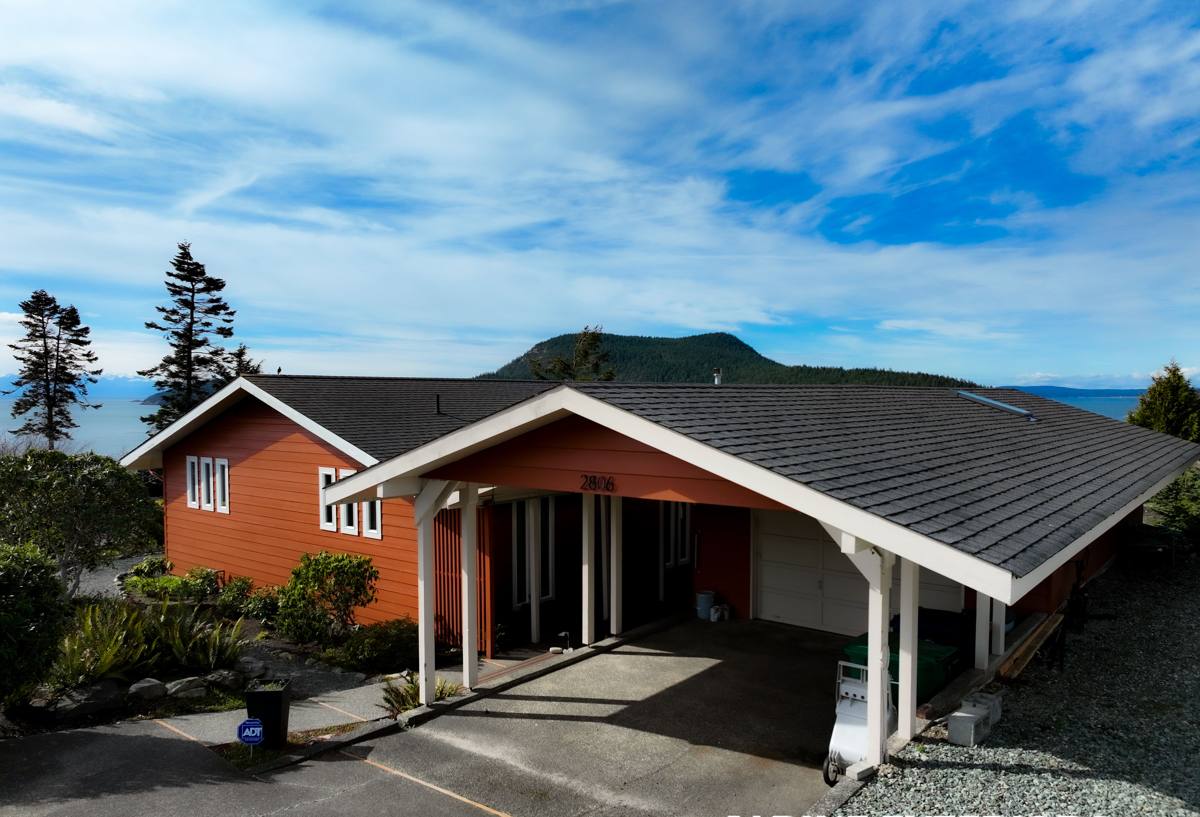
Why We Only Install James Hardie Fiber Cement
We install James Hardie fiber cement siding exclusively. We don't install vinyl, LP SmartSide, Cemplank, Allura, or primed wood siding like spruce or cedar. That's a deliberate professional standard, not a sales pitch, and it's worth explaining honestly rather than just asserting.
What the alternatives get right — and where they struggle here
Vinyl siding is inexpensive and low-maintenance in mild, dry climates, but it expands and contracts significantly with temperature swings, can become brittle in sustained cold, and doesn't hold up structurally the way fiber cement does over decades. Engineered wood products like LP SmartSide perform reasonably well when detailing and maintenance are followed to the letter, but they're wood-based, meaning moisture intrusion — the exact risk a shaded, rain-driven lot presents — is a bigger long-term liability than it is with a cement-based product. Primed cedar or spruce siding looks great initially and has real appeal, but it demands ongoing repainting and sealing to keep moisture out, and in a climate with this much sustained dampness, that maintenance burden is steep and unforgiving if it slips even one season.
Other fiber cement brands, like Cemplank or Allura, are chemically similar to Hardie's product. The difference we care about is the full system: Hardie's HZ5 product line is engineered specifically for climates with high moisture exposure, the ColorPlus factory finish is baked on rather than field-applied, and the company backs installations with a strong transferable warranty when installed to spec. For a neighborhood dealing with bay-air corrosion and long stretches of shade-driven dampness, that engineered-for-moisture positioning matters more than it would somewhere drier.
What Correct Fiber Cement Installation Actually Involves
Fiber cement siding is only as good as its installation. A rushed or corner-cutting install on a good product will fail the same way a bad product does — usually faster, given Edgemoor's exposure. Correct installation on a home like the ones in this neighborhood involves several details that are easy to skip and hard to notice until years later:
- A drainage plane and weather-resistive barrier installed and lapped correctly, so any water that gets behind the siding has somewhere to go besides the sheathing.
- A rainscreen gap in high-exposure and shaded areas, giving the wall assembly room to dry out between rain events instead of staying saturated.
- Correct fastener type, spacing, and placement per Hardie's installation specs — under- or over-driven fasteners are one of the most common causes of early siding failure.
- Proper flashing at every penetration — windows, doors, hose bibs, vents, and anywhere else the wall plane is interrupted — since water intrusion almost always starts at a penetration, not the field of the wall.
- Correct clearance from grade, decks, and roof lines so siding isn't sitting in a moisture trap where soil, mulch, or roof runoff keeps it wet.
- Caulking and joint treatment matched to Hardie's specifications, not generic exterior caulk that fails faster in this climate.
Every one of these is a place where a crew unfamiliar with the local climate might follow a generic install checklist instead of adjusting for a shaded, salt-exposed, high-rainfall lot. That's the practical argument for hiring a crew that already knows Edgemoor's conditions rather than one working from a one-size-fits-all playbook.
How Edgemoor's Terrain and Tree Cover Shape the Job
Many Edgemoor lots are wooded and sloped, with homes tucked among mature trees and, in some cases, limited street access or tight staging areas. That changes how a siding job gets planned, not just how it gets installed:
Site access and staging
Narrow driveways, sloped yards, and tree-lined lots mean material staging and scaffolding often need more planning than a flat, open-lot job. We walk the site ahead of time to figure out how material gets from the street to the wall without damaging landscaping or requiring last-minute workarounds.
Shade and drying time
Walls that sit in shade for most of the day dry more slowly after rain or pressure washing, which affects sequencing — caulking, priming touch-ups, and certain finish steps need genuinely dry substrate, not just a break in the rain. Crews unfamiliar with heavily shaded lots sometimes push through those steps too early.
Moss and organic buildup during tear-off
On older homes being re-sided, existing siding and trim in shaded areas often have moss, algae, or lichen buildup that needs to be addressed as part of tear-off and substrate inspection — it's not just cosmetic, since sustained organic growth can mask underlying moisture damage that needs to be caught before new siding goes up.
Our Process for an Edgemoor Fiber Cement Project
- On-site assessment — we walk the home, check existing siding and sheathing condition, note shade patterns, drainage issues, and any moisture damage already present.
- Written scope and estimate — clear pricing, product selection (lap siding, panel, shingle-style, or a mix), and color/finish decisions using Hardie's ColorPlus palette.
- Tear-off and substrate check — old siding comes off, sheathing is inspected for rot or moisture damage, and any repairs are addressed before anything new goes up.
- Weather barrier and drainage plane — installed and detailed around every penetration before siding starts.
- Fiber cement installation — installed to Hardie's specifications for fastening, clearance, and joint treatment, adjusted for Edgemoor's shade and exposure conditions.
- Trim, caulking, and final detail work — the finish work that determines how well the assembly sheds water over the next 20-plus years.
- Final walkthrough — we review the completed work with the homeowner before calling the job done.
What Fiber Cement Siding Costs Depend On
We don't quote pricing without seeing the home, but the factors that move the number are consistent across Edgemoor projects. This isn't a price list — it's what to expect a real estimate to weigh:
| Factor | Why it matters |
|---|---|
| Home size and wall complexity | More corners, dormers, and roof intersections mean more flashing detail and labor time. |
| Current siding and substrate condition | Rot or moisture damage found at tear-off adds repair scope before new siding can go up. |
| Product selection | Lap siding, shingle-style panels, and trim/accent combinations carry different material costs. |
| Site access and staging | Wooded, sloped, or tight-access Edgemoor lots can add setup and material-handling time. |
| Color and finish | Factory-applied ColorPlus finishes vary by line and color selection. |
| Existing moisture or ventilation issues | Shaded, damp walls sometimes need drainage or ventilation corrections beyond a straight re-side. |
Living With Fiber Cement Siding in a Salt-Air, Moss-Prone Climate
One advantage of fiber cement over wood-based siding is how little upkeep it demands, but "low-maintenance" isn't "no-maintenance," especially this close to the bay. A simple annual rinse-down removes salt residue and organic buildup before it has a chance to establish itself, particularly on shaded, north-facing walls where moss and algae take hold fastest. Keeping gutters clear and trimming back vegetation that holds moisture against the wall goes a long way toward protecting both the siding and the ColorPlus finish underneath it. Correctly installed and lightly maintained, Hardie fiber cement is built to handle exactly this kind of climate — that's the point of choosing it over materials that need more active protection to do the same job.
Why a Crew That Already Works Edgemoor Makes a Difference
Siding installation isn't only a product decision — it's a site-specific one. A crew that regularly works Edgemoor's wooded, sloped, water-adjacent lots already knows how to stage material on tight sites, how to sequence work around slow-drying shaded walls, and what moisture issues to expect when tearing off older siding near the bay. That local familiarity shows up in fewer surprises mid-project and a finished install that's actually detailed for the conditions the home will face for the next several decades, not just for a generic Whatcom County spec sheet.
Questions Worth Asking Before You Hire
- Does the crew have experience with wooded or sloped Edgemoor-style lots specifically, not just Bellingham in general?
- Will they inspect and address sheathing condition before installing new siding, not just cover what's there?
- Do they install a proper drainage plane and rainscreen detail, or just nail siding straight to the wall?
- Is the manufacturer's warranty backed by certified or manufacturer-trained installation?
- Will you get a written scope specifying product line, fastening method, and flashing details, not just a lump-sum number?
If you're weighing a re-side in Edgemoor, we're happy to walk the property, look at what your current siding and sheathing are telling us, and put together a straightforward estimate — no pressure, no obligation. Use the form below to get started.