 Bellingham Exterior
 Edgemoor's Bluff-and-Bay Setting Puts Real Stress on Siding
Edgemoor sits along the bluff above Bellingham Bay, and that position brings a specific combination of weather that most inland Whatcom County homes never have to deal with. Salt-laden air moves off the water and settles onto exterior surfaces, wind-driven rain hits siding at an angle instead of falling straight down, and the tree cover that makes the neighborhood so pleasant to live in also keeps siding shaded and slow to dry for much of the year. On top of that, the long Pacific Northwest moss season means anything organic on a roof or wall gets a running start every fall and doesn't let go until late spring.
None of that is a problem for siding that's installed correctly with the right materials. It becomes a problem when a product wasn't built for sustained moisture exposure, when flashing details were rushed, or when a home simply reaches the age where its original siding was never expected to last this long. Edgemoor homes tend to be older and larger, with more wall area, more trim detail, and more roof-to-wall transitions than a typical newer subdivision — all of which are places where water finds a way in if the job wasn't done right the first time.
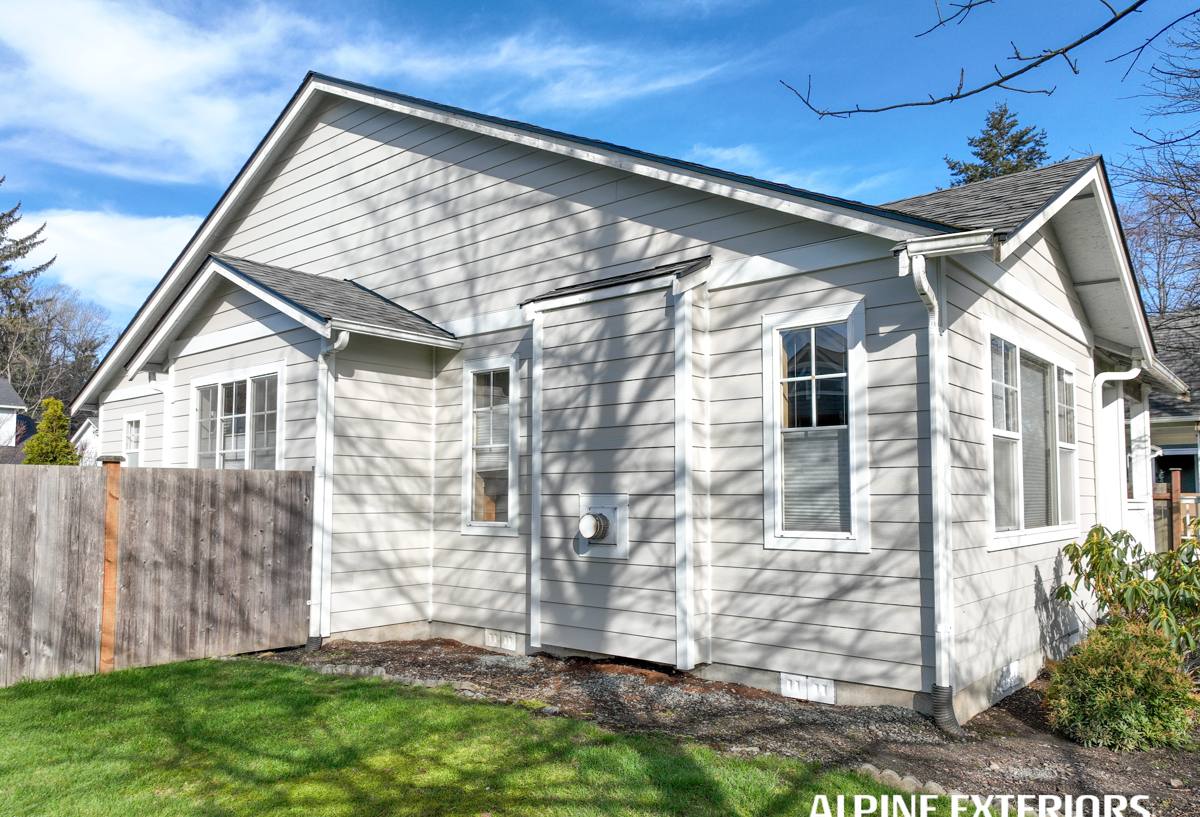
How to Tell Edgemoor Siding Has Reached the End of Its Life
Repainting or caulking can buy a little time, but some signs mean the siding itself — not just the finish — needs to come off. Walk the exterior, especially the north and west-facing walls that stay shaded and damp longest, and look for:
- Soft or spongy spots when you press on the siding, especially near the bottom courses and around window trim
- Paint that keeps failing in the same spots within a year or two of repainting, even after prep work
- Visible cupping, buckling, or separation at panel seams and butt joints
- Persistent moss or algae growth that returns within weeks of cleaning, particularly on shaded or bay-facing walls
- Streaking or dark staining below nail heads or trim boards, which usually points to trapped moisture
- Gaps opening up around window and door trim that weren't there a few years ago
- A musty smell in an adjoining interior wall or a rise in indoor humidity near an exterior wall
Any one of these can be a minor fix. Several of them together, especially on a home that's had multiple paint cycles, usually means the siding has absorbed more moisture over the years than it can shed, and patching won't solve the underlying problem.
What a Correct Siding Replacement Actually Involves
Tear-off and sheathing inspection
The siding itself is only part of the job. Once it comes off, the sheathing underneath gets inspected for soft spots, delamination, or rot — this is the point where hidden water damage from years of marginal flashing or a failed weather barrier finally shows up. On a bluff-side home exposed to consistent wind-driven rain, we pay particular attention to wall sections below window sills and anywhere two rooflines meet a wall, since those are the highest-risk spots for slow leaks.
Moisture barrier and flashing
A new weather-resistive barrier goes on before any siding, and it needs to be lapped correctly — upper courses over lower ones — so water is always directed outward and down, never into a seam. Every window, door, and penetration gets proper flashing integrated with that barrier, not just caulked over the top of it. This step matters more in Edgemoor than in a drier, more sheltered part of the county, because sustained wind-driven rain off the bay will find any shortcut in the flashing detail eventually.
Fastening and clearances
Siding needs to be fastened to the manufacturer's specification — correct fastener type, spacing, and depth — and it needs proper clearance from grade, roof lines, decks, and other siding transitions so water has somewhere to go instead of wicking up into the bottom edge of the panel. Rushed fastening and tight clearances are two of the most common causes of early siding failure we see on tear-offs, and they're invisible from the street until the damage is already done.
Why We Install Only James Hardie Fiber Cement
We made a decision as a company to install James Hardie fiber cement siding exclusively, and we don't install vinyl, LP SmartSide, or other engineered wood products. That's not a marketing position — it's based on how these materials actually perform over years of exposure to the kind of climate Edgemoor sits in.
| Factor | James Hardie Fiber Cement | Vinyl | Engineered Wood (LP SmartSide-type) |
|---|---|---|---|
| Moisture behavior | Non-combustible cement composite; doesn't swell or rot when installed correctly | Doesn't absorb water, but seams and panels can warp or distort with heat and cold cycling | Wood-based core is vulnerable if the factory seal is compromised at cuts or fastener points |
| Salt air exposure | Engineered for coastal and marine climates in Hardie's HZ product lines | Holds up reasonably well but can become brittle over time | More sensitive to sustained moisture than fiber cement |
| Moss and algae | Factory ColorPlus finish resists staining and holds up to regular cleaning | Can trap moisture behind panels where moss gets a foothold | Painted surface needs more frequent maintenance to resist growth |
| Fire resistance | Non-combustible | Combustible, can melt or deform near heat sources | Combustible |
| Long-term appearance | Factory finish resists fading and chalking for years | Can fade unevenly, especially on sun-exposed walls | Requires repainting on a regular cycle to protect the substrate |
Every product on that table has situations where it makes sense. But for a bluff-side, salt-exposed home with a long wet season and heavy tree cover, fiber cement's resistance to moisture absorption and its factory-applied finish give it a real, measurable advantage over the life of the siding — which is why it's the only product we put our name behind.
Our Edgemoor Siding Replacement Process
- On-site assessment: We walk the full exterior, check for the failure signs above, and identify problem areas before we ever talk numbers.
- Written scope and product selection: You get a clear scope of work and a choice of Hardie panel style, plank exposure, and ColorPlus color — no vague allowances.
- Tear-off and sheathing repair: Old siding comes off, sheathing is inspected, and any damaged sections are replaced before anything new goes on.
- Weather barrier and flashing installation: New house wrap and flashing go in at every window, door, and penetration, lapped correctly for this climate.
- Hardie siding installation: Installed to manufacturer fastening and clearance specifications, not shortcuts.
- Trim, caulking, and final detail: Trim boards, corners, and transitions are finished to shed water, not just look clean.
- Final walkthrough: We walk the finished job with you before we consider it done.
Cost Factors for Siding Replacement in Edgemoor
Every home is different, but the same handful of factors drive most of the variation in price. We won't quote a number without seeing the house, but this gives you a sense of what moves the estimate.
| Factor | Why It Matters |
|---|---|
| Total wall square footage and wall height | More material and more labor, especially on multi-story homes common along the bluff |
| Sheathing condition underneath the old siding | Hidden rot or delamination found during tear-off adds repair scope |
| Number of window, door, and trim details | Older Edgemoor homes often have more architectural detail than newer builds, which adds flashing and trim labor |
| Access and site conditions | Mature trees, slopes, and tight side yards can affect staging and scaffolding needs |
| Panel style and finish selected | Lap siding, panel siding, and shingle-style Hardie products carry different material and install costs |
| Existing paint or finish removal | Multiple layers of old paint can add prep time during tear-off |
Why Local Experience in Edgemoor Matters
A neighborhood like Edgemoor isn't a typical flat, open subdivision job. Wooded, sloped lots mean careful staging and material protection during a multi-day tear-off. Homes set close to the bluff edge or shaded under mature trees dry more slowly after rain, which affects how we sequence work and when we can safely install. A crew that's worked in Edgemoor before knows to plan around these conditions instead of discovering them mid-project, and knows what level of flashing and moisture protection this specific microclimate actually requires versus what would be adequate a few miles inland.
That local pattern recognition is hard to fake. A contractor who mostly works drier, more sheltered parts of Whatcom County can still do competent work, but they haven't necessarily seen how their details hold up after a few winters of sustained wind-driven rain off Bellingham Bay. We have, and it shapes how we flash, fasten, and finish every job here.
Caring for New Siding After Installation
Correctly installed Hardie siding is low-maintenance, but "low" isn't "none," especially this close to the water. A periodic rinse to clear salt film and organic buildup, particularly on shaded walls, keeps the ColorPlus finish looking its best and discourages moss from getting established in the first place. Keep an eye on caulking at trim joints over the years and have any gutters or downspouts checked so water isn't dumping directly onto a wall section. None of this is heavy work — it's the kind of occasional attention that lets correctly installed fiber cement siding go the distance in a marine climate like this one.
If your Edgemoor home's siding is showing any of the signs above, or you'd just like an honest read on where it stands, we're happy to come take a look. The estimate is free, there's no pressure, and you'll get a straight answer about what your home actually needs.