 Bellingham Exterior
 Edgemoor's Climate Is Hard on Windows
Edgemoor sits close enough to Bellingham Bay that salt-laden air is part of daily life, and it's tucked under enough mature tree cover that shade and moisture linger on siding and glass longer than they do in more open parts of Whatcom County. That combination — salt air, driving rain off the water, and a moss season that can stretch for months — is tough on window hardware, frames, and seals in ways that homeowners further inland rarely deal with.
Salt air accelerates corrosion on exposed fasteners, hinges, and low-quality cladding. Wind-driven rain finds every gap in flashing and sealant that a calmer climate would never expose. And moss and algae don't just look bad on a sill or a lower sash — they hold moisture against wood and finish surfaces for weeks at a time, which is exactly the environment that promotes rot and seal failure. Windows built and installed without this climate in mind tend to show their age early: fogged glass, soft wood at the corners, sticking sashes, and drafts that show up as heating bills creep up every winter.
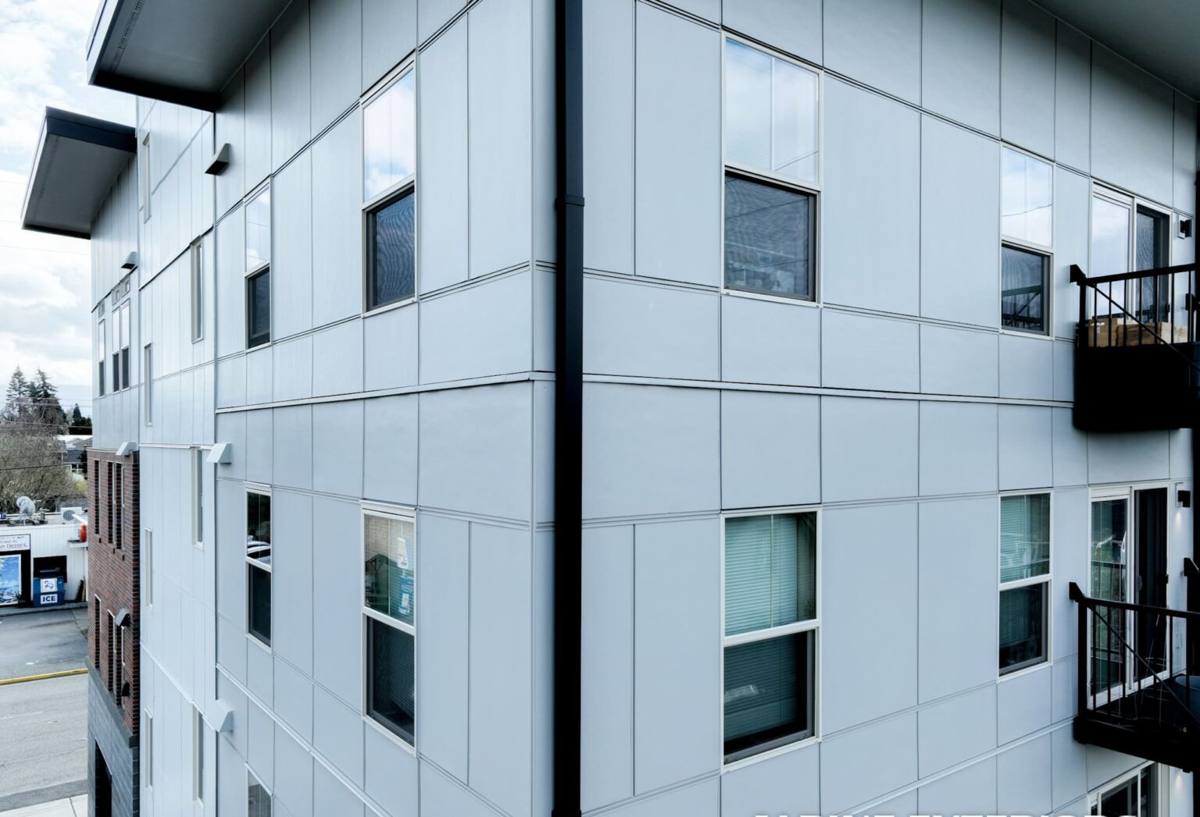
What "Custom" Actually Means for Edgemoor Windows
A lot of Edgemoor's housing stock is older and well-built, with rough openings that don't match today's standard window sizes. That's the real meaning of "custom" here — it's not a marketing word, it's a practical necessity. Off-the-shelf replacement units are manufactured in standard increments; if your home's openings don't match those increments (and in an older neighborhood, they often don't), a stock window either gets force-fit with shims and extra trim, or it leaves gaps that get packed with foam and caulk and called "finished."
Correct custom work starts with accurate field measurement of every opening — width, height, and diagonal, because older framing settles unevenly over decades. From there, units are ordered to the actual opening, not a nearby standard size, and installed so the reveal, sightlines, and grille pattern match the character of the home instead of looking like an obvious retrofit. On a neighborhood like Edgemoor, where a lot of homes have real architectural character, that detail matters as much as the weather performance does.
Matching the Home, Not Just the Hole
Beyond fit, custom work also means matching grid patterns, glass tint, and trim profiles to the rest of the house. A window that seals perfectly but looks wrong on an older Edgemoor facade is still a bad outcome. We treat appearance and performance as one job, not two separate decisions.
Frame Material Comparison for a Marine Climate
Every frame material handles salt air, rain, and shade differently. Here's how the common options actually perform in a Bellingham Bay-adjacent setting, in plain terms:
| Material | Moisture & Salt Air Behavior | Maintenance Load | Best Fit |
|---|---|---|---|
| Vinyl | Won't corrode or rot; can look chalky over many years of UV and salt exposure | Low | Budget-conscious replacements, rentals, secondary structures |
| Fiberglass | Very stable in wet/dry cycling, resists corrosion, holds paint well | Low | Homes wanting durability without a wood-maintenance commitment |
| Wood-clad | Interior wood warmth with an exterior shell protecting from rain; exposed end grain is the weak point if flashing is poor | Moderate | Character homes where interior wood look matters |
| Aluminum | Prone to corrosion in salt air unless properly finished; conducts cold and can condense | Moderate to High | Limited use — mainly where a very slim sightline is required |
None of these is universally "best" — the right call depends on the home's exposure, how close it sits to tree cover or open water view, and how much upkeep the owner wants to take on. We'll walk through the honest trade-offs for your specific openings rather than push one product line.
How We Keep Water Out: The Details That Actually Matter
Most window failures aren't glass failures — they're flashing and sealant failures. In a climate with sustained wind-driven rain, the installation details around the window do more work than the window itself. Correct installation includes:
- A sloped sill pan under the unit so any water that does get past the exterior seal drains back out instead of pooling on the framing
- Head flashing installed to shed water over the top of the window, integrated with the house wrap or building paper above it — not just caulked over it
- Proper lapping of the weather-resistive barrier so water sheds downward at every layer, the way shingles do
- Backer rod and sealant sized correctly at the perimeter, rather than a thick bead of caulk trying to do a job it isn't designed for
- Weep holes left clear so the small amount of water every window is designed to shed can actually get out
Skipping any one of these doesn't usually cause an immediate problem — it causes a slow one. Water intrusion around a window frame can go unnoticed for a year or more while it quietly rots sheathing and framing behind the wall finish. That's the failure mode we're installing against, especially on a home exposed to Bellingham's rainy season for months at a stretch.
Signs an Edgemoor Home May Need Window Replacement
Because damage from moisture and salt air develops slowly, homeowners often live with early warning signs for years before addressing them. Watch for:
- Fogging or a permanent haze between the panes of a double-pane unit — the seal has failed and the insulating gas is gone
- Soft or spongy wood at the sill or lower corners of the frame
- Moss or dark staining building up on horizontal sill surfaces, especially on the shaded side of the house
- Windows that are difficult to open, close, or lock, or that no longer sit flush in the frame
- Noticeable drafts or a cold radiating feeling near the glass in winter
- Visible daylight or gaps around the frame from outside
Any one of these on its own might just need a repair. Several at once, or a home with original windows from a prior decade, usually points toward full replacement being the more cost-effective long-term move.
Energy Performance in a Pacific Northwest Marine Climate
Whatcom County doesn't see the extreme heat or cold that drives window specs in other parts of the country, but it does see sustained damp cold for months at a time, which makes condensation resistance and consistent U-factor performance more important than chasing the lowest possible number on a spec sheet. A window with excellent insulating glass but poor perimeter sealing will still perform badly in practice, because the air leakage happens around the frame, not through the glass.
We look at the whole package — frame material, glass coating (low-E), gas fill, and spacer type — against how a given room actually sits relative to weather exposure and tree shade. A window on the rain-and-wind side of the house may warrant a different spec than one tucked under cover on a protected elevation, even on the same home.
Our Process, Start to Finish
- On-site assessment: we look at every opening in person, not just the ones you've flagged, since moisture and salt-air wear are often further along than they appear from inside.
- Measurement and product selection: exact field measurements, honest material recommendations based on exposure, and a clear written quote.
- Ordering and scheduling: custom units take longer to manufacture than stock sizes — we set expectations up front so there are no surprises.
- Install day: old units removed, framing inspected and repaired if needed, sill pan and flashing installed correctly, new units set, sealed, and finished.
- Cleanup and walkthrough: debris hauled away, every window operated and checked with you before we consider the job done.
Maintenance That Extends Window Life Through Moss Season
Even a well-installed window benefits from basic seasonal upkeep in this climate. A short annual routine goes a long way:
- Clear weep holes of debris, moss, and dirt so water can drain as designed
- Inspect exterior caulking each fall before the rainy season sets in, and re-seal any cracked or shrunken beads
- Wipe down and check sills for early moss or algae growth, especially on shaded or north-facing walls
- Trim back overhanging branches or vegetation that keeps a window in constant shade and moisture
- Operate every window at least once each season — a sash that's stuck shut is often hiding a sealing problem
Why Local Experience in Edgemoor Matters
A crew that regularly works in Edgemoor already understands the exposure patterns particular to homes near Bellingham Bay — which elevations take the worst of the driving rain, how tree cover changes drying time after a storm, and how older framing in this part of Bellingham tends to be built. That familiarity shows up in fewer surprises during installation and a specification that matches how the house actually experiences weather, not a generic recommendation pulled from a catalog. It also means we're working within City of Bellingham permitting norms and typical construction practices for the neighborhood's era of homes, rather than learning them for the first time on your project.
If you're weighing whether your windows need attention or full replacement, we're happy to take a look and give you a straightforward, no-pressure assessment. Use the form below to request a free estimate for your Edgemoor home.