 Bellingham Exterior
 Why Edgemoor's Setting Is Hard on Board & Batten Siding
Edgemoor is one of Bellingham's more heavily wooded, water-adjacent neighborhoods, and that combination creates a specific set of problems for exterior siding. Mature tree canopy means large stretches of wall never see direct sun, so wood surfaces stay damp far longer after a storm than they would on an open lot. Add proximity to Bellingham Bay and the salt-laden air that comes with it, plus the driving rain that blows in off the water during fall and winter systems, and you have a climate that punishes any siding material or installation detail that isn't built to shed water and dry out fast.
Board and batten siding is especially sensitive to this because of its geometry. The vertical boards and the narrow battens that cover the seams between them create dozens of linear joints running up every wall — joints that, if not flashed and fastened correctly, become entry points for moisture. In a sunny, open neighborhood a mediocre installation might get away with it for a few years. On a shaded Edgemoor lot with a long moss season, mistakes show up faster: streaking, soft spots at the base of boards, and paint failure along batten edges.
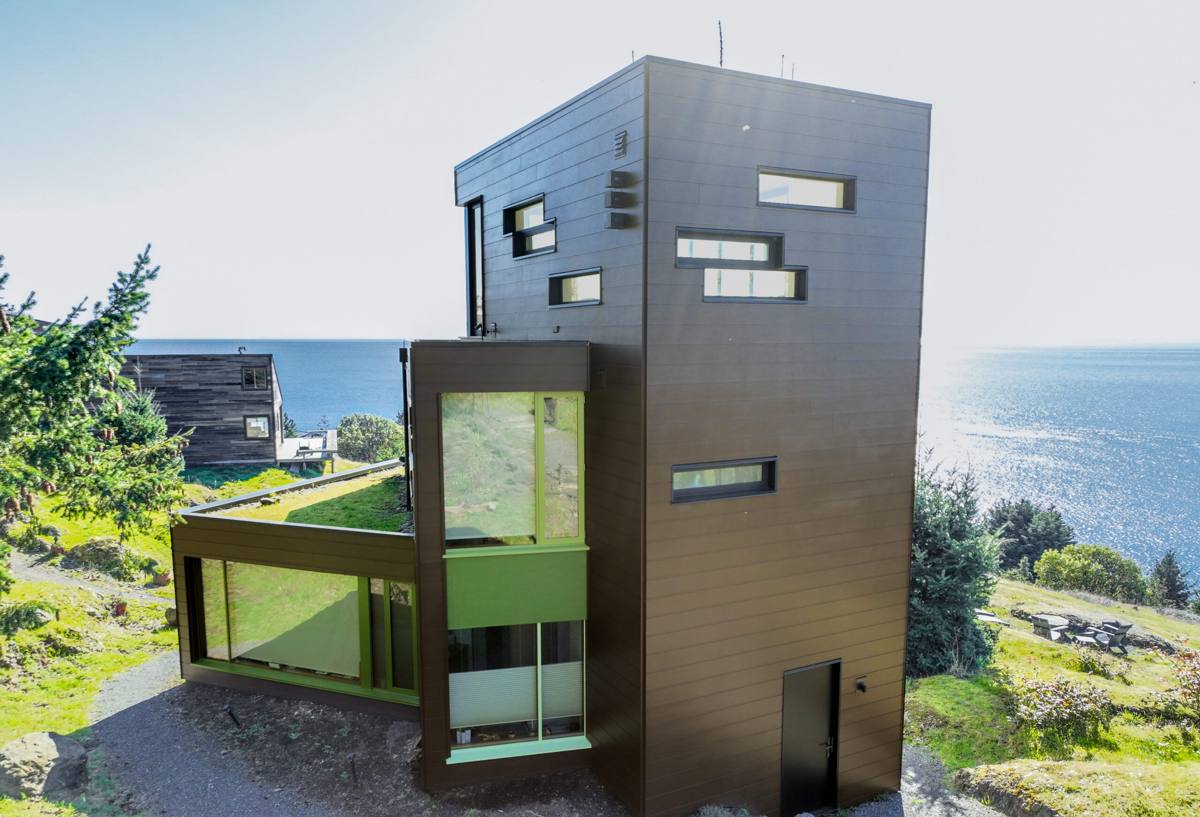
What Board & Batten Siding Is — and Why Homeowners Choose It
Board and batten is a siding pattern, not a single product. Wide boards are installed vertically with a gap between them, and a narrower strip — the batten — covers each seam. The result is a strong, evenly spaced vertical line and a crisp shadow pattern that reads as more architectural than standard horizontal lap siding. It's a natural fit for gables, dormers, accent walls, and full-home applications on the craftsman, farmhouse, and modern styles common around Whatcom County.
The look is the draw. The performance depends entirely on what material sits behind that look and how carefully it's installed — which is where most of the real differences between board and batten jobs actually show up.
Why We Only Install James Hardie for Board & Batten
We get asked regularly about cedar, primed spruce, LP SmartSide, and vinyl board and batten, and we're upfront about why none of them leave our trucks.
Cedar and primed wood board and batten can look excellent on day one. The problem is what happens over the following years on a shaded, damp lot like the ones common in Edgemoor: wood siding needs consistent airflow and sun exposure to dry between rain events, and where trees block both, boards stay wet longer, paint fails sooner, and end grain at the base of boards and around battens becomes a rot risk. Keeping wood board and batten looking right in this climate means a repainting and caulk-maintenance cycle that most homeowners underestimate when they choose it.
LP SmartSide is engineered wood — strand board with a resin-saturated overlay — and it holds up better than raw wood in many applications, but it's still wood-based, which means cut edges and any breach in the factory coating are vulnerable to moisture wicking. In a neighborhood with this much shade and salt air, that's a maintenance liability we don't want to hand a homeowner.
Vinyl board and batten is low-maintenance in the sense that it doesn't need paint, but it's a poor match for the look and for this climate. It flexes and warps in temperature swings, doesn't hold the crisp batten shadow lines the style is known for, and becomes brittle over time — not ideal against branches and wind-driven debris common on tree-covered lots.
James Hardie fiber cement is non-combustible, dimensionally stable, and engineered specifically for wet regions through its HZ5 product line, which is what we specify for Bellingham. It doesn't rot, doesn't feed insects, and holds a factory-applied ColorPlus finish that's designed to resist the fading and moisture damage that field-applied paint on wood or engineered wood eventually succumbs to. That combination is why it's the only board and batten system we put on homes.
What Correct Board & Batten Installation Requires
The material is only half the equation. Board and batten fails in this climate almost as often from installation shortcuts as from material choice. On every project we treat these as non-negotiable:
- A drainage gap (rainscreen) behind the siding so any moisture that gets past the surface has somewhere to go and can dry out, rather than sitting against the sheathing
- A continuous water-resistive barrier installed and lapped correctly before any board goes up
- Flashing at every horizontal joint, window and door head, and especially at roof-to-wall intersections, where kickout flashing directs runoff away from the wall instead of behind it
- Fastener spacing and batten attachment that follow Hardie's published fastening schedule, not just what looks even
- Sealant applied only where Hardie specifies it — not caulked everywhere out of habit, which can trap moisture instead of releasing it
- Proper ground clearance and clearance from roofing so the bottom edge of the siding isn't sitting in standing water or splashback
Every one of these details matters more on a shaded, wet lot than it does on a dry, open one, because the margin for error shrinks when surfaces don't get the sun exposure to recover from a mistake.
Board & Batten Material Comparison
| Material | Performance in shade/moisture | Maintenance | Fire resistance |
|---|---|---|---|
| James Hardie fiber cement | Engineered for wet climates (HZ5); does not rot or absorb moisture like wood | Occasional wash; ColorPlus finish holds color for years without repainting | Non-combustible |
| Cedar / primed wood | Prone to slow drying, cupping, and rot in shaded, low-airflow areas | Regular repainting and caulk upkeep | Combustible |
| LP SmartSide (engineered wood) | Better than raw wood but vulnerable at cut edges and coating breaches | Periodic inspection of edges and joints; repainting over time | Combustible |
| Vinyl | Doesn't rot, but warps/flexes with temperature swings and can crack in impacts | Low, but shadow lines flatten and panels can loosen over time | Combustible, can deform near heat |
Our Process for Edgemoor Board & Batten Projects
Assessment & Moisture Check
We start by looking at what the existing siding is telling us — moss staining patterns, soft spots, and paint failure locations usually point to where water has been getting trapped. On shaded lots we pay particular attention to north- and east-facing walls and any area under heavy tree cover, since those sections typically show the most wear.
Removal & Sheathing Repair
Old siding comes off, sheathing gets inspected, and any water damage found underneath is repaired before anything new goes up. Installing new siding over compromised sheathing just hides a problem — it doesn't solve it.
Installation to Hardie Specification
We install the water-resistive barrier, rainscreen, flashing, boards, and battens in that order, following Hardie's fastening and clearance requirements throughout. This is where the difference between a board and batten job that lasts and one that doesn't actually gets decided.
Final Inspection
Before we call it done, we walk the whole exterior checking flashing lines, batten spacing, caulk locations, and clearances — the same details that determine how the siding performs through its first few Whatcom County winters.
Cost Factors for Edgemoor Board & Batten Projects
| Factor | Why it matters here |
|---|---|
| Tree cover and site drying time | Shaded, wooded lots often need more careful sequencing and drying windows during install |
| Site access | Narrower driveways and wooded setbacks common in Edgemoor can affect material staging and equipment access |
| Condition of existing sheathing | Rot repair found during tear-off adds scope but is far cheaper to fix now than after new siding is up |
| Pattern complexity | Full-home board and batten costs more than gable or accent-wall applications due to material and labor volume |
| Hardie product line and color | Artisan and HardieTrim battens over HardiePanel price differently, and ColorPlus vs. field-painted finishes affect cost |
Maintaining Board & Batten Siding in This Climate
Even with the right material and installation, board and batten siding in a shaded, salt-air environment benefits from a light annual routine: a gentle wash to keep moss and algae from building up in the shadow lines the battens create, a look at caulked joints for any separation, and keeping gutters and downspouts clear so roof runoff isn't sheeting down the wall. None of this is heavy maintenance — it's closer to a yearly walk-around than a project — but it's the difference between siding that looks new for decades and siding that starts showing its age early.
Why a Crew That Already Works Edgemoor Matters
Board and batten installation detail doesn't change by neighborhood, but judgment does. Knowing which walls on a heavily treed lot need the most attention to flashing and drainage, understanding how a property's grading moves water during a heavy Bellingham storm, and having already worked through the access challenges of wooded, water-adjacent sites all come from experience in this specific kind of setting — not from a spec sheet. A crew that's done this work around Edgemoor and the rest of Whatcom County brings that judgment to your project instead of learning it on your house.
If you're weighing board and batten siding for a home in Edgemoor, we're glad to walk the property, look at what your current siding is telling us, and put together a straightforward, no-pressure estimate — just fill out the form below.