 Bellingham Exterior
 Deck Repair Built for South Hill's Climate
South Hill sits on the hillside above downtown Bellingham, with a mix of older homes, mature tree cover, and view lots looking out over Bellingham Bay. That combination is beautiful, but it's rough on an exterior deck. Tree canopy keeps north-facing decks shaded and damp for most of the year. Elevation and exposure mean decks take the full brunt of driving rain off the Sound. And the salt-tinged marine air that Whatcom County is known for works quietly on every metal fastener holding the structure together. Decks here don't usually fail because of sun damage — they fail because of moisture that never fully dries out between storms.
We repair decks in South Hill regularly enough to know the failure patterns before we even pull the first board. That matters, because a repair that doesn't account for how water moves through this specific setting — shaded, sloped, salt-adjacent — tends to need doing again in a few years.
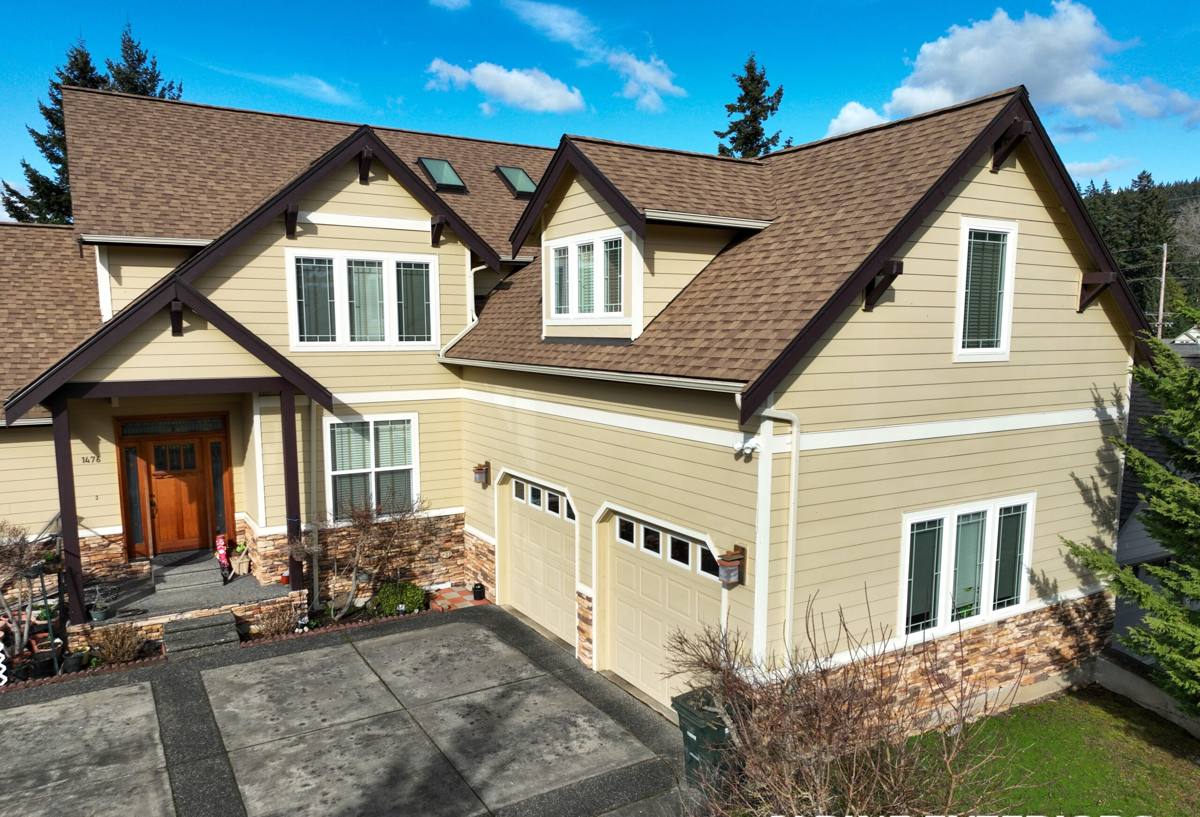
How the Local Climate Attacks a Deck
Rain That Doesn't Let Up
Bellingham's rainy season isn't defined by a few intense storms — it's defined by long stretches of steady, low-intensity rain that soaks into wood grain, seams, and end cuts. Decking that isn't sealed on all six sides, or that has open joints where water can sit, absorbs moisture slowly over weeks and months. By the time it shows on the surface, the damage underneath is often further along than it looks.
Salt Air and Fasteners
Bellingham Bay's salt air travels further inland than people expect, and hillside neighborhoods like South Hill catch it on prevailing winds. Standard zinc-coated screws and nails corrode faster here than in a dry inland climate. Once a fastener starts rusting, it swells slightly, cracks the wood fibers around it, and gives water an even easier path into the board or joist.
Moss, Shade, and Trapped Moisture
Tree-shaded decks in South Hill grow moss and algae faster than decks in open sun, and moss doesn't just look bad — it holds water against the wood surface constantly, which is exactly the condition that breeds rot. A deck that's shaded most of the day can stay damp for days after a storm that a sunnier deck would shed off in hours.
The Deck Problems We Find Most Often in South Hill
- Ledger board rot where the deck attaches to the house — often hidden behind the rim joist or siding until probed
- Joist and beam rot underneath the deck, especially near ground contact or in shaded sections
- Moss-covered decking boards that stay damp long enough to soften and rot from the top down
- Corroded fasteners, particularly on decks over 10-15 years old built before coated or stainless hardware was standard
- Railing post rot at the base connection, sometimes paired with railing spacing that no longer meets current code
- Stair stringer rot, which is a safety issue as much as a cosmetic one
What a Correct Deck Repair Actually Involves
Inspection From the Ground Up
A proper repair starts underneath the deck, not on top of it. We check the ledger connection, joists, beams, and posts for soft spots, checking, and fastener corrosion before we ever look at the decking surface. Surface damage is often the least of it — structural rot underneath is what determines whether a repair is straightforward or involves rebuilding a section of frame.
Structural Repairs Come First
Any rot in the framing — ledger, joists, beams, or posts — gets addressed before anything else. Sistering a joist, replacing a section of ledger, or resetting a post on a proper footing isn't optional if it's compromised; it's the part of the job that keeps the deck safe to stand on.
Surface and Fastener Work
Once the frame is sound, we replace damaged decking boards, re-fasten loose ones with corrosion-resistant hardware, and address any moss or algae buildup so the new work doesn't inherit the same moisture problem.
Code and Safety Details
Railing height, baluster spacing, and stair guard requirements come up often on older South Hill homes, since many decks were built before current code updates. When we're already repairing a railing or stair section, we bring it up to current safety standards rather than patching it back to its original — and sometimes non-compliant — condition.
Repair or Replace?
Not every deck needs a full rebuild, and not every problem can be fixed with a few new boards. The honest answer usually comes down to how much of the structure — not just the surface — is affected.
| Factor | Leans Toward Repair | Leans Toward Replacement |
|---|---|---|
| Framing condition | Ledger, joists, and posts are solid or have isolated rot | Rot is widespread across multiple structural members |
| Footings | Footings are sound and properly sized | Footings are undersized, frost-heaved, or missing entirely |
| Deck age | Under 15-20 years, built to a reasonable standard | Older than 20-25 years or built with outdated methods |
| Decking surface | Boards are localized damage, moss, or wear | Most boards are cupping, splitting, or soft throughout |
| Code compliance | Minor railing/stair updates needed | Structure predates current attachment or guard standards broadly |
We'll walk you through which category your deck falls into and why — not just tell you it needs to be replaced. Sometimes a repair genuinely is the right call, and we'll say so.
Our Deck Repair Process
- On-site inspection — we check the frame first, from underneath, before assessing the surface
- Written scope and estimate — what's structural, what's cosmetic, and what it costs, laid out clearly
- Structural repair — sistering, replacing, or resetting any compromised framing or footings
- Decking and fastener replacement — damaged boards swapped out, fasteners upgraded to corrosion-resistant hardware
- Moss and surface treatment — cleaning and treating affected areas so new work isn't compromised immediately
- Final walk-through — we go over what was found, what was fixed, and what to watch going forward
Decking Material Trade-Offs in a Wet Climate
When we're replacing boards on a repair, homeowners often ask whether to stick with what they have or switch materials. Each option has real trade-offs in a climate like ours — there's no single right answer, just the one that fits your maintenance appetite and budget.
| Material | Moisture Behavior | Maintenance | Typical Trade-Off |
|---|---|---|---|
| Pressure-treated lumber | Absorbs and releases moisture; prone to cupping if not sealed | Needs re-sealing every 1-3 years | Lowest upfront cost, highest upkeep |
| Cedar | Naturally rot-resistant but still absorbs water without finish | Regular sealing to hold color and resist moss | Good appearance, moderate upkeep, higher cost |
| Composite decking | Doesn't absorb water into the board itself | Occasional cleaning; no sealing required | Higher upfront cost, lowest ongoing maintenance |
We don't push one material over another. Composite reduces long-term maintenance but costs more up front and requires correct hidden-fastener installation to perform well. Wood costs less initially but only holds up if it's actually maintained — which is where a lot of moss and rot problems start in the first place.
Keeping Moss and Rot From Coming Back
Whatever repair we do, it lasts longer if a few basic habits stick after we leave.
- Sweep debris and leaf litter off the deck regularly, especially in fall — trapped organic matter holds moisture against boards
- Rinse or treat moss-prone, shaded areas before it establishes a heavy growth
- Keep gutters and downspouts clear so runoff isn't dumping directly onto or under the deck
- Check railing posts and stair connections yearly for movement or soft spots
- Re-seal wood decking on the manufacturer's recommended schedule, not just when it looks faded
Why a Crew That Already Works South Hill Matters
South Hill's terrain isn't flat, and a lot of decks up here were built to work with a slope, a retaining structure, or a walk-out basement level — which changes how the framing and footings are laid out compared to a deck on level ground. Knowing that going in means fewer surprises once we open things up, and a more accurate estimate the first time around. We're also familiar with how Bellingham and Whatcom County handle permitting for structural deck work, which keeps a repair from turning into a compliance headache later.
If your deck has soft spots, visible moss, rusted hardware, or just doesn't feel as solid as it used to, we're happy to take a look and give you a straight answer about what it needs. Reach out for a free, no-pressure estimate using the form below.