 Bellingham Exterior
 Building a Deck That Actually Holds Up on South Hill
South Hill is one of Bellingham's older, more established neighborhoods — hillside lots, mature tree canopy, and a mix of character homes that have been added onto and updated over the decades. A deck here has to do more than look good on a sunny afternoon. It has to survive a wet season that runs most of the year, resist moss and algae under tree cover, and stand up to the salt-laden air that drifts up from Bellingham Bay. We've built and repaired decks throughout this part of Whatcom County, and the failures we get called out to fix are almost always the same handful of mistakes: wrong flashing detail, undersized or corroding fasteners, and no real plan for water to get off the structure once it lands.
This page is about what a deck built specifically for South Hill's conditions actually requires — not a generic "how to build a deck" overview, but the decisions that matter for this neighborhood.
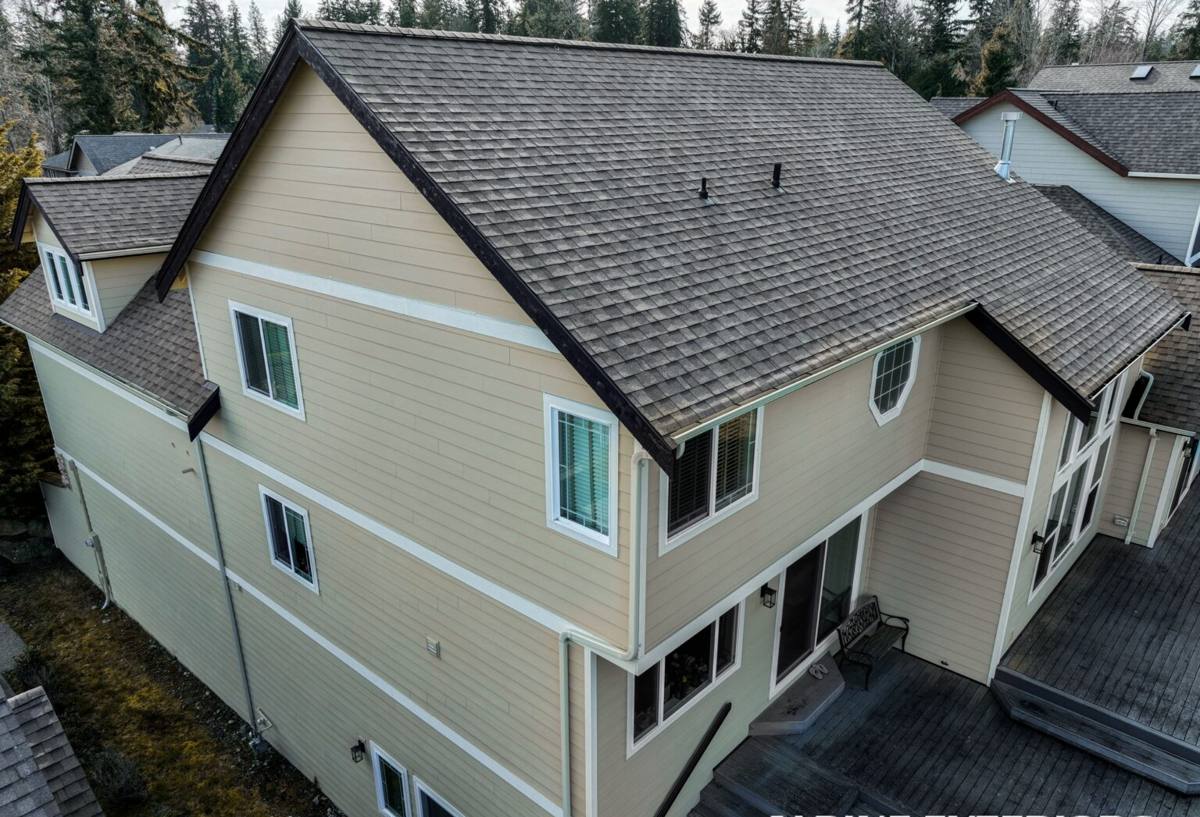
What Bellingham's Climate Does to a Deck
Three things drive almost every deck problem we see in this area:
- Driving rain. Storms here don't just fall straight down — wind-driven rain gets pushed sideways into ledger connections, stair stringers, and any horizontal surface that isn't sloped to shed water.
- Salt air. Proximity to Bellingham Bay means airborne salt accelerates corrosion on fasteners, joist hangers, and any exposed metal hardware — especially anything that isn't rated for coastal exposure.
- A long moss season. Between the tree cover common on South Hill lots and months of damp, low-light conditions, moss and algae get a foothold on decking, stair treads, and railings faster than most homeowners expect — and moss holds moisture against the surface below it, which speeds up rot in wood components.
None of these are exotic problems. They're just constant, year-round pressure — which means the difference between a deck that lasts and one that needs early repair usually comes down to details most homeowners never see once the decking boards are down.
Decking Material Options for This Climate
There's no single "correct" decking material — the right choice depends on budget, how much upkeep you want to do, and how much sun or shade the deck gets. Here's how the common options actually perform under Bellingham's wet, tree-shaded conditions:
| Material | Moisture Behavior | Moss/Algae Resistance | Maintenance |
|---|---|---|---|
| Cedar | Naturally moisture- and rot-resistant, but still wood — will absorb water at cut ends and fastener holes over time | Needs regular cleaning and sealing to resist moss in shaded spots | Annual cleaning, re-sealing every 2–3 years |
| Pressure-treated fir/hem-fir | Treated for rot resistance; still moves and checks (cracks) with wet/dry cycles | Moss takes hold quickly if not cleaned; rough surface texture holds spores | Annual cleaning, staining/sealing every 2–3 years |
| Composite decking | Doesn't absorb water into the board itself; performance depends on quality of the capstock | Smoother capped boards resist moss better than wood, but still need periodic cleaning in shaded areas | Occasional washing; no staining or sealing required |
| PVC decking | Fully synthetic, essentially impervious to moisture absorption | Best resistance to moss and algae buildup of the common options | Lowest maintenance; periodic washing only |
We'll walk through these trade-offs with you based on how much sun your specific lot gets, since a deck tucked under fir trees behaves very differently than one in an open, south-facing yard.
Framing Lumber Still Matters Even With Composite Decking
A lot of homeowners assume composite or PVC boards mean the whole deck is "maintenance-free." The structure underneath — joists, beams, posts, and ledger — is still almost always wood, and it's still exposed to the same rain and humidity as everything else. We treat the substructure with the same care regardless of what decking material sits on top, because that's where the real structural risk lives.
What a Correctly Built Deck Involves
Footings Set for Our Soil and Slope
South Hill's terrain includes real elevation changes on a lot of properties, which affects footing depth, post height, and whether a deck needs additional bracing against lateral movement. Footings need to be set below frost depth and bear on undisturbed, stable soil — not fill dirt or loose material, which is common on older, re-graded hillside lots.
Ledger Board Attachment and Flashing
The ledger board — where the deck attaches to the house — is the single most common source of deck failure we see, and it's almost always a water problem, not a structural one. Done right, this connection includes:
- Proper flashing that directs water out and away from the house band board, not behind it
- A gap or drainage plane behind the ledger so water that does get behind the flashing can escape instead of pooling against the wall
- Lag bolts or through-bolts rated for the load, not just deck screws
- Sealant used correctly — as a backup to flashing, never as a substitute for it
We've torn out more than a few decks where the ledger flashing was missing entirely, or where sealant alone was doing a job it was never designed to do. In a climate with this much driving rain, that detail decides how long the deck lasts.
Fasteners and Hardware
Given the salt air moving inland from the bay, we use fasteners and structural hardware rated for coastal or high-corrosion exposure — stainless steel or coated fasteners appropriate to the wood treatment being used, and joist hangers matched to the same standard. Mixing incompatible metals (for example, the wrong hanger with the wrong treated lumber chemical makeup) speeds up corrosion galvanically, which is a detail that gets overlooked more often than it should.
Drainage and Surface Slope
Decking should be installed with a slight slope away from the house and enough gap between boards for water to drain and air to circulate underneath. Poor airflow under a deck is one of the biggest contributors to moss and mildew on the surface above — trapped moisture underneath keeps the whole structure damp longer after every rain.
Our Process for South Hill Deck Projects
Every deck we build or replace in this neighborhood follows the same sequence, adjusted for the specific lot:
- On-site assessment of slope, soil, tree cover, and sun exposure to inform footing design and material recommendations
- Written scope covering framing, footing depth, ledger detail, fastener specification, and decking material — so there's no ambiguity about what's included
- Permit application and inspection scheduling with the local building department
- Demolition of the old structure (when replacing), including inspection of the house band board and framing for hidden rot before rebuilding
- Framing, footings, and ledger installation with flashing done correctly the first time
- Decking, railing, and stair installation
- Final walkthrough covering how to clean and maintain the specific materials used
Quick checklist for homeowners comparing bids on a South Hill deck project:
- Does the bid specify footing depth and address our local frost line?
- Does it call out ledger flashing detail specifically, or just say "attach to house"?
- Are fasteners and hardware specified by corrosion rating, not just "deck screws"?
- Is decking gap and slope for drainage addressed?
- Does the contractor pull permits in their name, or expect you to?
Permits and Local Requirements
Deck construction in Bellingham and unincorporated Whatcom County generally requires a building permit once the deck exceeds certain height or size thresholds, and inspections are typically required at the footing and framing stages before decking goes down. Requirements can vary depending on your specific parcel, whether the deck is attached to the house, and its height above grade. We handle the permit application and inspection scheduling as part of the job, so you're not the one tracking down inspectors mid-project.
Maintenance in a Moss-Prone Climate
Whatever material you choose, a South Hill deck needs a maintenance rhythm built around our wet season, not a generic national guideline. That generally means:
- Clearing leaves and debris from between boards before they trap moisture through fall and winter
- Washing the deck surface at least once a year — more often on heavily shaded decks — to keep moss and algae from getting established
- Checking railing posts and stair connections annually for movement, since these take the most stress and are often the first place hardware corrosion shows up
- Re-sealing or re-staining wood decking on the schedule appropriate to the product, since UV and moisture exposure here isn't gentle even under tree cover
We're glad to walk through a maintenance plan specific to whatever material ends up on your deck, since cedar, treated lumber, composite, and PVC each ask for something a little different.
Why Hire a Crew That Already Works This Neighborhood
South Hill's older housing stock, hillside lots, and tree cover create conditions a generic deck crew doesn't always plan for on day one. Knowing which lots hold water, which soil conditions need deeper or reinforced footings, and how much shade a given yard actually gets through the season changes how we spec a deck before we ever cut a board. That familiarity is also why our ledger, flashing, and fastener details don't get treated as optional upgrades — they're just how we build here, because we've seen what happens when they're skipped.
If you're planning a new deck or need to replace one that's showing its age, we're happy to take a look and put together a straightforward, no-pressure estimate — just fill out the form below.