 Bellingham Exterior
 Windows Built for the Puget Micro-Climate
Homes in the Puget area sit close enough to the water and tree cover that they take on a specific mix of weather stress most inland Whatcom County homes don't see in the same combination: salt-laden air off the water, wind-driven rain that hits window assemblies at an angle instead of straight down, and a long, damp moss season that keeps exterior surfaces wet for months at a stretch. Windows are one of the first things to show the wear from that combination, and one of the most expensive things to get wrong.
When we talk about "custom windows" for a Puget property, we mean windows sized, flashed, and specified for that specific house — not a stock size forced into an opening, and not a one-size-fits-all install method borrowed from a drier climate. The goal is a window that keeps performing after five winters of Pacific storms, not just one that looks good on install day.
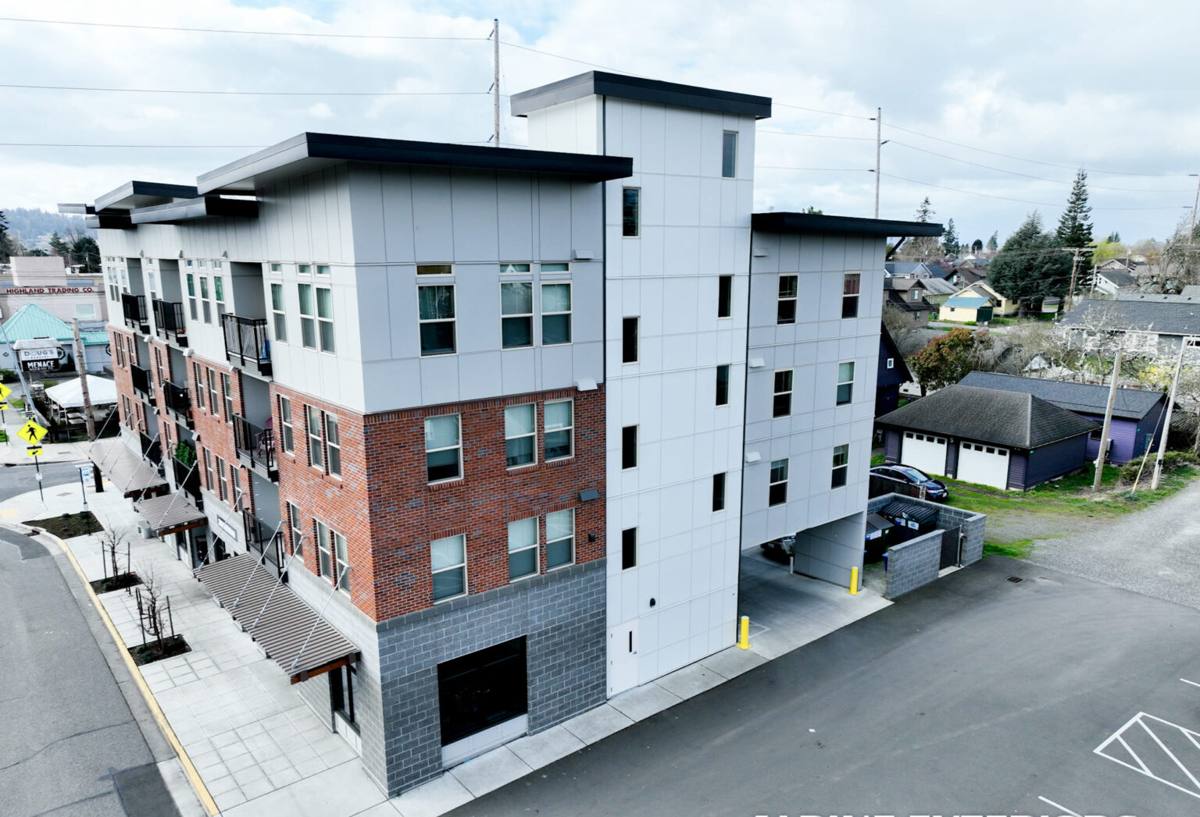
What Bellingham's Climate Actually Does to Windows
It helps to understand the failure modes before talking about the fix. In this part of Whatcom County, window problems rarely show up as sudden breakage — they show up slowly, as moisture finds its way in.
Salt Air and Hardware Corrosion
Proximity to Puget Sound means airborne salt settles on exterior surfaces, including window hardware, cladding, and fasteners. Over time this accelerates corrosion on lower-grade hardware, pits aluminum finishes, and can degrade seals faster than the manufacturer's inland warranty testing accounts for. This is why hardware and cladding material selection matters more here than it would forty miles inland.
Driving Rain and Flashing Failure
Wind off the water doesn't let rain fall straight — it pushes it sideways into wall assemblies and window openings. A window that would stay dry under vertical rainfall can still leak under driving rain if the flashing, sill pan, and weather-resistive barrier integration weren't detailed correctly at install. Most of the water damage we find behind old windows in this area traces back to flashing details, not the window unit itself.
Moss, Algae, and Prolonged Moisture
Bellingham's long wet season keeps north-facing and shaded elevations damp for extended stretches. That moisture supports moss and algae growth on sills, trim, and cladding, which holds even more moisture against the window frame. Wood trim in constant contact with that dampness rots from the inside out long before it looks bad from the street.
What a Correct Custom Window Install Involves Here
"Custom" starts with accurate measurement and extends through every layer of the install — the window unit is actually the easy part.
- Accurate opening measurement: older Puget-area homes often have openings that have shifted slightly with age or settling; we measure each opening individually rather than assuming uniformity across a house.
- Sill pan flashing: a sloped, sealed pan under the window directs any water that gets past the frame back outside instead of into the wall cavity.
- Weather-resistive barrier integration: the window's flashing has to shingle correctly with the house wrap or building paper above and below it, so water sheds down and out, not behind the barrier.
- Sealant selection: not all exterior sealants hold up the same way under constant damp-and-dry cycling; we use products rated for exterior, marine-influenced climates.
- Hardware and cladding grade: matched to salt-air exposure, especially on elevations facing open water or prevailing wind.
- Interior finish tie-in: trim and sealant on the interior side to prevent condensation from tracking into wall cavities.
Choosing Window Materials for a Puget Property
There's no single "best" window material for every house — the right choice depends on the home's exposure, existing trim style, and how much upkeep the owner wants to take on. Here's how the common options actually perform in this specific climate, based on what we see in the field.
| Material | Salt Air / Coastal Performance | Maintenance | Notes |
|---|---|---|---|
| Vinyl | Good — doesn't corrode | Low | Reliable value option; quality varies significantly by manufacturer grade |
| Fiberglass | Very good — dimensionally stable, resists corrosion | Low | Handles temperature and moisture cycling well; higher upfront cost |
| Aluminum-clad wood | Good exterior protection if hardware is marine-rated | Moderate | Attractive option for traditional trim styles; cladding quality matters near the water |
| Bare wood | Poor without diligent upkeep | High | Requires regular repainting/sealing to survive this moisture load; we're honest with clients about the ongoing commitment |
We don't push wood-frame windows on exposed Puget elevations as a default recommendation — not because wood windows are a bad product, but because the maintenance burden in a climate this wet is real, and we'd rather set that expectation up front than have a client surprised by peeling paint and soft trim a few years in.
Our Process for a Puget-Area Window Project
1. On-Site Assessment
We walk the exterior and look at each window's exposure — which elevations take the most wind-driven rain, which stay shaded and damp longest, and where existing moss or trim damage is already telling us something. We also check current flashing and trim condition where windows are being replaced, since that often changes the scope.
2. Measurement and Specification
Every opening is measured individually. We spec material, glazing, and hardware based on that window's specific exposure rather than a blanket choice for the whole house.
3. Written Estimate
You get a clear breakdown of unit cost, flashing and install labor, and any trim or siding repair the opening needs before the new window goes in. No surprise change orders for problems we could have found at assessment.
4. Removal and Opening Prep
Old windows come out carefully so we can inspect the rough opening, sill, and surrounding sheathing for hidden water damage — a common find on older Puget-area homes with years of marginal flashing.
5. Install
Sill pan, flashing integration, window setting, shimming for square and plumb, insulation, and sealant — done in that order, every time, regardless of how straightforward the job looks.
6. Final Check
We check operation, weatherstripping contact, and exterior sealant lines before calling the job done.
Common Trouble Signs on Puget Homes
If you're not sure whether your windows need attention, these are the signs we hear about most from homeowners in this area:
- Fogging or condensation between panes on double- or triple-glazed units (a sign the seal has failed)
- Soft, discolored, or crumbling trim around the frame
- Visible moss or persistent green staining on sills or lower trim
- Drafts or a noticeable temperature difference near the window in winter
- Difficulty opening, closing, or locking — often from swelling, corrosion, or a frame that's racked slightly out of square
- Paint that keeps failing in the same spot no matter how often it's touched up
Any one of these on its own isn't necessarily an emergency, but a few together usually means water is getting past the window assembly, and that's worth having looked at before it reaches the framing.
Repair, Restoration, or Replacement — Making the Right Call
Not every window issue means full replacement. Sometimes a failed seal, worn weatherstripping, or a re-caulk of deteriorated exterior sealant solves the problem for a fraction of the cost. Other times, especially when trim or sheathing behind the window has taken on water damage, replacement is the more honest recommendation because a repair would just mask a bigger issue. We'll tell you which situation you're in rather than defaulting to the more expensive option — a straight answer is worth more to a long-term client than a bigger invoice.
Why Local Experience on Puget Homes Matters
A crew that mostly installs windows in drier inland climates can still do competent work, but they're often applying assumptions — about flashing detail, sealant choice, or how much margin to build in for wind-driven rain — that don't hold up on a home exposed to Puget's weather. We work Whatcom County properties regularly enough to know which elevations and window types tend to show problems first, and we build the install accordingly instead of treating every job the same way.
That local pattern-recognition is also what makes a maintenance conversation useful. We can tell you, based on your home's exposure, roughly how often to expect to check seals and trim, rather than giving you a generic manufacturer maintenance schedule that assumes a milder climate.
Get a Free, No-Pressure Estimate
If you're dealing with drafty, fogged, or hard-to-operate windows on your Puget-area home, or you're planning ahead for a replacement, we're happy to take a look and give you an honest read on repair versus replacement. Fill out the form below for a free estimate — no pressure, no obligation.