 Bellingham Exterior
 Why Happy Valley Homes Need Windows Built for This Climate
Happy Valley is a settled residential neighborhood, and like most of Bellingham it's a mix of older homes with original single-pane or early-generation dual-pane windows and newer construction that's starting to show its age. Whatcom County's weather doesn't ease up on a window's weak points the way a drier climate would. Windows here are asked to hold a seal against wind-driven rain for months at a stretch, resist the slow corrosion that comes with living near Bellingham Bay, and shed moisture fast enough that moss and algae don't get a foothold on sills and frames. A window that was built for a general national market, or installed without much thought to how water actually moves across a wall in this region, tends to fail here years before it would somewhere drier.
Custom windows done right for Happy Valley means matching the frame material, the flashing detail, and the glass package to what this specific climate throws at a house — not just picking a window out of a catalog because it fits the opening.
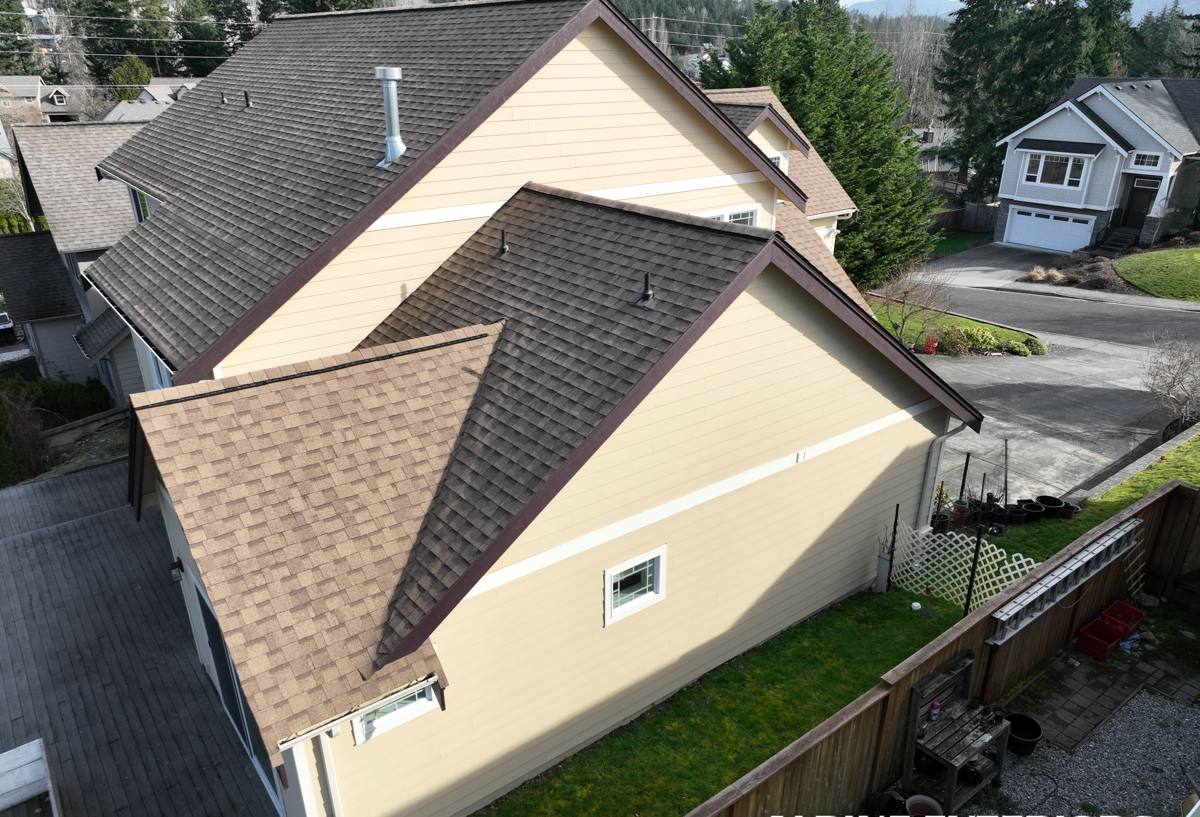
What Salt Air, Driving Rain, and Moss Season Do to Windows
Salt Air and Corrosion
Bellingham sits close enough to the bay that salt-laden air reaches most neighborhoods, Happy Valley included, especially during winter storms when wind carries moisture inland. Over time that air attacks unprotected metal — hardware, hinges, aluminum frames, and fasteners — causing pitting, corrosion, and stiff or failing operation long before the glass itself is a problem. Cheaper hardware and unfinished aluminum components are the first things to give out.
Driving Rain and Water Intrusion
Rain in this part of Washington rarely falls straight down. Storms off the Pacific push it sideways against the west and south faces of a house, which is exactly where wind-driven rain finds any gap in flashing, caulking, or a window's own weep system. A window that's watertight in a still rain can still leak in a driving one if the installation detail around it wasn't built for that condition. Most of the water damage we find behind old window trim in this area didn't come from a bad window — it came from a window installed without the flashing and sealing sequence that driving rain actually requires.
Moss and Prolonged Moisture
Whatcom County's wet season can run eight months or more, and that means long stretches where sills, tracks, and the wood or trim around a window simply never fully dry out. Moss and algae take hold in that kind of standing dampness, and once established they hold even more moisture against the frame and finish. On older wood windows this accelerates rot at the sill and lower corners — the two spots that take the most standing water and the least sun.
Signs Your Current Windows Are Losing the Battle
Most window failure in this climate is gradual, and homeowners often chalk up the early symptoms to normal aging rather than a moisture problem in progress. Worth checking for:
- Soft or discolored wood at the sill, especially the bottom corners
- Moss, algae, or green staining building up on sills, tracks, or exterior trim
- Fogging or a visible haze between panes, which means the seal has failed and the argon or air gap is compromised
- Windows that are hard to open, stick in the track, or won't latch fully — often a sign of frame swelling or hardware corrosion
- Drafts or a cold spot near the window even when it's fully closed
- Paint or finish peeling or bubbling on interior trim near the window, which usually means moisture is getting in behind it
- Visible gaps or cracked caulking where the window meets the siding
Any one of these on its own might just mean the window needs maintenance. Two or three together, especially on the same window, usually means water has been getting past the seal for a while.
Choosing Window Materials for Whatcom County Weather
There's no single "best" window material — the right choice depends on the house, the exposure, and how much upkeep you want to take on. Here's how the common options hold up under our conditions specifically:
| Material | How it handles salt air and rain | Maintenance | Notes for this climate |
|---|---|---|---|
| Vinyl | Won't corrode or rot; handles moisture well | Low — occasional cleaning | Good value; quality varies a lot between grades, so frame stiffness and weld quality matter |
| Fiberglass | Very stable, resists swelling and corrosion, holds paint well | Low | Handles our wet-dry cycling with minimal expansion; a strong fit for exposed walls |
| Wood | Needs a sound finish to keep moisture out; vulnerable at end grain and sills | High — refinishing on a cycle | Can work well with proper detailing and upkeep, but it's the least forgiving of neglect here |
| Wood-clad (wood interior, clad exterior) | Exterior clad layer sheds water and salt air well; interior keeps a wood look | Moderate | Good middle ground where appearance matters on the interior side |
| Aluminum | Prone to corrosion and thermal transfer unless well-finished | Moderate to high | We use it selectively; not usually our first recommendation for full sun/rain exposure walls |
Glass package matters as much as frame material. In this climate we generally recommend dual-pane, low-E glass with argon fill and a warm-edge spacer — the spacer is where a lot of budget windows cut corners, and it's often the first thing to fail under our constant temperature and moisture swings.
What a Correct Custom Window Installation Actually Involves
Opening Prep and Inspection
Before any new window goes in, we open the wall enough to actually see the condition of the framing, sheathing, and existing flashing. In a climate this wet, skipping this step is how hidden rot gets sealed back up behind a brand-new window.
Flashing and Weather Barrier Integration
The flashing has to tie into the house's weather-resistive barrier in the right sequence — building paper or house wrap lapped over the top flange, sill pan flashing that sheds water back out rather than trapping it, and side flashing that directs anything that gets past the window down and out, not into the wall cavity. This sequencing is the single biggest factor in whether a window stays dry through a driving rain.
Sealing and Insulating
Low-expansion foam or backer rod and sealant around the frame — not just caulk on the outside — cuts down on air leaks and condensation risk. Exterior sealant has to be a product rated for our wet, temperature-swinging conditions, applied to a clean, dry surface, which sometimes means scheduling around the weather rather than around convenience.
Trim and Finish
Exterior trim gets back-primed or back-sealed on all sides, including cut ends, since end grain is where wood trim absorbs the most water. Interior trim and sill work get finished last, once we've confirmed the window is sealed and dry.
Our Process, Start to Finish
- Site visit and assessment — we look at each window's exposure (which walls take the most wind-driven rain and sun), current condition, and any signs of hidden moisture damage.
- Material and glass recommendation — matched to that specific wall's exposure and your budget, not a one-size answer for the whole house.
- Written estimate — clear scope, materials, and timeline, so there are no surprises once work starts.
- Scheduling around the weather — sealants and finishes need dry conditions to cure properly, so we plan install windows accordingly rather than rushing a wet-day install.
- Removal, inspection, and any needed repair — if we find rot or damage behind an old window, we address it before the new one goes in, and we'll show you what we found.
- Installation — flashing, sealing, insulating, and setting the window to manufacturer spec.
- Trim, finish, and cleanup — interior and exterior finish work, and job site cleaned up before we call it done.
- Final walkthrough — we operate every window with you and confirm everything latches, seals, and looks right before we consider the job finished.
What Affects the Cost of a Custom Window Project
Every house and every opening is different, so we don't quote sight unseen — but these are the main variables that move a project's cost up or down:
| Factor | Why it matters |
|---|---|
| Window size and configuration | Custom shapes, large picture windows, or multi-unit combinations cost more than standard single units |
| Frame material | Vinyl generally costs less upfront than fiberglass or wood-clad; wood tends to be the highest ongoing cost due to maintenance |
| Glass package | Upgraded low-E coatings, tempered glass where code requires it, or triple-pane options add cost but also performance |
| Condition behind the existing window | Hidden rot or framing damage found during removal adds repair scope beyond the original estimate |
| Number of openings and access | Multiple windows on one visit are more efficient per-unit than single, spread-out jobs; second-story or hard-to-access openings take more time |
| Trim and finish scope | Matching existing trim profiles or upgrading trim material adds labor and material cost |
Why a Crew That Already Works in Happy Valley Matters
A contractor who's worked this neighborhood and this part of Bellingham already knows which walls tend to take the worst of the driving rain, how the older housing stock in this area was typically built and flashed, and what moss and moisture damage actually looks like once you open a wall up. That's not something you can fully substitute with a general checklist — it comes from having done the work here repeatedly and seen what holds up and what doesn't. It also means realistic scheduling around our wet season instead of promising an install date that a dry-climate crew might not think twice about.
Just as important is honesty about trade-offs. We won't push a product because it has the best margin or the flashiest marketing — we'll tell you plainly if a material or install detail isn't a good fit for a given wall's exposure, even if that means recommending something less expensive.
Living With Your New Windows Through a Long Wet Season
New windows still need a little seasonal attention in this climate to get their full lifespan:
- Clear moss or debris from sills and tracks a couple of times during the wet season so water doesn't sit
- Check that weep holes on the exterior sill stay clear so water can drain out as designed
- Wipe down hardware occasionally, especially on windows facing prevailing storm winds, to keep salt residue from building up
- Re-check exterior caulking annually — sealants have a service life and are cheap to renew compared to the water damage a failed bead can cause
- Keep an eye on any wood trim or sills for early soft spots, and address them before the next wet season rather than after
If you're noticing drafts, fogged glass, sticking sashes, or moisture damage around your windows in Happy Valley, we're happy to take a look and give you a straightforward assessment of what's actually going on — no pressure, no upsell. Reach out for a free estimate using the form below.