 Bellingham Exterior
 Building a Deck That Actually Belongs in Edgemoor
Edgemoor sits close enough to Bellingham Bay that salt-laden air, near-constant winter rain, and shade from mature tree canopy shape almost every outdoor structure in the neighborhood. A deck built here needs to handle conditions that a deck in a drier inland part of Whatcom County simply doesn't face. We've built and repaired decks throughout this part of Bellingham long enough to know which shortcuts fail first, and which details are worth the extra time and material cost. This page walks through what a correctly built deck looks like for an Edgemoor property specifically — not a generic new-deck checklist, but the decisions that matter for this exact stretch of coastline.
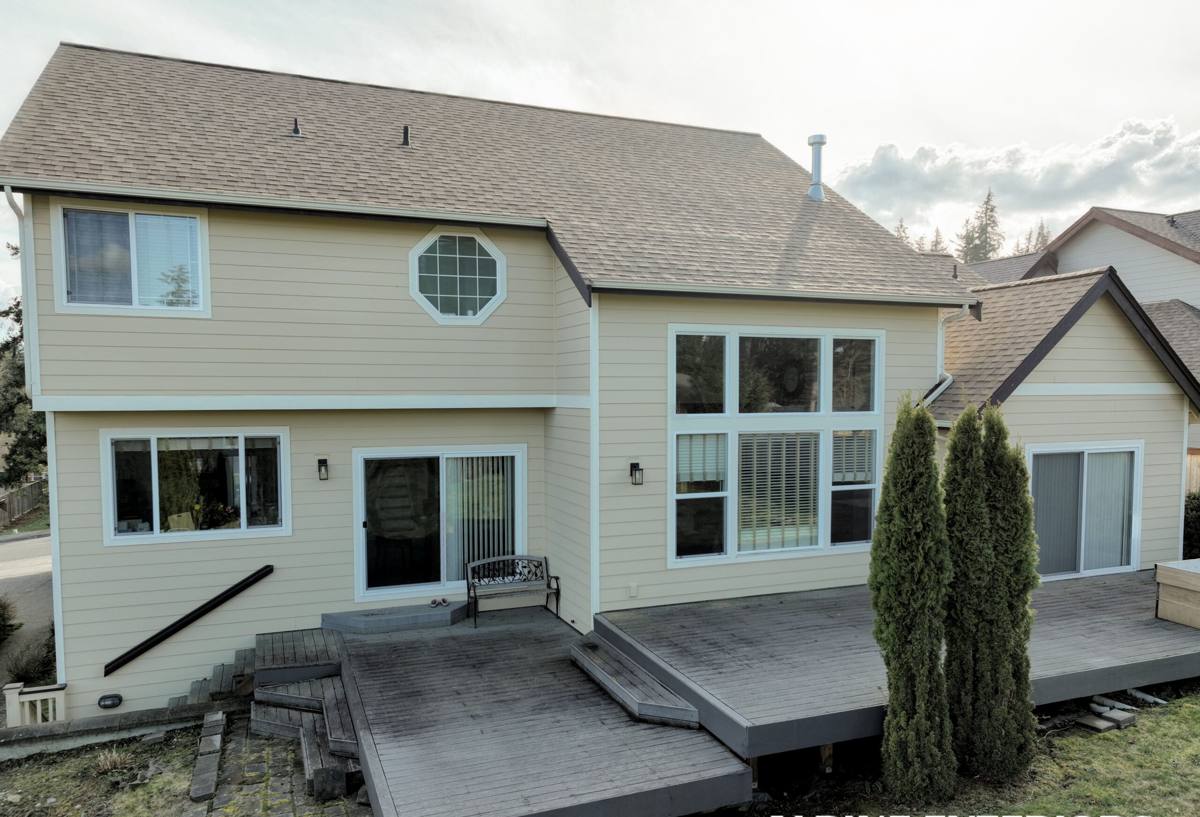
What the Local Climate Does to a Deck
Three environmental factors do most of the damage to decks in this part of Bellingham, and they compound each other.
Salt Air
Proximity to the bay means airborne salt settles on every exposed surface, including fasteners, flashing, and railing hardware. Salt accelerates corrosion in standard fasteners and can pit lower-grade metal railings and post bases over a matter of years rather than decades. It also interacts with certain wood preservatives and finishes, sometimes causing them to break down faster than the manufacturer's stated service life would suggest.
Driving Rain
Storms coming off the water tend to drive rain sideways, not just straight down. That means water gets forced up under railing caps, into end-grain cuts, and behind ledger boards in ways that vertical-rain assumptions in generic building guides don't account for. Any gap, seam, or fastener penetration that isn't properly flashed or sealed becomes a water entry point.
Moss and Shade
Edgemoor's tree cover is a big part of the neighborhood's character, but it also means many decks sit in partial shade for large stretches of the year. Shaded, damp wood surfaces are exactly what moss and algae need to take hold. Beyond being a slip hazard, moss holds moisture against the decking surface long after the surrounding air has dried out, which is one of the more common causes of premature rot we see on older Bellingham decks.
Choosing Decking Material for This Environment
There's no single "best" decking material — the right choice depends on how much maintenance a homeowner actually wants to do, budget, and how much shade and salt exposure the specific site gets. Here's how the common options stack up for an Edgemoor property.
| Material | Moisture & Moss Behavior | Maintenance | Typical Lifespan Here |
|---|---|---|---|
| Pressure-treated wood | Absorbs moisture readily; needs consistent sealing to resist moss and rot | Annual cleaning and re-sealing recommended | 10–15 years with upkeep |
| Cedar | Naturally rot-resistant but still needs finish maintenance in a wet, shaded yard | Cleaning and oil/stain every 1–2 years | 15–20 years with upkeep |
| Composite decking | Doesn't absorb water, but surface film can still support moss/algae growth in deep shade | Periodic washing, no sealing or staining | 25–30 years |
| PVC/capped polymer | Fully moisture-resistant surface; best resistance to moss staining | Occasional washing | 25–30+ years |
We don't push one product line over another as a blanket rule — we size the recommendation to the site. A sunnier, more open lot can do well with a quality wood deck properly maintained. A heavily shaded, tree-covered lot closer to the water is usually better served by composite or capped polymer decking, simply because it removes moss and rot from the list of things a homeowner has to stay on top of every year.
Fasteners and Hardware
Whatever decking material is chosen, the hardware underneath it matters just as much. In a salt-air environment we standardize on stainless steel or heavy hot-dip galvanized fasteners and structural connectors rather than the lighter coated fasteners that are adequate further inland. It costs more up front and is one of the least visible parts of the job, but it's also one of the most common failure points we find when we're called out to look at an older deck that's starting to sag or show rust streaks.
What a Correctly Built Deck Requires Here
A deck is only as good as the parts nobody sees once it's finished. For this climate, a handful of construction details are non-negotiable.
Ledger Attachment and Flashing
Where the deck attaches to the house is the single most common source of hidden rot on older decks in wet coastal climates. Correct ledger flashing directs water away from the house's wall assembly rather than letting it wick behind the ledger board. This is a detail that's easy to do wrong and expensive to fix later, since damage often isn't visible until the siding or sheathing behind it has already been compromised.
Footings and Frost Considerations
Whatcom County's frost depth requirements mean footings need to be set deep enough to stay stable through winter freeze-thaw cycles, not just deep enough to hold the deck's weight in dry conditions. On sloped or bluff-adjacent lots, which are common in this part of Bellingham, footing placement also has to account for drainage patterns so runoff doesn't undermine the footing over time.
Joist Protection and Airflow
Joist tape or a comparable moisture barrier on top of the joists, combined with proper spacing for airflow underneath the decking boards, keeps framing lumber from sitting in standing moisture. In a shaded, damp yard this detail has an outsized effect on how long the structure underneath the decking actually lasts, even if the decking surface itself is a low-maintenance product.
Railing and Guard Hardware
Railings take the most direct hit from driving rain and salt spray since they're fully exposed and vertical. We use hardware rated for coastal exposure and detail cap rails so water sheds off rather than pooling on top of end grain or fastener heads.
Design Considerations for Edgemoor Properties
Many Edgemoor lots slope toward the water or sit among mature trees, which changes some of the standard deck-design assumptions.
- Sloped and bluff-adjacent lots often need engineered footing or post support rather than a standard deck-block approach, and may require additional permitting review depending on proximity to the slope.
- Tree-canopy shade affects material choice, board spacing for drainage, and how often a homeowner will realistically need to clean the surface.
- Wind exposure off the bay factors into railing and guard design, especially for elevated decks.
- Privacy and screening matter more on lots with closer neighbors, which can shape railing style or partial privacy panel placement.
- Water views, where a lot has them, often push the design toward open cable or glass-panel railing rather than solid balusters, which changes the hardware and structural bracing requirements.
How Our Process Works
The process is the same regardless of size, but each step is done with Edgemoor's specific conditions in mind.
- Site visit and assessment — we look at slope, shade exposure, existing structure (if replacing a deck), and how close the site is to salt spray and prevailing wind.
- Material and design conversation — an honest walkthrough of wood versus composite versus capped polymer trade-offs for that specific lot, plus railing and layout options.
- Permitting — City of Bellingham or Whatcom County permitting as applicable, including any additional review needed for sloped or bluff-adjacent lots.
- Demolition (if replacing an existing deck) — including a check of the ledger and any framing behind it for hidden moisture damage before new construction begins.
- Framing and flashing — footings, ledger flashing, joist protection, and structural connections built to coastal-exposure standards, not just code minimums.
- Decking, railing, and hardware installation — with fastener and hardware grade matched to the site's salt exposure.
- Final walkthrough — including a maintenance plan specific to the material chosen and the site's shade and moisture conditions.
Keeping a Deck Sound Through Bellingham Winters
Whatever material is chosen, a little seasonal attention goes a long way in this climate.
| Season | What to Check or Do |
|---|---|
| Spring | Wash off winter moss and debris; inspect railing hardware for rust or corrosion |
| Summer | Reseal or oil wood decking if due; check gaps between boards are still clear for drainage |
| Fall | Clear fallen leaves promptly so they don't trap moisture against the decking surface |
| Winter | Keep surfaces clear of standing water and check for ice buildup on stairs and railings |
Composite and capped polymer decks cut this list down significantly — mostly a wash in spring and keeping leaves off in fall — while wood decks need the fuller routine to get a full service life out of the material.
Why Local Experience Matters for This Job
A deck built to a generic regional spec sheet, without accounting for salt exposure, driving rain direction, and shade-driven moss growth, tends to show problems within the first five to ten years — usually starting with corroding hardware or moss buildup in board gaps that were cut too tight. We've done enough deck work in and around Edgemoor and the rest of Bellingham to know which fastener grades hold up, which ledger details actually keep water out, and how much shade a given lot really gets through the year. That local pattern recognition is the difference between a deck that needs real attention every year and one that mostly takes care of itself.
If you're planning a new deck or replacing one that's showing its age, we're happy to come take a look and talk through honest options for your specific lot — no pressure, no obligation. Reach out using the form below to set up a free estimate.