 Bellingham Exterior
 Building a Deck for Cordata's Actual Weather
Cordata sits in one of the wetter, more marine-influenced corners of Whatcom County, and that shows up in how decks age here. Salt-laden air moving in off the water corrodes hardware faster than a generic manufacturer's rating assumes. Driving, wind-pushed rain gets up under railings and behind ledger boards instead of simply falling straight down and running off. And the long gray stretch from fall through late spring gives moss and algae months to colonize any horizontal surface that doesn't get a real chance to dry out between storms. None of this makes building a deck in Cordata harder than in drier parts of the country — it just means the details matter more, and a deck built to a generic national spec will show its age within a few winters instead of a couple of decades.
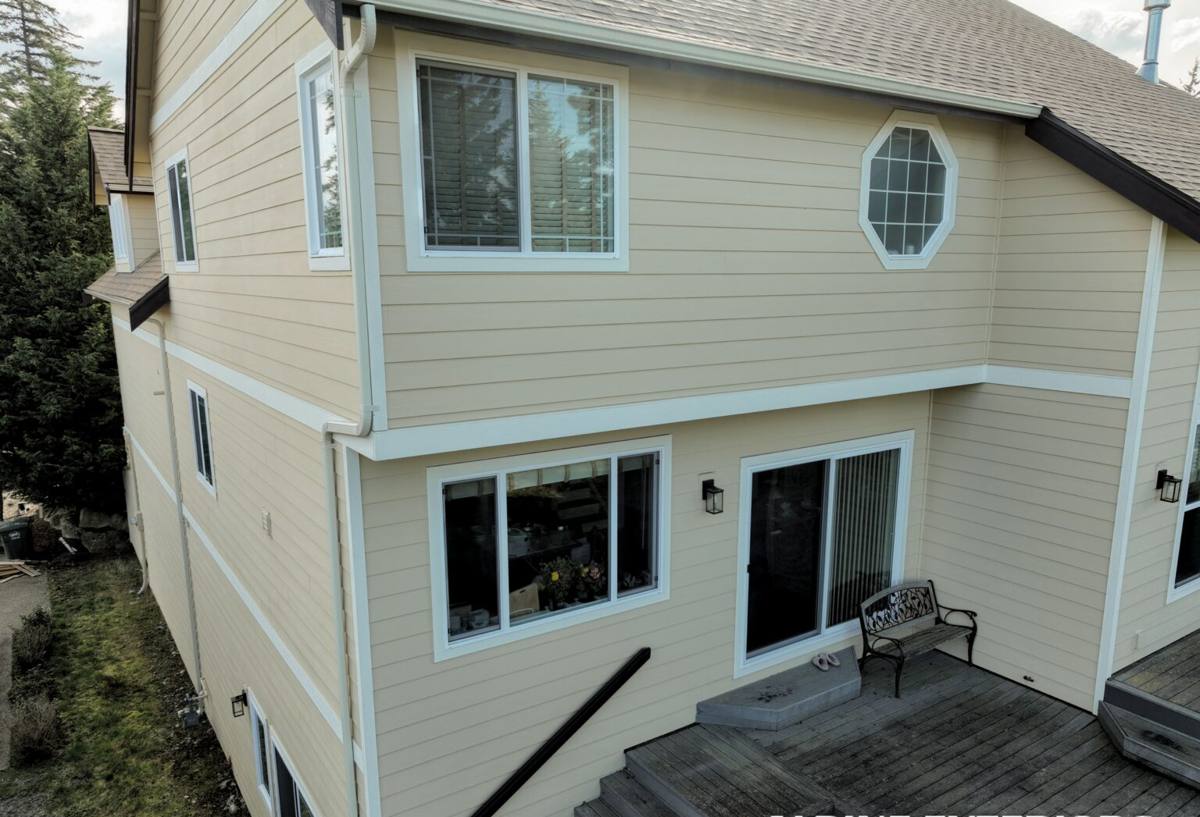
What Makes a Cordata Deck Project Different
A Neighborhood Built on Whatcom County Clay
Much of Cordata was developed and graded within the last few decades, which means most lots already have established drainage patterns, downspout routing, and grading from the original build-out. That's generally good news for a new deck project, but it also means we're working around existing conditions rather than starting from raw ground. Whatcom County's native soils lean heavy on clay in a lot of areas, and clay drains far more slowly than sandy or gravelly soil. That slow drainage means moisture sits around post footings longer after a storm, so footing depth and drainage gravel matter more here than a generic plan set would assume.
Sun, Shade, and Drying Time
Two decks the same size, built the same week, can age completely differently depending on how much afternoon sun they get and how close the tree line sits. A shaded, tucked-in deck on the north or east side of a Cordata home may never fully dry out between rain events for weeks at a stretch in winter — that's exactly the condition moss and mildew need to establish. We factor sun exposure and airflow into the framing design and the material recommendation, not just the finished look, because a deck's orientation on the lot has as much to do with how it ages as the materials do.
Choosing a Decking Material That Fits This Climate
There's no single "best" decking material — there's the material that fits your budget, your appetite for maintenance, and how much sun and moisture your specific site actually sees. Here's how the common options really perform in a Whatcom County climate over time, not just on a spec sheet:
| Material | Moisture Behavior | Maintenance | Typical Lifespan Here |
|---|---|---|---|
| Pressure-treated fir/hem-fir | Absorbs and releases moisture; prone to cupping and checking if left unsealed | Re-seal or stain every 1-2 years | 10-15 years |
| Cedar | Naturally rot-resistant heartwood, but still needs a sealed surface to shed rain and resist moss growth | Annual cleaning, periodic re-oil or reseal | 15-20 years |
| Capped composite | Won't absorb water or rot; the capped surface sheds moss and mildew more easily than open wood grain | Periodic washing; no sealing or staining | 25-30+ years |
| PVC | Fully closed-cell material, essentially immune to rot and moisture absorption | Occasional washing | 25-30+ years |
We install all of the above, and each one has a place depending on your budget and how much upkeep you want to take on. Where we push back is on uncapped composite specifically in this climate — the exposed wood-fiber core can wick moisture at cut ends, screw holes, and board edges, which shows up as swelling and dark staining well before a capped or PVC board shows any comparable wear. That's a maintenance and warranty conversation we'd rather have honestly with you up front than let you find out the hard way three winters in.
What a Correctly Built Deck Involves Below the Surface
Footings and Framing Sized for This Ground
Post footings need to reach below frost depth and bear on undisturbed soil, with enough drainage rock underneath that water doesn't sit against the concrete after every storm. In the clay-heavy yards common to this area, we oversize the footing and add drainage gravel rather than pouring straight into native clay — skipping that step is one of the most common reasons we see older decks develop a lean, a soft spot, or a post that's slowly heaving out of level within a decade.
Ledger Flashing — the Failure Point We Take Most Seriously
Almost every rotted deck frame we've torn out failed at the same spot first: where the ledger board bolts to the house rim joist. If that connection isn't properly flashed with a water-resistant membrane and metal flashing that directs water out and away from the house, driving wind-blown rain and splash-back will eventually find their way behind it. Given how much wind-driven rain this part of Whatcom County gets through the fall and winter, we treat ledger flashing as a non-negotiable structural detail, not an optional upgrade.
Fasteners and Hardware for Salt-Influenced Air
Standard zinc-coated fasteners corrode faster near salt-influenced coastal air than their spec sheets suggest, especially in direct contact with the copper-based preservatives in pressure-treated lumber. We use stainless steel or heavy hot-dip galvanized fasteners and structural connectors rated for that chemical contact, so the hardware holding the deck together isn't the first thing to fail years before the decking itself needs attention.
Designing Against Moss, Mildew, and Standing Water
You can't stop moss spores from landing on a deck anywhere in this part of Washington — you can only control how long the surface stays wet enough for them to take hold and spread. A handful of design choices make a real, lasting difference over the life of the deck:
- Board gapping sized correctly so water drains through rather than pooling on the surface
- Joist framing pitched slightly away from the house so water sheets off instead of collecting near the ledger
- Under-deck ventilation so airflow can actually dry the framing out between storms
- Keeping the deck surface clear of tight overhead tree canopy where the layout allows it
- A washable, properly sealed finish rather than a porous surface that holds moss spores and organic debris
- Gutter and downspout routing that keeps roof runoff off the deck surface entirely
None of these are exotic fixes — they're details that get skipped when a deck is built fast and cheap, and they're exactly the details that show up two winters later as green, slick boards and a slippery surface every homeowner ends up complaining about.
Permits, Railings, and Code Basics
Most decks attached to a house and elevated above a certain height require a building permit in Bellingham and unincorporated Whatcom County, along with guardrails and baluster spacing that meet residential code once the deck surface sits far enough off the ground. Exact height thresholds and any local amendments can shift over time, so we confirm the current requirements for your specific address before finalizing a design rather than working from memory or a generic checklist. If your property falls within a homeowners association, we'll also factor in whatever design review or material guidelines that association requires before we finalize plans.
Skipping the permit step might feel like a shortcut, but it creates real problems down the road — an unpermitted structural addition can complicate a home sale, an insurance claim, or a future remodel. We handle the permit application and coordinate inspections as a standard part of the project rather than leaving that step for you to navigate on your own.
Our Process for a Cordata Deck Project
- Site visit and assessment — we walk the property and look at grade, drainage, sun exposure, and how the new deck will tie into the house before we recommend anything.
- Design and material selection — we go through the material trade-offs above against your budget and appetite for upkeep, and design footing depth and flashing details around your actual site conditions, not a generic template.
- Permitting — we handle the application and coordinate inspections so nothing gets built that has to be opened back up later.
- Construction — framing, footings, and flashing come first, since that's the work nobody sees but everything else depends on; decking, railing, and finish work follow once the structure underneath is right.
- Walkthrough — before we leave, we go over the specific maintenance your chosen material actually needs, so you know what upkeep looks like for your deck, not the generic version.
Why Hire a Crew That Already Works in Cordata
A contractor who has already built decks in this neighborhood isn't guessing at footing depth, flashing details, or drainage behavior for the first time on your project. They already know the soil tends toward clay, know what a typical lot's grading and downspout layout looks like, and have seen how the local rain and moss pattern plays out on a deck a few years after it's built. That familiarity translates directly into fewer surprises mid-project and a deck genuinely designed for the conditions it will sit in for the next twenty-plus years, rather than a spec pulled off a national plan set and hoped to hold up.
Cost Factors for a Custom Deck in Cordata
Every custom deck is priced around the same handful of variables, and honest ranges depend entirely on how these line up for your specific project:
| Factor | Why It Matters |
|---|---|
| Size and shape | Square footage and multi-level or non-rectangular designs both add material and labor |
| Decking material | Pressure-treated wood costs the least upfront; composite and PVC cost more but need far less long-term upkeep |
| Height and stairs | Taller decks need deeper footings, more framing, and code-compliant stairs and guardrails |
| Railing style | Basic wood or metal baluster railing costs less than glass panel or cable railing systems |
| Site access | Difficult equipment access or a tight, sloped yard can add labor time to the project |
| Permit and engineering | Larger or unusual designs may need engineered drawings in addition to the standard building permit |
We'd rather walk your specific property and give you real numbers based on your yard, your material choice, and your design than post a broad range that doesn't actually match your situation.
Before you settle on any of this, it helps to have someone walk the actual site with you. If you're considering a new custom deck for a Cordata home, we're glad to take a look at the property, talk through material and design options honestly, and put together a free, no-pressure estimate — just fill out the form below to get started.