 Bellingham Exterior
 Cordata's Climate Is Harder on Siding Than It Looks
Cordata sits in north Bellingham, close enough to Bellingham Bay and the Puget Sound shoreline that salt-laden air reaches homes here more often than most residents realize. Add Whatcom County's long stretch of driving rain from fall through spring, plus a moss season that can run eight months or more under our persistent cloud cover, and you have a combination that steadily breaks down siding that wasn't built for it. This isn't a dramatic storm-damage story — it's slow, cumulative wear that shows up as swelling, staining, and soft spots years before most homeowners expect to think about siding at all.
We work on homes throughout Cordata and the surrounding north Bellingham area regularly enough to know which failure patterns show up here specifically, and which siding systems actually hold up against them. This page is about one job: replacing siding correctly on a Cordata home, with the right product and the right process for this climate.
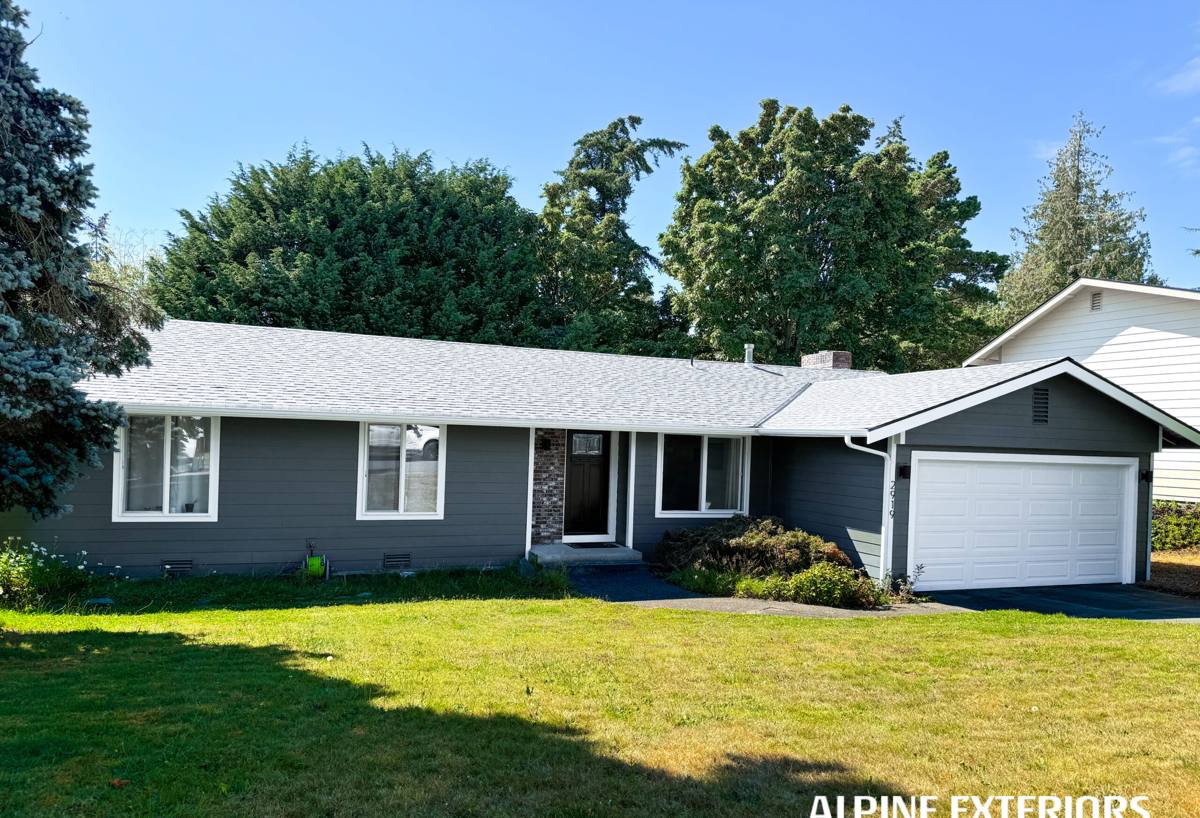
How Salt Air, Rain, and Moss Actually Damage Siding
Salt Air
Even homes that aren't waterfront get periodic exposure to salt-carrying air moving inland off the Sound. Over years, that moisture accelerates corrosion on fasteners and trim, and it speeds up the breakdown of finishes that aren't rated for coastal-adjacent exposure. Siding with a weak factory finish will chalk, fade, and lose its water resistance faster in this environment than the same product would inland.
Driving Rain
Bellingham doesn't just get a lot of rain — a good share of it comes in sideways during winter storms, driven by wind off the water. That means siding here has to manage wind-driven moisture at laps, seams, and butt joints, not just shed water straight down. Products and installation details that work fine in a drier or calmer climate can fail here specifically because they weren't designed around driving rain.
Moss and Sustained Dampness
North Bellingham's tree cover, cloud cover, and rainfall combine to keep exterior surfaces damp for long stretches of the year. Moss and algae take hold wherever siding stays wet and shaded, and once established they hold additional moisture against the surface — which is a particular problem for wood-based products that swell, delaminate, or rot when moisture is trapped rather than shed.
Signs a Cordata Home Needs Siding Replacement
- Soft, spongy, or crumbling spots when you press on the siding, especially near the bottom courses and around window trim
- Persistent moss or dark streaking that returns within a season or two of cleaning
- Paint that's peeling, bubbling, or needing repainting far more often than it used to
- Visible swelling, warping, or delamination at seams and butt joints
- Rising energy bills that point to failing insulation behind damaged siding
- Visible gaps, cracks, or separated caulking that let water track behind the siding
Any one of these on its own might just need a repair. Several at once, especially combined with soft spots, usually means the underlying material has absorbed more moisture than it can recover from, and patch repairs won't hold for long in this climate.
Why We Install Only James Hardie Fiber Cement
We made a standard years ago: James Hardie fiber cement siding, installed to spec, and nothing else. We don't install LP SmartSide, vinyl, Cemplank, Allura, primed spruce, or cedar. That's not a marketing line — it's a decision based on what actually holds up in Whatcom County conditions and what we're willing to stand behind.
Vinyl siding is inexpensive and low-maintenance in mild climates, but it becomes brittle in cold snaps, expands and contracts more than fiber cement, and its seams give wind-driven rain more opportunities to get behind the cladding. Wood-based products like primed spruce, cedar, and OSB-core engineered siding (LP SmartSide) can perform well when maintenance is kept up perfectly, but they're organic materials — they absorb moisture, and in a climate with this much sustained dampness and moss pressure, that moisture exposure eventually wins, usually starting at butt joints, bottom edges, and anywhere caulking has aged. Cemplank and Allura are also fiber cement, and they're reasonable products, but we've standardized on one manufacturer's full system — panels, trim, fasteners, and factory finish engineered to work together — rather than mixing components from different lines.
James Hardie fiber cement is non-combustible, doesn't support moss and algae growth the way wood does, and holds its factory-applied ColorPlus finish far longer than field-applied paint on wood siding. It's not the cheapest option on the shelf, but for a home that has to survive salt air, driving rain, and eight months of dampness every year, it's the product we're willing to put our name behind.
Choosing the Right Hardie Line for This Climate
James Hardie engineers its products by climate zone (HZ5 for our region), which affects moisture resistance and installation requirements. For Cordata homes we typically recommend:
| Product | Best Use | Why It Fits This Climate |
|---|---|---|
| HardiePlank lap siding | Most home exteriors | Traditional look, factory ColorPlus finish resists fading and moisture intrusion at laps |
| HardiePanel vertical siding | Accent walls, gables, modern facades | Fewer horizontal laps for water to work into on exposed elevations |
| HardieTrim boards | Corners, window and door surrounds | Dense composition resists the swelling and rot common with wood trim in wet conditions |
| HardieSoffit panels | Eaves and overhangs | Vented options manage moisture in roof and wall assemblies prone to trapped dampness |
What Correct Installation Involves
Fiber cement siding is only as good as the installation behind it. Most of the siding failures we're called out to inspect in this area trace back to installation shortcuts, not the product itself. A correct Hardie installation on a Cordata home includes:
- Full tear-off and substrate inspection — removing existing siding to check the sheathing and framing underneath for rot or moisture damage before anything new goes up
- Repair of any water-damaged sheathing or framing — covering over compromised substrate just locks the problem behind the new siding
- Proper weather-resistive barrier and rainscreen detailing — creating a drainage gap behind the siding so any moisture that does get past the cladding can drain and dry rather than sit against the wall
- Correct flashing at every penetration — windows, doors, hose bibs, vents, and anywhere else water can find a path inward
- Manufacturer-specified fastening and clearances — proper nailing patterns, gaps at butt joints, and ground clearance, all of which matter more in a climate with this much sustained rain
- Factory-finished trim and caulking done to Hardie's published specifications — not general-purpose caulk applied wherever it seems needed
Our Process, Start to Finish
1. On-Site Assessment
We walk the exterior with you, check for the soft spots and moisture signs common in this area, and give you an honest read on whether you're looking at repair or full replacement.
2. Detailed, Written Estimate
You get a scope of work and pricing broken down by material, labor, and any substrate repair we expect to find — no vague lump-sum guessing.
3. Tear-Off and Substrate Repair
We remove the old siding, inspect and repair the wall assembly underneath, and address any rot before it's covered up again.
4. Weather Barrier and Rainscreen Installation
This is the step that matters most for driving-rain performance, and it's the step most often skipped by crews unfamiliar with our conditions.
5. Hardie Installation to Manufacturer Spec
Panels, trim, and fasteners go in following James Hardie's published installation requirements for our HZ5 zone.
6. Final Walkthrough
We review the finished work with you, including care and maintenance guidance specific to Bellingham's climate.
Cost Factors for Cordata Siding Replacement
Every home is different, but the same variables tend to drive cost on jobs in this area:
| Factor | Why It Affects Cost |
|---|---|
| Substrate condition | Rot or water damage found during tear-off requires repair before new siding goes on |
| Home size and wall complexity | More corners, gables, and dormers mean more cutting, trim, and labor |
| Siding profile chosen | Lap width, panel style, and trim details affect material cost and install time |
| Trim and accent scope | Full HardieTrim packages cost more than matching only what's failing |
| Access and site conditions | Mature landscaping, tight lot lines, or multi-story sections add labor time |
We don't quote off a drive-by. A written estimate after an on-site assessment is the only way to give you numbers you can actually plan around.
Maintaining Hardie Siding in Cordata's Climate
- Rinse siding annually to keep moss and algae from establishing, especially on shaded north- and east-facing walls
- Keep gutters clear so overflow doesn't run down the siding face during heavy rain
- Trim back vegetation that keeps siding shaded and damp longer than it needs to be
- Inspect caulking at trim joints and penetrations every year or two and recaulk as needed
- Repaint on Hardie's recommended cycle if you choose a field-applied color rather than factory ColorPlus finish
- Address any impact damage or cracked panels promptly rather than waiting
Why a Crew That Already Works Cordata Matters
Siding installed correctly for a drier or milder climate can still fail here, even if it's rated well on paper, because the installation details that matter — rainscreen gaps, flashing sequencing, fastener spacing — have to be tuned to actual driving-rain and moss-season conditions. A crew that regularly works homes in Cordata and the rest of Bellingham has already seen what fails here and why, and builds around it as a matter of habit rather than guesswork. That local repetition is what keeps a siding job from becoming a callback five years later.
If your Cordata home is showing signs of wear, or you're planning ahead rather than waiting for a failure, we're happy to take a look and give you a straightforward, no-pressure estimate using the form below.