 Bellingham Exterior
 Siding Repair Built for Cordata's Weather
Cordata sits far enough inland to avoid the worst of Bellingham Bay's direct salt spray, but it still gets the full package of Whatcom County weather: months of driving rain off the Pacific, damp air that never fully dries out between storms, and long stretches of low winter sun that keep north- and west-facing walls shaded and wet longer than homeowners expect. Add in the tree cover common to Cordata's newer subdivisions and older pockets alike, and you get ideal conditions for moss, algae, and slow moisture intrusion to work on siding year-round, not just during the rainy season.
Siding repair in this climate is rarely about one dramatic event. Most of the calls we get are from homeowners who noticed a soft spot, a stain, or a section of paint that keeps failing no matter how many times it's touched up. By the time it's visible, moisture has usually been working behind the surface for a while. Repair here means finding and fixing the actual cause, not just patching what shows.
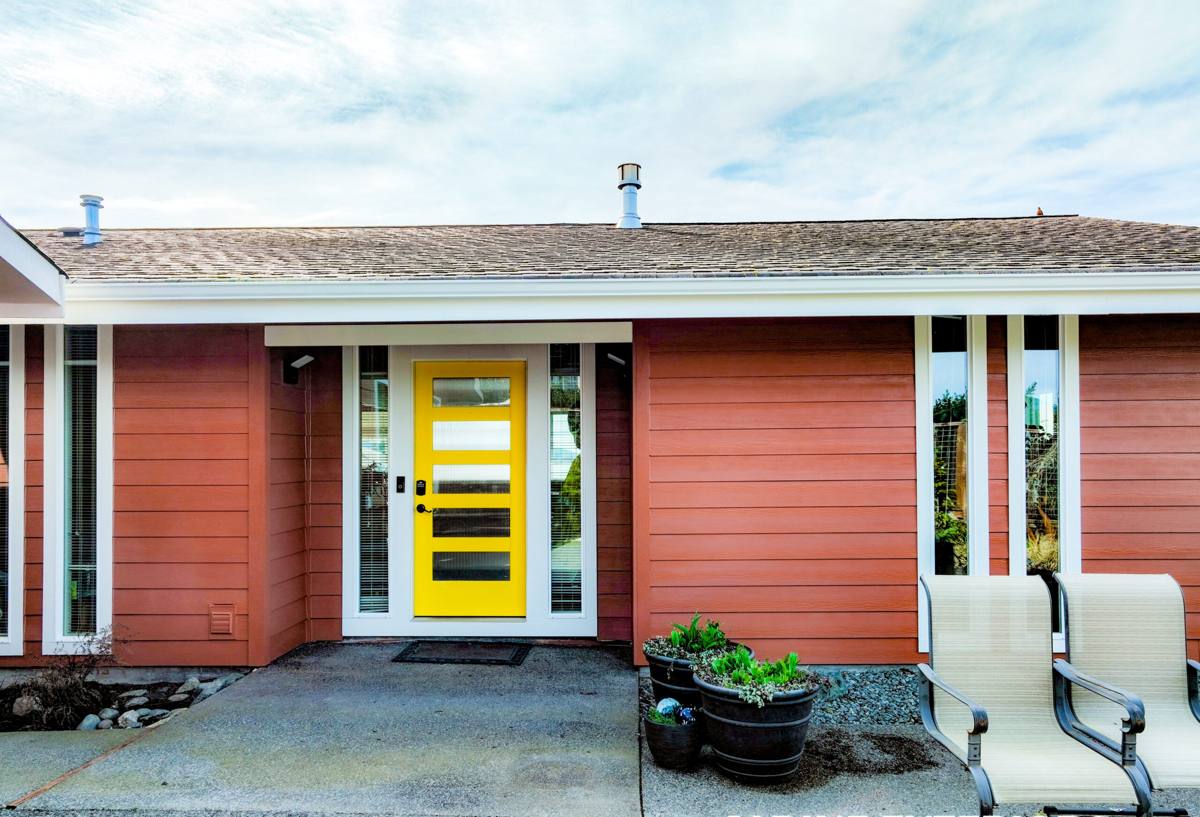
Signs a Cordata Home Needs Siding Repair
Because moisture damage in this climate builds slowly, it's easy to miss the early signs or write them off as cosmetic. Look for these on a walk around the exterior, especially on shaded and north-facing walls:
- Soft or spongy spots when you press on the siding, particularly near the bottom courses and around windows
- Paint that bubbles, peels, or fails again within a year or two of repainting
- Persistent green or black staining that comes back quickly after cleaning
- Visible gaps, cracks, or warping at butt joints and corners
- Swelling or delamination along board edges
- Musty odors or visible staining on interior walls near exterior siding
- Moss buildup that's thick enough to hold moisture against the surface rather than just sitting on top
Any one of these on its own might be minor. Several together, especially on the same wall, usually point to a moisture pathway that needs to be traced back to its source.
What a Correct Repair Actually Involves
Diagnosing the cause, not just the symptom
The first job on any repair is figuring out how water is getting in. That could be a failed caulk joint, siding installed too close to grade, a gap in flashing above a window or door, a downspout dumping water against a wall, or simply siding that's reached the end of its service life in a wet spot. Patching over the visible damage without addressing the entry point means the same repair call again in a year or two.
Matching materials and profiles
A lot of Cordata homes were sided years ago with products that are no longer made in the same profile, thickness, or finish — cedar, older masonite-style boards, or early-generation composite siding. Matching a repair section to surrounding siding that's weathered for a decade takes judgment: sometimes a close match is good enough, and sometimes the honest answer is that the repaired section will always look slightly different until the whole wall or the whole house is eventually redone.
Sealing, flashing, and drainage
Good siding repair isn't just replacing boards — it's restoring the drainage plane behind them. That means correct house wrap or building paper overlap, proper flashing at penetrations and openings, and sealant used only where it belongs (siding systems are designed to shed water, not rely on caulk to keep it out). Skipping this step is the most common reason a repair fails again within a couple of years.
Repair or Replace? How We Help Cordata Homeowners Decide
Not every damaged section needs a full re-side, and we won't push a replacement when a targeted repair will genuinely hold up. But there's a point where patch-and-repeat stops making financial sense. The table below covers the factors we walk through with homeowners.
| Factor | Leans toward repair | Leans toward replacement |
|---|---|---|
| Extent of damage | Isolated to one or two wall sections | Recurring across multiple walls or elevations |
| Age of existing siding | Under 10-15 years, otherwise sound | Original siding is decades old or already near end of life |
| Material availability | Matching material or profile is still obtainable | Discontinued product, visible mismatch likely |
| Underlying cause | One-time or easily corrected issue (gutter, flashing) | Systemic moisture issue affecting the whole envelope |
| Repair history | First repair in this area | Same wall has been patched more than once already |
When the honest answer is repair, we do a repair. When the pattern points to a siding system that's simply worn out, we'll say so plainly and explain what a replacement would involve.
Why the Material You Repair With Matters
This is where a lot of siding repair goes wrong industry-wide, and it's part of why we standardized our own work on James Hardie fiber cement rather than installing vinyl, LP SmartSide, primed spruce, or cedar. Vinyl siding cracks and fades unevenly, so a repaired section stands out immediately and keeps standing out as the surrounding material continues to fade. Engineered wood products like LP SmartSide and untreated wood siding such as spruce or cedar are the most vulnerable to exactly the kind of slow moisture intrusion Cordata's climate produces — once water gets behind or into the board, repair often just delays a repeat failure rather than solving it.
When a repair on one of these materials turns into "this needs to happen again in three years," we tell the homeowner that directly rather than billing for another patch. In many cases, especially where damage has spread across more than one wall, replacing the affected sections — or the whole elevation — with Hardie fiber cement is the more honest long-term fix. It's non-combustible, engineered specifically for wet Pacific Northwest conditions in its HZ5 product line, holds its factory ColorPlus finish far longer than field-applied paint, and comes with a strong transferable warranty. We're not going to tell every Cordata homeowner with a small repair that they need a full re-side — but when the underlying material is the actual problem, we won't pretend a patch is a permanent solution either.
Our Repair Process
- On-site inspection. We look at the damaged area and the areas around it, check for moisture with a meter where needed, and identify the likely entry point.
- Diagnosis and honest recommendation. We explain what we found, whether it's a contained repair or a sign of a bigger issue, and what each option involves.
- Removal of damaged material. Affected boards and any compromised underlayment or flashing come out — not just the visibly rotted piece, but enough surrounding material to confirm the framing and sheathing underneath are sound.
- Correcting the cause. Flashing, drainage, or grading issues get fixed before new siding goes back on.
- Reinstallation. New material is fitted, fastened, and sealed to spec, matched to existing siding as closely as the product allows.
- Final check. We walk the repair with the homeowner before calling it done.
Why It Helps to Hire a Crew That Already Works Cordata
Siding repair is very site-specific. A crew that regularly works Cordata and the surrounding Bellingham neighborhoods has a working sense of which builders and eras of construction tend to show up with which problems, how local drainage and grading issues typically develop, and how Whatcom County's rain patterns affect different sides of a house. That familiarity shortens the diagnostic step and reduces the chance of a repair that looks fine going into winter but fails again by spring.
It also matters for permitting and code awareness. Repairs that touch flashing, structural sheathing, or larger sections of wall can fall under different requirements than a simple cosmetic patch, and a local crew knows where that line is in Bellingham and Whatcom County.
What to Expect
Most contained repairs — one to a few wall sections — take one to a few days depending on the extent of damage and drying time needed before sealing. Repairs that turn up more extensive rot or moisture intrusion take longer, since removing compromised sheathing and correcting the underlying cause is not something to rush. We'll give a realistic timeframe once we've seen the actual damage, not before.
If you're seeing soft spots, recurring stains, or paint that won't hold on your Cordata home's siding, we're happy to take a look. The estimate is free, there's no pressure to move forward, and if a simple repair is genuinely the right call, that's what we'll recommend.