 Bellingham Exterior
 Why Columbia Homes Take a Beating From the Weather
Columbia sits close enough to Bellingham Bay that salt-laden air is a daily fact of life for the siding on these homes, not an occasional nuisance. Add Whatcom County's long, wet fall-through-spring stretch of driving rain, and you've got a combination that tests any exterior cladding: moisture that wants to find its way behind the siding, salt that accelerates corrosion on fasteners and trim, and enough shaded, damp square footage on north- and west-facing walls to grow moss for months at a time. None of that is unique to Columbia, but the density of mature trees mixed with proximity to open water means many homes here get a heavier dose of all three than properties further inland.
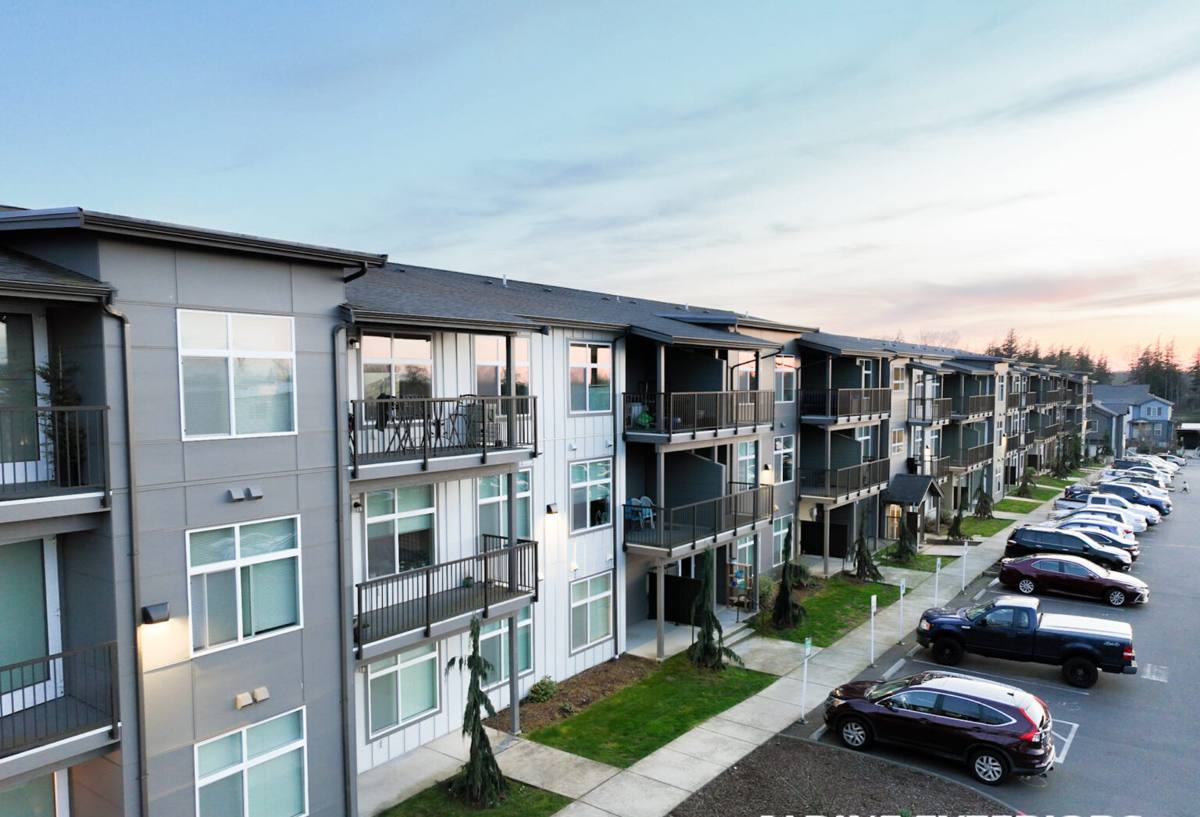
Siding that isn't built or installed for this combination shows it early — swelling at seams, soft spots near the bottom courses, streaking and moss creep on shaded walls, and fastener corrosion that eventually shows up as rust streaks bleeding through paint. We install James Hardie fiber cement exclusively, and a large part of why is how directly it addresses these specific failure points.
Why We Standardized on James Hardie for This Area
We don't install LP SmartSide, vinyl, Cemplank, Allura, primed spruce, or cedar. That's a deliberate professional standard, not a marketing line. Each of those products has legitimate strengths, but every one of them asks a homeowner to accept a trade-off — engineered wood's sensitivity to sustained moisture exposure at cut edges, vinyl's tendency to warp and fade and its limited ability to actually shed water at seams, cedar's ongoing maintenance demand in a climate that never really dries out, primed spruce's need for disciplined repainting on a strict schedule. In a climate like Columbia's, those trade-offs compound faster than they would somewhere drier.
James Hardie fiber cement is non-combustible, dimensionally stable when properly installed, and finished with the ColorPlus factory coating — a baked-on finish that resists fading and doesn't require homeowners to repaint on the same tight cycle a field-painted product does. Hardie also engineers its boards by climate zone (HZ5 and HZ10 designations), which matters more in a mixed marine climate than most homeowners realize. We'll only put one product on a home, and this is the one we're willing to stand behind here.
What a Correct Installation Actually Involves
Fiber cement siding performs exactly as well as the installation behind it — the board is only one part of the system. In a wet, salt-exposed neighborhood like Columbia, the details most homeowners never see are the ones that determine whether the siding lasts twenty years or needs repair work in five.
Moisture Management Behind the Board
Correct installation starts with a water-resistive barrier and properly integrated flashing at every window, door, and roofline intersection — installed so water is directed out and down, never trapped behind the cladding. Rainscreen or drainage gap detailing matters more here than in drier parts of the state, since it gives incidental moisture a path to escape instead of sitting against the back of the board. Butt joints get flashed or sealed per Hardie's specification, not just caulked and left.
Fastening and Clearances
Hardie's warranty and performance both depend on following the fastener schedule, board overlap, and clearance requirements — including keeping the bottom edge of the siding a proper distance above grade, decks, and roof lines so it's never sitting in standing water or splash-back. We use fasteners rated for coastal and marine environments given the salt air here; using the wrong fastener is a common shortcut that shows up as rust bleed within a few years.
Cuts, Caulking, and Factory Finish
Every field cut gets sealed and touched up so bare fiber cement edges aren't left exposed to moisture. Where caulk is used, it's at joints designed for it — not as a substitute for proper flashing. Keeping the factory ColorPlus finish intact at seams and corners is part of what makes the finish last as long as Hardie's coating warranty promises.
Which Hardie Products Fit a Home in Columbia
Hardie makes several board profiles, and the right one depends on the home's style and exposure, not just preference. HardiePlank lap siding is the most common choice for traditional Bellingham homes; HardiePanel works well for vertical or board-and-batten looks, often paired with trim; HardieShingle suits homes going for a more textured, Pacific Northwest look. All of them are available in Hardie's ColorPlus finishes or as primed boards for field painting.
| Product | Best Fit | Local Consideration |
|---|---|---|
| HardiePlank Lap | Traditional and craftsman-style homes | Most common choice; performs well against driving rain when lapped and flashed correctly |
| HardiePanel | Modern or board-and-batten designs | Requires careful joint detailing since panel seams see more direct weather exposure |
| HardieShingle | Accent walls, gables, cottage-style homes | More surface texture holds moisture briefly after rain; benefits from good ventilation |
| HZ5 vs HZ10 engineering | Climate-matched board formulation | Whatcom County's marine climate falls in Hardie's mixed/moist zone specification |
How Our Process Works
We keep the process straightforward, in part because we've done enough of this work in and around Columbia to know where the surprises usually hide.
- On-site assessment — we look at existing siding condition, wall exposure (which sides take the worst weather), trim and flashing condition, and any moisture damage already present under the current cladding.
- Written estimate — scope, product selection, and a realistic cost range, with no pressure to sign on the spot.
- Prep and tear-off — removal of existing siding, inspection of sheathing for hidden rot or moisture damage before anything new goes up.
- Water-resistive barrier and flashing — the part of the job that determines long-term performance, done to Hardie's installation specification.
- Hardie installation — board placement, fastening, and finishing per manufacturer spec and local best practice for coastal exposure.
- Final walkthrough — trim, caulking, and touch-up review with the homeowner before we call the job done.
What Drives Cost on a Job Like This
Every home is different, but the same handful of factors move the price up or down on most Columbia projects. We won't quote a number without seeing the home, but knowing what drives cost helps homeowners plan.
| Factor | Why It Matters |
|---|---|
| Existing siding removal | Tear-off and disposal of old material adds labor, especially with layered or damaged siding |
| Sheathing repair | Hidden moisture damage found during tear-off (common on older homes near the water) needs to be fixed before new siding goes on |
| Board profile and finish | Lap, panel, and shingle profiles carry different material and labor costs; ColorPlus vs. primed field-paint changes the finish budget |
| Wall exposure and complexity | Homes with more corners, dormers, and trim take longer to flash and finish correctly |
| Access and site conditions | Mature landscaping, sloped lots, and tight setbacks near neighboring homes can affect staging and labor time |
Living With Fiber Cement Siding Here Long-Term
Hardie siding is low-maintenance compared to wood or field-painted alternatives, but "low-maintenance" doesn't mean "no maintenance" — especially in a moss-prone, salt-air environment. A little seasonal attention protects the investment.
- Rinse siding annually (garden hose pressure is enough — avoid aggressive pressure washing that can force water behind boards or damage the finish)
- Keep gutters clear so overflow doesn't run directly down wall sections
- Trim back vegetation and tree limbs that keep shaded wall areas damp and encourage moss growth
- Check caulking at trim and joints every couple of years and re-caulk if it's cracked or pulling away
- Look at ground-level clearance periodically — mulch, soil, or landscaping that's crept up over time can trap moisture against the bottom of the siding
- Address any moss or algae growth early with a gentle cleaning rather than letting it establish
Why Local Experience in Columbia Matters
A crew that already works this neighborhood knows which walls typically take the worst weather, how older Columbia homes were originally built and where their sheathing tends to have problems, and what permitting and inspection expectations look like in Bellingham. That local pattern recognition shortens the assessment phase and helps avoid surprises mid-project. It also means we're not learning the area's climate behavior on your home — we've already seen how salt air and moss season affect siding a few streets over.
If your current siding is showing moss buildup, soft spots, or fading that a rinse won't fix, it's worth having it looked at before small problems turn into sheathing repairs. We're happy to walk the exterior with you, point out what we see, and put together a straightforward, no-pressure estimate for James Hardie siding built for what Columbia's climate actually demands.