 Bellingham Exterior
 Fiber Cement Siding Built for Columbia's Conditions
The Columbia neighborhood sits close enough to Bellingham Bay that salt-laden air is a constant companion to anything mounted on the outside of a house. Add in the driving rain that comes sideways off the water during winter storms, and a moss season that can stretch from October well into spring, and you've got a climate that is genuinely hard on exterior building materials. Siding here doesn't just need to look good — it needs to shrug off moisture, resist organic growth, and hold its finish without constant upkeep. That's the standard we install to, and it's why we only put James Hardie fiber cement siding on Columbia homes.
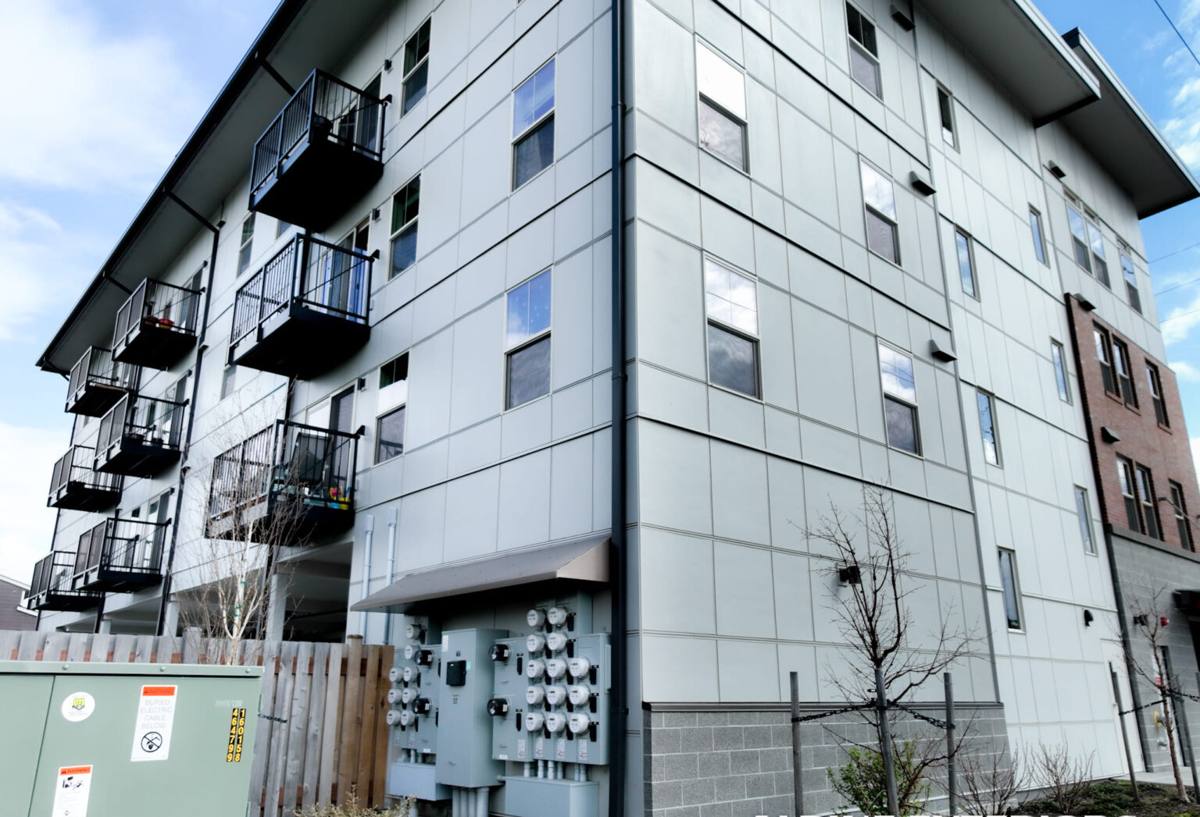
Why This Location Matters for the Material Choice
Not every part of Whatcom County sees the same exposure. Homes closer to the water and open to prevailing wind take a different beating than a sheltered lot a few miles inland. In Columbia, that combination of salt air and wind-driven rain means seams, laps, and butt joints get tested constantly — any weak point in the water management plan gets found sooner rather than later. Wood-based and engineered-wood siding products are more vulnerable here because they rely on paint film and factory sealing to keep moisture out of the wood substrate itself. Once that film is compromised — by UV, by abrasion, by a nail that wasn't sealed correctly — water finds a way in, and swelling, delamination, and rot follow.
Fiber cement doesn't have that vulnerability at its core. It's cement, sand, and cellulose fiber, and it doesn't swell or rot the way wood-based products can when moisture gets past the surface. That's a meaningful difference for a neighborhood where the surface is under near-constant assault from salt air and rain.
What Moss Season Actually Does to Siding
Moss and algae need three things to establish themselves on a wall: moisture, shade, and a surface texture they can grip. Bellingham's long, damp fall-through-spring stretch supplies the first two in abundance on north-facing and tree-shaded elevations, which describes a lot of lots in this part of town. The siding surface itself determines the third.
- Untreated or lightly primed wood surfaces give moss and algae plenty to hold onto, especially once the finish starts to chalk or crack.
- Vinyl siding sheds water fine but its seams and J-channels trap debris and moisture, creating pockets where growth takes hold.
- James Hardie's factory-applied ColorPlus finish is baked on under controlled conditions, producing a harder, more uniform surface that gives moss and mildew less to grip and holds up to the periodic washing needed to keep a north wall clean.
No siding is moss-proof in this climate — anything in constant shade will eventually need a wash-down. But the material and finish quality determine how often, and how much damage a wash-down (or neglecting one) actually does to the surface underneath.
What a Correct Fiber Cement Job Involves Here
Fiber cement siding is only as good as its installation, and that's especially true in a wind-and-rain exposure like Columbia's. A correct install isn't just nailing boards to the wall — it's a full water management system.
Water management details we won't skip
- Rainscreen or proper drainage plane behind the siding so any moisture that gets past the cladding has somewhere to go, instead of sitting against the sheathing.
- Correct flashing at every window, door, and roof-to-wall intersection — the majority of siding failures we see on older homes trace back to flashing that was missing or installed backward, not to the siding material itself.
- Proper clearances from grade, roof lines, and decks, per James Hardie's published installation instructions, so splash-back and standing water don't sit against the bottom edge of the boards.
- Correctly sealed and caulked penetrations at every fixture, vent, and utility penetration, using materials rated for this climate.
- Factory-primed cut edges sealed on site — any field cut needs to be treated before it goes up, or you've created a weak point exactly where you don't want one.
Skipping any one of these doesn't show up on day one. It shows up two or three wet seasons later, as staining, soft spots, or a warranty claim that gets denied because the installation didn't follow spec. That's the gap between siding that looks installed and siding that's actually built to last through Whatcom County winters.
How Our Process Works for Columbia Homes
We treat every project as specific to its lot, not a generic template, because exposure varies house to house even within the same neighborhood.
1. On-site assessment
We walk the property and look at wind exposure, shade patterns, existing moisture damage, and how the current siding and trim are performing. This tells us where extra attention is needed — a shaded north wall gets different scrutiny than a sun-exposed south wall.
2. Tear-off and sheathing check
Once the old siding is off, we inspect the sheathing underneath for rot or moisture damage that was hidden. This is often where problems from a prior installation surface, and it needs to be addressed before anything new goes up.
3. Water management and rainscreen installation
We install the drainage plane and flashing system correctly the first time, since this layer does more to protect the house long-term than the visible siding itself.
4. James Hardie installation to manufacturer spec
Boards, panels, and trim go up following James Hardie's fastening, clearance, and joint-treatment requirements exactly, which is also what keeps the manufacturer's warranty valid.
5. Final walkthrough
We go over the finished work with the homeowner, including basic care — what an annual rinse-down should look like given the moss and salt exposure in this area.
Comparing Siding Options for a Columbia Exposure
| Factor | James Hardie Fiber Cement | Vinyl | Wood / Engineered Wood |
|---|---|---|---|
| Salt air resistance | Strong — cement-based, doesn't corrode or pit | Can become brittle and discolor over time near salt air | Vulnerable once finish is compromised |
| Moss/algae resistance | Factory finish resists growth better than most alternatives | Seams trap debris and moisture | Textured surfaces and worn paint invite growth |
| Wind-driven rain performance | Excellent when installed with proper flashing and rainscreen | Prone to water intrusion at seams under wind pressure | Highly dependent on paint film integrity |
| Fire resistance | Non-combustible | Combustible, can melt/warp | Combustible |
| Maintenance | Periodic rinse; repaint interval much longer than wood | Low maintenance but limited repair options once damaged | Regular repainting and moisture monitoring required |
Cost Factors for a Columbia Fiber Cement Project
Every home is different, so we won't quote a number without seeing the property, but these are the factors that actually move the price:
| Factor | Why It Matters |
|---|---|
| Home size and wall complexity | More corners, gables, and dormers mean more cutting, flashing, and labor time |
| Condition of existing sheathing | Hidden rot or moisture damage found during tear-off requires repair before new siding goes on |
| James Hardie product line and profile | Lap siding, shingle-style panels, and board-and-batten carry different material and labor costs |
| Trim and accessory scope | Fascia, soffits, and trim replacement alongside siding affects total project cost |
| Site access and exposure | Tight lots, second-story work, or wind exposure can affect scheduling and staging |
Why Hire a Crew That Already Works This Neighborhood
A crew that's worked in Columbia and the surrounding Bellingham area already understands what this specific exposure demands — where moss tends to build up first, which elevations take the worst of the wind-driven rain, and what flashing details actually hold up here versus what looks fine on paper. That local pattern recognition matters more than it sounds like it should. It's the difference between a generic installation and one that accounts for the particular way salt air, rain, and shade interact on a given lot.
It also means we're not learning Whatcom County's climate on your house. We've seen what happens when water management gets skipped in this kind of exposure, and we build every James Hardie installation to avoid repeating those mistakes.
A Straightforward, Honest Process
We don't upsell products we don't believe in, and we don't install vinyl, LP SmartSide, or unprimed wood siding — not because those products have no legitimate use anywhere, but because we've standardized on James Hardie fiber cement as the product that consistently performs under conditions like Columbia's, backed by a strong transferable warranty and a factory finish that holds up to years of salt air and rain without the maintenance burden of paint-dependent materials.
If your home in Columbia needs new siding, or you're seeing early signs of moisture damage, moss buildup, or failing caulk lines, we're happy to take a look. Reach out for a free, no-pressure estimate — we'll walk the property, explain exactly what we see, and give you a straight answer on what it would take to do the job right.