 Bellingham Exterior
 Building Decks for Columbia's Specific Conditions
Columbia is one of Bellingham's older, established neighborhoods, sitting close enough to the bay that salt-laden air is a constant factor and mature tree canopy is common on many lots. That combination — moisture-heavy air, shade, and long stretches of gray, wet weather — is exactly what shortens the life of a deck that wasn't built with this climate in mind. A custom deck here isn't just about layout and looks. It's about choosing materials and connection details that hold up to Whatcom County's wet season year after year, not just the first summer.
We've built and repaired decks across Bellingham long enough to know the difference between a deck that looks good on installation day and one that still looks good, and functions safely, five winters later. That difference almost always comes down to decisions made below the decking boards — framing, fasteners, drainage, and footings — not the decking material itself.
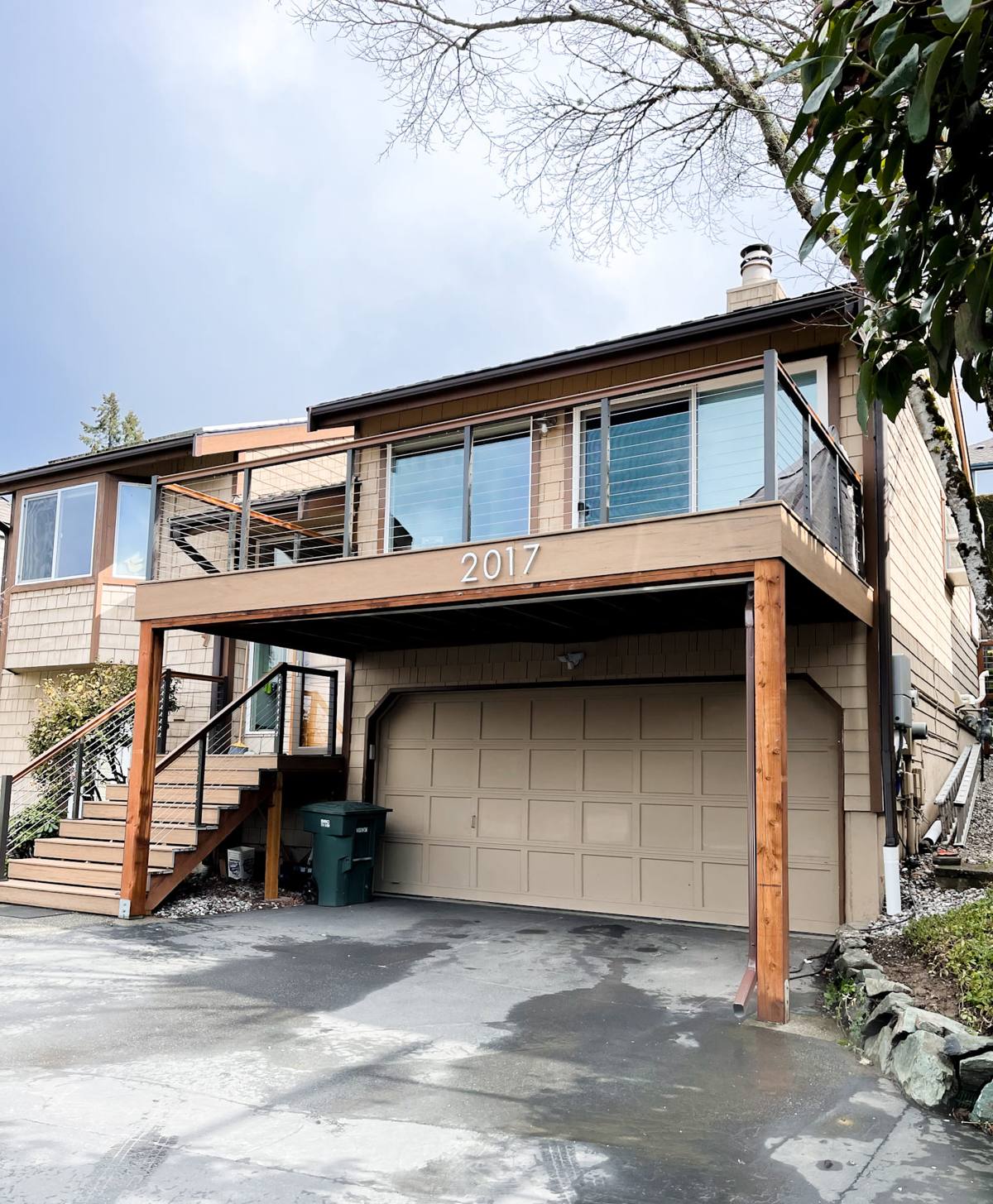
What Salt Air, Rain, and Moss Actually Do to a Deck
Each of these conditions attacks a deck differently, and a correctly built deck accounts for all three at once:
Salt air and corrosion
Proximity to Bellingham Bay means airborne salt moisture reaches fasteners, brackets, and hardware even on decks that aren't waterfront. Standard zinc-coated screws and nails corrode faster in this environment, and corroded fasteners are one of the most common causes of structural failure in older decks we're called out to inspect.
Driving rain and moisture intrusion
Wind-driven rain off the bay doesn't just fall straight down — it gets pushed sideways into ledger boards, under flashing, and into end grain. Water that gets trapped rather than shed is what causes rot in framing members long before the surface decking shows any problem.
Moss and prolonged dampness
Shaded lots and our long wet season create ideal conditions for moss and algae growth on decking surfaces. Beyond the cosmetic issue, moss holds moisture against the board surface and creates a genuinely slick, slippery walking surface — a real safety concern on stairs and landings.
Choosing the Right Decking Material
There's no single "best" decking material for every Columbia property — it depends on how much shade the lot gets, how close it is to the bay, and how much maintenance the homeowner wants to take on. Here's how the common options compare under our regional conditions:
| Material | Moisture & Moss Resistance | Maintenance | Typical Lifespan |
|---|---|---|---|
| Cedar | Naturally rot-resistant but still needs sealing; moss will grow on shaded, unsealed boards | Annual cleaning and periodic staining/sealing | 15–25 years with upkeep |
| Pressure-treated wood | Good rot resistance when properly maintained; can still hold moisture in end grain | Regular sealing, more prone to cupping/splitting over time | 15–20 years with upkeep |
| Composite decking | Strong resistance to rot and moisture absorption; still requires cleaning to prevent surface moss/algae | Periodic washing, no staining or sealing required | 25–30+ years, manufacturer-dependent |
Composite has become the more common choice for shaded or bay-adjacent Columbia lots because it removes the wood's vulnerability to moisture absorption, but it still needs periodic cleaning — composite surfaces can grow surface moss and algae just like wood if left unwashed through a wet winter. Cedar remains a good choice for homeowners who want a natural look and are willing to keep up with sealing on a set schedule. We'll walk through the honest tradeoffs for your specific lot rather than push one product line by default.
Framing, Fasteners, and Footings — The Parts You Don't See
The decking surface gets all the attention, but the structure underneath is what determines whether a deck lasts. This is where corner-cutting shows up years later as sag, rot, or an unsafe railing.
Fasteners and hardware
Given the salt air exposure common across Columbia, we use stainless steel or high-grade coated fasteners and structural hardware rated for exterior, coastal-adjacent use — not standard interior-grade hardware that will visibly corrode within a few seasons.
Ledger attachment and flashing
The ledger board — where the deck attaches to the house — is the single most common failure point on older decks in our area. Correct flashing detail sheds water away from the house framing instead of trapping it behind the ledger, which is critical given how much wind-driven rain this region gets.
Footings and frost depth
Footings need to be set below the local frost line and sized correctly for the soil conditions on the lot. Older Columbia properties sometimes have decks built on undersized or shallow footings from an earlier building era; when we're replacing a deck, we check the existing footings rather than assuming they're adequate.
Joist protection
Joist tape or an equivalent moisture barrier over the top of framing members keeps water from soaking into the wood through deck board fastener holes — a small detail that meaningfully extends framing life in our wet climate.
Permits and Code Requirements
Deck projects in Bellingham typically require a building permit, and the requirements aren't just paperwork — they cover the things that actually keep people safe:
- Guardrail height and baluster spacing for any deck above a certain height off grade
- Minimum footing depth and sizing based on local frost line and soil bearing
- Proper attachment method for ledger boards on existing structures
- Stair rise/run and handrail requirements
- Setback compliance from property lines, which matters on some of Columbia's tighter, older lots
We handle the permit submission and coordinate inspections as part of the job. Skipping this step isn't a shortcut — it creates real problems when the home is sold and the deck shows up as unpermitted work during inspection.
Our Process, Start to Finish
- On-site assessment — we look at grade, drainage, sun/shade exposure, and existing structure if this is a replacement.
- Design and material selection — sized to how the space will actually be used, with material recommendations based on the lot's specific exposure.
- Permit submission — we prepare and file the permit package with the city.
- Site prep and footings — including verification of frost-depth compliance before pouring.
- Framing — ledger flashing, joist protection, and corrosion-resistant hardware installed throughout.
- Decking and railing installation — using the material selected during design.
- Final walkthrough and inspection — we review the finished deck with you and coordinate the final city inspection.
Site-Specific Considerations We See in Columbia
Every neighborhood has its own quirks, and Columbia has a few that come up repeatedly on our jobs there:
Mature tree cover
Many lots in this neighborhood have established trees that shade decks for large parts of the day. That shade is pleasant in summer but keeps decking damp longer after rain, which accelerates moss growth and means material choice and cleaning frequency matter more than they would on a fully sun-exposed lot.
Older home connections
Because Columbia has a good number of older homes, ledger attachment sometimes needs to tie into rim joists or framing that wasn't built with a deck attachment in mind. We evaluate the existing structure before assuming a straightforward ledger bolt-through will work.
Proximity to the bay
Being close to Bellingham Bay means salt air exposure is a real factor even a few blocks inland, which is why we don't treat fastener and hardware selection as an afterthought on any Columbia project.
Maintenance Checklist for Homeowners
Whatever material you choose, a few habits go a long way toward getting the full lifespan out of your deck in this climate:
- Sweep leaves and debris off the deck surface regularly, especially in fall — trapped organic matter feeds moss and holds moisture
- Wash the deck surface at least once a year to remove algae and moss buildup before it gets established
- Check and reseal wood decking on the manufacturer or product's recommended schedule
- Inspect fasteners and hardware annually for corrosion, especially on decks close to the bay
- Keep gutters and downspouts near the deck clear so runoff isn't draining directly onto or under the structure
- Trim back overhanging branches to reduce shade-driven moss growth and keep debris off the surface
Why Local Experience Matters for This Job
A deck built to a generic national spec doesn't account for Whatcom County's frost depth requirements, Bellingham's permit process, or the salt air and moss conditions specific to a bay-adjacent neighborhood like Columbia. A crew that already works in this neighborhood knows which older homes need extra evaluation at the ledger, which lots need moss-resistant material choices because of tree cover, and how to detail flashing and hardware for a climate that stays wet for months at a time. That local knowledge shows up in the parts of the deck you don't see on day one — and in whether it's still solid a decade later.
If you're considering a new deck or replacing an aging one in Columbia, we're happy to take a look and put together a straightforward, no-pressure estimate — just fill out the form below.