 Bellingham Exterior
 Board & Batten Siding in Barkley: A Look That Needs to Work as Hard as It Looks Good
Board and batten has become one of the most requested siding profiles in Barkley, and it's easy to see why. The vertical lines read as clean and modern on newer builds, and they lend a craftsman or farmhouse feel to more traditional homes. It's a distinctive look in a neighborhood where a lot of construction is relatively recent and homeowners want something that stands apart from standard lap siding.
But board and batten is not a purely cosmetic choice. The profile changes how water moves down a wall, how many seams and fastener penetrations exist, and how forgiving (or unforgiving) the assembly is of a mediocre installation. In a part of Whatcom County that sees salt-laden air off the water, long stretches of driving rain, and a moss season that can run most of the year in shaded spots, those details decide whether board and batten siding looks good for two years or for several decades.
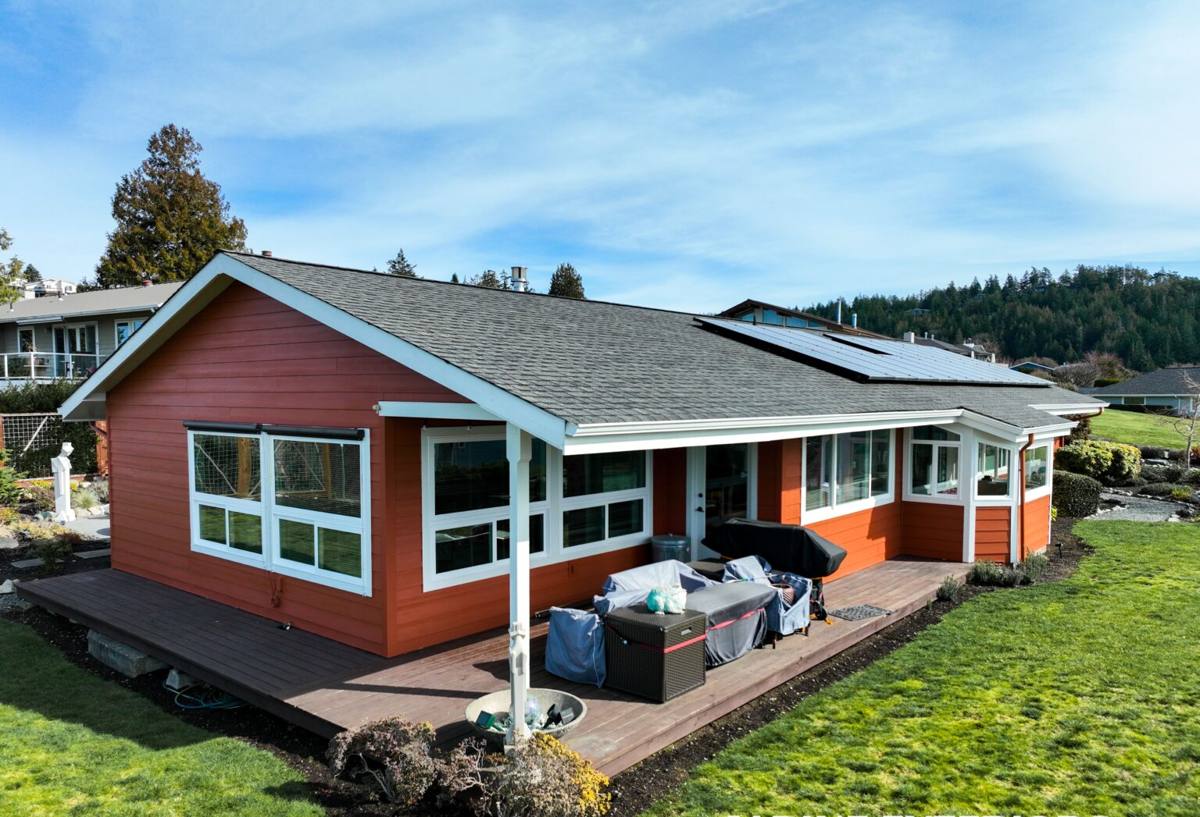
What Barkley's Climate Actually Does to a Vertical Siding Assembly
Bellingham's marine climate is generally mild, which is part of why so many homeowners here don't think twice about exterior materials until something goes wrong. The problems tend to show up slowly, which is exactly why they get missed.
Salt air
Proximity to Bellingham Bay means airborne salt is a real factor on siding hardware, not just on cars and outdoor furniture. Fasteners, flashing, and trim that aren't rated for a coastal-influenced environment can corrode from the inside of the assembly, long before any staining shows up on the surface.
Driving rain
Wind off the water doesn't just drop rain straight down — it pushes it sideways into vertical seams and butt joints. Board and batten has more linear seams per square foot than horizontal lap siding, so every one of those joints needs to be treated as a place water will actually reach, not just a cosmetic reveal.
Moss season
Shaded north and west-facing walls in Barkley, especially near mature trees and closely spaced lots, stay damp for extended stretches. Moss and algae take hold wherever moisture lingers against a wall, and a board and batten profile with tight battens can trap debris and moisture right where you least want it if the drainage gap behind the siding isn't built correctly.
What a Correct Board & Batten Installation Actually Involves
Board and batten looks simple from the curb — vertical boards, battens over the seams — but the assembly behind it is where the job is won or lost.
- Drainage gap (rainscreen): A continuous gap behind the siding lets any water that gets past the surface drain and dry out instead of sitting against the wall sheathing.
- Weather-resistive barrier and flashing: Every window, door, penetration, and horizontal transition needs flashing that's lapped correctly so water sheds outward at every level, not just at the obvious spots.
- Fastening pattern: Battens and boards need to be fastened per the manufacturer's specification for exposure and spacing — not "close enough," since under-fastening in a high-wind, wet climate shows up as loose boards within a few years.
- Corrosion-resistant hardware: Given the salt-air exposure in this part of Whatcom County, fasteners and flashing need to be rated for it, not just standard-grade.
- Butt joint treatment: Vertical siding has more horizontal butt joints than lap siding on a comparable wall, and each one needs proper backing and sealing.
Skip any one of these and the siding can still look right on installation day. The failures — trapped moisture, soft sheathing, streaking, loose boards — show up later, usually after the crew that installed it is long gone.
Why We Only Install James Hardie Board & Batten
We don't install vinyl board and batten, engineered wood board and batten, or primed cedar boards. That's a deliberate standard, not a matter of what's easiest to source.
Vinyl board and batten is affordable and low-maintenance in the sense that it doesn't need painting, but it's a thin material that expands and contracts significantly with temperature swings, and it can't be caulked at seams the way fiber cement can — which matters when driving rain is finding every seam on a wall. Engineered wood and primed cedar look excellent when new, but they depend on field-applied paint and consistent maintenance to keep moisture out of the wood fiber, and Barkley's damp, shaded microclimates are exactly the conditions where wood-based products are least forgiving of a missed maintenance cycle.
James Hardie fiber cement board and batten gives us a non-combustible material, a factory-applied ColorPlus finish that resists fading and doesn't rely on a homeowner repainting every several years, and a product engineered specifically for high-moisture climates. That combination is why it's the only board and batten system we put on homes.
The James Hardie Board & Batten System
James Hardie's vertical siding options give us the board and batten look without the trade-offs of wood-based materials.
HardiePanel vertical siding with Hardie Batten trim
This is the most common way we build the board and batten look: engineered fiber cement panels installed vertically, with dedicated batten trim over the seams. It reads as true board and batten from the street while giving us a single, engineered panel behind the battens instead of dozens of individual boards and joints.
HZ5 climate engineering
James Hardie engineers its products by climate zone, and this region falls into the HZ5 category — the specification built for wetter, harsher-moisture climates rather than dry inland regions. That's a meaningful distinction for a coastal Whatcom County property, not a marketing label.
ColorPlus factory finish
Rather than field-painting boards after installation, ColorPlus finish is baked on at the factory under controlled conditions, which gives more even coverage and better long-term color retention than a job-site paint job exposed to Bellingham's damp conditions during application.
Our Process for Barkley Homes
- On-site assessment: We look at wall orientation, shade exposure, existing moisture or moss patterns, and the current siding and sheathing condition before quoting anything.
- Tear-off and sheathing check: We remove the existing siding and inspect the sheathing underneath for rot or soft spots — this is often the first time hidden moisture damage becomes visible.
- Weather barrier and drainage plane: We install a proper weather-resistive barrier and continuous drainage gap before a single piece of siding goes up.
- Flashing at every transition: Windows, doors, roof lines, and any wall penetrations get flashed before the siding closes them in.
- Panel and batten installation: Installed to James Hardie's fastening and spacing specifications, with corrosion-resistant hardware appropriate for salt-air exposure.
- Final inspection and cleanup: We walk the job with the homeowner and clear the site completely.
Cost Factors for Board & Batten Siding
Board and batten typically costs somewhat more than standard lap siding on the same wall, mainly because of the added batten material and labor for the extra trim pieces and seams. Exact numbers depend on the specifics of the home, but the main variables are consistent from project to project.
| Factor | Why It Affects Cost |
|---|---|
| Home size and wall complexity | More corners, gables, and dormers mean more cuts, seams, and batten pieces |
| Existing siding removal | Tear-off and sheathing repair add labor beyond a straightforward re-side |
| Sheathing condition | Moisture-damaged sheathing found during tear-off needs to be replaced before new siding goes on |
| Trim and batten detail | Wider batten spacing or additional trim detail changes material quantity and install time |
| Access and site conditions | Tight lots, slopes, or limited staging area affect labor time |
Board & Batten vs. Other Vertical Siding Options
| Material | Moisture Behavior in This Climate | Maintenance | Long-Term Appearance |
|---|---|---|---|
| James Hardie fiber cement | Engineered for high-moisture (HZ5) climates; non-combustible | Occasional cleaning; no repainting under normal conditions | Factory finish holds color over time |
| Vinyl board and batten | Can't be caulked at seams; prone to expansion/contraction movement | Low, but limited repair options if damaged | Can fade and become brittle over years |
| Engineered wood / primed cedar | Wood fiber is vulnerable to sustained moisture exposure | Requires regular repainting and sealing | Appearance depends heavily on maintenance consistency |
Maintaining Board & Batten Siding in a Moss-Prone Climate
Even a correctly installed board and batten system benefits from a bit of homeowner attention in a climate like this one.
- Rinse shaded, north- and west-facing walls periodically to keep moss and algae from establishing
- Keep gutters clear so overflow doesn't run down the siding face
- Trim back vegetation and tree cover that keeps specific wall sections damp and shaded
- Inspect caulking at trim and penetrations annually, since sealant is the first thing to wear
- Watch for any staining or streaking at butt joints, which can signal a flashing issue worth checking early
Why Hiring a Crew That Already Works in Barkley Matters
Barkley isn't a uniform tract of identical homes — it's a mix of architectural styles and lot conditions, with plenty of shaded, closely built sections alongside more open, exposed ones. A crew that already works this neighborhood knows which walls tend to hold moisture, which orientations take the worst of the driving rain, and how to size up a job accordingly instead of applying a one-size-fits-all approach. That local familiarity, combined with sticking to one product system we install correctly every time, is what keeps a board and batten job looking right well past the first few winters.
If you're considering board and batten siding for a home in Barkley, we're happy to take a look and walk you through what your specific walls need. There's no pressure and no obligation — just a straightforward assessment and a free estimate.