 Bellingham Exterior
 Storm Damage Roof Repair Built for Birchwood Homes
Birchwood is one of Bellingham's older, more established residential neighborhoods, with a mix of home ages, roof types, and a lot of mature tree canopy overhead. That combination — older roofing systems, big trees, and Whatcom County's weather — means storm damage here doesn't always look like a dramatic blown-off section of roof. More often it's a handful of lifted shingles, a compromised flashing joint, or a soft spot that started with one storm and got worse with the next three. We repair storm-damaged roofs specifically for homes in this area, and we've learned that a "small" repair done right the first time is almost always cheaper than a delayed repair that turns into a full deck replacement.
This page is about one service, for one neighborhood: what storm damage actually does to Birchwood roofs, what a correct repair involves, and how we handle the job from first call to final inspection.
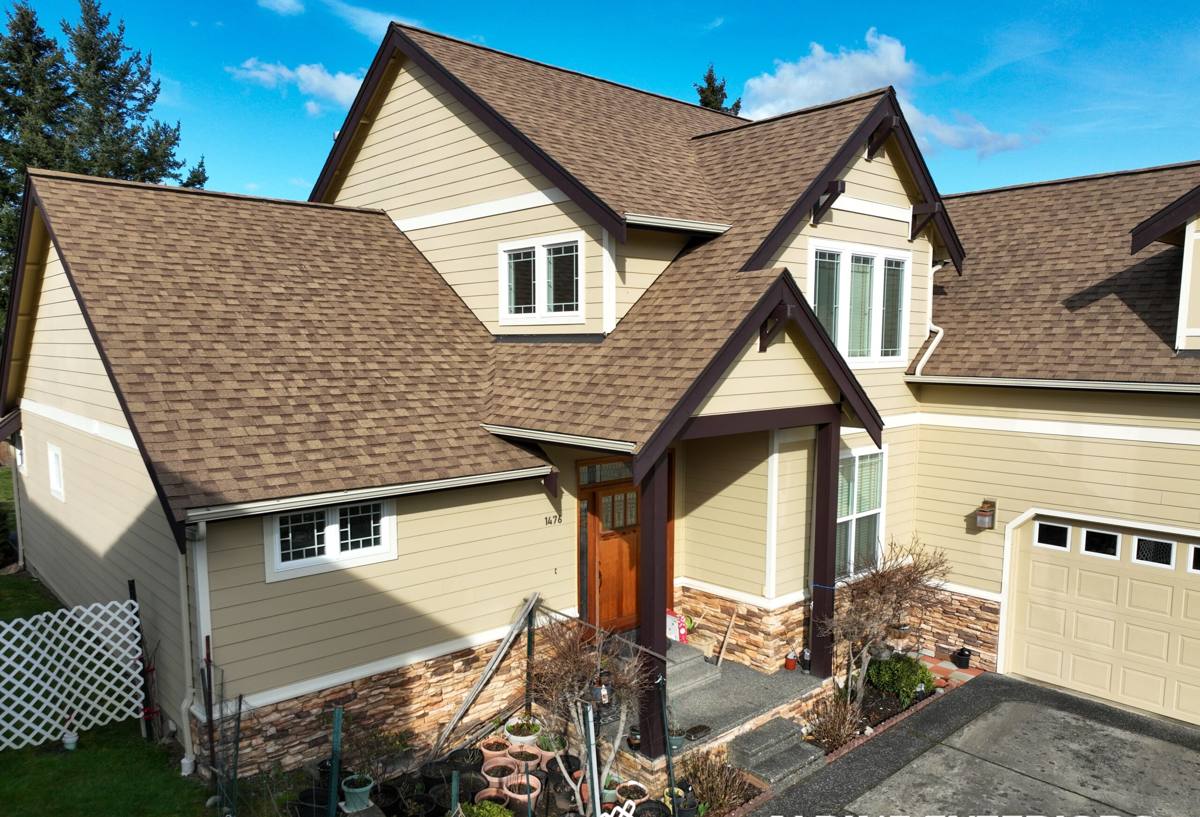
Why Birchwood Roofs Take a Different Kind of Beating
Bellingham sits close enough to Bellingham Bay and the Salish Sea that salt-laden air is a real factor for roofing materials, especially metal flashing, fasteners, and any exposed hardware. Add in the driving, wind-pushed rain that comes through Whatcom County during fall and winter storm systems, and water gets pushed sideways under laps and flashing that were only ever designed to shed water moving straight down. Then there's moss. Our moss season here isn't a few weeks — it's most of the year, and a roof with tree cover like much of Birchwood's tends to hold moisture longer after every storm because it never fully dries out between rain events.
None of these factors cause damage on their own in a single event. What actually happens is cumulative: a windstorm loosens a shingle tab, moss growth keeps the area beneath it damp, salt air accelerates corrosion on the nail heads or flashing holding it down, and the next storm finishes the job. By the time a homeowner notices a stain on the ceiling, the roof has usually been compromised for a while.
The Three Climate Factors We Watch For
- Wind-driven rain: pushes water uphill under shingle laps and around flashing, especially on roof planes facing prevailing storm direction
- Salt air: accelerates corrosion on nails, flashing, and metal roof edges, weakening the roof's grip points before the surface shows any wear
- Extended moss season: keeps roof surfaces damp long after a storm passes, which slows drying and invites rot at the decking level under compromised shingles
What Counts as Storm Damage (Even When It's Not Obvious)
Storm damage isn't just missing shingles. Some of the most common damage we find on Birchwood roofs after a wind or rain event is subtle enough that homeowners live with it for months without realizing it's there.
Signs You Can Check From the Ground
- Shingle pieces or granules collecting in gutters or at the base of downspouts
- Shingles that look curled, lifted at the edges, or out of alignment with the surrounding roof plane
- Visible gaps or bent sections in metal flashing around chimneys, vents, or roof valleys
- New or spreading moss patches, particularly on north-facing slopes or shaded areas under trees
- Ceiling stains, peeling paint, or a musty smell in an upstairs room or attic space after a storm
Signs That Need a Roof-Level Inspection
- Soft or spongy spots underfoot (we check this, not the homeowner — walking a compromised roof is a genuine fall risk)
- Fastener heads backing out or rust streaking below flashing and nail lines
- Sealant or flashing that's cracked, shrunk, or pulled away from a penetration
- Decking that flexes or shows discoloration when viewed from the underside in the attic
Wind can also lift a shingle just enough to break its seal without visibly displacing it. That shingle looks fine from the ground but no longer sheds water correctly, and it will leak the next time rain comes in at an angle — which, in this part of Whatcom County, is often.
What a Correct Storm Damage Repair Actually Involves
A rushed storm repair — a bead of sealant over a lifted shingle, a tarp left up too long — buys a few dry weeks and often hides a bigger problem instead of solving it. A correct repair addresses the roof system, not just the visible symptom.
- Stop active water intrusion first. If the roof is actively leaking, temporary protection (tarping, emergency flashing) goes on immediately, before anything else.
- Inspect beyond the obvious damage point. Wind and water travel — the entry point is rarely directly above the stain or soft spot inside. We check the full roof plane, not just the reported area.
- Check the decking, not just the shingles. If water has been getting underneath for any length of time, the plywood or plank decking underneath may be soft, delaminated, or rotted and needs to be addressed before new material goes down.
- Match materials correctly. Shingle color, profile, and weight vary by manufacturer and by age. We match as closely as the market allows, and we're upfront when an exact match isn't realistic so there are no surprises.
- Rebuild flashing points properly. Flashing around valleys, chimneys, and vent penetrations is where most repeat leaks originate. It gets rebuilt to shed water correctly, not just patched at the surface.
- Address moss and debris while we're up there. Since we're already on the roof, we clear moss and debris from the repair area and surrounding sections so it isn't holding moisture against the new work.
Our Process for Storm Damage Repairs in Birchwood
We keep this process the same whether the job is a single lifted shingle or a full slope repair.
1. Initial Contact and Triage
We ask what happened, when, and whether there's active water intrusion. If there is, we prioritize getting a temporary cover on the roof same-day or as close to it as weather allows.
2. On-Site Inspection
We walk the roof (safely, with proper equipment) and check the attic or interior where accessible. We document everything with photos — this matters for both our repair plan and for any insurance claim.
3. Written Scope and Estimate
Before any work starts, the homeowner gets a plain-English explanation of what's damaged, what caused it, what needs to happen, and what it will cost. No surprise line items after the fact.
4. The Repair Itself
We do the work in the order that protects the house fastest: stop water intrusion, address decking, rebuild flashing, install matched roofing material, clean the work area.
5. Final Walkthrough
We show the homeowner what was done and why, and flag anything else on the roof worth keeping an eye on — even if it wasn't part of this repair.
Repair or Replace? What Actually Decides It
Not every storm-damaged roof needs full replacement, and not every roof that "looks fine" is actually fine. The honest answer depends on a few concrete factors.
| Factor | Favors Repair | Favors Replacement |
|---|---|---|
| Age of existing roof | Under 12-15 years, otherwise sound | Nearing or past typical service life for its material |
| Extent of damage | Isolated to one area or slope | Spread across multiple planes or recurring in different spots |
| Decking condition | Solid, dry, no rot found | Soft, delaminated, or rotted in multiple areas |
| Material availability | Close match available for existing shingle | Discontinued or badly weathered material with no reasonable match |
| History of past leaks | First significant issue | Repeated leaks in different locations over recent years |
We'll always recommend the repair when a repair is the honest, durable answer. We only recommend replacement when the numbers and the roof's condition genuinely point that way — not as an upsell.
Storm Damage and Insurance Claims
Many storm repairs in this area are covered, in part or in full, by homeowner's insurance — but coverage depends heavily on your policy's specific wind and water damage language, and on documentation. A few things that help:
- Photograph visible damage as soon as it's safe to do so, before any temporary repairs change what's visible
- Get an inspection promptly — insurers can dispute claims where damage sat unaddressed for an extended period
- Keep the written scope and photos we provide; adjusters work faster with clear documentation
- Ask your insurer directly about their timeline requirements for filing after a storm event
We're not a public adjuster and don't negotiate your policy for you, but we provide the documentation homeowners need to support their own claim.
Preventing the Next Storm From Doing the Same Damage
Once a roof is repaired, a few habits make a real difference in how it holds up through the next round of Whatcom County weather:
- Keep gutters and downspouts clear so wind-driven rain has somewhere to go instead of backing up under the roof edge
- Trim back tree limbs that overhang the roof — both for impact risk and to reduce the shade that keeps moss active longer
- Have moss growth treated before it lifts shingle edges, not after
- Get a roof checked after any storm with sustained high winds, even if nothing looks obviously wrong
- Address small flashing or sealant issues promptly — they're inexpensive to fix early and expensive to ignore
Why Hiring a Crew That Already Works Birchwood Matters
Storm damage repair isn't just a technical skill — local familiarity changes the outcome. A crew that already works in Birchwood knows the kinds of roofs common to the neighborhood's building era, understands how the tree canopy and coastal exposure interact on specific roof orientations, and can usually respond faster because we're not driving in from across the county. We also know what Bellingham's permitting and inspection expectations look like for roofing work, so repairs are done to code without extra back-and-forth. That local familiarity shows up as fewer surprises, faster turnaround after a storm, and a repair that accounts for the actual conditions your roof deals with — not generic assumptions.
If you've got storm damage, suspected storm damage, or just want a roof checked after a rough stretch of weather, we're happy to take a look. Estimates are free, there's no pressure to move forward, and the form below is the fastest way to get on our schedule.