 Bellingham Exterior
 Windows Built for Birchwood's Weather, Not Just Its Curb Appeal
Birchwood sits close enough to the water and the moisture patterns of Bellingham Bay that its homes take a different kind of beating than houses further inland in Whatcom County. Salt-laden air corrodes hardware and finishes faster than dry-climate window products expect. Driving rain, pushed sideways by wind off the Sound, tests seals and flashing in ways a sunny-day install can hide for years. And the long, damp moss season here means anything with a horizontal ledge, a weep hole, or a shaded north face is fighting organic growth for months at a time. Energy-efficient windows in this neighborhood aren't just about a lower heating bill — they're about hardware that doesn't seize, frames that don't wick moisture, and seals that hold up under sustained wet pressure, not just occasional rain.
We've worked enough homes in and around Birchwood to know the difference between a window that's rated efficient on a spec sheet and one that actually performs here, in this microclimate, on this kind of house. That distinction is the whole point of this page.
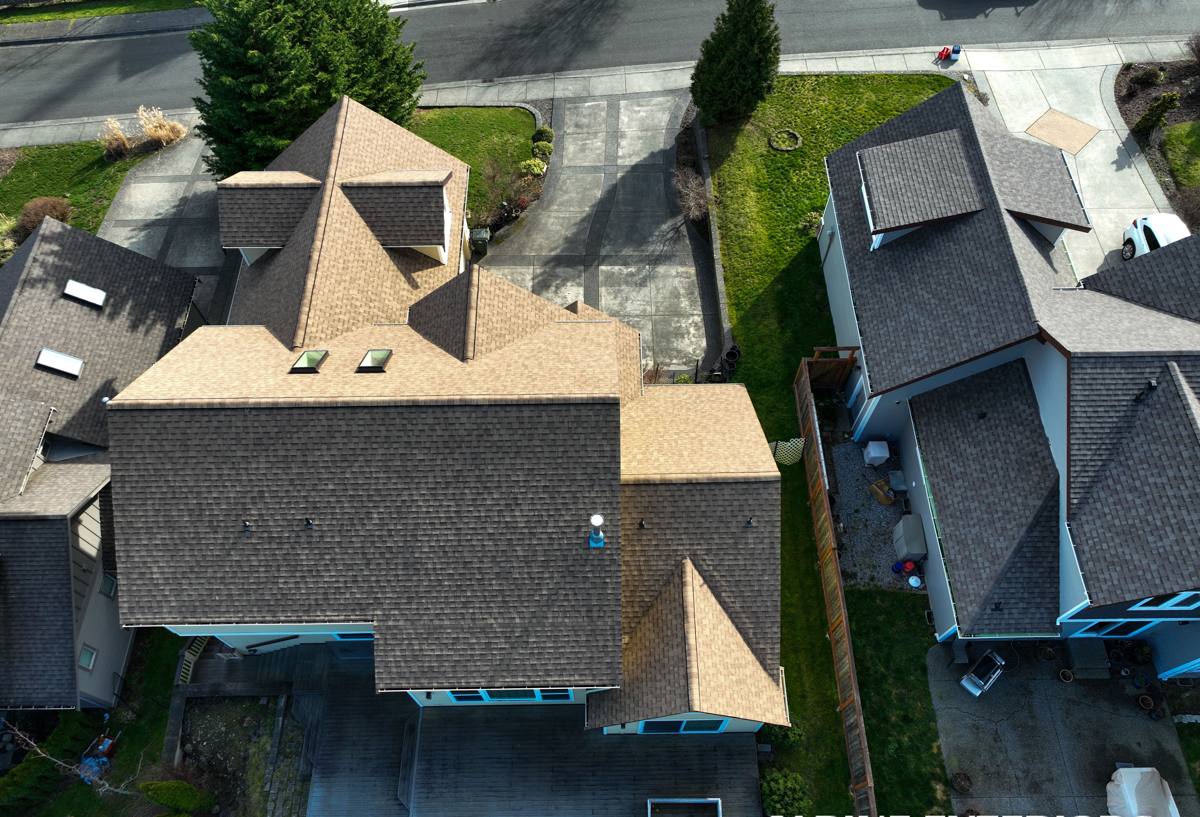
What Birchwood Homes Actually Need From a Window Upgrade
Most homes in this part of Bellingham fall into a few common categories: older single-pane or early dual-pane builds from the mid-century and post-war eras, and a mix of newer construction from the last few decades. Each has different pressure points.
Older Homes
Original wood-frame windows in older Birchwood homes often still have decent bones but have lost their seal integrity, meaning fogging between panes, drafts you can feel with a hand near the frame, and sashes that have swollen or warped from decades of moisture cycling. These homes benefit the most from a full window replacement, both in comfort and in visible condition.
Mid-Generation Vinyl and Aluminum
Homes with 1990s–2000s vinyl or aluminum windows frequently have adequate glass but poor frame performance — thin vinyl that's gone brittle, or aluminum frames that conduct cold straight through and sweat on the inside during our wetter months. Condensation on the interior of a window in winter is usually a sign the frame itself is the weak point, not the glass.
Newer Construction
Even newer homes in the area can have installation issues — flashing that wasn't detailed correctly for wind-driven rain, or sealant that was never meant to be a long-term moisture barrier on its own. A window can be efficient on paper and still leak or underperform if it wasn't installed with this specific climate in mind.
The Salt Air, Rain, and Moss Factor
This is the part of the job that separates a generic window install from one built for Birchwood specifically.
- Salt air accelerates corrosion on hinges, cranks, locks, and screws. We favor hardware finishes and materials chosen to resist that corrosion, not standard-grade fasteners that will streak and seize within a few seasons.
- Driving rain means flashing and sill pan detailing matter as much as the window unit itself. A high-efficiency window installed without proper sill pan flashing and a correctly lapped weather-resistive barrier will eventually leak, regardless of its energy rating.
- Moss and organic growth thrive in the shaded, damp conditions common on north- and east-facing walls in this neighborhood. Frame materials and finishes that shed water quickly and don't hold surface moisture reduce the buildup that leads to staining, wood rot at sills, and clogged weep systems.
None of this shows up on a window's energy label. It shows up five or ten years later, on the job that was done without it in mind.
What a Correct Installation Actually Involves
Energy efficiency starts with the window unit, but it's finished — or ruined — by the installation. Our process for a Birchwood home typically includes:
- Removing the old window and inspecting the rough opening for hidden rot, moisture damage, or framing issues before anything new goes in.
- Correcting any sill or framing damage found — this is common in older homes near the water and should never be covered up rather than fixed.
- Installing a sloped sill pan and properly lapped flashing so any water that reaches the opening drains out, not in.
- Setting the window level, plumb, and square, then sealing and insulating the gap between the frame and rough opening with the correct materials — not just spray foam alone.
- Finishing exterior trim and sealant details built to shed wind-driven rain, and interior finish work matched to your home.
Skipping steps 1 through 3 is the single most common reason a "new energy-efficient window" still leaks, drafts, or fails early in coastal Whatcom County homes. The window product matters less than most homeowners assume; the installation is where efficiency and durability are actually won or lost.
Choosing the Right Window for This Climate
There's no single "best" window brand or style for every home — the right choice depends on your home's age, orientation, exposure to wind and rain, and budget. That said, a few general principles hold up well in Birchwood conditions:
| Factor | Why It Matters Here |
|---|---|
| Frame material | Should resist moisture absorption and hold finish well under sustained damp exposure and salt air. |
| Glazing (double vs. triple pane) | Double-pane with a quality low-E coating is usually sufficient for our moderate coastal temperatures; triple-pane adds cost and weight with diminishing returns unless the wall faces harsh, direct wind exposure. |
| Hardware finish | Corrosion-resistant hardware reduces sticking cranks and seized locks within a few years of salt-air exposure. |
| Weatherstripping design | Compression seals generally outperform basic fin seals against driving, wind-pushed rain. |
| Sill and drainage design | Windows with built-in weep systems that won't clog easily hold up better against moss and debris buildup. |
We'll walk through these trade-offs with you directly rather than pushing one product line — the honest answer is usually "it depends on which wall of your house we're talking about."
A Note on Maintenance
Every window, no matter how good, needs occasional upkeep in this climate — clearing weep holes, checking sealant lines, and keeping moss from establishing on sills and trim. We'll walk you through what your specific windows need so a good install stays a good install for the long haul.
Why It Matters to Hire a Crew That Already Works in Birchwood
A window installer who mostly works drier, inland areas may not think twice about flashing details, hardware corrosion resistance, or moss-prone shaded walls — because those issues simply don't come up as often where they usually work. In Birchwood, they come up on almost every job. Crews who work this neighborhood and the broader Bellingham and Whatcom County area regularly know:
- Which orientations on local homes take the worst wind-driven rain and need extra flashing attention.
- What sill and framing damage typically looks like on homes of this area's common ages and construction styles.
- Which hardware and finish choices hold up against salt air instead of corroding within a few seasons.
- How to sequence work around our wet season so openings aren't left exposed longer than necessary.
That local pattern-recognition is the difference between a window that looks good on install day and one that's still performing well a decade later.
What to Expect From Our Process
We keep the process straightforward and transparent, from the first look at your home to the final walkthrough:
- An in-person assessment of your current windows, framing condition, and specific exposure (wind direction, shade, water history).
- A clear, honest recommendation on which windows fit your home and budget — including trade-offs, not just upsells.
- A written estimate before any work begins, with no pressure to decide on the spot.
- Careful removal, framing inspection and repair as needed, correct flashing and sealing, and clean finish work.
- A final walkthrough so you understand how your new windows operate and what maintenance, if any, they'll need going forward.
Signs It's Time to Replace, Not Repair
Not every window needs full replacement. Here's a quick check for whether repair might still make sense, or whether replacement is the more honest recommendation:
- Fogging or moisture trapped between panes — this means the seal has failed and can't be repaired, only replaced.
- Visible wood rot or soft spots at the sill or lower frame corners.
- Drafts you can feel by hand even with the window fully latched.
- Hardware that's seized, corroded, or requires force to operate.
- Frames that no longer close flush or lock securely due to warping.
If your windows show one or two of these signs but the frame is otherwise sound, a repair or targeted resealing may be worth discussing before jumping straight to replacement — we'll give you that option honestly if it applies.
If you're weighing window replacement for a home in Birchwood, we're happy to take a look and give you a straight answer on what your house actually needs — no pressure, no upsell. Use the form below to request a free estimate.