 Bellingham Exterior
 Siding Built for the Barkley Climate, Not Just the Barkley Look
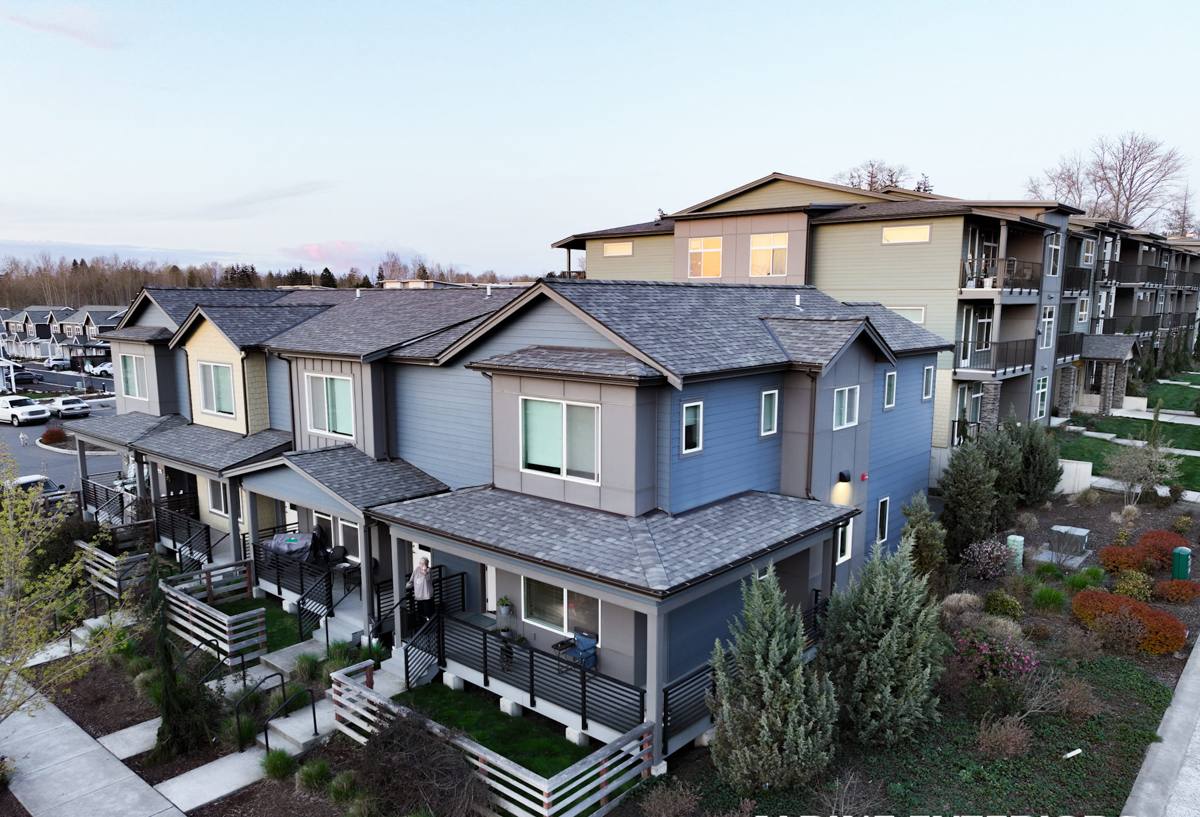
Barkley is one of Bellingham's newer planned neighborhoods, and a lot of the homes here were built within the same couple of decades, using the same handful of siding products that were popular at the time. That means a lot of Barkley homes are hitting the same wear points at roughly the same age — caulk lines failing, paint chalking and peeling faster than it should, and moss creeping up from the north-facing walls and rooflines. None of that is unusual for a Whatcom County home. It's what happens when a marine climate meets siding that was never really engineered for it.
Replacing siding in Barkley isn't just a cosmetic decision. It's a chance to correct the mismatch between the product on the wall and the climate it's been fighting for years. Salt-tinged air off Bellingham Bay, long stretches of driving rain, and a moss season that can run most of the year all put specific, predictable stress on exterior cladding. A siding replacement done right accounts for all of it — not just at installation, but in the product choice itself.
What Salt Air, Driving Rain, and Moss Season Actually Do to Siding
Homeowners often assume siding failure is about age. In Bellingham, it's usually about moisture management — or the lack of it. Here's what's actually happening to siding on a typical Barkley home over time:
Salt Air and Airborne Moisture
Bellingham sits close enough to the water that airborne salt and moisture reach inland neighborhoods like Barkley, especially on windier days. Salt-laden moisture accelerates the breakdown of paint films and can corrode uncoated or under-coated fasteners over time. Siding materials that rely on a field-applied paint job as their only defense lose that protection faster near the coast than they would inland.
Driving Rain
Whatcom County doesn't just get a lot of rain — it gets a lot of wind-driven rain, which behaves very differently than a straight-down shower. Driving rain gets pushed sideways into laps, seams, and butt joints, and it finds any gap in flashing, caulking, or house wrap. Siding systems that aren't dimensionally stable, or that swell and shrink with moisture, open up tiny gaps over repeated wet-dry cycles. Once water gets behind the siding, the sheathing and framing underneath are what actually pay the price.
Moss and Sustained Dampness
Shaded walls, north-facing elevations, and anything near mature landscaping in Barkley can stay damp for days after a storm. That sustained dampness is exactly what moss, algae, and mildew need to take hold. Beyond the appearance issue, moss holds moisture directly against the siding surface far longer than open air would, which speeds up rot in wood-based products and paint failure on almost anything.
Signs a Barkley Home Needs Siding Replacement, Not Just Repair
Not every siding problem calls for a full replacement. But there's a point where patching becomes a losing game. Watch for:
- Soft or spongy spots when you press on the siding, especially near the bottom courses or below windows
- Paint that's peeling, bubbling, or chalking heavily within just a few years of the last paint job
- Visible gaps, warping, or cupping at panel seams and butt joints
- Persistent moss or dark staining that comes back within a season of cleaning
- Rising energy bills alongside drafts near exterior walls, which can point to moisture-compromised insulation behind the siding
- Siding that's original to a home built 15–25 years ago, especially if it's a wood-based composite product
Any one of these on its own might just need attention. Several together, especially on an older Barkley home, usually means the siding system as a whole has reached the end of its useful life.
Why We Install Only James Hardie Fiber Cement
We made a decision as a company to install James Hardie fiber cement siding exclusively — not vinyl, not LP SmartSide, not primed wood products. That's not a marketing angle; it's a standard we hold because of what we see on homes across Whatcom County, including in neighborhoods like Barkley where the climate stress is constant and cumulative.
Fiber cement is non-combustible, dimensionally stable, and doesn't feed moisture damage the way wood-based products can if a factory finish gets compromised. James Hardie's HZ5 product line in particular is engineered for climates with exactly this profile — sustained moisture, temperature swings, and freeze-thaw cycling. The ColorPlus factory finish is baked on under controlled conditions, which holds up to UV and salt-air exposure noticeably better than a field-applied paint job, and it comes with a real transferable warranty behind it.
We're not going to tell you every other siding product is worthless — they're not, and each one has legitimate use cases. But for the specific combination of salt air, driving rain, and moss season that Barkley homes deal with year after year, we've concluded Hardie fiber cement is the product that holds up best with the least maintenance burden on the homeowner. That's the standard we build every replacement around.
What a Correct Siding Replacement Actually Involves
Siding replacement is often sold as a surface-level swap, but the parts nobody sees are what determine whether the new siding lasts 10 years or 40. A correct job includes:
Tear-Off and Inspection
Removing the old siding down to the sheathing and actually looking at what's underneath — rot, insect damage, compromised framing — instead of covering problems up. This is the step that gets skipped on rushed jobs, and it's the one that matters most in a wet climate.
Water-Resistive Barrier and Flashing
A properly lapped house wrap, correctly integrated flashing at every window, door, and penetration, and a drainage plane that gives any water that does get behind the siding a way out. This is the layer doing the real work against driving rain — the siding itself is the second line of defense, not the only one.
Rainscreen or Furring Where Appropriate
In a climate like Bellingham's, a small air gap behind the siding lets moisture drain and dry instead of sitting against the wall assembly. It's an added step, but it's the kind of detail that separates a siding job built for this climate from one that just looks the same as it would in a dry region.
Correct Fastening and Clearances
James Hardie has published installation specs for fastener type, spacing, and clearance from grade, decks, and roof lines for a reason — get those wrong and you create the exact gaps that let driving rain in, regardless of how good the siding material itself is.
| Installation Step | Why It Matters in Barkley |
|---|---|
| Full tear-off vs. re-siding over old material | Exposes hidden rot and moisture damage common in older Bellingham homes |
| Water-resistive barrier and flashing | Primary defense against wind-driven rain off the bay |
| Rainscreen gap | Lets trapped moisture dry instead of feeding rot and moss |
| Manufacturer-spec fastening | Prevents seam gaps that open under repeated wet-dry cycling |
| Grade and roofline clearances | Keeps splash-back and roof runoff from saturating bottom courses |
How Our Process Works for Barkley Homeowners
- On-site assessment. We walk the exterior, check for moisture damage, and evaluate what's driving the current siding's failure — sun exposure, shade and moss patterns, drainage around the foundation.
- Straightforward estimate. You get a clear scope of work and pricing before anything starts, with no pressure to decide on the spot.
- Tear-off and inspection. Old siding comes off, sheathing gets inspected, and any rot or damage is addressed before new material goes up.
- Weather barrier and flashing installation. This is the step that protects the home for the next several decades, done to spec, not shortcut.
- Hardie installation. Panels, planks, or shingle-style siding installed to manufacturer specification, with attention to fastening, clearances, and finish detail.
- Final walkthrough. We go over the finished work with you directly so you know exactly what was done and why.
Cost Factors for Barkley Siding Replacement
Every home is different, and we won't quote a number without seeing the house, but the biggest cost drivers on a Barkley siding replacement project are generally consistent:
| Factor | How It Affects Scope |
|---|---|
| Home size and wall complexity | More corners, gables, and trim detail mean more labor and material cutting |
| Condition of the sheathing underneath | Rot repair adds cost but is far cheaper to fix now than after new siding goes up over it |
| Siding profile chosen | Lap, shingle-style, and panel Hardie products vary in material and labor cost |
| Trim and accessory work | Window and door trim, fascia, and soffit work often gets bundled into a siding project |
| Access and site conditions | Steep lots, tight setbacks, or landscaping close to the home can affect labor time |
The honest range for a full siding replacement varies widely based on those factors — anyone quoting a firm number without walking your home is guessing. We'll give you real numbers after an actual assessment.
Why Hiring a Crew That Already Works in Barkley Matters
Siding installation quality has as much to do with judgment calls on-site as it does with the product itself. A crew that's worked on Barkley and similar Bellingham-area homes already knows the common failure points to check for, how local drainage and grading patterns tend to affect wall assemblies, and how the area's rain and moss patterns should shape flashing and rainscreen decisions. That's the kind of experience that doesn't show up in a brochure but shows up in how the job holds up ten years later.
Before hiring anyone for a siding replacement, it's worth checking:
- Are they licensed and insured to work in Washington State, and will they show you proof without being asked twice
- Do they install to the manufacturer's actual published specifications, not just "how we've always done it"
- Will they show you the sheathing before it's covered back up, not just the finished exterior
- Do they give you a written scope of work, not just a verbal estimate
- Can they explain why they recommend a specific siding product for your home, rather than just what they happen to stock
What to Expect After Installation
A correctly installed Hardie siding system in a climate like Bellingham's should mean fewer maintenance surprises, not zero maintenance. You'll still want to keep gutters clear, trim back vegetation that's shading and dampening walls, and do a periodic visual check for caulking or trim issues — especially after a hard winter. What you shouldn't be dealing with is recurring paint failure, soft spots, or moss that comes back within weeks of cleaning. If those problems persist after a proper installation, that's a sign something in the original work was missed, not a normal part of owning a home in Whatcom County.
If your Barkley home's siding is showing its age, or you just want an honest read on whether it's a repair situation or a replacement situation, we're happy to take a look. Fill out the form below for a free, no-pressure estimate.