 Bellingham Exterior
 Siding Installation Built for Barkley's Weather, Not Just Its Curb Appeal
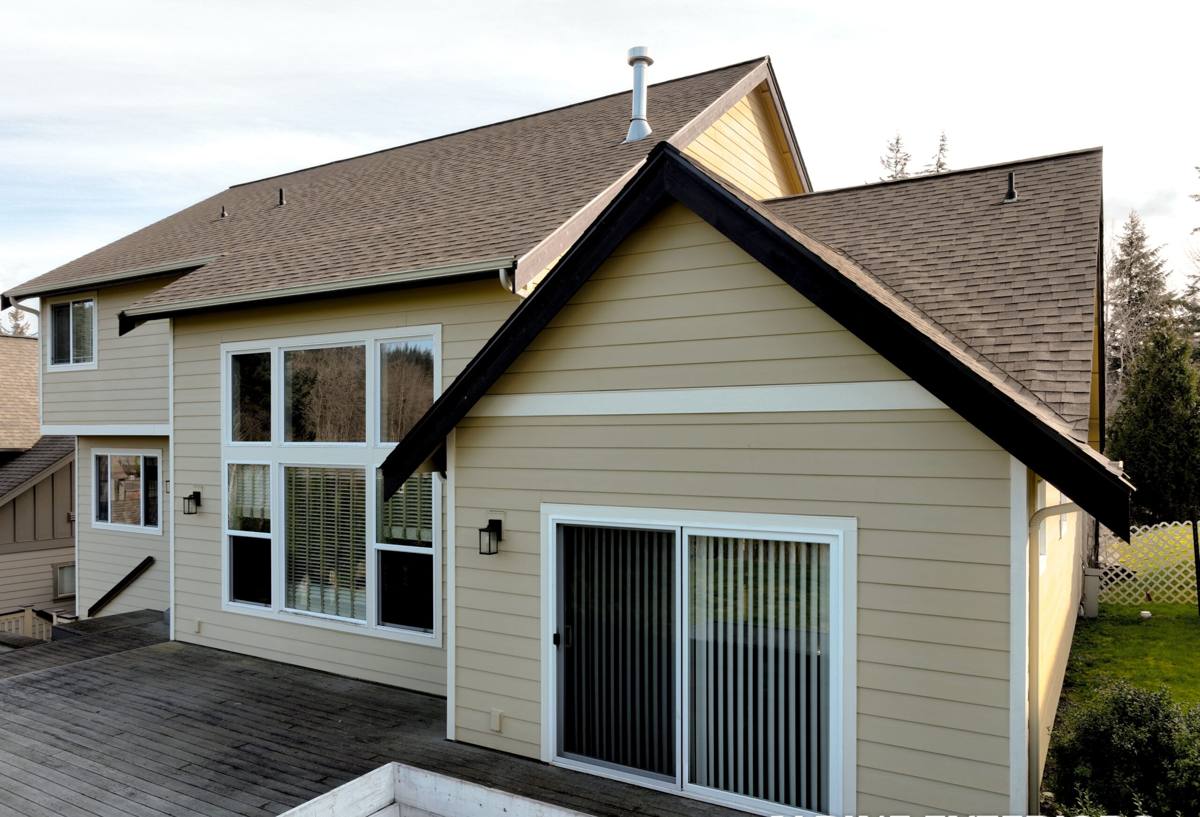
Barkley sits close enough to the water and to Bellingham's tree cover that its homes take a specific kind of beating: salt-tinged air drifting in off the bay, long stretches of driving rain through fall and winter, and a moss season that seems to start earlier every year. Siding here isn't just a cosmetic choice — it's the thing standing between your framing and months of sustained moisture exposure. We install James Hardie fiber cement siding for homeowners in this neighborhood because it's the one product system we trust to hold up to that combination without turning into a maintenance project.
This page is about one job, done right, in one place: full siding installation on a Barkley home. Not a general overview of siding options — the specifics of what this climate demands, what a correct installation actually involves, and why a crew that already knows this neighborhood's housing stock gets better results than a contractor working from a generic playbook.
What Barkley's Climate Actually Does to Siding
Whatcom County's marine climate is mild, which is part of why people move here — but mild doesn't mean easy on a building envelope. A few things compound in Barkley specifically:
- Salt air: Proximity to the bay means airborne salt settles on exterior surfaces and accelerates corrosion of fasteners, trim, and any siding product with metal components that aren't properly rated.
- Driving rain: Wind-driven rain off the water doesn't just fall on siding, it pushes into laps, seams, and butt joints. Any installation with sloppy flashing or caulk-dependent seams will eventually let water behind the cladding.
- Moss and organic growth: Shade from mature trees plus sustained dampness gives moss, algae, and mildew a long season to establish on north-facing walls and anything that stays damp for days at a stretch.
- Temperature swing between seasons: Not extreme by national standards, but enough freeze-thaw cycling in a wet substrate to matter over 20-plus years.
Every one of these is a moisture problem at its core. That's why the installation details — not just the siding material itself — determine whether a home stays dry or slowly develops rot behind a good-looking exterior.
Why This Pushes Us Toward Fiber Cement, Not Away From It
Wood-based siding products (cedar, primed spruce) absorb moisture at cut ends and any place the factory coating gets breached, and in a climate with this much sustained dampness, that absorption cycle is what starts rot. Vinyl doesn't rot, but it isn't dimensionally stable — it expands and contracts with temperature and can warp or pull away from fasteners over time, opening gaps at exactly the laps where driving rain wants to get in. James Hardie fiber cement is dimensionally stable, doesn't absorb and swell the way wood does, and its factory-applied ColorPlus finish is engineered to resist the fading and coating failure that constant damp-and-dry cycling causes on site-painted products.
What Correct Installation Involves
The siding material is only part of the system. A correct James Hardie installation in a climate like Barkley's includes several things that are easy to skip and hard to notice once the wall is closed up:
Water Management Behind the Cladding
A weather-resistive barrier (house wrap or building paper) goes on first, lapped correctly shingle-style so water sheds down and out, never inward. Every window and door opening gets proper flashing integration — head flashing, sill pans, and side flashing tied into the barrier — before any siding goes up. This is the part of the job nobody sees after completion, and it's the part that determines whether the wall stays dry for the next 30 years.
Rainscreen Gap
In a climate with this much sustained rain, a drainage gap between the back of the siding and the weather barrier gives any moisture that does get through a path to drain and dry out, rather than sitting against the sheathing. This is standard practice on the installations we do and matters more here than in drier regions.
Fastening and Clearances
James Hardie specifies fastener type, spacing, and penetration depth for a reason — under-driven or over-driven nails crack the board or leave it loose, and both create entry points for water. Ground clearance and clearance from roof lines, decks, and other siding also matter: too little clearance means splashback and standing moisture wick straight into the bottom courses.
Joint and Seam Treatment
Butt joints get sealed and, where possible, backed with flashing rather than relying on caulk alone. Caulk is a maintenance item, not a waterproofing system — a joint that depends entirely on a bead of sealant is a joint that will eventually fail.
Trim and Corner Detail
Corners, trim boards, and transitions are where moisture problems usually start first, because they involve more cut ends and more places where two materials meet. Factory-primed or ColorPlus trim, cut ends sealed per manufacturer spec, and correct overlap at inside and outside corners all reduce the number of vulnerable seams on the finished wall.
Our Process for a Barkley Siding Job
- On-site assessment: We walk the home, check the current siding and sheathing condition, look for existing moisture damage, and note site-specific exposure — how much direct rain and shade each elevation gets.
- Tear-off and sheathing check: Old siding comes off and we inspect the sheathing underneath. Any soft or rotted sheathing gets flagged and replaced before anything new goes on — covering damaged sheathing with new siding just hides a problem instead of fixing it.
- Weather barrier and flashing installation: House wrap, window and door flashing, and rainscreen furring go on according to spec, not according to shortcuts.
- James Hardie installation: Boards or panels installed to manufacturer fastening and clearance specifications, with attention to butt joint placement and corner details.
- Trim, caulking, and paint touch-up: Final trim work, minimal necessary sealant at transitions, and any factory-finish touch-up needed after installation.
- Final walkthrough: We go over the finished exterior with the homeowner and confirm clearances, seams, and finish quality before calling the job done.
Why a Local Crew Matters More Than It Sounds Like It Should
A contractor who works Bellingham and Whatcom County regularly has already seen how homes in Barkley and similar neighborhoods age under this specific climate. That means knowing which elevations tend to hold moss longest, which older homes in the area were built with sheathing types that need extra care during tear-off, and how much rainscreen detailing actually matters here versus in a drier part of the state. It also means being available for warranty follow-up and service calls without a long drive, and having a track record in the community rather than a one-time job and a phone number that changes.
None of that shows up in a brochure. It shows up in fewer callbacks, fewer surprises during tear-off, and a finished installation that's actually suited to where it sits.
Comparing Siding Approaches for a Home Like Yours
| Factor | James Hardie Fiber Cement | Vinyl | Wood / Primed Spruce |
|---|---|---|---|
| Moisture absorption | Very low — engineered fiber cement doesn't swell like wood | None, but seams can gap as material expands/contracts | Absorbs at cut ends and coating breaches |
| Performance in driving rain | Strong when flashed and lapped to spec | Depends heavily on installation quality; can gap over time | Vulnerable at any coating failure point |
| Resistance to moss/algae staining | Factory finish resists staining better than site-applied paint | Can stain; surface texture holds organic growth | Prone to staining and coating breakdown in shade |
| Salt air / coastal exposure | Non-combustible, stable material holds up well | Can become brittle over long-term UV and salt exposure | Requires more frequent recoating in coastal exposure |
| Long-term maintenance | Lower — factory finish, periodic inspection | Low but limited repair options if damaged | Higher — repainting and recaulking on a recurring cycle |
This isn't a knock on every alternative product across the board — it's why, for the specific conditions Barkley homes face, we standardized on one system rather than offering several and hoping the homeowner picks the right one.
Signs Your Current Siding Is Already Losing the Fight
- Soft spots or visible give when you press on siding near the bottom courses or below windows
- Persistent moss or dark staining that comes back within weeks of cleaning, especially on north- or shade-facing walls
- Visible gaps opening at butt joints or corners that weren't there a few years ago
- Peeling, bubbling, or chalking paint on wood siding, or fading and warping on vinyl
- Musty smell or discoloration on interior walls that share an exterior wall with problem siding
- Caulk that's cracked, shrunk, or missing at trim and window transitions
Any one of these is worth a look. Several together usually mean moisture has already gotten past the surface, and it's better to address it with a full assessment than to patch and repaint over a problem that's still there underneath.
What Installation Timing Looks Like
Siding work in this region is weather-dependent — you want a stretch of dry days for tear-off and weather barrier installation especially, since an open wall during a heavy rain event is the one thing to avoid. That generally makes late spring through early fall the more predictable installation window for a full re-side, though smaller sections or repairs can often be scheduled more flexibly. We plan around the forecast and the scope of the job, not a fixed calendar date, and we won't open up a wall ahead of weather that puts it at risk.
Cost Factors Homeowners Should Understand
Every Barkley home is different, so we don't quote a number without seeing the site, but the main variables that move a siding installation estimate are consistent:
| Factor | Why It Matters |
|---|---|
| Home size and elevation count | More square footage and more corners/transitions mean more material and labor |
| Sheathing condition | Rotted sheathing found during tear-off adds repair scope before new siding can go on |
| Siding profile and trim complexity | Lap width, panel style, and trim detail affect both material cost and install time |
| Access and site conditions | Grade, landscaping, and how close the home sits to property lines affect setup and staging |
| Existing siding removal | Tear-off of old material adds labor and disposal cost versus new construction |
Get a Straight Answer for Your Home
If your Barkley home's siding is showing its age, or you're planning ahead before the next wet season sets in, we're glad to come take a look. No pressure, no inflated scope — just an honest assessment of what your home needs and a clear estimate for James Hardie siding installed the right way. Use the form below to request a free estimate.