 Bellingham Exterior
 Decking Built for How Barkley Actually Weathers
Barkley sits close enough to Bellingham Bay and the Nooksack lowlands that its homes take on a distinct mix of weather stress: salt-laden air drifting in off the water, long stretches of driving rain through fall and winter, and a moss season that can run from October well into spring. A deck in this neighborhood isn't dealing with one problem — it's dealing with all three at once, month after month, year after year. That combination is exactly why so many Barkley homeowners are moving away from wood decking and toward composite systems, and it's also why a composite deck installed without attention to local conditions can still disappoint within a few seasons.
We build and replace decks across Bellingham and Whatcom County, and Barkley's mix of established homes, mature landscaping, and shaded lots gives it its own set of decking challenges. This page focuses specifically on what a composite deck needs to hold up here — not composite decking in general, but composite decking done right for this neighborhood's climate and building stock.
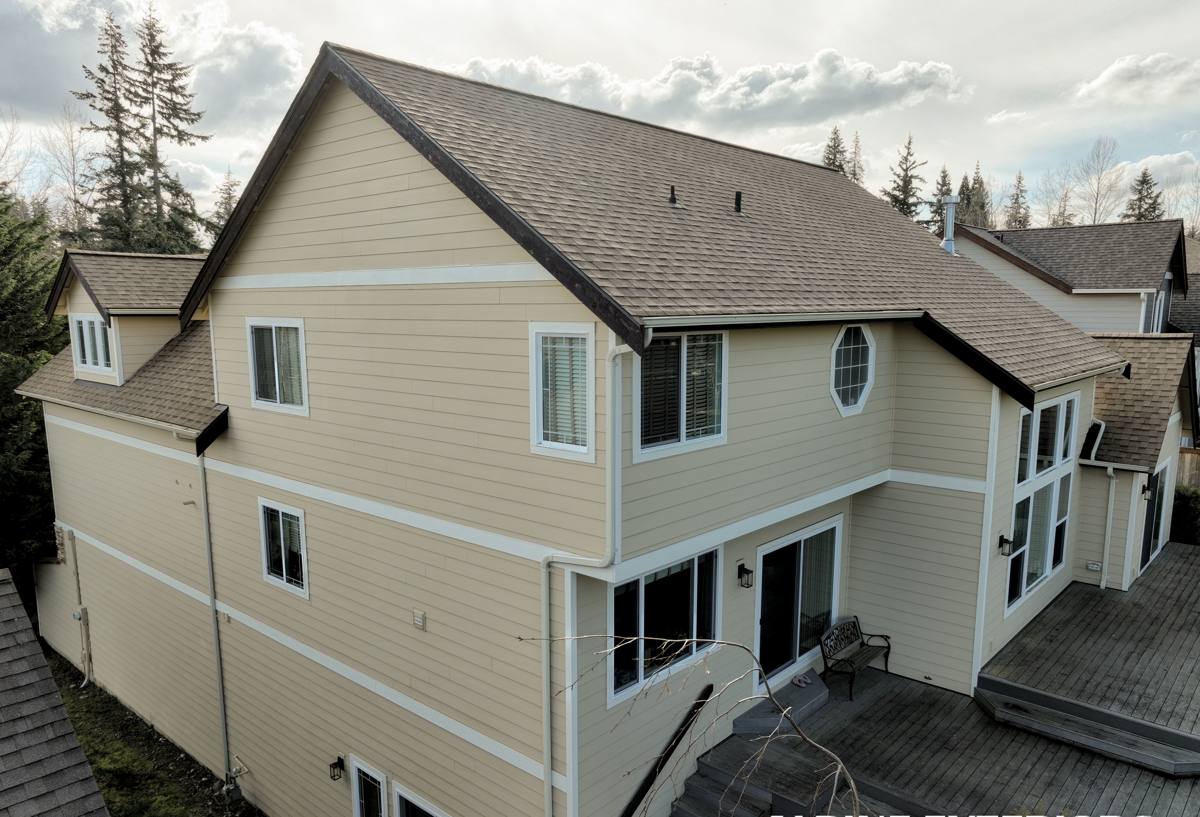
What Bellingham's Climate Does to a Deck Over Time
Salt Air and Metal Fasteners
Even a few miles inland from the bay, airborne salt accelerates corrosion on anything metal — screws, joist hangers, post bases, and railing hardware. On an older deck, this shows up as rust streaking down the boards or fasteners that back out because the metal underneath has degraded. Composite boards themselves don't corrode, but a composite deck is only as good as the fasteners and structural hardware holding it together, so the hardware spec matters just as much as the decking material.
Driving Rain and the Structure Underneath
Whatcom County rain rarely falls straight down — it comes in sideways off the water often enough that ledger boards, rim joists, and the framing tucked underneath a deck take on more moisture exposure than homeowners usually expect. Composite decking sheds water well on the surface, but if the substructure beneath it isn't flashed and ventilated correctly, moisture gets trapped where you can't see it, and that's where rot and hidden damage start.
Moss Season and Walking Surfaces
Barkley's tree cover and the region's damp, mild winters create ideal conditions for moss and algae to take hold on any horizontal surface that doesn't drain or dry quickly. On a wood deck, this means regular scrubbing, staining, and a slick, slippery surface for much of the year. Composite decking resists moss growth far better than wood because it doesn't have the porous grain moss needs to root into, but board spacing, airflow underneath, and surface texture still all affect how much moss pressure a given deck actually sees.
Composite vs. Wood Decking for Barkley Properties
We install both wood and composite decking, and we're upfront with clients about the honest trade-offs of each. For a Barkley property dealing with salt air, sustained rain, and heavy moss pressure, composite generally holds up with far less ongoing work — but it isn't automatically the right call for every budget or every homeowner's priorities.
| Factor | Composite Decking | Cedar / Wood Decking |
|---|---|---|
| Moisture behavior | Won't rot or swell from moisture itself; structure below still needs proper flashing | Absorbs water; prone to cupping, splitting, and rot without diligent upkeep |
| Moss and algae resistance | Resists growth; occasional rinsing keeps it clean | Porous surface holds moisture, encouraging moss and requiring more frequent cleaning |
| Maintenance | Periodic washing; no staining or sealing | Annual or biannual staining/sealing to prevent weather damage |
| Upfront cost | Higher material cost | Lower material cost |
| Long-term cost | Lower — minimal recurring maintenance spend | Higher over time due to repeated staining, board replacement, and repairs |
| Appearance over time | Consistent color and texture with UV-stable capping | Natural look but grays and weathers unevenly without upkeep |
Composite has become our default recommendation for exposed, rain-heavy, or shaded Barkley lots simply because it removes the maintenance burden that wood demands in this climate. Where a lot has good sun exposure and an owner who genuinely enjoys the upkeep and look of real wood, cedar still has a place — we'll give you a straight answer on which fits your property.
What a Correct Composite Deck Installation Involves
Substructure First
The decking boards get the attention, but the framing underneath determines whether the deck lasts. That means pressure-treated or naturally durable framing lumber, joist spacing matched to the specific composite product's span rating (composite boards flex differently than wood and manufacturers specify tighter joist spacing than you'd use for a wood deck), and joist tape or a comparable barrier over the top of each joist to keep water from wicking into the wood from above.
Ledger Flashing and Waterproofing
Where a deck attaches to the house, the ledger board connection is the single most common point of hidden water damage on any deck in this region. Correct flashing — installed in the right order relative to the house's siding and building wrap — keeps driving rain from working its way behind the ledger and into the rim joist or wall framing. This is not a place to cut corners, and it's not something you can inspect after the decking boards go down.
Fasteners and Hardware
Given the salt air exposure common around Bellingham, we use stainless steel or coated fasteners and hot-dip galvanized or stainless structural hardware rated for corrosive environments, not standard-grade hardware. We also use hidden fastener systems on composite decking where the product supports it, which avoids the exposed screw heads that are usually the first thing to show corrosion staining on an otherwise good-looking deck.
Drainage and Airflow Underneath
A deck that sits low to grade or over a patio needs a drainage plan — proper slope away from the house, gapping between boards sized to the manufacturer's spec, and enough ventilation underneath that the substructure can actually dry out between rain events. On shaded Barkley lots especially, airflow underneath the deck is one of the biggest factors in how much moss and mildew pressure the surface sees.
Choosing the Right Composite Board for Your Property
Not all composite decking is built the same way, and the right choice depends on your lot's sun exposure, how much shade and moss pressure it sees, and your color and texture preferences.
Capped Composite
Most modern composite boards have a protective cap layer bonded over a wood-plastic composite core. That cap is what gives the board its stain resistance, fade resistance, and moss resistance — it's a meaningful upgrade over older, uncapped composite products, which absorbed moisture at cut ends and were more prone to surface mold in a climate like ours.
Color and Heat Considerations
Darker board colors show less dirt and moss staining but run warmer underfoot on sunny days; lighter and mid-tone colors hide less but stay cooler. On shaded Barkley lots this is less of a concern than it would be on a south-facing, sun-exposed deck, so we factor your specific lot orientation into the recommendation rather than defaulting to one color line.
Board Profile and Grip
Textured, grooved-edge boards (used with hidden fastener clips) tend to handle moss and moisture better than smooth-face boards because the texture breaks up standing film and improves footing when the surface is damp — which, in this climate, is often.
Our Process, Start to Finish
- On-site assessment — we look at your existing deck or build site, note grade, drainage, sun/shade exposure, and any structural issues before quoting anything.
- Honest scope and estimate — a clear breakdown of what needs replacing versus what can stay, with composite and wood options priced separately so you can compare.
- Permitting — deck permits and inspections through the City of Bellingham or Whatcom County, depending on your property's jurisdiction, handled as part of the job.
- Demo and structural work — removal of old decking, repair or replacement of framing, and correction of any flashing or ledger issues found underneath.
- Installation — framing, joist protection, ledger flashing, and composite board installation with hidden fasteners and corrosion-resistant hardware throughout.
- Final walkthrough — we go over the finished deck with you, including basic care guidance specific to the board line installed.
Living With a Composite Deck in a Moss-Prone Marine Climate
Composite decking cuts maintenance dramatically compared to wood, but "low-maintenance" isn't "no-maintenance" — especially with Barkley's moss season factored in. A little seasonal care keeps a composite deck performing the way it's supposed to for decades.
- Rinse or sweep the surface periodically through fall and winter to keep organic debris from sitting on the boards and feeding moss growth
- Clean gaps between boards where leaves and needles collect, since trapped debris holds moisture against the board edges
- Wash with a soft-bristle brush and mild soap and water once or twice a year — avoid pressure washers on composite, which can damage the cap layer
- Check that gutters and downspouts near the deck are directing water away, not onto the deck surface or substructure
- Keep planters and rugs from sitting in one spot too long, since trapped moisture underneath them is a common spot for surface mildew to start
- Inspect railing posts and stair connections annually for any movement, since hardware is the first thing to show wear in salt-air conditions
Why Hire a Crew That Already Works in Barkley
A lot of what determines whether a composite deck lasts in this neighborhood isn't the decking material — it's decisions made before the first board goes down: how the ledger is flashed against your specific siding type, what hardware spec makes sense given how close your lot sits to the bay, and how much airflow the substructure needs given your tree cover and shade. Crews that work regularly in Bellingham and Whatcom County make these calls based on what actually happens to decks here over time, not generic manufacturer installation minimums written for a drier climate. We've built and repaired enough decks around Bellingham to know where water actually gets in, where moss actually takes hold, and where salt air actually does its damage — and we build accordingly from the start.
If you're planning a new composite deck or replacing an aging wood deck at your Barkley home, we're happy to take a look and give you a straightforward estimate — no pressure, no upsell, just an honest read on what your property needs. Use the form below to request your free estimate.