 Bellingham Exterior
 Window Replacement in Sunnyland: A Local Job, Not a Catalog Order
Sunnyland is one of Bellingham's older, established residential neighborhoods, with a housing stock that spans decades — bungalows and cottages from the early-to-mid 1900s mixed in with newer infill homes. That range of ages matters when it comes to windows. A house built before double-pane glass was standard has different problems than one built in the 1990s with early vinyl units that are now reaching the end of their service life. Either way, if you're looking at window replacement in this part of Bellingham, the job needs to account for what the neighborhood's exposure actually does to a window over time — not just what a showroom brochure says a window can handle.
We treat window replacement as an envelope project, not a swap-the-glass project. The window is only as good as the flashing, sealant, and framing detail around it, and in Whatcom County that detail is what determines whether a window lasts 10 years or 30.
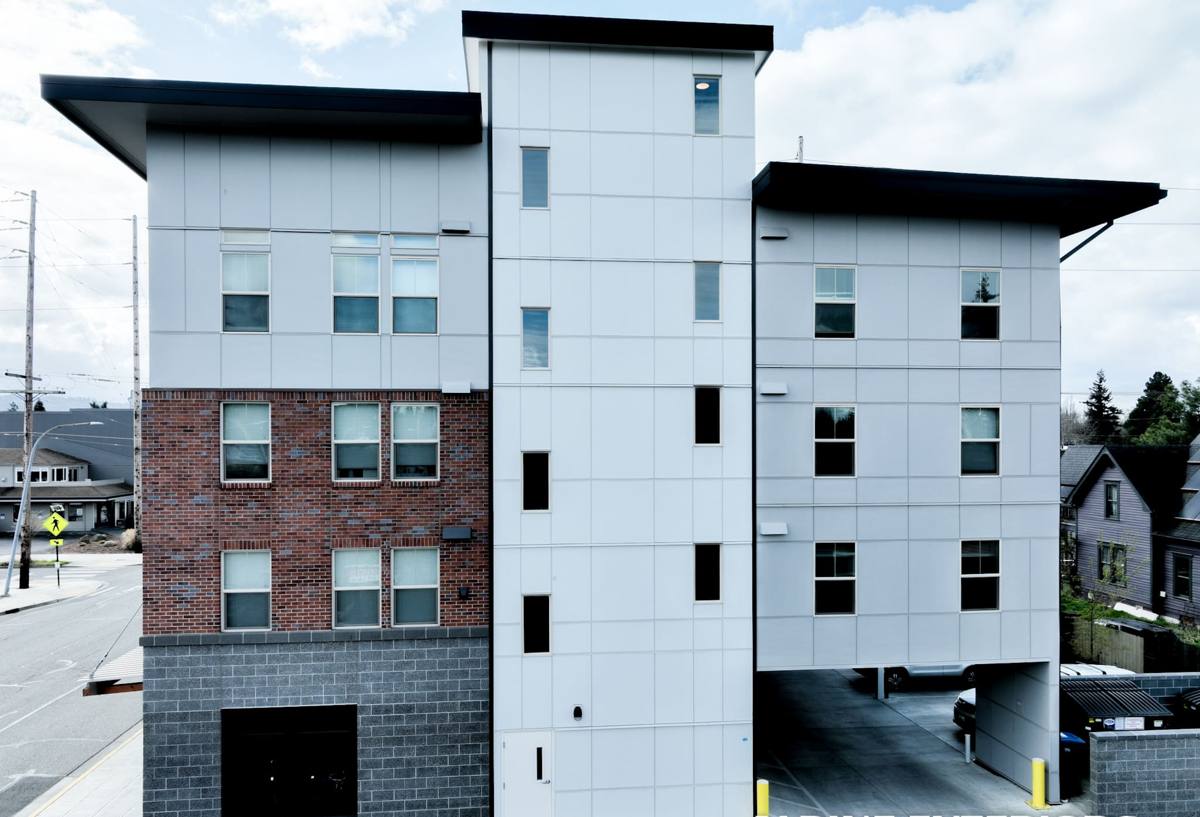
What Bellingham Bay's Climate Does to Windows Over Time
Sunnyland sits close enough to Bellingham Bay that salt-laden air is a real factor, and it works quietly in the background on hardware and finishes long before anyone notices a leak. Add in the region's driving, wind-blown rain — which hits windows at an angle rather than straight down — and a long moss season that keeps exterior surfaces damp for months at a stretch, and you have three separate mechanisms working on a window at once.
- Salt air accelerates corrosion on aluminum frames, steel reinforcement, hinges, and cheaper hardware finishes, especially on window walls facing the water or prevailing wind.
- Driving rain exploits any gap in flashing or sealant around the window opening, pushing moisture sideways into wall cavities instead of running harmlessly down the siding.
- Extended damp/moss season keeps wood sills, trim, and sashes wet for long stretches, which is exactly the condition wood rot and mildew need to take hold.
None of this means Bellingham is an unusually harsh place to own a house. It means the margin for error on installation detail is smaller here than it would be in a drier inland climate, and it's why we don't treat "the window looks fine from the street" as proof the assembly behind it is sound.
Why Older Sunnyland Homes Need Extra Attention
Older single-pane or early double-pane windows in this neighborhood were often installed with building methods that predate modern flashing standards. Even if the sash and glass have held up, the original opening may never have had proper water management built in. Replacing the window without addressing that opening just repeats the same vulnerability with new materials.
Signs a Sunnyland Home Needs Window Replacement
Some of these show up inside the house, others only show up if you know where to look outside.
- Fogging or a permanent haze between panes on double-glazed units — the seal has failed and the insulating gas is gone.
- Sashes that are hard to open, don't stay open, or rattle in the wind.
- Soft, spongy, or visibly rotted wood at the sill or lower frame corners.
- Peeling paint or bubbling finish concentrated around the window rather than the whole wall.
- Persistent condensation on the interior glass or sill in cool weather, even with normal ventilation.
- A noticeable cold draft at the frame edge when it's windy outside.
- Visible daylight or gaps around the frame where it meets the siding or trim.
- Corrosion or chalky white buildup on aluminum-framed windows facing the water side of the house.
Any one of these can be a minor fix. Several at once, especially on an older window, usually means the unit and its surrounding assembly are both due for replacement rather than another round of caulk and paint.
What a Correct Window Replacement Job Actually Involves
A window replacement is judged on what you can't see once the trim goes back on. The steps that matter most, in order:
- Remove the old window and inspect the rough opening for rot, soft framing, or existing water damage before anything new goes in. This is where problems from decades of Bellingham rain usually surface.
- Repair or rebuild the opening if the framing has any deterioration — installing a new window into a compromised opening just hides the problem.
- Install a proper drainage plane and flashing so any water that gets behind the siding is directed back out, not trapped against the framing. This step matters more in a driving-rain climate than in most parts of the country.
- Set the window plumb, level, and square with correct shimming — a window that's slightly out of square will bind, leak, or wear its hardware unevenly.
- Seal and insulate the gap between the window frame and rough opening with the right materials — not just spray foam alone, and not just caulk alone.
- Finish exterior trim and flashing so water sheds away from every seam, with particular attention to the top flashing, which does most of the work keeping wind-driven rain out.
- Test operation and seal quality before calling the job done.
Choosing the Right Window Type for This Neighborhood
There's no single "best" window material — the right choice depends on the home's age, exposure, and how much upkeep the homeowner wants to do. Here's how the common options actually compare for a coastal Whatcom County home:
| Frame Material | Moisture/Salt Behavior | Maintenance | Best Fit |
|---|---|---|---|
| Vinyl | Won't corrode or rot; seams can be a weak point if installation is poor | Low — no painting, occasional cleaning | Most homes prioritizing value and low upkeep |
| Fiberglass | Very stable in wet/salt exposure; minimal expansion or contraction | Low | Homes with heavy water/wind exposure wanting a long-term install |
| Wood (clad or unclad) | Needs consistent finish maintenance to keep moisture out, especially in a long moss season | High — refinishing on a schedule | Homeowners prioritizing a traditional look and willing to maintain it |
| Aluminum | Prone to corrosion and pitting in salt air over time; conducts cold | Moderate | Generally not our first recommendation this close to the bay |
We'll walk through these trade-offs honestly during an estimate rather than steering everyone toward one product. The point isn't that any of these materials is bad — it's matching the material's known behavior to this specific site's exposure.
Our Process, Start to Finish
- On-site assessment — we look at the existing windows, the openings behind them, and the specific exposure of each elevation of the house (a window facing the water sees different conditions than one on a sheltered wall).
- Written estimate — clear scope, materials, and pricing, with options if more than one approach makes sense.
- Scheduling around weather — openings are exposed during the swap, so we plan installation days with Bellingham's rain patterns in mind rather than working through it.
- Removal and opening inspection — any rot or damage found gets flagged and priced before we proceed, no surprise change orders after the fact.
- Installation — following the flashing and sealing sequence above, on every window, not just the ones that are visible from the street.
- Final walkthrough — operation check, seal check, and cleanup before we consider the job finished.
What Affects the Cost
| Factor | Why It Matters |
|---|---|
| Window count and size | Larger openings and more windows scale both material and labor cost |
| Frame material | Vinyl is typically the most budget-friendly; fiberglass and wood cost more up front |
| Condition of the rough opening | Rot or framing repair adds labor beyond the window unit itself |
| Number of stories / access | Second-story or hard-to-access windows take more time and equipment |
| Glass package | Upgraded low-E coatings or gas fills add cost but improve comfort and efficiency |
We give a firm, itemized number after seeing the actual openings — not a phone-quote guess — because on older Sunnyland homes, the condition behind the old window is often the biggest variable in the final price.
Why Hiring a Crew That Already Works This Neighborhood Matters
A window installer who only sees a house once has no reference for how that house's specific exposure — bay-facing wall, prevailing wind side, shaded and mossy roofline — behaves over a full year. A crew that regularly works Bellingham and Whatcom County homes has seen how driving rain finds gaps, how salt air ages hardware, and how a long wet season punishes any shortcut in the flashing detail. That local pattern recognition is what separates a window that's still tight in year fifteen from one that's leaking again in year three.
It also means straightforward answers: which walls of a house are worth upgrading first, which frame materials hold up on this side of town, and what a realistic maintenance schedule looks like for whatever you choose — instead of a one-size-fits-all sales pitch.
If you're weighing window replacement for a Sunnyland home, we're happy to take a look and give you a straight, no-pressure estimate — no obligation, just an honest read on what your windows and openings actually need. Use the form below to get started.