 Bellingham Exterior
 Windows Built for Columbia's Coastal Weather
The Columbia neighborhood sits close enough to Bellingham Bay that salt-laden air is a daily fact of life, not an occasional nuisance. Add Whatcom County's long wet season — months of driving rain, low sun angles, and a moss season that seems to start earlier every year — and you have a climate that is genuinely hard on windows. Frames corrode faster near the water. Wood trim stays damp longer under tree cover and north-facing walls. Seals that would last two decades in a drier climate can start failing in twelve or fifteen years here.
Window installation in a neighborhood like Columbia isn't just about swapping out old glass for new. It's about choosing materials and installation details that actually hold up to this specific mix of salt, rain, and shade, and installing them in a way that keeps water out of the wall system for the life of the window.
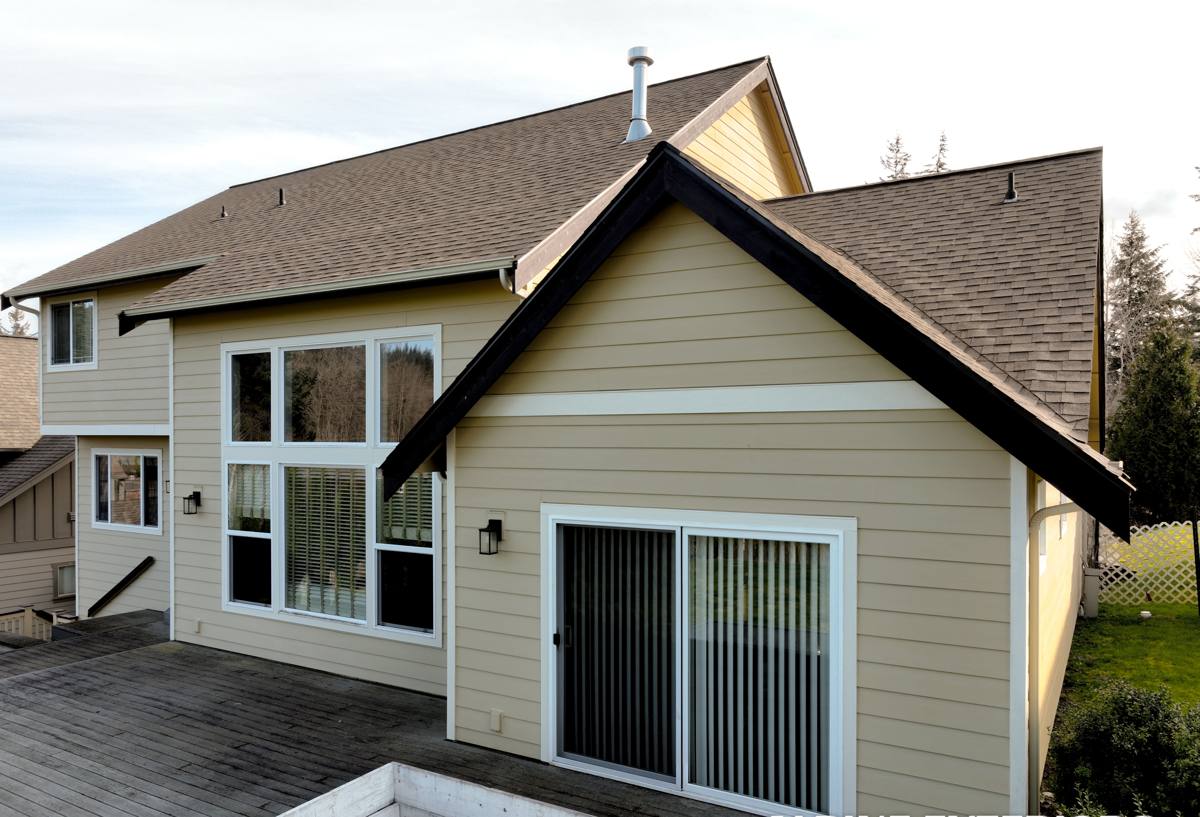
How to Tell When Columbia Windows Need Replacing
Older homes in this part of Bellingham often still have their original wood or early aluminum windows, and a lot of them are past the point where repair makes sense. Look for these signs:
- Fogging or a permanent haze between panes — the seal has failed and the argon or air gap is gone
- Soft, spongy, or discolored wood at the sill or lower corners of the frame
- Drafts you can feel with a hand held near the frame on a windy day
- Difficulty opening, closing, or locking — often a sign the frame has swollen or warped from moisture
- Visible moss or algae growth on the exterior trim or sill, especially on shaded or north-facing walls
- Condensation forming on the inside of the glass regularly, even with normal household humidity
Any one of these on its own might just mean a repair. Several together, especially on a window over 20 years old, usually means it's cheaper long-term to replace than to keep patching.
What a Correct Installation Actually Involves
Window installation looks simple from the outside — old window out, new window in — but the parts nobody sees are what determine whether that window is dry in ten years or rotting the wall around it. In a wet, salt-exposed area like Columbia, we're especially careful about a few things:
Flashing and Water Management
Every window opening gets flashed so that any water that reaches the frame is directed back out, not down into the wall cavity. This means sill pan flashing under the window, properly lapped flashing tape at the sides and head, and a drainage path that works with your home's existing weather-resistive barrier rather than against it. This detail matters more here than in drier climates, because Bellingham's rain isn't occasional — it's sustained, wind-driven, and frequent enough that any shortcut in the flashing shows up as a problem within a few wet seasons.
Air and Moisture Sealing
Low-expansion foam or backer rod and sealant around the frame, sized and applied correctly, closes the gap between the window unit and the rough opening without trapping moisture. We don't over-foam a window — too much rigid foam can bow the frame and cause it to operate poorly, which becomes its own moisture problem when the sash doesn't seat properly anymore.
Exterior Trim and Caulking
The exterior caulk joint is the first line of defense and also the first thing salt air and UV break down. We use sealants rated for exterior exposure and pay attention to joint design so water sheds away from the window rather than pooling against it.
Choosing Materials for Whatcom County Conditions
There's no single "best" window material — it depends on your home's style, your budget, and how much maintenance you want to take on. Here's how the common options hold up in a coastal, high-moisture setting like Columbia:
| Material | Salt Air / Moisture Performance | Maintenance | Typical Fit |
|---|---|---|---|
| Vinyl | Good — won't rust or rot, seams are the main watch point | Low | Most retrofit and replacement projects |
| Fiberglass | Very good — dimensionally stable in wet/dry cycling, resists corrosion | Low | Homes wanting a wood look without wood upkeep |
| Wood (clad exterior) | Depends entirely on the cladding — bare wood exteriors struggle here | High if exterior is exposed wood | Historic or character homes, interior wood look |
| Aluminum | Poor to fair near the water without upgraded finishes — prone to corrosion and condensation | Moderate | Best reserved for specific architectural needs |
For most Columbia homes, we steer clients toward vinyl or fiberglass frames specifically because of the salt exposure this close to the bay. That's a judgment call based on decades of watching how different frame materials age in this climate, not a knock on any manufacturer — wood-clad and aluminum windows have their place, and we're glad to talk through the trade-offs for your specific home.
Glass Packages Worth Considering
Glass matters as much as frame material in the Pacific Northwest, where you're paying to keep heat in far more often than to keep it out.
- Double-pane, low-E glass — the standard minimum for this climate; cuts heat loss and UV fading
- Argon or krypton gas fill — improves insulation value with no visible difference
- Warm-edge spacers — reduce condensation risk at the glass edge, which matters in our humid winters
- Triple-pane — worth considering for north-facing rooms, street noise, or homes with persistent condensation issues, though it adds cost and weight
Our Installation Process
The process is the same whether it's one window or a whole house, just scaled up:
- On-site assessment — we check rough openings, look for existing water damage or rot, and measure for accurate ordering
- Product selection — we walk through frame and glass options suited to your home's exposure and your budget
- Removal — old windows come out carefully, and we inspect the opening for hidden damage before anything new goes in
- Repair as needed — any rotted framing or compromised sheathing gets fixed before the new window is set; we don't install over a problem
- Flashing and installation — sill pan, side and head flashing, correct shimming and fastening, and low-expansion sealing
- Exterior finish — trim, caulking, and paint or stain matching as needed
- Final check — operation, locks, weatherstripping, and a walkthrough with you before we call it done
What Window Installation Costs
Costs vary by window size, material, glass package, and how much work the opening needs, but these are the main factors that move the price:
| Factor | Why It Matters |
|---|---|
| Frame material | Vinyl is typically the most affordable; fiberglass and wood-clad cost more |
| Window size and type | Large picture windows and operable bays cost more than standard double-hungs |
| Glass package | Triple-pane and specialty coatings add cost over standard low-E double-pane |
| Opening condition | Rot repair or reframing adds labor beyond the window itself |
| Number of windows | Whole-house projects typically bring a better per-window rate than single replacements |
We give straightforward, itemized estimates so you can see exactly what you're paying for — no vague bundled numbers.
Why a Crew That Knows Columbia Makes a Difference
A window installer who works all over the country will install a window correctly in a dry climate and never think twice about it. A crew that works Bellingham and Whatcom County every week thinks about salt exposure, moss growth patterns, and sustained wind-driven rain by default, because we see what happens when those things aren't accounted for. We know which details matter more here than they would inland, and we know what a home in this specific setting is up against year-round. That local familiarity shows up in the flashing details, the sealant choices, and the honest conversation about which materials are worth the extra cost for a home this close to the bay.
Keeping New Windows Performing for the Long Haul
A correctly installed window still benefits from some basic upkeep, especially in this climate:
- Rinse salt residue off frames and glass periodically, especially after storms
- Clear moss and debris from sills and tracks before it holds moisture against the frame
- Check exterior caulk joints yearly and re-caulk if you see cracking or gaps
- Keep weep holes clear so water can drain out of the frame system
- Test locks and operation each season — sticking can signal a moisture or settling issue worth catching early
If your Columbia home has windows that are drafty, fogged, hard to operate, or just past their prime, we're happy to take a look and give you a straightforward, no-pressure estimate. Fill out the form below and we'll get back to you.