 Bellingham Exterior
 Roofing a Home Near the Water in Silver Beach
Silver Beach sits close enough to Bellingham Bay that the weather your roof deals with is a little different from a roof three miles inland. Salt-laden air moves through the neighborhood off the water, the tree cover on many lots keeps roofs shaded and damp longer after a storm, and the long stretch of gray, wet months between fall and spring gives moss every opportunity it needs to take hold. None of that is unusual for Whatcom County, but it does mean a roof installed here needs to be specified and installed with those conditions in mind, not just installed to code and left at that.
When we install a new roof in Silver Beach, we're thinking about three things the whole time: how the materials and fasteners will hold up to salt air over the long run, how the roof sheds and drains water fast enough that nothing sits and soaks in, and how much moss pressure the site has based on tree cover and sun exposure. Get those three right and a roof in this neighborhood should perform the way it's supposed to for its full expected life. Get them wrong and you'll see problems well before the shingles or panels themselves wear out.
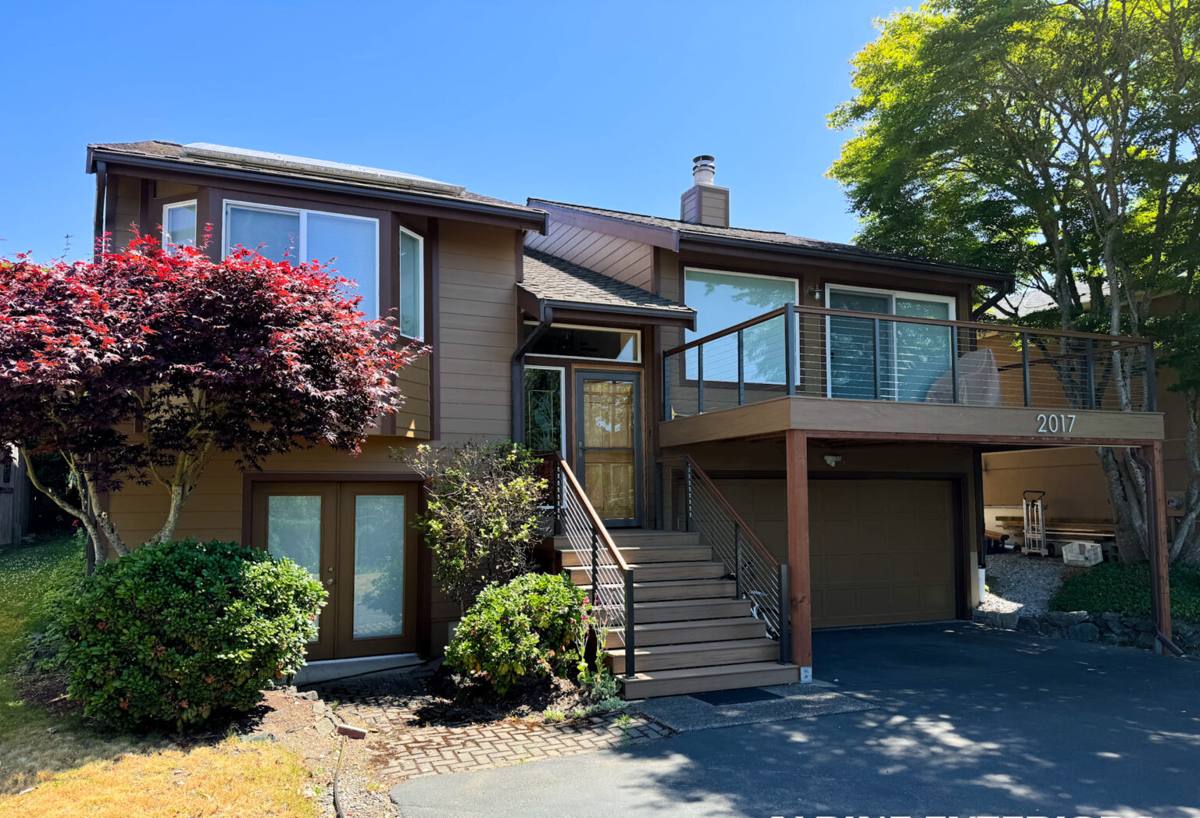
What Salt Air Actually Does to a Roof
Coastal salt air is corrosive to exposed metal. That's the part that matters most on a roof. Nails, flashing, drip edge, vent stacks, and any exposed fasteners are all candidates for accelerated corrosion if they're not rated for coastal exposure. A roof that would hold up fine for decades further inland can start showing rust streaks, failing fasteners, or pitted flashing years earlier near the water.
This doesn't mean you need an exotic roofing system for a Silver Beach home. It means the details have to be right:
- Fasteners and flashing rated for coastal or marine exposure, not standard-grade galvanized
- Corrosion-resistant metal at valleys, chimneys, and any roof-to-wall transitions
- Vent stacks and pipe boots that won't degrade quickly from salt exposure and UV together
- Careful attention to any exposed metal on the roof's most weather-facing slope
We spec materials for Silver Beach jobs the same way we would for any home this close to the water — assuming the salt exposure is real, not occasional, and building the roof to hold up to it over years, not just pass inspection on day one.
Driving Rain and Wind-Driven Water
Bellingham gets a lot of rain, and near the water it often comes in sideways. Wind off the bay can drive rain up and under roofing materials at eaves, valleys, and any place two roof planes meet — the exact spots where a roof is most likely to leak if it wasn't installed with wind-driven water in mind.
Where Driving Rain Causes Problems
The weak points aren't usually the open field of the roof — they're the transitions. Valleys where two slopes meet, the line where a roof meets a chimney or wall, and the eaves themselves are where wind-driven rain finds gaps in a roofing system that wasn't installed carefully. A correct installation uses proper underlayment coverage, ice-and-water shield or equivalent membrane at vulnerable areas, and step flashing or valley metal installed in the right sequence with the roofing material — not caulked over as an afterthought.
We install with the assumption that rain in Silver Beach will hit the roof from an angle, not just fall straight down. That changes how underlayment is lapped, how flashing is sequenced, and how much attention goes into the edges of the roof versus the open field.
Moss: The Long-Season Local Problem
Whatcom County's wet season runs long, and shaded, tree-covered lots — common in Silver Beach — stay damp for extended stretches even when it isn't actively raining. That's exactly the environment moss needs. Moss isn't just cosmetic. It holds moisture against the roofing material, works its way under shingle tabs and shakes, and over time it can lift material and create paths for water to get underneath.
Reducing Moss Pressure at Installation
You can't eliminate moss risk on a shaded, moist lot, but you can reduce it significantly with the right approach at install time:
- Zinc or copper strips installed near the ridge on moss-prone roofs, which naturally inhibit growth as rain washes over them
- Roofing materials with algae- and moss-resistant granules or coatings where appropriate for the home
- Proper attic ventilation so the roof deck itself dries out between rain events instead of staying damp from underneath
- A roof design and material choice that doesn't trap debris and standing moisture in the first place
We also talk with homeowners honestly about tree cover. If a lot has heavy shade from surrounding trees, that's a real factor in how often the roof will need moss treatment or gentle cleaning over its life — it's better to know that going in than be surprised by it five years later.
What a Correct New Roof Installation Includes
A new roof is more than shingles or panels nailed down over the old ones. Every full installation we do includes:
- Tear-off and deck inspection — removing the old roofing down to the deck and checking for rot, soft spots, or damage that needs to be repaired before anything new goes on. Roofing over problems just hides them.
- Deck repair as needed — replacing any damaged sheathing so the new roof has a solid, dry surface to attach to.
- Underlayment and water barrier — synthetic underlayment across the field, with ice-and-water shield or equivalent membrane at eaves, valleys, and other vulnerable areas.
- Flashing — new flashing at chimneys, walls, skylights, and valleys, sized and sequenced correctly rather than reused from the old roof.
- Ventilation check — confirming intake and exhaust ventilation is adequate, since poor attic ventilation shortens roof life and increases moss and moisture problems.
- Roofing material installation — installed to manufacturer specification, which matters for both performance and warranty coverage.
- Final details — vent boots, ridge caps, drip edge, and cleanup, with a walkthrough so you know exactly what was done.
Choosing Materials for a Silver Beach Home
There isn't one right roofing material for every home in this neighborhood — it depends on the house, the budget, the roof's slope and shade exposure, and how long you plan to own the home. What we won't do is recommend a system based only on upfront cost without walking through how it'll actually perform given the salt air, rain, and moss factors specific to this area.
| Material | Coastal & Moisture Performance | Typical Lifespan | Maintenance Considerations |
|---|---|---|---|
| Architectural asphalt shingle | Good with proper flashing and algae-resistant granules; standard choice for most homes | 25–30 years | Periodic moss treatment on shaded lots; inspect flashing over time |
| Standing seam metal | Excellent water shedding on steep slopes; needs coastal-rated fasteners and coatings near the water | 40–50+ years | Low maintenance once installed correctly; higher upfront cost |
| Cedar shake | Traditional look but more sensitive to sustained moisture and moss in shaded, damp conditions | 20–30 years | Requires more regular upkeep in this climate; higher maintenance burden |
| Synthetic/composite shingle | Good moisture and impact resistance; consistent performance in wet climates | 30–50 years | Generally low maintenance; verify manufacturer warranty terms |
We'll walk you through these trade-offs based on your specific roof — its slope, shade, and exposure — rather than a one-size-fits-all recommendation.
What Drives Cost on a New Roof
Every roof is priced based on the specifics of the job, but the main factors that move the number are consistent:
- Roof size and the number of planes, valleys, and penetrations
- Roof pitch — steeper roofs take longer and require more safety setup
- Whether the existing roof needs full tear-off or has deck damage to repair
- Material choice, from standard asphalt shingle up through metal or composite systems
- Ventilation upgrades if the current attic ventilation is inadequate
- Access — trees, tight lot lines, or difficult staging areas near the water can add time
We give straightforward written estimates that break these factors out so you can see exactly what you're paying for and why, rather than a single number with no explanation behind it.
Why Local Roofing Experience Matters Here
A roofing crew that mostly works inland, drier parts of the county can do fine work and still miss the details that matter on a lot like this — the coastal-rated fasteners, the moss-inhibiting strips, the flashing sequence that accounts for wind-driven rain off the bay. Working in Silver Beach and similar Bellingham neighborhoods regularly means we're not guessing at what this environment does to a roof over time — we're building for it from the start.
We're licensed to work in Washington and familiar with Whatcom County permitting and inspection requirements, so the process moves smoothly from estimate through final sign-off. We also stand behind the work with clear warranty terms on both materials and labor, explained plainly before you sign anything.
Signs Your Silver Beach Roof May Need Replacement
Some homeowners come to us after storm damage or an obvious leak. Others are trying to figure out whether repair still makes sense or whether it's time for a full replacement. A few signs worth a professional look:
- Shingles that are curling, cracking, or losing significant granules
- Heavy, persistent moss growth that keeps returning after cleaning
- Soft spots on the roof deck or visible sagging
- Water stains on interior ceilings, especially after wind-driven rain
- Rusting or deteriorating flashing and vent boots
- A roof approaching or past its expected material lifespan
Any one of these is worth a look before it turns into a bigger repair. We'll give you an honest assessment of whether repair or full replacement is the right call for your situation — we don't push replacement when a repair will genuinely do the job.
If you're weighing a new roof for your Silver Beach home, we're happy to come take a look and put together a free, no-pressure estimate. Use the form below to get started.