 Bellingham Exterior
 Storm Damage Roof Repair for York's Older Housing Stock
York is one of Bellingham's established in-town neighborhoods, with a housing mix that runs from early-and-mid-20th-century homes to newer infill construction. That mix matters when a windstorm or heavy rain event rolls through, because older roof framing, older flashing details, and decades of prior repairs don't always respond to a storm the same way a newer roof does. A repair that works on a five-year-old roof in a new subdivision can miss the actual problem on a roof that's already carrying wear from Bellingham Bay's salt air and Whatcom County's long wet season.
This page covers what storm damage repair actually looks like for a York home specifically — what to watch for, what a correct repair involves, and how we handle the job from the first call to the final cleanup.
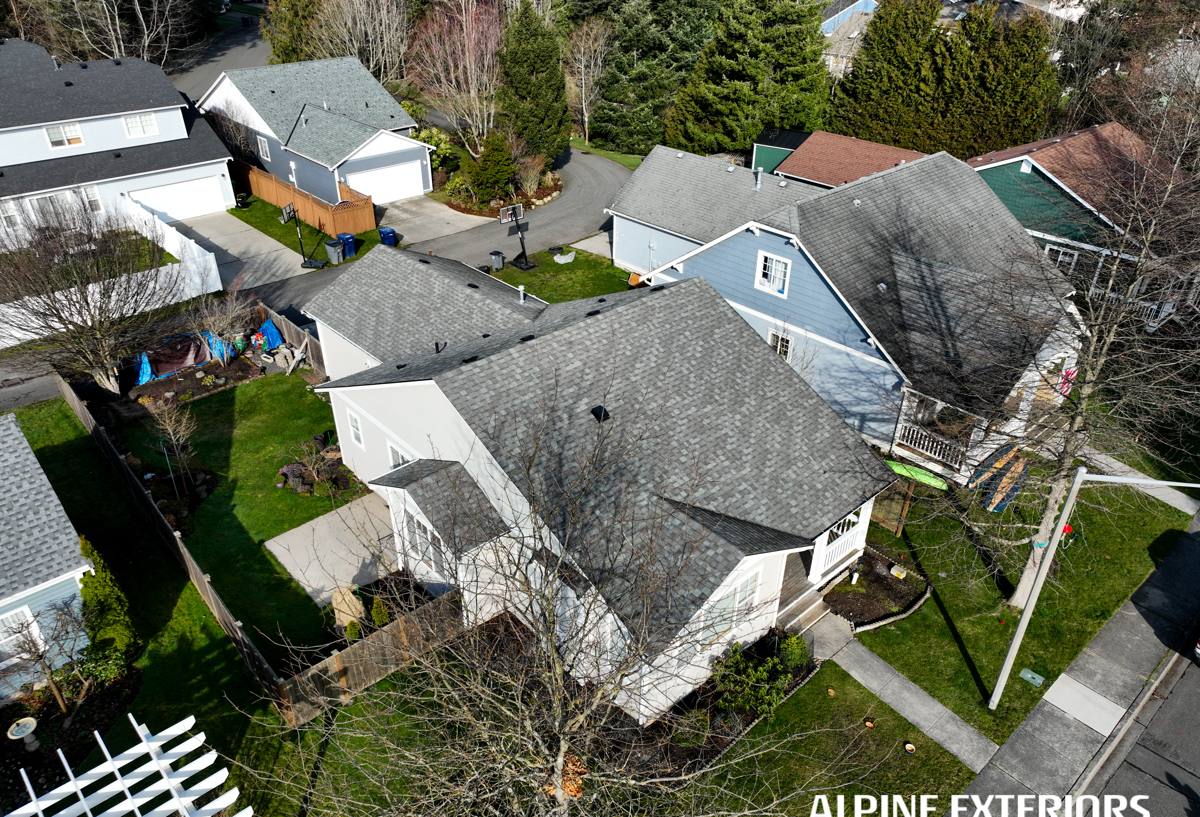
Why York's Climate Makes Storm Damage Worse Than It Looks
Bellingham sits close enough to the water that salt-laden air is a real factor on roofing metal, fasteners, and flashing — it accelerates corrosion in ways that inland homes never deal with. Add driving rain that comes in sideways during a windstorm, and you get wind-driven water finding its way under shingles or through marginal flashing that would never leak in a straight-down rain. Then layer on Whatcom County's long moss season: moss holds moisture against the roof surface for months at a time, softening shingles and, in bad cases, rotting the decking underneath before a storm ever hits.
None of these three factors cause damage in isolation as dramatically as they do together. A roof with moss buildup and some UV wear from summer, hit by a wind event with sideways rain, is far more likely to leak than a clean, well-ventilated roof facing the same storm. That's the pattern we see across York and the rest of Bellingham every storm season — the roofs that fail are usually the ones that had a smaller, unaddressed problem first.
What Actually Counts as Storm Damage
- Shingles lifted, cracked, or torn loose by wind gusts
- Wind-driven rain forced under shingle tabs or through aging flashing at chimneys, valleys, and roof-to-wall transitions
- Branches or debris impact from falling limbs during high winds
- Granule loss and bruising from wind-blown debris, even without visible holes
- Moss-softened areas that give way or accelerate leaking once wind and rain hit them
- Gutter and downspout damage that backs water up under the roof edge
Why Waiting on Storm Damage Costs More in This Climate
A lifted shingle or a small flashing gap doesn't look urgent right after a storm. In a drier climate, it might sit fine for months. In Bellingham's rain pattern, that same gap gets tested again and again through the wet season, and each event pushes a little more water into the decking, insulation, or framing. By the time a stain shows up on a ceiling inside the house, the damage has usually been building for weeks or longer.
There's also a practical insurance angle: most homeowner policies expect prompt reporting and documentation of storm-related damage. Waiting doesn't just risk more water intrusion — it can complicate a claim if an adjuster can't tell whether damage happened during the storm event or built up afterward from a delayed repair.
What a Correct Storm Repair Actually Involves
Storm repair done right isn't just replacing the shingles that are obviously missing. A thorough repair addresses the cause of the failure, not just the visible symptom.
Inspection Before Anything Else
We start on the roof surface and in the attic when accessible, checking for the extent of the damage, whether water has already reached the decking, and whether moss or prior wear contributed to the failure. This step determines whether the job is a targeted repair or something larger.
Decking and Structure
If water has been getting in for a while, the plywood or plank decking underneath can be softened or rotted. Patching shingles over compromised decking is a short-term fix that fails again in the next storm — any soft or delaminated decking gets replaced before new roofing goes down.
Flashing and Transitions
Most storm leaks in this region trace back to flashing — around chimneys, at wall-to-roof intersections, in valleys, and around vent penetrations — rather than the shingle field itself. A correct repair rebuilds or reseats flashing rather than just caulking over a gap, since caulk is a temporary answer, not a permanent one.
Material Matching
Where we're doing a targeted repair rather than a full re-roof, we match shingle type, color, and exposure as closely as the existing roof allows, so the repair blends in rather than standing out as an obvious patch.
Storm Damage: Type, Cause, and Urgency
| Damage Type | Common Local Cause | Repair Urgency | Typical Fix |
|---|---|---|---|
| Lifted or torn shingles | Wind gusts during a storm event | High — exposed decking | Replace affected shingles, reseal tabs |
| Flashing leaks | Salt-air corrosion, wind-driven rain | High — active water intrusion | Rebuild or reseat flashing |
| Moss-softened shingles | Long wet season, shaded roof areas | Moderate, escalates with storms | Moss removal, treatment, spot shingle replacement |
| Granule loss / bruising | Wind-blown debris impact | Moderate — shortens shingle life | Assess for replacement vs. monitor |
| Gutter or downspout damage | Wind and debris load | Moderate — causes secondary water damage | Repair or replace gutter sections |
| Rotted decking | Prolonged undetected leak | High — structural | Cut out and replace decking before re-roofing |
Our Storm Repair Process in York
We keep this process the same for every storm call, whether it's a single lifted shingle or a section that needs full replacement:
- Initial assessment. We inspect the roof, document the damage with photos, and identify whether the issue is isolated or connected to a larger underlying problem like moss damage or aged flashing.
- Emergency mitigation if needed. If there's active water intrusion, we tarp or temporarily seal the affected area to stop further damage while the full repair is scheduled.
- Written scope and honest pricing. You get a clear explanation of what's damaged, what needs to be repaired versus replaced, and why — no upsell language, just what the roof actually needs.
- Repair. We complete the work using materials matched to your existing roof where possible, following manufacturer installation specs rather than shortcuts.
- Cleanup and final check. Debris, old materials, and fasteners are cleared from the yard and gutters before we call the job done.
Insurance and Documentation
Many storm repairs in Bellingham involve a homeowner's insurance claim. We're glad to provide the photo documentation and written scope you'll need for an adjuster, and we can walk the roof with an adjuster if that's helpful. We don't inflate estimates to work around a deductible, and we won't tell you a repair is storm-related if the underlying cause is actually long-term wear like moss damage or an aging roof nearing the end of its service life — that distinction matters for your claim and for setting honest expectations about what's ahead for the roof.
What to Do Right After a Storm
- Check the attic (if accessible) for new water stains, damp insulation, or daylight coming through the roof deck
- Look at ceilings and upper walls inside for new discoloration after a storm
- From the ground, look for shingles in the yard, on the driveway, or caught in gutters
- Check gutters and downspouts for damage or granule buildup, which can signal shingle wear
- Avoid getting on the roof yourself, especially on wet or moss-covered surfaces — this is where most storm-related falls happen
- Take photos of any visible exterior damage from the ground for your own records
- Call for an inspection promptly rather than waiting to see if a small leak gets worse
Why a Crew That Already Works in York Matters
York's mix of older homes and infill construction means roof framing, ventilation, and prior repair quality vary a lot from house to house, even on the same block. A crew that regularly works this neighborhood has already seen the common flashing details, roof pitches, and moss patterns typical of the area's tree cover and building age, which shortens the time it takes to correctly diagnose a storm repair instead of guessing. We're also familiar with Bellingham and Whatcom County permitting requirements when a repair crosses into re-roofing territory, so there are no surprises mid-project.
Local also means faster response. After a regional windstorm, roofing crews get busy fast, and homes with active leaks need attention within days, not weeks. Working a defined service area lets us get to York calls quickly rather than spreading thin across a much wider region.
Get a Free, No-Pressure Estimate
If your York home took wind or rain damage in a recent storm — or you just want a roof checked out before the next one hits — we'll come take a look, give you a straight answer about what's going on, and put together a clear estimate. There's no obligation and no pressure. Use the form below to get started.