 Bellingham Exterior
 Storm Damage Roof Repair in Barkley
Barkley sits close enough to the water and open enough to weather that its roofs take a different kind of beating than roofs a few miles inland. When a windstorm rolls through Whatcom County, or a long stretch of driving rain sits over Bellingham for days, Barkley homes show it first — lifted shingles, saturated felt, moss-clogged valleys that back water up under the roofing instead of shedding it. This page is about one job: fixing storm-related roof damage on Barkley homes, done correctly the first time, by a crew that already knows what this neighborhood's roofs are up against.
"Storm damage repair" gets used loosely in this trade. Some contractors mean a quick patch to stop a leak. Others mean a full diagnostic that finds every place wind and water actually got in, not just the spot that's dripping onto the ceiling. We mean the second one. A storm rarely damages just the one shingle you can see from the ground — it usually finds two or three weak points at once, and only fixing the obvious one means you're back up on that roof again next winter.
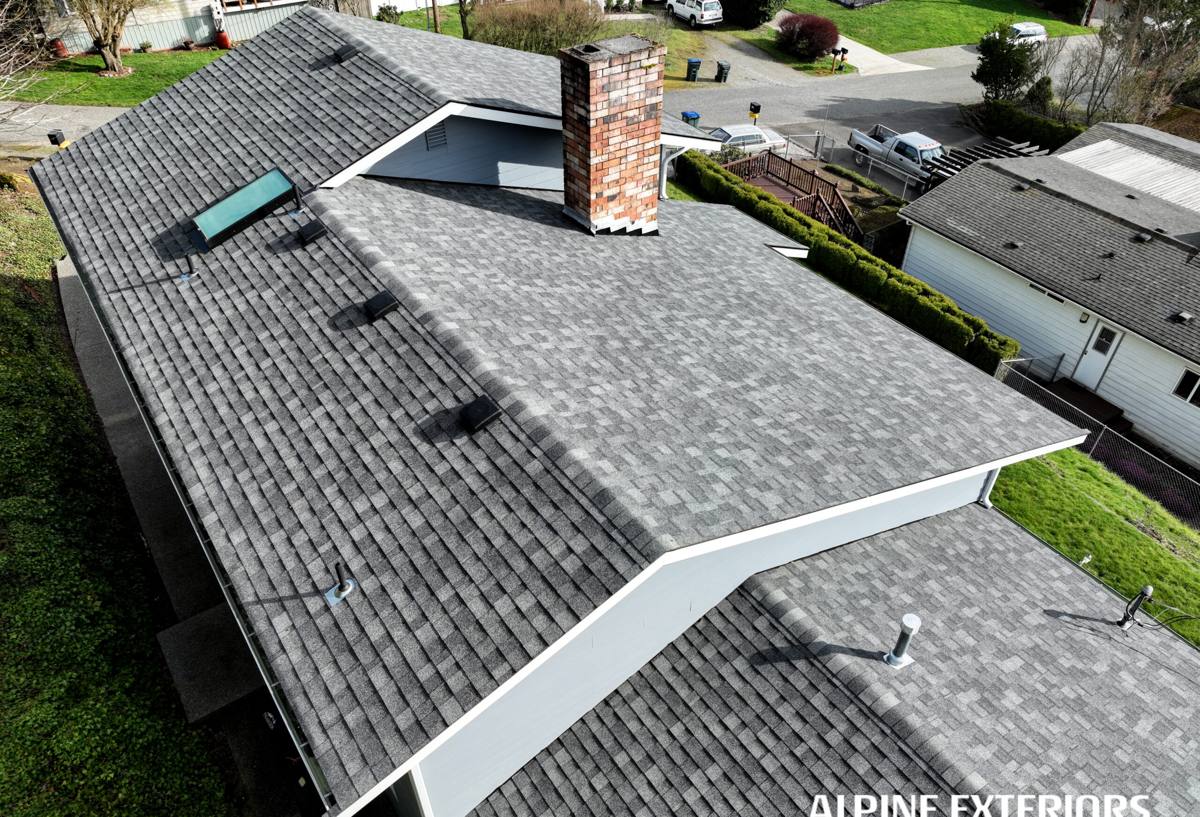
Why Barkley Roofs Take This Kind of Damage
Bellingham's climate is hard on roofs in general, but Barkley's location adds a few specific pressures worth understanding before any repair work starts.
Salt Air and Metal Fatigue
Proximity to Bellingham Bay means a steady low level of salt in the air, even well inland from the water itself. Salt air accelerates corrosion on exposed metal — flashing, fasteners, gutter hardware, and the metal components in roof vents and pipe boots. A fastener that would last two decades in a dry inland climate can start weeping rust streaks and losing grip strength much sooner here. After a storm, we check metal condition as carefully as we check the shingles or panels themselves, because corroded flashing is often the real reason water got in, not a torn shingle.
Driving Rain
Whatcom County storms don't just drop rain straight down — wind-driven rain comes in at an angle, which means it can get up under shingle tabs, behind step flashing, and into any gap that would stay dry in a calm rain. A roof that's held up fine for years under normal weather can suddenly leak during one sideways storm simply because the wind exposed a weak point that was never tested before. This is why storm damage repair has to include an inspection of flashing and edge details, not just a look at the field of the roof.
A Long Moss Season
Bellingham's mild, wet climate gives moss a long growing window — often close to nine or ten months of the year with conditions damp enough to sustain it. Moss holds moisture directly against roofing material, and on a roof that's already stressed from a storm, that trapped moisture speeds up rot in the decking underneath. A repair that patches storm damage but ignores an existing moss mat is a repair that will need to be revisited.
What Actually Counts as Storm Damage
Homeowners often assume "storm damage" means missing shingles after a dramatic windstorm. In practice, it covers a wider range of issues, some obvious and some that only show up as a slow leak weeks later.
- Shingles lifted, curled, or torn loose by wind, even if none are fully missing
- Granule loss from wind-driven rain and debris, which thins the shingle's UV and water protection
- Flashing pulled away from chimneys, skylights, or wall-to-roof joints
- Gutters pulled loose or overflowing, sending water back up under the roof edge
- Punctures or dents from falling branches or wind-blown debris
- Saturated or sagging decking where water has been getting in gradually
- Moss mats loosened and shifted by wind, exposing bare shingle underneath
Some of these are visible from the ground. Most aren't. That's the main reason a proper inspection after a storm involves getting on the roof, not just looking up at it from the yard.
What a Correct Repair Involves
Full Diagnostic First
Before any material goes on the roof, we identify every point of entry, not just the one causing the visible leak. That means checking the field of the roof, all flashing points, valleys, penetrations (vents, pipes, skylights), and the roof edge and gutters. Water travels sideways under roofing material before it shows up as a ceiling stain, so the spot where you see damage inside the house is often not directly below where the water got in.
Matching the Repair to the Damage
Storm repair isn't one-size-fits-all. A few isolated lifted shingles might only need to be re-sealed or replaced individually. A section with granule loss and exposed felt might need a larger patch. Damaged decking underneath always needs to be replaced, not just covered over — roofing material laid over soft, wet decking will fail again, usually faster than the first time. Part of an honest repair is telling you clearly which category your roof falls into.
Flashing and Ventilation Get Checked, Not Skipped
Because Barkley's storm damage so often traces back to flashing failure rather than the shingles themselves, we treat flashing repair as a core part of the job, not an upsell. We also check attic ventilation while we're up there — poor ventilation traps moisture that mimics or worsens storm damage over time, and it's a lot cheaper to correct during a repair than to discover later as a separate problem.
Moss and Debris Removal Where It Affects the Repair
If moss or built-up debris is holding moisture against the repair area, we clear it as part of the job. Sealing a leak under a moss mat without removing the moss just delays the next leak.
Our Process
- Contact and initial description. Tell us what you're seeing — a leak, missing shingles, visible damage after a specific storm — and roughly when it started.
- On-roof inspection. We get up on the roof, not just the ladder, and document damage at the source, including flashing, valleys, and penetrations.
- Written findings and options. You get a clear explanation of what's damaged, what's causing it, and what a correct fix involves — including whether a targeted repair is realistic or whether damage has spread far enough that replacement of a section (or the roof) makes more sense.
- Repair work. Matching materials where possible, correcting flashing and ventilation issues found during inspection, and replacing any compromised decking.
- Final check. We confirm the repair area sheds water correctly and walk you through what we found and what we did.
Repair or Replace? What Actually Decides It
Not every storm-damaged roof needs a full replacement, and not every leak can be permanently fixed with a patch. The honest answer depends on a few factors:
| Factor | Leans Toward Repair | Leans Toward Replacement |
|---|---|---|
| Age of roof | Under roughly 10-12 years | Near or past expected material lifespan |
| Extent of damage | Isolated to one section or a few spots | Spread across multiple slopes or repeated leak points |
| Decking condition | Dry, solid beneath damaged area | Soft, rotted, or repeatedly saturated |
| Repair history | First storm-related issue | Third or fourth repair in a few years |
| Material availability | Matching shingles/panels still available | Discontinued material forces visible patchwork |
We'll give you a straight answer based on what we actually find, not a default push toward the bigger job. A well-timed repair on a roof with years of life left is the right call more often than not.
Insurance and Documentation
Many storm damage claims in Whatcom County go through homeowners insurance, and adjusters generally want clear documentation of the damage and its likely cause (a specific wind event, a fallen branch, hail if it occurred). We document what we find during inspection — photos and a written description of damage and cause — which you can use for your own claim. We're not a public adjuster and won't represent your claim to the insurer, but having a clear, professional record of the damage makes that conversation easier on your end.
Why a Barkley-Familiar Crew Matters
A roofing crew that works Barkley regularly already knows the pattern this neighborhood's roofs follow — where salt air tends to eat flashing first, which roof orientations catch the worst of the driving rain off the bay, and how aggressive the moss growth gets on north-facing slopes with heavy tree cover. That local pattern recognition speeds up diagnosis and helps catch problems that a crew unfamiliar with the area might miss on a first pass. It also means we're not guessing at code requirements or typical construction details for homes built in this part of Bellingham — we've seen the roofs.
Signs You Should Have Your Roof Checked After a Storm
- Any new water stain on a ceiling or interior wall, even a faint one
- Shingles or granules visible in gutters or on the ground after high wind
- Daylight visible through the attic roof deck
- A musty smell in the attic that wasn't there before
- Gutters pulling away from the fascia or sagging after heavy rain
- Visible moss buildup that's shifted position or thickened noticeably
- A roof that's due for inspection anyway and just went through a significant storm
None of these guarantee serious damage on their own, but any one of them is worth a look before the next storm compounds it.
Get a Straight Answer on Your Roof
If your Barkley home has been through recent wind or rain and you're not sure whether what you're seeing is cosmetic or something that needs attention now, we're glad to take a look. The estimate is free, there's no pressure attached to it, and you'll get a clear explanation of what we find either way. Use the form below to get started.