 Bellingham Exterior
 Roofing on South Hill Isn't the Same as Roofing Inland
South Hill sits close enough to Bellingham Bay that homes here deal with a different mix of weather stress than roofs even a few miles inland. Salt-laden air off the water accelerates corrosion on fasteners and flashing. Wind-driven rain off Puget Sound doesn't just fall straight down — it gets pushed sideways under shingle tabs and around chimneys and vent pipes. And the tree cover that makes South Hill's older streets so shaded also means long, damp shoulder seasons where moss and moisture have months to work on a roof before a good drying stretch shows up.
None of that makes asphalt shingle roofing a bad choice here — it's still the most practical, cost-effective option for the vast majority of homes in this neighborhood. But it does mean the install details matter more than they would in a drier climate, and a roof that's put together correctly the first time will noticeably outlast one that isn't.
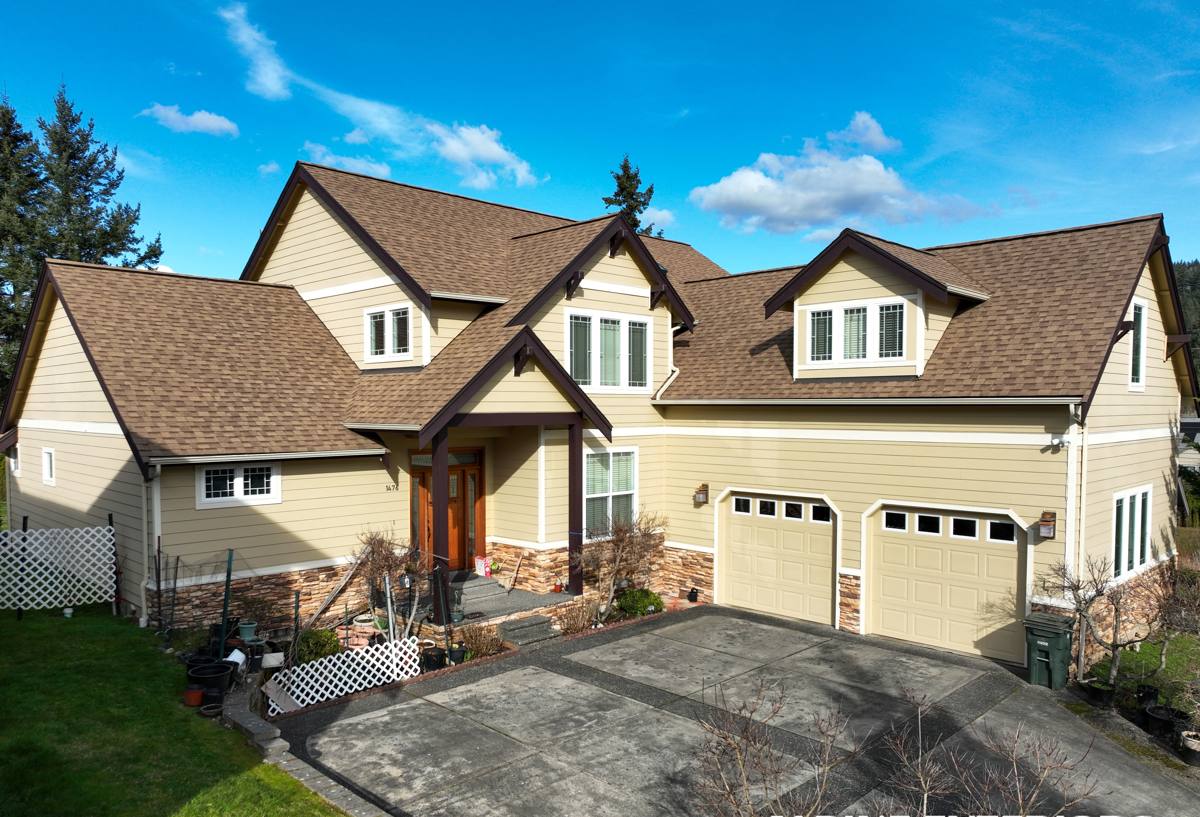
What Whatcom County Weather Actually Does to a Shingle Roof
Moisture That Doesn't Leave
Bellingham's marine climate means long stretches of overcast, drizzly weather rather than short, hard storms. That's actually gentler on a roof in some ways — less thermal shock, fewer hail events — but it also means shaded slopes and north-facing sections can stay damp for days at a time. Moss, algae, and lichen all need sustained moisture to establish, and South Hill's tree canopy gives them exactly that.
Wind-Driven Rain
Storms coming off the water don't need to be severe to push rain sideways into vulnerable spots: shingle edges, valleys, and anywhere flashing meets a wall or chimney. A roof that relies on shingles alone to keep water out — without proper underlayment and flashing detail — will eventually leak in exactly these locations, even if the shingles themselves look fine from the ground.
Salt Air and Metal Fatigue
Being close to the bay means metal components — nails, flashing, vent boots — corrode faster than they would twenty miles inland. Cheap or under-spec fasteners can start rusting within a few years, which shows up as streaking on the shingles and, eventually, as nail pops or loosened flashing.
What a Correctly Installed Asphalt Shingle Roof Looks Like Here
A roof that's built for South Hill's climate isn't just "shingles nailed to a deck." Every layer underneath the shingles is doing a specific job, and skipping or shortcutting any of them is where problems start.
- Deck inspection and repair — any soft, delaminated, or water-damaged sheathing gets replaced before anything new goes down, not covered over.
- Ice-and-water shield at eaves, valleys, and penetrations — a self-adhering waterproof membrane in the spots most likely to see standing or driven water.
- Synthetic underlayment across the full deck — a second line of defense if wind ever drives moisture past the shingle layer.
- Corrosion-resistant flashing at chimneys, walls, and roof-to-roof transitions, sized and bent for the actual roof geometry rather than a generic strip.
- Proper nailing pattern — correct nail count, placement, and depth per shingle, since under- or over-driven nails are one of the most common causes of early shingle failure.
- Balanced attic ventilation — intake and exhaust that let the roof deck dry from underneath, which matters even more in a climate where the outside air rarely does the drying for you.
Any one of these done poorly can undercut an otherwise good shingle product. This is why two roofs using the exact same shingle brand can have very different lifespans on the same street.
Choosing a Shingle for South Hill's Climate
Not every asphalt shingle is built the same way, and the right choice depends on how much sun exposure a roof gets, how steep it is, and how much wind and moss pressure it's likely to face.
| Shingle Type | Typical Lifespan | Best Suited For | Notes for This Climate |
|---|---|---|---|
| 3-Tab | 15–20 years | Budget-conscious re-roofs, simple gable roofs | Lower wind rating; can show granule loss faster under sustained wet weather |
| Architectural / Dimensional | 25–30 years | Most South Hill homes | Heavier, better wind resistance, more resistant to the freeze-thaw and moisture cycling common here |
| Algae-Resistant (copper/zinc granule) | 25–30 years | Shaded lots, north-facing slopes, heavy tree cover | Directly targets the moss and algae growth that shaded South Hill roofs are prone to |
| Impact-Rated (Class 4) | 30+ years | Homes wanting maximum durability, possible insurance discount | Higher upfront cost; worth asking your insurer whether it qualifies for a premium reduction |
For most South Hill homes with any meaningful tree coverage, we lean toward architectural shingles with algae-resistant granules as the practical baseline — not because 3-tab shingles are a bad product, but because the moss and moisture pressure in this neighborhood tends to shorten their useful life faster than the upfront savings justify.
Our Process for a South Hill Roof Replacement
- On-site inspection — we walk the roof (or use appropriate access for steep or fragile roofs) to check deck condition, flashing, ventilation, and moss or moisture damage before quoting anything.
- Written scope and estimate — what's being replaced, what shingle and underlayment system we're using, and what happens if we find hidden deck damage once tear-off starts.
- Tear-off and deck check — old roofing removed down to the deck, with any damaged sheathing flagged and replaced.
- Underlayment, flashing, and ice-and-water shield installation — the layers that do the real waterproofing work, installed before a single shingle goes down.
- Shingle installation — correct nailing pattern, proper starter courses, and attention to valleys, hips, and penetrations.
- Cleanup and magnetic nail sweep — job site and yard cleared of debris and stray fasteners.
- Final walkthrough — we go over the finished roof with you before calling the job done.
Living With an Asphalt Shingle Roof in a Moss-Prone Neighborhood
Even a well-installed roof needs some basic upkeep in a climate like this. Moss and algae are a maintenance issue, not necessarily a sign of a failing roof — but ignoring them long enough can turn into one, since moss holds moisture against the shingle surface and can work its way under tabs over time.
- Have gutters and downspouts cleared at least once or twice a year so water isn't backing up under the eaves.
- Keep overhanging branches trimmed back to cut down on shade and debris buildup, which slows drying and feeds moss growth.
- Have visible moss or algae treated before it spreads across a full slope — early treatment is far cheaper than replacing damaged shingles later.
- Schedule a roof check after any significant windstorm to catch lifted or displaced shingles early.
- Get an inspection every few years even without visible problems, since flashing and fastener issues aren't always obvious from the ground.
None of this requires a big annual budget — it's mostly about not letting small issues sit through an entire wet season.
Why Local Experience on South Hill Actually Matters
A roofing crew that regularly works South Hill's streets already has a feel for which slopes see the most moss pressure, which roof orientations take the worst of the wind-driven rain, and what deck and framing conditions tend to show up in homes of this neighborhood's typical age range. That's not a marketing point — it's the difference between a crew guessing at a roof's problem spots and one that knows what to check first.
It also means faster response when something does go wrong. A crew based in Bellingham and working Whatcom County day to day isn't scheduling a special trip to reach South Hill after a storm — it's already part of the regular route.
What Affects the Cost of a South Hill Roof Replacement
| Factor | Why It Matters |
|---|---|
| Roof size and number of slopes | More squares and more complex geometry (valleys, dormers, hips) means more material and labor |
| Current deck condition | Rotted or delaminated sheathing found during tear-off adds material and time to replace |
| Shingle class chosen | 3-tab, architectural, and impact-rated shingles carry different material costs and warranty terms |
| Roof pitch and access | Steep or hard-to-access roofs take longer and require more safety setup |
| Ventilation and flashing upgrades | Older homes often need ventilation corrected or flashing upgraded to current standards during a re-roof |
Because every one of these varies house to house, we don't quote a roof over the phone — an on-site look is the only honest way to give you a real number.
Get a Straightforward Estimate
If your South Hill roof is showing moss, granule loss, or you're just not sure how much life it has left, we're happy to take a look and give you a clear, no-pressure assessment of where things stand. Use the form below to request a free estimate.