 Bellingham Exterior
 Why Silver Beach Roofs Wear Differently
Silver Beach sits along the edge of Lake Whatcom, tucked under mature evergreen canopy that keeps yards cool in summer and roofs damp for most of the rest of the year. That tree cover is one of the reasons people love this part of Bellingham, but it's also the reason roofs here go through moss, algae, and trapped moisture faster than roofs on open, sun-exposed lots elsewhere in Whatcom County. Add in the marine-influenced air that moves through the region off Bellingham Bay and the Salish Sea, and you get a climate that combines driving, wind-pushed rain with long stretches of shade and humidity that never fully dries out a roof deck between storms.
None of that means a Silver Beach roof is doomed to fail early. It means the roof has to be built and maintained with this specific combination of shade, moisture, and salt-tinged marine air in mind, rather than treated like any other asphalt shingle job. A roof detailed correctly for these conditions will comfortably outlast one that was installed to a generic spec and just happened to end up on a lake-shaded lot.
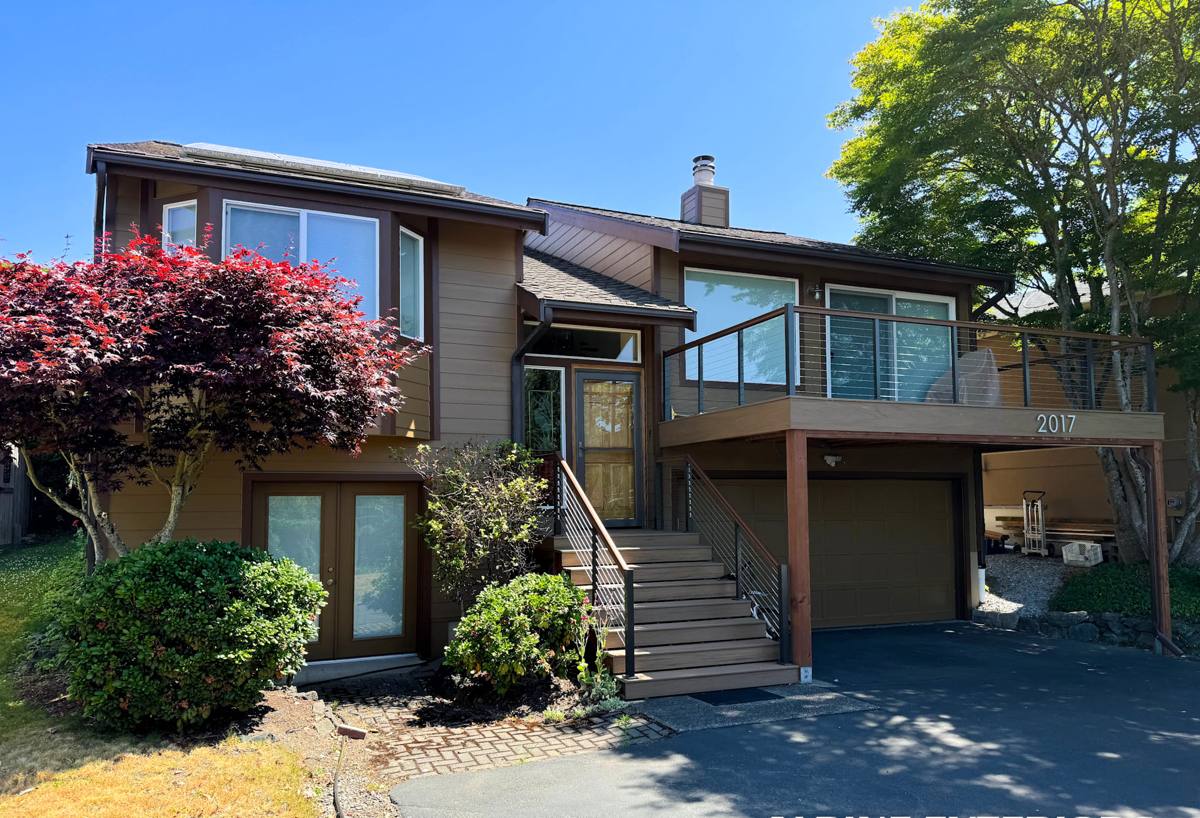
What a Correct Asphalt Shingle Roof Needs in This Climate
Underlayment and Water Protection
Because Silver Beach roofs stay wet longer than roofs in drier, sunnier parts of the county, the underlayment layer matters more here than it does elsewhere. We use synthetic underlayment rather than older felt products because it holds up better to repeated wetting and drying cycles and doesn't degrade as quickly under prolonged moisture exposure. In valleys, around chimneys, and at eaves where wind-driven rain tends to find its way under shingles, we add self-adhering ice-and-water membrane as a second line of defense, even though this area doesn't see the ice-dam issues that colder inland climates deal with.
Ventilation
A shaded roof that can't breathe holds moisture underneath the shingles as well as on top of them. Balanced intake and exhaust ventilation lets warm, moist attic air escape instead of condensing against the underside of the roof deck, which is one of the most common causes of premature sheathing rot on tree-covered lots. We check existing ventilation on every Silver Beach roof we look at, because a lot of older homes here were built with less airflow than an asphalt shingle roof actually needs.
Flashing and Fasteners
Salt-tinged marine air accelerates corrosion on cheap or improperly coated metal. We flash chimneys, sidewalls, and roof-to-wall transitions with corrosion-resistant metal and fasten shingles with galvanized or coated nails sized and placed to the manufacturer's actual specification, not just "close enough." On a roof that stays damp as much as these do, sloppy flashing work shows up as a leak years before the shingles themselves would have failed.
Signs Your Silver Beach Roof Needs Attention
Because moss and shade-related wear build up gradually, a lot of homeowners don't notice a problem until it's already inside the attic. Here's what we tell Silver Beach homeowners to watch for between inspections:
- Moss or dark algae streaking that keeps coming back within a season or two of cleaning
- Granules collecting in gutters or at the base of downspouts
- Shingle edges that look lifted, curled, or cupped, especially on north-facing or heavily shaded slopes
- Soft or spongy-feeling spots when walked on, which usually means the deck underneath has absorbed moisture
- Daylight or water stains in the attic near valleys, chimneys, or where the roof meets a wall
- Metal flashing that's visibly rusted, pitted, or separating from the roofline
Any one of these on its own might just mean routine maintenance. Two or three together usually means it's time for a real inspection rather than another round of surface cleaning.
Choosing the Right Shingle for a Lake-Shaded, Moss-Prone Lot
Not every asphalt shingle product handles shade and moisture the same way. The biggest factor for a Silver Beach roof isn't brand name, it's whether the shingle's granule coating includes algae-resistant treatment and how the product performs under sustained dampness rather than just under sun and heat, which is what most warranty testing is built around.
| Shingle Tier | Typical Lifespan | Wind Rating | Best Fit For |
|---|---|---|---|
| Standard 3-tab | 15–20 years | Lower, standard rating | Budget-driven jobs on less exposed, less shaded roof faces |
| Architectural laminate | 25–30 years | Mid-to-high rating | Most Silver Beach homes; better moisture and algae-resistant options available |
| Impact-rated (Class 4) | 30+ years | Highest available | Homes wanting maximum durability and, in some cases, an insurance premium discount |
For most Silver Beach homes, we steer people toward a mid-to-upper architectural laminate shingle with algae-resistant granules built in, rather than the cheapest option on the shelf. The upfront cost difference is modest compared to the cost of dealing with moss and staining again in five years instead of fifteen.
Our Installation Process, Step by Step
Every roof gets the same disciplined process, whether it's a straightforward re-roof or a more complex layout with multiple valleys and dormers:
- On-site inspection of the existing roof, decking, ventilation, and any trouble spots specific to shade or drainage on your lot
- Full tear-off of old roofing material and a deck inspection once it's exposed, with any soft or rotted sheathing replaced before anything new goes down
- Installation of synthetic underlayment, with self-adhering membrane at eaves, valleys, and penetrations
- New flashing at chimneys, sidewalls, and any roof-to-wall transitions
- Shingle installation following the manufacturer's nailing pattern and exposure specs, not a shortcut version of it
- Ridge and intake ventilation check and correction where needed
- Final walkthrough covering what was found, what was done, and what to watch for going forward
We don't treat ventilation and flashing as optional add-ons priced separately after the fact. On a shaded, moisture-heavy lot like Silver Beach, they're part of what makes the shingle warranty meaningful in the first place.
Moss Prevention Built Into the Job, Not Sold as an Extra
A lot of moss treatment offered around Whatcom County is reactive: scrape it off, spray something on, repeat next year. We'd rather build moss resistance into the roof itself. That starts with algae-resistant shingle granules, but it also means paying attention to things a lot of installers skip, like keeping overhanging branches trimmed back from the roofline where we can advise on it, making sure valleys and low-slope areas actually drain instead of holding standing water, and using metal flashing and drip edges that shed water cleanly instead of letting it pool at transitions.
None of this makes a Silver Beach roof moss-proof forever, no roof under this much tree cover is. But it meaningfully stretches the time between cleanings and reduces the chance that moss growth turns into actual granule loss and shingle damage underneath it.
Maintenance That Actually Extends the Roof's Life Here
Once a correctly built roof is on, the maintenance that matters most in Silver Beach is simple but easy to let slide:
- Clear gutters and downspouts at least twice a year, more often if you're under heavy tree cover
- Have moss and debris gently removed before it builds up thick enough to hold moisture against the shingles
- Walk the roofline visually after major windstorms for lifted shingles or displaced flashing
- Check the attic once a year for any sign of moisture, staining, or reduced airflow
Homeowners who stay on top of this short list get noticeably more life out of the same roof compared to those who only think about the roof once something is actively leaking.
Why a Crew That Already Works Silver Beach Matters
A contractor who works all over Whatcom County in a given month sees a lot of different roof conditions, but a crew that regularly works Silver Beach specifically has already seen how this neighborhood's shade, lake proximity, and marine air interact on real roofs, not just in a general climate zone. That translates into fewer surprises during the tear-off, better judgment about where to invest in extra membrane or ventilation, and a more accurate estimate the first time, instead of change orders once the old roofing comes off.
It also means straightforward answers instead of upsell pressure. If your roof genuinely needs a full replacement, we'll explain why. If a repair and better maintenance schedule will get you several more good years, we'll say that instead. Either way, the goal is a roof that's actually built for the conditions on your specific lot.
If you're noticing moss buildup, granule loss, or you just want an honest read on how much life is left in your current roof, we're happy to take a look. Reach out for a free, no-pressure estimate using the form below, and we'll walk the roof with you and tell you exactly what we see.