 Bellingham Exterior
 Siding Repair Built for Happy Valley's Conditions
Happy Valley is one of Bellingham's older, established neighborhoods — mature trees, a mix of home ages, and enough tree canopy and shade that moss and moisture are a fact of life rather than an occasional nuisance. Add in Whatcom County's long wet season and the salt-tinged air that rolls in off Bellingham Bay, and siding here works harder than siding almost anywhere else in the state. Repairs that would hold up fine in a drier inland climate often fail within a season or two here if they're not done with local conditions in mind.
We work in Happy Valley regularly, which matters more than it might sound like. A repair crew that knows which sides of a house take the worst driving rain, how shaded lots hold moisture longer after a storm, and how moss establishes itself on north-facing walls can diagnose a problem faster and fix it in a way that actually lasts — instead of just patching the visible symptom.
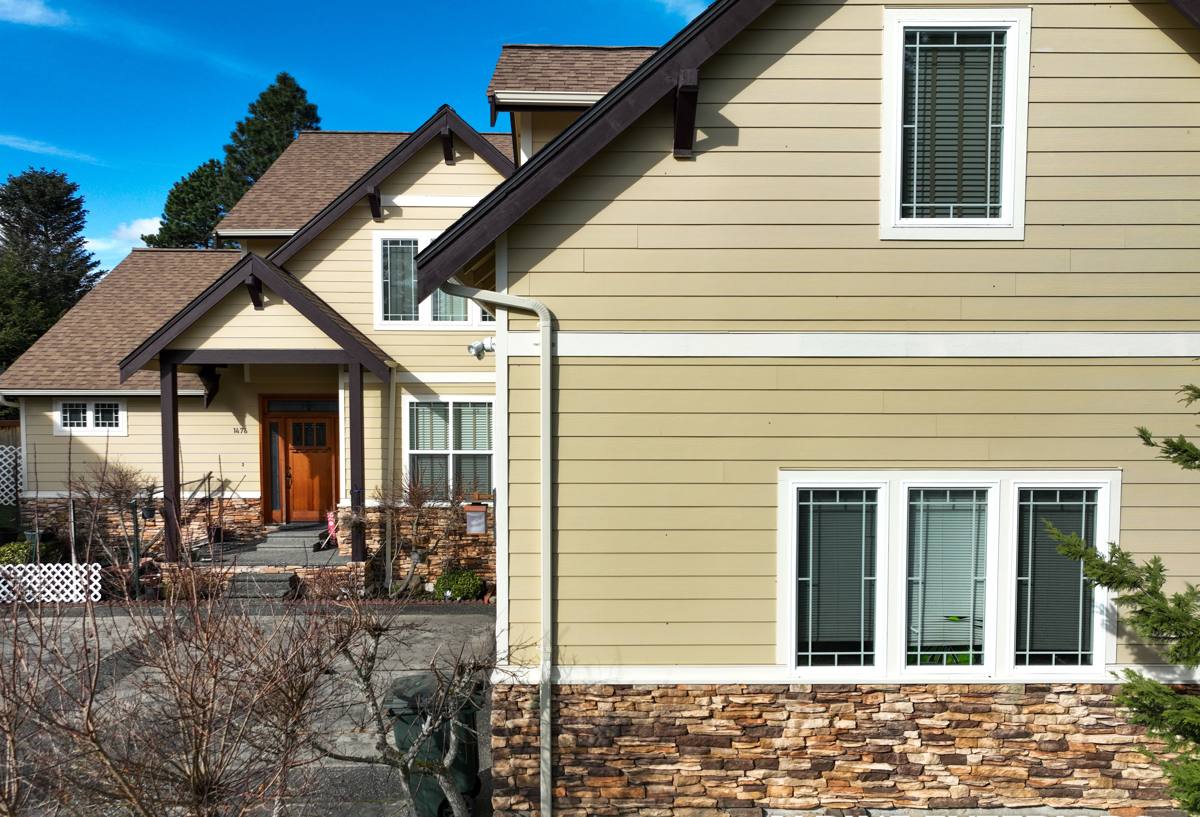
Why Siding Fails Faster in This Part of Bellingham
Three climate factors do most of the damage to siding in Happy Valley and the surrounding hillside neighborhoods:
- Driving rain: Storms off the Salish Sea often come in sideways, forcing water into laps, seams, and fastener points that would stay dry in a straight-down rain.
- Salt air: Proximity to the bay means airborne salt accelerates corrosion on fasteners, flashing, and any exposed metal trim — a slow process, but a steady one.
- Extended moss season: Shade, moisture, and mild temperatures give moss and algae a long window to establish on siding, trim, and the transitions where siding meets roofing or decks.
None of these individually destroys siding overnight. What they do is find every weak point — a gap in caulking, a nail that backed out, a seam that wasn't flashed correctly — and turn a small installation flaw into a real problem over a few wet seasons.
Signs Your Siding Needs a Professional Look
Most siding repair calls in this area start with one of the following. If you're seeing any of these, it's worth having someone look before the next wet season:
- Soft or spongy spots when you press on the siding, especially near the bottom courses or around windows
- Visible moss or dark streaking that keeps returning after cleaning
- Cracked, warped, or buckled boards or panels
- Gaps opening up at seams, corners, or where siding meets trim
- Paint that's peeling, bubbling, or failing in one specific area rather than evenly across the house
- Water stains or discoloration on interior walls that line up with an exterior wall
- Nail heads popping through the surface, or streaks of rust below fasteners
Any one of these can be isolated and minor. Several appearing together, or appearing repeatedly in the same spot after a "fix," usually means water is getting behind the siding rather than just sitting on top of it — and that changes the scope of the repair.
What a Correct Repair Actually Involves
A siding repair that only replaces what's visibly damaged, without checking what's underneath, tends to fail again in the same spot. A repair done right in a climate like ours includes a few steps that are easy to skip and expensive to skip:
1. Find the actual water path, not just the damage
Damaged siding is usually a symptom. We look at flashing, house wrap, window and door transitions, and fastener patterns to understand how water got in before we decide how to close it back out. Replacing a board without fixing the entry point just delays the next failure.
2. Check the sheathing and framing behind the siding
If moisture has been getting in for a while, especially in a shaded, slower-drying spot, the wall sheathing or framing underneath can be affected. That has to be addressed before new siding goes back on — covering damaged sheathing with new siding just hides the problem.
3. Match material and finish correctly
A patched section that doesn't match the surrounding siding in profile, reveal, or finish stands out and often performs differently over time, especially if it's a different material than the rest of the house. Matching matters both for appearance and for consistent weather performance.
4. Re-flash and re-seal properly
Whatcom County's rain load means flashing details — around windows, at butt joints, along the bottom of the wall — aren't optional extras. They're the difference between a repair that holds and one that reopens the same spot next winter.
5. Address the moss and moisture conditions that caused the problem
If shade and slow drying caused the original damage, we'll talk through what's realistic — trimming back vegetation, improving airflow, or adjusting maintenance frequency — so the repair isn't fighting the same conditions all over again.
Repair or Replace? How to Think About It
Not every siding problem calls for full replacement, and not every problem should be patched. The right call depends on how widespread the damage is and what's causing it.
| Factor | Repair Usually Makes Sense | Replacement Usually Makes Sense |
|---|---|---|
| Extent of damage | Isolated to one or two areas | Recurring in multiple spots across the house |
| Cause | Identifiable, fixable source (bad flashing, one failed seam) | Widespread moisture intrusion or systemic installation issues |
| Underlying material | Sheathing and framing behind the damage are sound | Sheathing shows rot or long-term water damage |
| Age and condition of remaining siding | Rest of the siding is otherwise sound and well-adhered | Remaining siding is near the end of its service life |
| Material match | Matching material is available and will blend acceptably | Original material is discontinued, mismatched, or was a poor fit for the climate to begin with |
We'll always tell you honestly which side of that table your house falls on. A repair that's likely to fail again within a couple of years isn't a good use of your money, and we'd rather say so up front than sell you a patch that doesn't hold.
Why Material Choice Matters Even for a Repair
When we patch or replace a section of siding, what we use to do it matters as much as the workmanship. This is why we install exclusively James Hardie fiber cement siding rather than vinyl, LP SmartSide, or other cladding options — including when the work is a repair rather than a full re-side.
Fiber cement doesn't absorb water the way engineered wood products can, and it doesn't expand and contract with temperature swings the way vinyl does — both of which matter for a patch that needs to perform identically to the material around it, year after year, in a climate with this much rain and moisture cycling. James Hardie's HZ5 product line is specifically engineered for climates like ours, and the factory-applied ColorPlus finish holds its color and resists moisture better than field-applied paint on a patched section, which helps a repair blend in and stay blended in rather than weathering differently than the surrounding wall.
If your existing siding is a different material and a true match isn't available or advisable, we'll talk through whether a full re-side with Hardie makes more sense long-term than continuing to patch a product that wasn't built for this environment in the first place.
Our Process for Happy Valley Siding Repairs
- On-site assessment: We inspect the damaged area and the surrounding siding, checking for moisture behind the surface, not just what's visible.
- Honest scope and estimate: You get a clear explanation of what caused the problem, what repair involves, and whether repair or replacement is the better long-term call — with a straightforward estimate, no pressure.
- Correct repair, not a cosmetic patch: We address the water path, check the substrate, re-flash and re-seal to spec, and match material and finish as closely as possible.
- Cleanup and a final walkthrough: We show you the completed work and talk through any maintenance steps that'll help it hold up, given your lot's sun exposure and shade.
Keeping Repaired Siding in Good Shape
A good repair buys you years, but a little seasonal attention extends that further, especially in a shaded, moisture-prone neighborhood like Happy Valley:
- Rinse moss and algae off siding gently before it has a chance to establish, rather than after it's already discolored the surface
- Keep gutters clear so water isn't overflowing onto siding below
- Trim back vegetation and tree limbs that are shading walls and slowing drying time
- Walk the exterior once or twice a year and look for the early warning signs listed above, especially after a hard winter storm
If you're noticing soft spots, recurring moss, or a section of siding that just doesn't look right, we're happy to take a look. We offer free, no-pressure estimates for Happy Valley homeowners — no obligation, just an honest read on what's going on and what it would take to fix it right.