 Bellingham Exterior
 Roof Repair for the Puget Area of Bellingham
The Puget area sits inside the same coastal weather pattern that defines exterior work across Bellingham and the rest of Whatcom County: air off the Salish Sea carrying salt and moisture, rain that comes in sideways as much as straight down, and long stretches of mild, damp weather that keep roofs wet far more often than dry. A roof here doesn't fail because of one big storm. It fails slowly, from years of small compromises: a flashing seam that let a trickle of water through, moss that held moisture against shingles longer than it should have, a gutter that backed up during one heavy rain and stayed damp for a week after. Roof repair in this neighborhood is less about patching a single obvious problem and more about understanding how this specific climate wears a roof down over time, and fixing the actual cause instead of just the symptom that's visible from the ground.
We work on roofs in this part of Bellingham regularly, which matters more than it might sound. A roofing crew that mostly works drier inland climates tends to think about wind and hail. A crew that works this coastline thinks about sustained moisture, moss regrowth, and the kind of slow-leak damage that hides under shingles for a season before it shows up as a stain on a ceiling. That difference in mindset shapes how we diagnose a problem and what we recommend to fix it.
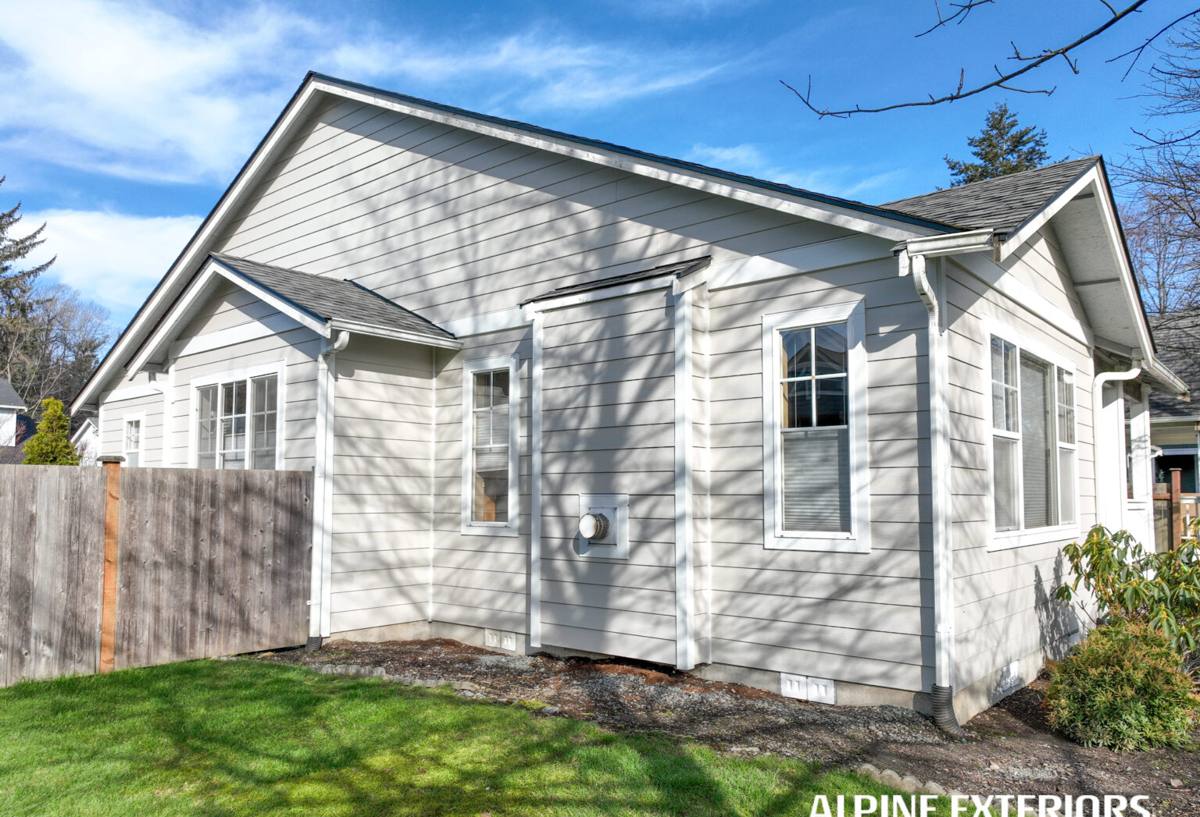
What This Climate Does to a Roof
Salt Air and Coastal Exposure
Homes in the Puget area sit close enough to the water that salt-laden air is a constant, low-level presence, not just an occasional storm effect. Salt exposure accelerates corrosion on exposed metal: flashing, fasteners, gutter hardware, and any exposed roofing nails. A fastener that would last decades in a dry inland climate can start showing rust and weakening well before that here, and a corroded fastener is a common hidden cause of leaks that otherwise look mysterious.
Driving Rain and Wind
Rain in this part of Whatcom County frequently comes in at an angle instead of falling straight down, pushed by wind off the water. That matters at every joint, seam, and penetration on a roof — valleys, chimney flashing, vent boots, skylight curbs. A repair that only addresses the surface shingle and ignores how wind-driven rain can work its way sideways under a lap or around a poorly sealed penetration will often leak again within a season or two.
Moss, Shade, and a Long Wet Season
Mild temperatures and consistent dampness give moss a long growing season here, and Puget's tree cover only extends that. Moss doesn't just look bad — it holds water against the roofing material, works its way under shingle edges, and lifts them slightly as it grows, creating small gaps that wind-driven rain can exploit. A roof with heavy moss buildup is very often further along in hidden damage than it looks from the driveway.
Signs a Roof in This Area Needs Repair
- Water stains or discoloration on interior ceilings, especially after a run of heavy rain
- Visible moss or algae growth, particularly on north-facing or shaded slopes
- Granules collecting in gutters or at downspout outlets, a sign of shingle wear
- Curling, cracked, or missing shingles anywhere on the roof plane
- Rust streaking or visibly corroded flashing around chimneys, vents, or valleys
- Soft or spongy spots underfoot during an inspection, indicating sheathing damage below
- Daylight visible through the roof deck from inside an attic
- Gutters that overflow or pull away from the fascia during heavy rain
Any one of these on its own isn't necessarily an emergency, but they're worth having looked at before the next wet season, since small problems in this climate tend to compound rather than stay static.
What a Correct Repair Actually Involves
A roof repair done right in this climate goes beyond swapping out a few damaged shingles. We look at the whole system around the damaged area, because a leak is almost always a symptom of a failure somewhere in the layered system that's supposed to shed water, not just a hole in the top layer.
Diagnosis Before Repair
We start by tracing the actual path water is taking, which is often not directly above where a ceiling stain shows up. Water can travel along rafters or sheathing before it drips somewhere visible, so a repair aimed only at the spot below the stain can miss the real source entirely.
Flashing and Penetration Detail
Given how much of this climate's damage starts at flashing and penetrations, we pay close attention to chimney flashing, valley metal, vent boots, and skylight curbs during any repair. If the flashing is corroded, undersized, or was installed without proper step-and-counter technique, replacing the surrounding shingles without fixing the flashing just resets the clock on the same failure.
Underlayment and Deck Condition
If water has been getting under the shingle layer for any length of time, the underlayment and roof deck underneath may be compromised. We check for soft sheathing, delaminated decking, and saturated underlayment as part of any repair scope, because covering damaged decking with new shingles just hides a problem that will resurface, usually as a bigger repair later.
Moss and Debris Removal
Where moss or heavy debris buildup is part of the picture, we address it as part of the repair rather than leaving it to regrow immediately over the fixed area. Removing moss without damaging the shingle surface underneath takes a careful hand, not a pressure washer set to a high setting.
Matching Materials
We match shingle type, color, and exposure to the existing roof as closely as the market allows, since a poor match is both a cosmetic problem and sometimes a sign that a repair was done with whatever was on the truck rather than what actually belonged on that roof.
Repair or Replace: How We Help You Decide
| Factor | Leans Toward Repair | Leans Toward Replacement |
|---|---|---|
| Roof age | Under roughly 15 years, materials still structurally sound | Approaching or past the material's expected service life |
| Extent of damage | Isolated to one section, valley, or penetration | Widespread across multiple roof planes |
| Deck condition | Sheathing is dry and solid | Soft, delaminated, or repeatedly saturated decking |
| Repair history | First or infrequent repair in that area | Same spot has needed repair more than once |
| Moss and moisture pattern | Surface-level growth, roof otherwise sound | Long-term moss damage affecting multiple slopes |
We'll always tell you honestly which side of that table your roof falls on. A repair that's likely to fail again within a year or two isn't a good use of your money, and we'd rather say so upfront than sell a patch job we don't believe in.
Our Process
- Inspection: We walk the roof and the attic where accessible, checking flashing, decking, ventilation, and the condition of the roofing material itself.
- Honest assessment: We explain what we found, what's causing the problem, and whether repair or replacement makes more sense given the roof's age and condition.
- Written estimate: You get a clear scope of work and price before anything starts, no surprise add-ons once we're on the roof.
- The repair itself: We fix the actual cause, not just the visible symptom, including flashing, underlayment, or decking work if the diagnosis calls for it.
- Cleanup and check: We clear debris, check gutters and downspouts near the repair area, and confirm the fix before we consider the job done.
Why a Local Crew Matters for This Kind of Work
Roof repair is one of those trades where local experience shows up directly in the quality of the work. A crew that regularly repairs roofs in the Puget area and around Bellingham has already seen how salt air corrodes specific fastener types, how moss regrows in the shaded pockets common to this terrain, and how wind-driven rain finds the same handful of weak points across different homes. That pattern recognition is hard to substitute with general roofing knowledge from a drier region.
It also matters for follow-through. A local crew is easy to reach if a repair needs a warranty check or a follow-up visit, and has a reputation in the neighborhood worth protecting. We're not driving in from out of the area for a one-time job and then gone.
What to Ask Before Hiring Anyone for Roof Repair Here
- Are you licensed and insured to work in Washington State, and can you provide proof?
- Will you inspect the flashing and decking, not just replace visible shingles?
- What's your plan for moss removal without damaging the roof surface?
- Is the estimate written, with a clear scope, before work begins?
- Do you offer a warranty on the repair labor, not just the materials?
- Have you worked on roofs in this specific area of Whatcom County before?
Get a Free, No-Pressure Estimate
If you're seeing signs of roof trouble in the Puget area, whether that's a ceiling stain, visible moss, or a roof that's simply getting older and you want an honest read on its condition, we're happy to take a look. Fill out the form below for a free, no-pressure estimate, and we'll give you a straight answer about what your roof actually needs.