 Bellingham Exterior
 Board & Batten Siding Built for the Puget Waterfront Climate
Board and batten is one of the most requested looks on homes near the water in Whatcom County, and for good reason — the vertical lines read as clean, modern, and distinctly Pacific Northwest, whether the house is a new build or a renovation of an older cottage-style home. But in Puget, the look is only half the job. The other half is making sure that siding survives what this stretch of coastline actually throws at it: salt-laden air off the water, wind-driven rain that hits walls sideways instead of straight down, and a wet season that runs long enough to grow moss on anything that stays damp too long. A board and batten installation that isn't built for those conditions will look great for a year or two and then start showing problems exactly where the battens meet the field boards — the most vulnerable seams in the whole system.
We install board and batten siding for homes in and around Puget using James Hardie fiber cement exclusively. This page explains what that climate actually demands from a board and batten system, what a correct installation involves, and why the details matter more here than they would on a home twenty miles inland.
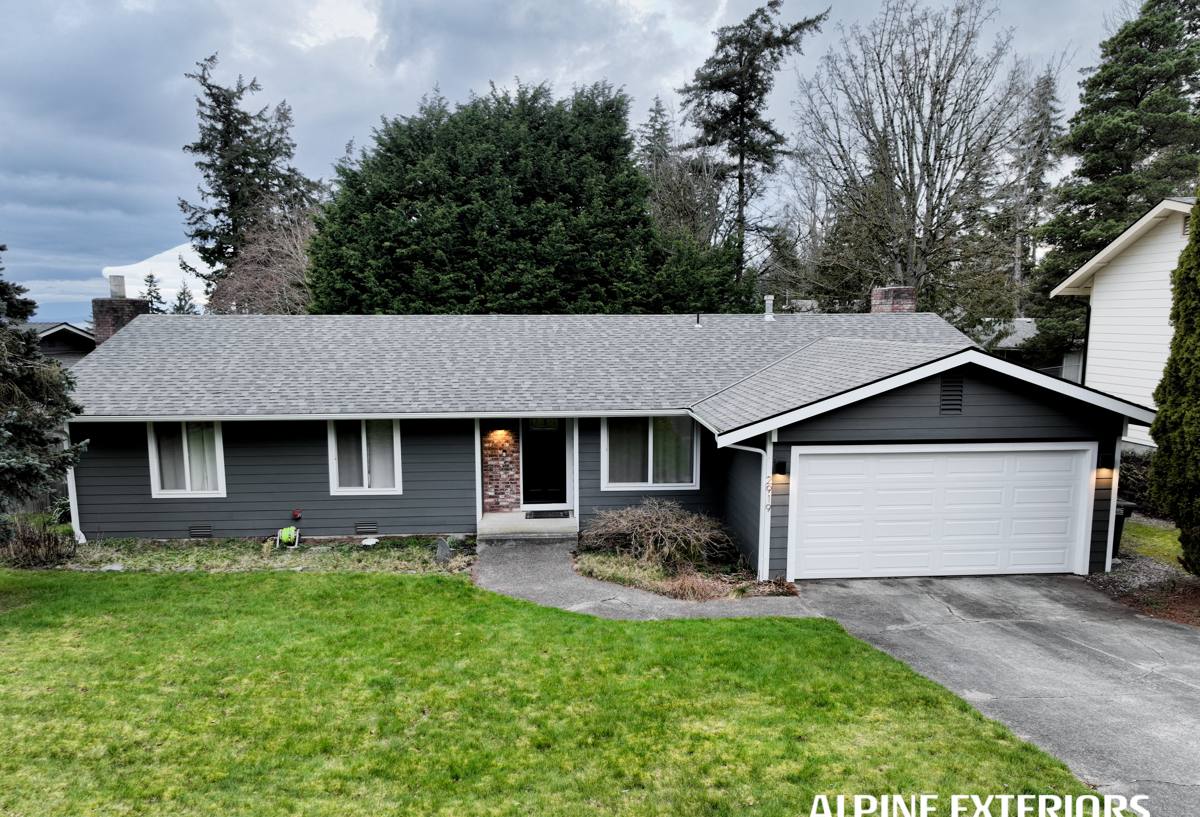
Why Puget's Conditions Are Harder on Siding Than Most People Expect
Board and batten siding has more seams and more vertical joints than lap siding, which is part of its appeal — clean shadow lines, strong texture — but it's also why the material and the installation both matter more here than on other siding styles.
Salt Air
Homes with any proximity to Puget Sound deal with airborne salt that settles on exterior surfaces and accelerates corrosion of fasteners and metal flashing. Untreated or lower-grade fastener systems can start rusting and staining a facade well before the siding itself would otherwise need attention.
Driving Rain
Wind off the water doesn't just drop rain — it drives it horizontally into wall assemblies, which means vertical battens and their fastening points are under more moisture pressure than the flat field of a wall. Any gap in the water-resistive barrier or any batten seam that wasn't sealed and fastened correctly becomes a place water can work its way behind the cladding.
Long Moss Season
Bellingham's wet months stretch long, and north- and shade-facing walls that stay damp for extended stretches are prime territory for moss and algae growth. Materials that hold moisture at the surface, or installations with poor drainage behind the boards, feed that growth. Materials that shed water and dry quickly resist it.
What Correct Board & Batten Installation Actually Involves
The board and batten look is simple. Doing it correctly so it holds up in this climate is not. A few things separate a durable installation from one that will need attention in a few years:
- Proper rainscreen or drainage gap — a small air space behind the siding lets any moisture that gets past the cladding drain and dry out instead of sitting against the wall sheathing.
- Correct fastener placement and spacing — battens need to be fastened into structural framing or proper backing, not just through the field board, or they work loose under wind load over time.
- Sealed and flashed penetrations — every window, door, and utility penetration needs flashing detail that directs water out and away, not one that relies on caulk alone.
- Factory-finished material — a pre-finished product resists the moisture absorption at cut edges and joints that raw or site-primed material is prone to.
- Corrosion-resistant fasteners — given the salt air, fastener grade is not a place to cut corners near the water.
Skipping any one of these doesn't necessarily cause an immediate problem. It causes a slow one — moss creeping up from the bottom battens, staining around fastener heads, or soft spots developing behind seams that weren't properly drained. Those are the failures we get called out to fix on homes that had board and batten installed by crews that treated it as a standard lap-siding job with different boards.
Why We Only Install James Hardie for This Application
Board and batten siding puts more seams and more vertical joints on a wall than almost any other siding style, which means the material behind those seams has to perform consistently over decades, not just look right on installation day. That's the core reason we standardized on James Hardie fiber cement rather than offering board and batten in vinyl, engineered wood, or primed spruce.
Non-Combustible, Dimensionally Stable
Fiber cement doesn't expand and contract with moisture and temperature the way wood-based products do, which matters at every batten seam — less movement means fewer opportunities for gaps to open up and let water in over time.
ColorPlus Factory Finish
Hardie's ColorPlus finish is baked on at the factory under controlled conditions, which gives it better fade and moisture resistance at the cut edges and joints than field-applied paint typically achieves — a real advantage on a style with this many seams.
Climate-Engineered HZ Product Line
Hardie's HZ5 formulation is engineered specifically for wetter, harsher climates like the Pacific Northwest, which is a meaningful match for a location that sees the combination of salt exposure and sustained rain that Puget does.
Backed by a Transferable Warranty
Hardie's product warranty is a real, well-documented program, which matters on a home you may sell down the road — a transferable warranty is a selling point, not just a piece of paperwork.
We've made the decision not to install board and batten in vinyl or in engineered wood products like LP SmartSide. Vinyl board and batten can look convincing from the street, but it's a thinner, more flexible material that shows waviness and seam movement over time, especially with the temperature swings and wind exposure common near the water. Engineered wood products have improved their moisture resistance significantly, but they still rely on an intact factory coating to keep water out at every cut edge — a coating that has to be maintained perfectly at every batten seam for the life of the siding. Given how much seam exposure board and batten has by design, we don't think that's the right trade-off for homes in this climate, and it's why we put James Hardie on every board and batten project we do.
Our Process for Puget Board & Batten Projects
Every project starts with an on-site look at the specific wall — orientation, existing moisture damage, current siding condition, and how exposed the home is to wind and salt air off the water. From there:
- Assessment — we check the sheathing and framing underneath existing siding for any moisture damage that needs to be addressed before new siding goes on, since covering a problem never fixes it.
- Drainage plan — we confirm the rainscreen/drainage approach for the specific wall, adjusting for orientation and exposure.
- Material and color selection — Hardie's board and batten profiles and ColorPlus palette are reviewed against the home's style and HOA or neighborhood expectations where relevant.
- Installation — battens fastened to proper backing, correct spacing, corrosion-resistant fasteners, and flashing detail at every window, door, and penetration.
- Final walkthrough — we go over the finished work and the warranty documentation with the homeowner directly.
Cost Factors for Board & Batten Siding in This Area
Board and batten pricing depends on several variables that are worth understanding before you compare quotes, especially since a lower bid often means a shortcut somewhere in the list below.
| Factor | Why It Affects Cost |
|---|---|
| Wall exposure and orientation | Water- and wind-facing walls need more careful drainage and flashing detail, which takes more labor time. |
| Existing sheathing condition | Moisture damage found during tear-off needs repair before new siding goes on — this can't be skipped without risking the new install. |
| Batten spacing and reveal design | Wider or custom spacing patterns require more precise layout work than standard spacing. |
| Trim and corner detailing | Board and batten shows corner and trim work more prominently than lap siding, so these details take more finishing time. |
| Fastener and flashing grade | Corrosion-resistant fasteners and proper flashing material cost more than standard-grade hardware but matter significantly near salt air. |
We provide a written estimate that breaks these factors down for your specific home rather than a flat per-square-foot number, because the wall exposure and existing condition genuinely change what the job requires.
Signs Your Current Siding Needs Attention
If you're not sure whether it's time to look at board and batten replacement or repair, a few signs are worth checking for on your own before calling anyone out:
- Moss or algae buildup concentrated on shaded or north-facing walls
- Staining or rust streaks running down from fastener heads
- Soft spots or give when you press gently on the siding near the bottom edge or around windows
- Visible gaps or separation at batten seams
- Paint or finish that's peeling or bubbling rather than just fading evenly
None of these mean the whole wall needs to come off immediately, but they're worth a professional look before the wet season does more damage underneath the surface.
Why Local Experience Matters for This Job
A crew that installs board and batten across a range of inland climates will get the basics right, but Puget's combination of salt exposure and driving rain rewards specific experience — knowing which walls in a given layout take the worst of the weather, how much drainage detail a given exposure actually needs, and what fastener grade holds up here versus what's standard elsewhere. We're a Bellingham-based crew that works Whatcom County siding projects regularly, and that local pattern recognition is part of what you're paying for when you hire a crew that already knows this stretch of coastline.
If you're considering board and batten siding for a home in Puget, we're glad to come take a look and walk you through what your specific home and wall exposures actually need. Reach out for a free, no-pressure estimate using the form below.