 Bellingham Exterior
 Happy Valley sits close enough to Bellingham Bay and the surrounding hills that its homes take a different kind of weather beating than roofs a few miles inland. Between the salt-tinged marine air, the driving rain that comes sideways off Pacific storms, and a moss season that can run most of the year in the shade of mature trees, a roof here works harder than most manufacturers' warranty language assumes. When it's time for a full replacement, the details matter more than the brand name on the shingle wrapper.
Why Happy Valley Roofs Wear Differently
Whatcom County's climate isn't extreme in the way a hurricane zone or a heavy-snow region is extreme — it's persistent. Bellingham gets a lot of moderate rain spread across a lot of months, plus enough wind off the water to drive that rain sideways under poorly flashed edges. Add tree cover, which is common on the sloped, wooded lots typical of Happy Valley, and you get roofs that stay damp longer than roofs in open, sunnier parts of the county. Damp plus shade equals moss, and moss is not just cosmetic — it holds moisture against the roofing material and works its way under shingle tabs over time.
None of this means a Happy Valley roof needs exotic materials. It means the installation has to account for moisture management from the deck up, not just the shingles down.
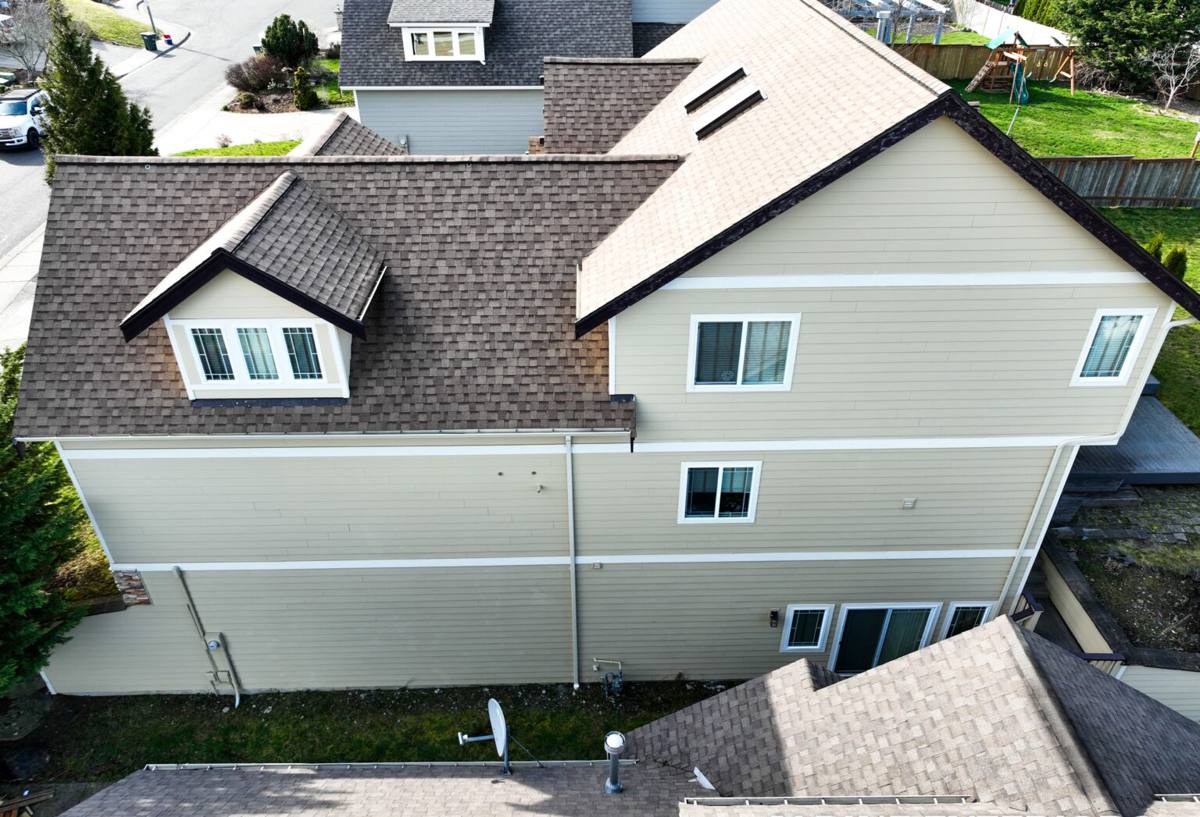
What Bellingham's Climate Actually Does to a Roof
Moss and Organic Growth
Moss spores travel on wind and settle wherever a roof stays shaded and moist — north-facing slopes and anything under overhanging trees are the usual spots. Left alone, moss lifts shingle edges, traps water, and accelerates granule loss. It's a maintenance issue as much as an installation issue, but the right materials and roof design reduce how aggressively moss takes hold in the first place.
Driving Rain and Wind-Driven Water
Rain that falls straight down is easy to shed. Rain that's being pushed sideways by wind off the water finds every gap in flashing, every under-driven nail, and every spot where underlayment wasn't lapped correctly. This is where a lot of "mystery leaks" originate — not from a failed shingle, but from water intrusion at valleys, chimneys, skylights, and wall-to-roof transitions.
Salt Air and Metal Fatigue
Homes closer to the bay deal with airborne salt that accelerates corrosion on unprotected fasteners, flashing, and metal roofing components. It's a slower process than moss or leaks, but it's the kind of thing that shows up as rust streaks and premature fastener failure five or ten years down the road if the wrong grade of metal was used the first time.
Repair or Replace: How We Help You Decide
Not every roof problem calls for a full tear-off. We look at three things before recommending replacement over repair:
- Age and remaining material life — a shingle roof nearing the end of its rated lifespan with widespread granule loss is usually past the point where patching makes financial sense.
- Deck condition — soft spots, staining, or rot in the roof deck itself usually means water has been getting in for a while, which changes the scope of the job.
- Pattern of the damage — a single leak around one flashing detail is a repair; moss damage and wear spread across multiple slopes is usually a sign the whole roof is nearing replacement.
We'll tell you honestly if a repair will hold for a few more years. A new roof is a significant investment, and we'd rather earn that job when it's actually needed.
What a Correct Installation Actually Involves
A new roof is only as good as what's underneath the visible shingle. For Happy Valley's conditions, we pay particular attention to:
Tear-Off and Deck Inspection
Full tear-off lets us see the actual condition of the roof deck rather than covering up problems. Any soft, delaminated, or water-damaged sheathing gets replaced before anything new goes down — installing new roofing over a compromised deck just guarantees an earlier second failure.
Underlayment and Moisture Barrier
Given how much wind-driven rain this area sees, we use synthetic or ice-and-water underlayment strategically at eaves, valleys, and other vulnerable transitions, not just wherever code minimums require it. This is one of the biggest differences between a roof that sheds a coastal storm cleanly and one that develops slow leaks nobody notices until there's staining on a ceiling.
Flashing Details
Chimneys, skylights, vent pipes, and wall intersections are where most leaks actually start, not in the open field of the roof. Correctly formed and properly lapped flashing — not just caulk covering a gap — is what keeps water out at these points for the life of the roof.
Ventilation
A roof system needs balanced intake and exhaust ventilation to manage moisture from inside the house, not just rain from outside. Poor ventilation traps humid air in the attic, which contributes to premature deck rot and can actually accelerate moss and algae growth on the underside of the roof surface.
Choosing the Right Roofing Material for Happy Valley
Material choice is a trade-off between upfront cost, maintenance, and how well a product handles sustained moisture and shade. Here's how the common options stack up for this specific climate:
| Material | Moss/Moisture Resistance | Maintenance | Typical Lifespan |
|---|---|---|---|
| Asphalt composition shingle (standard) | Moderate — benefits from algae-resistant granules | Periodic moss removal in shaded areas | 20-30 years |
| Asphalt composition shingle (algae-resistant / copper-infused) | Good — granules resist organic growth longer | Lower, still needs occasional cleaning under trees | 25-30 years |
| Standing seam metal | Very good — sheds moisture quickly, little for moss to grip | Low, but fasteners and cut edges need corrosion-resistant coatings near the bay | 40-50+ years |
| Cedar shake | Poor in shaded, damp settings without diligent upkeep | High — regular treatment and moss control required | 20-30 years with maintenance |
We don't push one material on every home. A sunny, open roof plane and a heavily shaded one on the same house can reasonably use different strategies for moss control even if the shingle is the same. What we do insist on is being upfront about the maintenance a material will actually require in this climate, rather than letting a homeowner find out the hard way after installation.
Our Process From Estimate to Cleanup
The steps are straightforward, but we don't skip any of them:
- On-site inspection — we walk the roof (or use a drone where pitch or access makes that safer) and check the attic from the inside for ventilation, moisture, and deck condition.
- Written estimate — a clear scope of work and pricing, with material options explained in plain terms, no pressure to decide on the spot.
- Scheduling around weather — we plan installation windows with Bellingham's rain patterns in mind and protect an open roof deck if conditions change mid-job.
- Tear-off and deck repair — old material removed, deck inspected and repaired as needed.
- Installation — underlayment, flashing, ventilation, and roofing material installed to manufacturer specification and local code.
- Cleanup and walkthrough — magnetic sweep for debris, a final walkthrough so you know what was done and what to watch for going forward.
Why Local Experience in Happy Valley Matters
A roofing crew that regularly works Bellingham and Whatcom County neighborhoods like Happy Valley has already seen how the local combination of tree cover, elevation, and marine exposure plays out on real homes. That translates into knowing which slopes on a given lot orientation tend to hold moss, where wind-driven rain typically finds weak flashing, and which fastener and flashing grades hold up against salt air over the long run. It also means we're not guessing at permitting requirements or how local building department expectations apply to your project — we handle that as a normal part of the job.
What to Check Before You Sign a Roofing Contract
Whoever you hire for a project this size, a few basics protect you regardless of who does the work:
- Current Washington state contractor license and liability insurance, verifiable before work starts
- A written estimate that itemizes materials, labor, and any deck repair contingencies
- Manufacturer product warranty terms explained clearly, including what voids them
- A workmanship warranty from the contractor, separate from the material warranty
- A plan for protecting gutters, siding, and landscaping during tear-off
- Clear communication about timeline, including how weather delays are handled
If your Happy Valley roof is showing moss buildup, granule loss, or you're just past the point of confidently getting through another wet season, we're glad to take a look. We offer free, no-pressure estimates — use the form below to get one scheduled.