 Bellingham Exterior
 Building New in Cordata Means Building for Bellingham's Weather, Not Around It
Cordata has been one of the more active new-construction pockets in Bellingham for a while now — new single-family lots, townhome rows, and infill builds going up on what used to be farmland and forest edge north of downtown. Whatcom County's marine climate doesn't care whether a house is brand new or fifty years old: the same driving rain off the Sound, the same long gray stretch from November through April, and the same moss and mildew pressure that builds up on any surface that stays damp too long. A new build gives you one real advantage over a remodel — you get to install the windows correctly the first time, before siding, trim, and interior finishes make it expensive to fix.
That's the whole argument for treating new-construction window installation as its own trade, not just "putting windows in." On a new build, the window opening is bare framing and a weather-resistive barrier (WRB) — nothing hiding a bad flashing job yet. Get the sequence right here and the house stays dry for decades. Get it wrong, and the mistake gets sealed behind siding where nobody finds it until there's a stain on the drywall or soft wood at the sill.
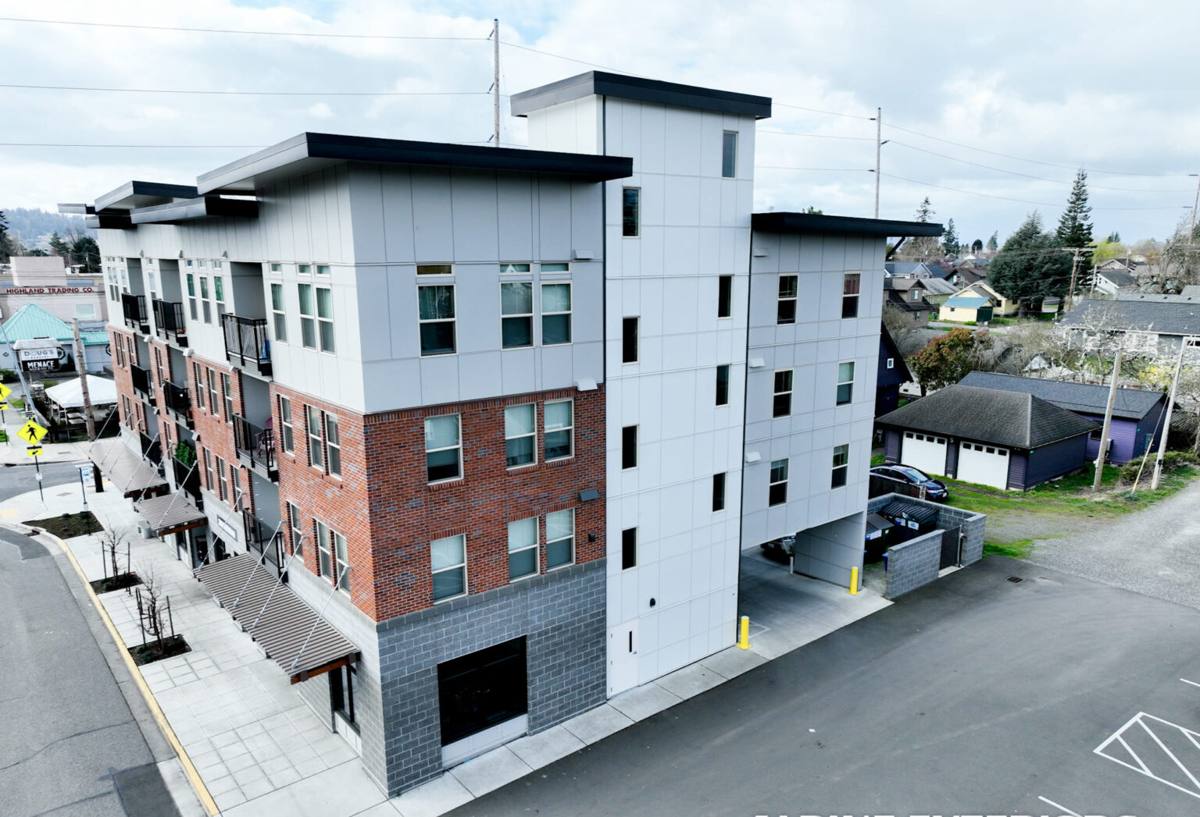
New-Construction Windows vs. Replacement Windows — Why the Difference Matters
These are genuinely different jobs, and mixing up the approach is one of the more common errors we see corrected on punch lists. Replacement windows go into an existing, already-flashed opening and usually rely on the old frame or a pocket install. New-construction windows are nail-fin (flange) units that get integrated directly into the rough opening, the WRB, and the flashing system while the wall is still open.
- New-construction (flanged) windows: installed to bare sheathing/WRB, nailing fin fastened to framing, flashing built in shingle-fashion around the fin
- Replacement (pocket or full-frame) windows: installed into an existing opening, often reusing existing flashing and cladding
- Why it matters here: a flanged window installed like a replacement (or vice versa) either loses its water management path or ends up double-sealed with no way for incidental moisture to escape
On a Cordata new build, you almost always want true flanged units installed to the flashing sequence below — that's what the window and the wall system are both designed around.
Why It's Not Just a "Set It and Caulk It" Job
Caulk is not a flashing plan. In a climate that gets sustained, wind-driven rain for days at a stretch, any installation that relies on sealant alone to keep water out — instead of shedding it downward and outward the way flashing tape and building paper are designed to — is a callback waiting to happen. We treat sealant as the last line of defense, not the first.
What a Correct New-Construction Window Install Actually Involves
There's a specific order of operations here, and skipping steps is exactly how a window that looks fine on install day leaks two winters later. This is the sequence we follow on framing:
- Rough opening check: confirm size, level, plumb, and square before the window ever gets set — a slightly out-of-square opening stresses the frame and the seal for the life of the house
- Sill pan flashing: a sloped, sealed pan at the sill so any water that does get past the window has somewhere to go besides the framing
- Jamb flashing: side flashing tied into the WRB before the window goes in
- Window set: unit shimmed level and square, fastened per the manufacturer's schedule — not just where it's convenient
- Head flashing: installed last, lapped over the WRB above the window so water sheds down and over, never behind
- WRB integration: every layer taped and lapped shingle-style — house wrap over the head flashing, never tucked under it
- Interior/exterior sealant: a backer rod and sealant joint sized correctly, with a deliberate gap left where the system needs to breathe
Every one of those steps depends on the one before it being done right. It's also why we want to be on site before siding and trim close things up — once the WRB and cladding go on, an inspector (or a homeowner) can't see whether the flashing was actually lapped correctly or just tucked in loosely to save time.
Window Types We See Specified on Cordata New Builds
Most Cordata new construction we work on falls into a handful of material and glazing choices. None of these is a wrong answer — the right one depends on budget, the home's exposure, and how much upkeep the owner wants to take on.
| Frame Material | Upfront Cost | Maintenance | Notes for This Climate |
|---|---|---|---|
| Vinyl | Lowest | Low | Good moisture resistance, budget-friendly for spec builds; check fusion-welded corners on quality |
| Fiberglass | Mid-high | Low | Dimensionally stable in temperature swings; holds paint well if a custom color is wanted |
| Wood-clad | Highest | Moderate | Best interior look; exterior cladding needs an intact seal to keep moisture out of the wood core |
| Aluminum | Mid | Low-moderate | Strong for larger openings; thermal break matters for condensation control in our cool, damp winters |
Whatever material gets specified, the glazing package matters as much as the frame in Whatcom County — a good low-E, dual-pane (or triple-pane) unit cuts down interior condensation on cold, wet mornings, which is the first sign of moisture trouble in a new home.
How We Approach a Cordata New-Construction Job
Before the Windows Arrive
We walk the rough openings against the window schedule and the WRB installation before anything gets set — catching a framing error or an out-of-square opening now costs an hour, not a change order after drywall.
During Install
We follow the flashing sequence above on every opening, not just the exposed elevations. Weather side walls facing the prevailing wind and rain get the same attention as the sheltered side — inconsistent water intrusion problems almost always trace back to the openings nobody thought needed the extra ten minutes.
Before We Leave the Site
Every window gets operated, checked for square and even reveal, and the flashing photographed before siding crews cover it up. That documentation matters if a moisture question ever comes up down the road — for the builder, the GC, and the homeowner.
Mistakes We Catch on New Builds (So the Homeowner Never Has To)
A handful of issues show up often enough on new-construction sites in this region that they're worth naming plainly:
- Head flashing tucked under the WRB instead of over it — reverses the water path
- Sill pans skipped entirely, relying on sealant alone at the bottom of the opening
- Nailing fins fastened through only two sides instead of the full perimeter
- Sealant joints packed solid with no room for the assembly to move seasonally
- Reveal gaps set unevenly, leaving one corner of the window under more stress than the others
None of these show up on install day. They show up in year two or three, as a stain at the sill, a soft spot in trim, or moss creeping into a joint that should have stayed dry. Correcting them after the fact means opening up finished siding and drywall — far more disruptive than doing it right during the build.
Cost Factors on a New-Construction Window Job
| Factor | Why It Moves the Price |
|---|---|
| Number and size of openings | More and larger units mean more flashing detail and labor time |
| Frame material | Vinyl, fiberglass, wood-clad, and aluminum carry different unit costs |
| Wall assembly complexity | Rainscreen or advanced WRB systems add flashing steps versus a standard assembly |
| Elevation exposure | Walls facing prevailing wind and rain sometimes warrant extra flashing detail |
| Timing with other trades | Coordinating install between framing and siding closures affects scheduling, not usually cost, but delays add up if missed |
We give straightforward numbers based on the actual window schedule and wall assembly for the build — not a flat per-window rate that ignores how much flashing complexity is really involved.
What to Confirm Before Windows Go In
Whether you're a builder, a GC, or an owner-builder in Cordata, this is worth checking before the crew shows up:
- Window schedule matches the rough openings framed — sizes and swing/operation direction
- WRB is installed and lapped correctly before window install begins
- Sill pan flashing is part of the written scope, not assumed
- Flashing tie-in sequence is documented (photos) before siding covers it
- Sealant and backer rod specifications match the window manufacturer's requirements
- Someone on site can answer "who's responsible for this flashing detail" without pointing fingers between trades
Why a Crew That Already Works Cordata Matters
New-construction window installation isn't exotic work, but it is detail-dependent, and the details that matter in a dry climate aren't the same ones that matter here. A crew that installs windows regularly around Bellingham and Whatcom County already accounts for sustained wind-driven rain, the long moss season, and the moisture load our marine climate puts on every exterior assembly — it's not something we're calculating for the first time on your job. That familiarity shows up in the small decisions: how tight to leave a reveal, which elevations get extra flashing attention, how a sealant joint needs to be sized so it survives our wet-to-dry seasonal swing without failing early.
If you're framing a new build in Cordata or coordinating windows for one, we're happy to walk the openings, review the window schedule, and put together a straightforward, no-pressure estimate — just fill out the form below to get started.