 Bellingham Exterior
 Lynden Sits at the Edge of a Tough Siding Climate
Lynden homes sit close enough to the Salish Sea and the Nooksack lowlands that siding takes a steady beating most of the year. Marine air carries fine salt that settles on exterior surfaces and slowly works into seams, fasteners, and anything not rated to shrug it off. Add Whatcom County's driving rain — the kind that comes in sideways during a fall or winter blow — and you've got moisture pressure hitting siding from angles that a lot of installation details simply weren't drawn to handle. Then there's the long stretch of grey, damp months where north-facing and shaded walls barely dry out between storms. That's moss season, and it doesn't just make siding look tired. Moss and algae hold water against the surface for weeks at a time, which is exactly the condition that rots wood-based products and delaminates poorly-made composites.
None of this is unique to one street in Lynden — it's the whole lowland corridor between Bellingham and the Canadian border. But it does mean that siding installed here needs to be chosen and installed differently than siding going up in a dry inland climate. A product and a crew that haven't been tested against this specific combination of salt, wind-driven rain, and sustained damp shade are working from a disadvantage before the first course goes up.
Why We Only Install James Hardie in This Climate
We don't install LP SmartSide, vinyl, Cemplank, Allura, primed spruce, or cedar. That's a deliberate standard, not a lack of options. Each of those products has real strengths — vinyl is inexpensive and low-maintenance in mild climates, cedar has genuine warmth and character, engineered wood siding installs quickly. But in a marine, high-moisture environment like Lynden's, each one asks the homeowner to accept a trade-off we're not willing to install and then walk away from.
Wood-based composites and real cedar depend on an intact factory or field-applied coating to keep moisture out of the substrate. Once that coating is compromised — a hairline crack, a fastener that split the material, a spot moss held wet too long — water gets into wood fiber, and wood fiber swells, softens, and eventually rots. Vinyl doesn't rot, but it's a thin material that flexes with heat and cold, and in driving rain it relies almost entirely on correct lap and flashing work behind it, since the panel itself isn't doing much structurally. Cemplank and Allura are also fiber cement, and reasonable products, but we've standardized on one manufacturer's system so our crew installs one set of specs, one flashing detail, one fastening schedule, every time — instead of switching methods house to house.
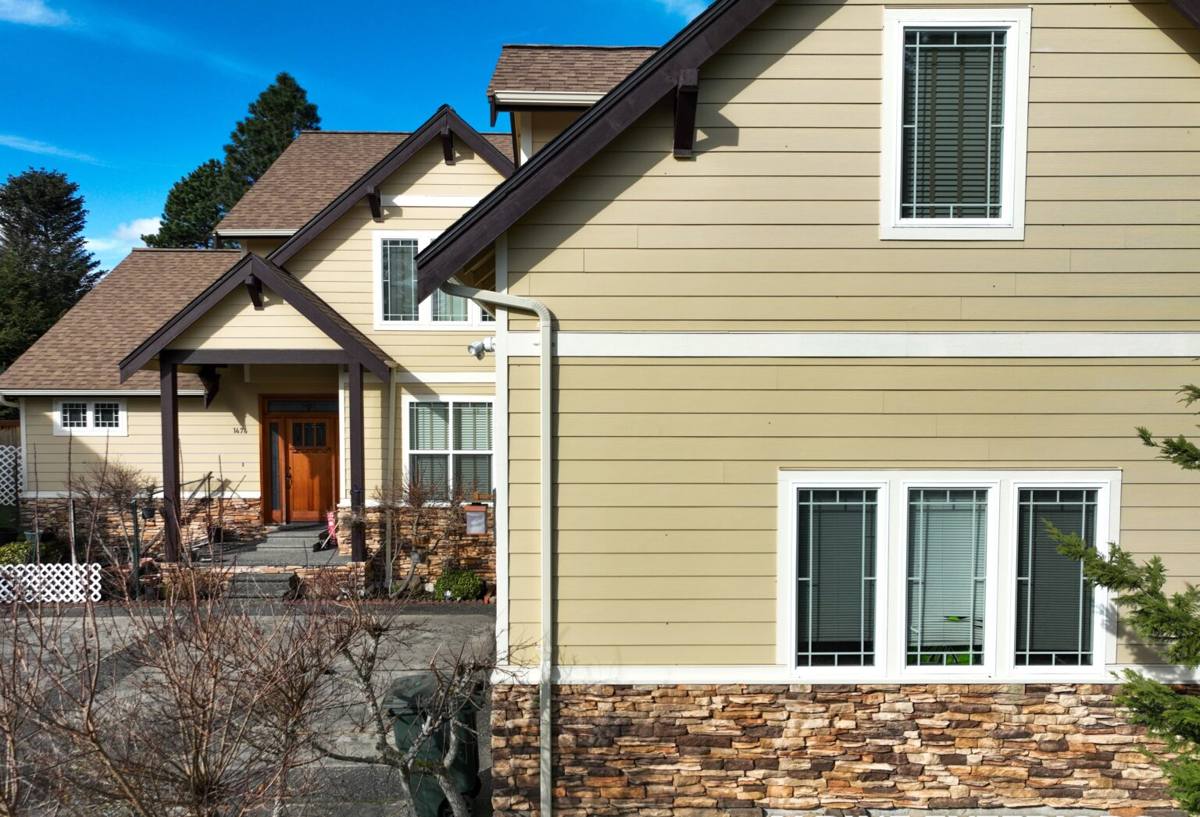
James Hardie fiber cement is engineered specifically for this: it's non-combustible, dimensionally stable when wet, and Hardie's HZ5 product line is formulated for the exact freeze-thaw and moisture-cycling conditions found in the Pacific Northwest. The factory-applied ColorPlus finish is baked on under controlled conditions, which holds color and resists the fading and touch-up problems you get with field-painted siding. It's also backed by a transferable limited warranty, which matters if a Lynden home changes hands — it's one less thing for a seller to explain away.
What a Correct Siding Installation Actually Involves
The Weather-Resistive Barrier Comes First
Siding is the visible layer, but the water-resistive barrier underneath is what actually keeps a wall dry. On every job we install a continuous, correctly lapped barrier — house wrap or building paper, shingled top over bottom so water sheds down and out — before any siding touches the wall. In a driving-rain climate, gaps or reversed laps here are the single most common cause of hidden rot behind siding that still looks fine from the curb.
Flashing at Every Penetration
Every window, door, hose bib, vent, and light fixture is a place water wants to get behind the siding. Correct flashing — head flashing above windows, kick-out flashing where roof lines meet walls, properly lapped step flashing — has to be installed and integrated with the weather barrier before siding closes it in. This is the detail that's easiest to rush and hardest to fix later, because by the time it fails you're looking at a tear-off, not a touch-up.
Fastening, Clearances, and Joint Treatment
James Hardie publishes specific fastening patterns, minimum ground clearance, and joint treatment requirements for a reason — deviate from them and you compromise both the product's performance and its warranty. That includes keeping siding a proper distance above grade, decks, and roof lines so splash-back and standing water don't sit against the bottom edge, and using the correct caulk or trim details at butt joints so water doesn't wick into the cut ends of the board.
Installation Checklist We Hold Every Job To
- Continuous, correctly lapped weather-resistive barrier with no gaps or tears
- Flashing installed and integrated at every window, door, and wall penetration
- Manufacturer-specified fastener type, spacing, and embedment depth
- Minimum clearance maintained above grade, roofing, and decks
- Butt joints and cut ends properly sealed or trimmed per spec
- Corner boards, trim, and caulking installed to shed water outward, not trap it
- Final walk-through inspection against the manufacturer's installation manual
Signs a Lynden Home Needs New Siding Now
Some warning signs are obvious — visible cracking, boards pulling away from the wall, or soft spots you can press a thumb into. Others are easier to miss. Persistent moss or algae staining on north- and west-facing walls is often a sign that the surface is staying wet longer than it should, which points to either a moisture problem behind the siding or simply siding that's reached the end of its coating life. Bubbling or peeling paint, especially in patches rather than evenly across a wall, usually means moisture is trying to escape from underneath. Rising energy bills without another explanation can also trace back to a compromised weather barrier letting conditioned air leak out. If any of these sound familiar, it's worth having someone look at the wall assembly, not just the surface.
Our Process, Start to Finish
- On-site walk-through: we look at your current siding, trim, flashing, and any problem areas before quoting anything.
- Written estimate: scope, product line, color, and price laid out plainly, no pressure to sign on the spot.
- Tear-off and inspection: once old siding comes off, we inspect sheathing and framing for hidden moisture damage before closing the wall back up.
- Weather barrier and flashing: installed to spec before a single piece of Hardie goes up.
- Hardie installation: fastened, spaced, and finished per manufacturer requirements.
- Final walk-through: we go over the finished job with you before calling it done.
James Hardie Product Lines for Whatcom County Homes
| Product Line | Best For | Notes |
|---|---|---|
| HardiePlank Lap Siding | Most Lynden homes, classic and modern styles | Available in smooth or cedar-textured finish, wide color range |
| HardiePanel Vertical Siding | Accent walls, gables, modern designs | Often paired with lap siding for visual contrast |
| HardieShingle Siding | Craftsman and cottage-style homes | Staggered or straight-edge panels for a shingle look without wood's moisture risk |
| HardieTrim Boards | Corners, window and door surrounds, fascia | Matches ColorPlus finish for a consistent factory-finished look |
All of these are available in Hardie's ColorPlus factory finish, which holds up better against fading and touch-up mismatch than field-painted siding — a real advantage under Bellingham's long grey stretches where paint gets little chance to fully cure between rain events.
What Drives Cost on a Lynden Siding Job
| Factor | Why It Matters |
|---|---|
| Tear-off scope | Removing old siding down to sheathing costs more than installing over a compliant surface, but it lets us inspect for hidden moisture damage |
| Hidden damage repair | Rotted sheathing or framing found during tear-off has to be repaired before new siding goes on — this is common on older homes with wood or engineered wood siding |
| Home size and wall complexity | More corners, gables, and dormers mean more trim work and cutting |
| Product line and finish | Lap, panel, and shingle profiles carry different material and labor costs |
| Trim and accent details | Vertical accents, custom trim, or mixed profiles add labor beyond a straightforward lap-siding job |
We don't quote ranges we can't stand behind, but the honest answer is that a walk-through is the only way to give you a real number — homes that look similar from the street often have very different underlying conditions once siding comes off.
Why Hiring a Crew That Already Works Lynden Matters
A contractor who works this area regularly already knows how local wall assemblies tend to be built, what moisture problems show up most often on homes of a certain age, and how far off the Bellingham prevailing wind and rain patterns push water into wall details that would be fine in a calmer climate. That's not something you can fully substitute with a generic installation manual. It also means faster response if something needs a look after the job is done — you're not waiting on a crew that has to drive in from out of the area.
We stand behind our installation work specifically because we control the whole process — one product system, one set of specs, applied consistently. That's a big part of why we don't install five different siding brands: it's easier to guarantee a job when the crew isn't relearning a new manufacturer's requirements on every house.
Get a Straight Answer for Your Home
If your Lynden home's siding is showing moss staining, peeling paint, soft spots, or you're just planning ahead before it becomes a bigger problem, we'll come take a look and give you a straightforward, no-pressure estimate. Fill out the form below and we'll get back to you to schedule a walk-through.