 Bellingham Exterior
 Building Decks for Lynden's Wet, Mossy Climate
Lynden sits in the agricultural flatlands of Whatcom County, but the weather that shapes deck-building here is the same weather that shapes it across the whole region: long stretches of steady, driving rain from fall through spring, heavy dew and fog off the surrounding farmland, and a moss and algae season that can run eight or nine months out of the year on any surface that stays shaded and damp. Add in the salt-influenced air that moves inland from Bellingham Bay and the Strait of Georgia during wind events, and you have a climate that is genuinely hard on exterior wood and hardware, even if Lynden itself is a few miles from open water.
A deck built to a generic national spec — one designed for a drier climate — will often look fine for the first year or two and then start showing problems: soft spots near the house, black streaking on the boards, corroding fasteners, and moss creeping across any low-airflow section. A deck built correctly for this specific climate looks different in a few key ways, and those differences are worth understanding before you sign a contract with anyone.
Why Lynden decks take a different kind of beating
Unlike a coastal deck that dries quickly in strong onshore wind, decks in Lynden and the surrounding valley often sit in calmer, more humid air. Moisture lingers longer on the surface and underneath the structure. That combination — frequent rain plus slow drying — is exactly the environment moss, algae, and wood rot need to establish themselves. It's also harder on metal connectors and fasteners, which is why we treat corrosion resistance as a baseline requirement, not an upgrade.
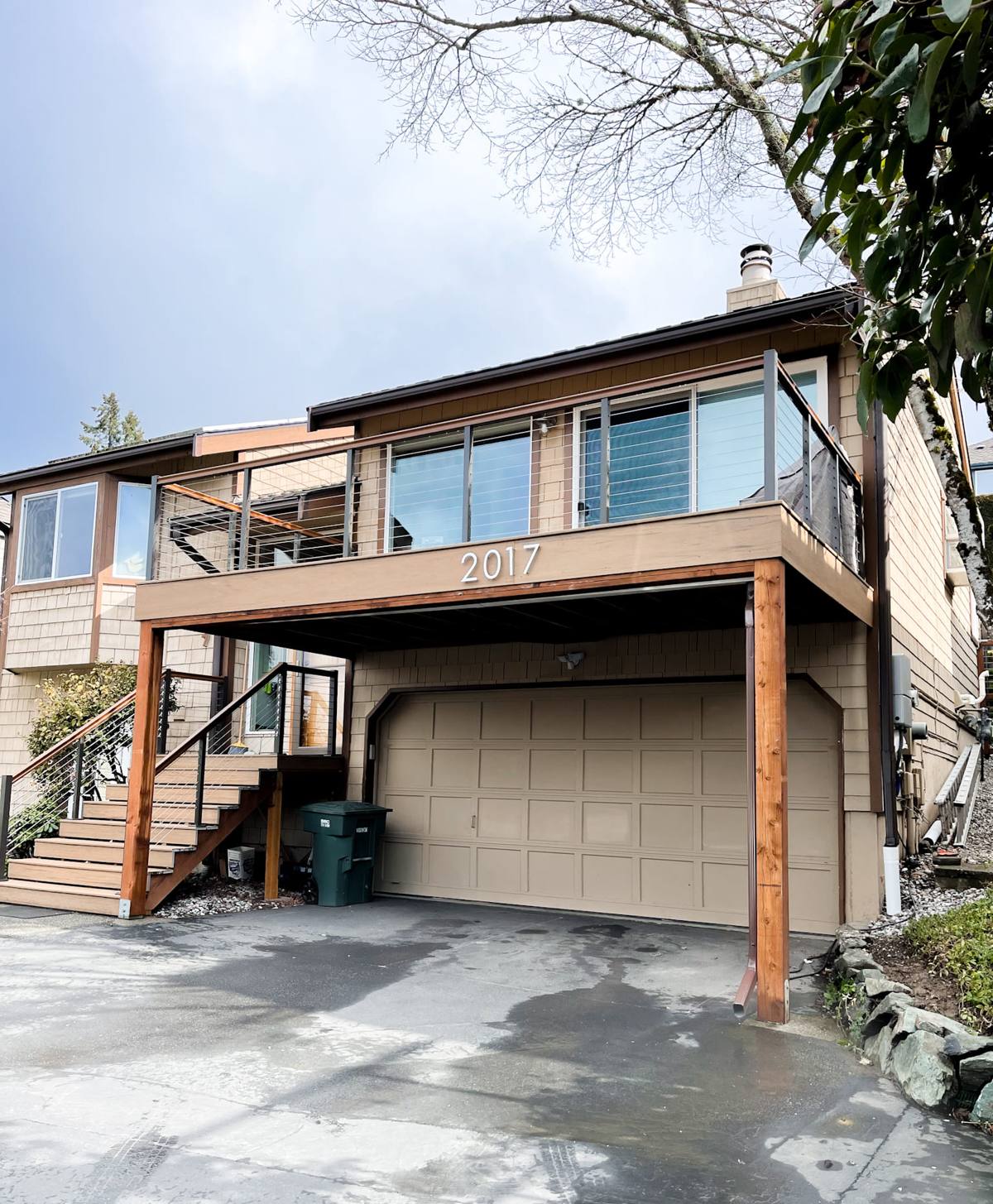
What a Correct Deck Build Requires in This Region
There's a difference between a deck that passes a quick visual inspection and one that's actually built to hold up through repeated wet-dry cycles for decades. The parts that matter most are the parts you can't see once the project is finished.
Ledger board and house connection
The single most common failure point on any deck attached to a house is the ledger board — the piece that bolts the deck to the structure. In a climate with this much sustained rain, that connection needs proper flashing that sheds water away from the house sheathing, not just a bead of caulk. We treat ledger flashing as non-negotiable, because a failure here doesn't just damage the deck — it can lead to rot in the home's rim joist and wall framing behind it.
Framing and fasteners
All structural framing should be rated for ground contact or exterior exposure, and every fastener and connector — joist hangers, post bases, screws — needs to be corrosion-resistant hardware rated for treated lumber and coastal-influenced air. Mixing incompatible metals (for example, standard fasteners with certain treated lumber chemicals) accelerates corrosion and is a mistake we see on older decks throughout Whatcom County.
Decking material selection
The board you walk on matters less structurally than the frame beneath it, but it matters enormously for maintenance and appearance. In a high-moisture, moss-prone climate, some materials simply require more diligence than others to keep looking and performing well. We'll walk through that tradeoff honestly rather than pushing whatever has the best margin.
Drainage and airflow underneath
A deck built low to the ground, over poorly draining soil, or without adequate ventilation underneath will trap moisture regardless of what decking material sits on top. Grading the ground beneath the deck, keeping skirting vented rather than sealed, and maintaining clearance from soil are all details that determine how long the structure lasts — and they're details that are easy to skip and hard to notice until years later.
Comparing Deck Materials for a Lynden Property
Every material has real tradeoffs. None of them are maintenance-free, despite what marketing sometimes implies. Here's how the common options actually perform in this climate.
| Material | Moisture/moss behavior | Maintenance | Typical lifespan here |
|---|---|---|---|
| Pressure-treated lumber | Absorbs moisture readily; needs sealing to resist moss and graying | Annual cleaning and re-sealing recommended | 15–20 years with upkeep |
| Cedar | Naturally rot-resistant but still needs treatment to fight moss staining | Periodic cleaning and refinishing | 15–25 years with upkeep |
| Composite decking | Doesn't absorb water like wood, but surface algae/moss can still grow if shaded and unwashed | Low — periodic washing, no sealing/staining | 25–30+ years, brand-dependent warranty |
| PVC/capped polymer | Fully resists moisture absorption; easiest to keep moss-free with occasional washing | Lowest — washing only | 25–30+ years, brand-dependent warranty |
We don't push composite or PVC on every job — plenty of homeowners in Lynden want the look and feel of real wood and are willing to do the upkeep. Our job is to make sure whichever material you choose is installed with the drainage, flashing, and fastening details that let it perform the way it's supposed to.
Our Process for a Lynden Deck Project
We keep the process straightforward and try not to waste your time with unnecessary back-and-forth.
1. On-site walkthrough and assessment
We look at the existing structure (if there is one), the ledger connection to the house, grading and drainage around the footprint, sun/shade exposure, and how the deck will actually be used — entertaining, grilling, hot tub, quiet morning coffee. That use case affects layout and material choice as much as the climate does.
2. Design and material selection
We go over layout, railing style, decking material, and any add-ons (built-in seating, stairs, lighting) along with honest cost and maintenance expectations for each option — no upselling toward whatever is most profitable for us.
3. Permitting
Most new decks and many deck replacements in Whatcom County require a building permit, particularly for decks above a certain height or attached to the house. We handle that process rather than leaving it on your plate.
4. Demolition (if replacing) and framing
Old decking, and often old framing, gets removed so we can inspect what's underneath — this is frequently where we find rot or corrosion that wasn't visible from the surface. Framing goes in with proper flashing, hardware, and drainage slope.
5. Decking, railing, and finish work
Final surface material and railing go on, with attention to fastener spacing and hidden fastening systems where applicable, followed by a final walkthrough with you.
What We Commonly Find on Older Lynden Decks
When we're called out to inspect or repair an existing deck in this area, a handful of issues show up again and again:
- Ledger boards with missing or failed flashing, leading to rot at the house connection
- Moss and algae buildup on shaded boards that were never designed with airflow in mind
- Rusted or corroding fasteners, especially where dissimilar metals were mixed
- Decks built too close to grade, with poor drainage pooling water underneath
- Railings and stair stringers that were never properly anchored, becoming loose over time
- Soft or spongy spots in decking boards, usually a sign of trapped moisture and early rot
Most of these issues trace back to shortcuts taken during the original build, not to normal aging. A deck built correctly the first time, for this specific climate, shouldn't develop these problems on this kind of timeline.
Design Considerations Specific to Lynden Properties
Lynden's mix of larger residential lots, farm-adjacent properties, and newer subdivisions means deck projects here often have more room to work with than a tighter in-town Bellingham lot — but that also means more exposed square footage that has to be detailed correctly for drainage and moss resistance. Larger decks, wraparound layouts, and decks paired with covered structures or pergolas are common requests. Covering part of a deck can reduce direct rain exposure, but it also reduces natural sun-drying, which means moss-resistant material choices and good airflow underneath matter even more on covered sections.
Permits and Local Code
Deck permitting in Whatcom County depends on factors like height above grade, whether the structure is attached to the house, and square footage. Requirements can also vary slightly depending on whether a property falls under city of Lynden jurisdiction or unincorporated Whatcom County. Rather than guessing, we confirm the specific requirements for your property before design work is finalized, and we pull the necessary permits as part of the project rather than treating that as the homeowner's responsibility.
Keeping a New Deck Looking Right Through Whatcom County Winters
Whatever material you choose, a little seasonal attention goes a long way in this climate:
- Sweep leaves and organic debris off the deck regularly in fall — trapped debris holds moisture and feeds moss
- Rinse or wash the surface at least once or twice a year to interrupt moss and algae growth before it takes hold
- Check railings, stair connections, and any visible fasteners annually for looseness or rust
- Keep gutters and downspouts near the deck clear so runoff isn't dumping extra water onto or under the structure
- For wood decking, plan on re-sealing or re-staining on the manufacturer's recommended cycle, not just when it looks worn
- Trim back overhanging branches or shrubs that keep sections of the deck shaded and slow to dry
Why Hire a Crew That Already Works in Lynden
Deck-building advice that works in a dry climate doesn't automatically transfer here. A contractor who mostly builds in low-rainfall regions may not default to the flashing details, fastener specs, or drainage planning that this climate actually requires — not out of carelessness, but because it's simply not the environment they're used to building in. A crew that regularly works Whatcom County properties has already seen which shortcuts fail here and builds around them as standard practice, not as an upcharge.
Local experience also means fewer surprises on permitting, a better sense of realistic timelines around our wetter months, and a crew that's used to sequencing work around rain rather than being caught off guard by it.
If you're planning a new deck or need to replace one that's showing its age, we're happy to take a look and walk you through what a correctly built deck for your property would involve. Reach out for a free, no-pressure estimate using the form below.