 Bellingham Exterior
 Sudden Valley's Siding Problem Is Different From the Rest of Bellingham
Most siding advice written for Whatcom County treats the whole area the same: salt air off the bay, driving rain, and a long wet season that keeps moss and moisture-loving growth active for most of the year. All of that is real, and it shapes how we build every job in this region. But Sudden Valley adds its own layer on top of it. This is a heavily wooded, lakeside community built into hillsides above Lake Whatcom, and that setting changes what siding actually has to deal with day to day.
Tree canopy over much of the neighborhood means large sections of siding rarely see direct sun, even in summer. Combine that shade with the lake's ambient humidity and the region's driving rain, and you get walls that stay damp longer than a home out in the open would. That's the exact condition where moss, algae, and mildew take hold on the wrong siding material and never really let go.
Shade and a Longer Moss Season
On sun-exposed lots, siding dries out between storms. On shaded, tree-covered lots like a lot of what you see around Sudden Valley, siding can stay wet for days after a rain event, especially on north-facing walls or sections tucked under overhanging branches. That extended dampness is what feeds moss and green algae staining, and it's harder on siding materials that absorb moisture or rely on a surface paint film to keep water out.
Driving Rain and Wind-Funneled Moisture
The lake basin and surrounding hills can funnel wind-driven rain against certain wall faces harder than you'd expect on a calm-looking day. That means flashing, weather barriers, and joint details around windows, doors, and trim have to be right — not just "close enough" — because wind-driven water finds any gap in the installation, not just gaps in the material itself.
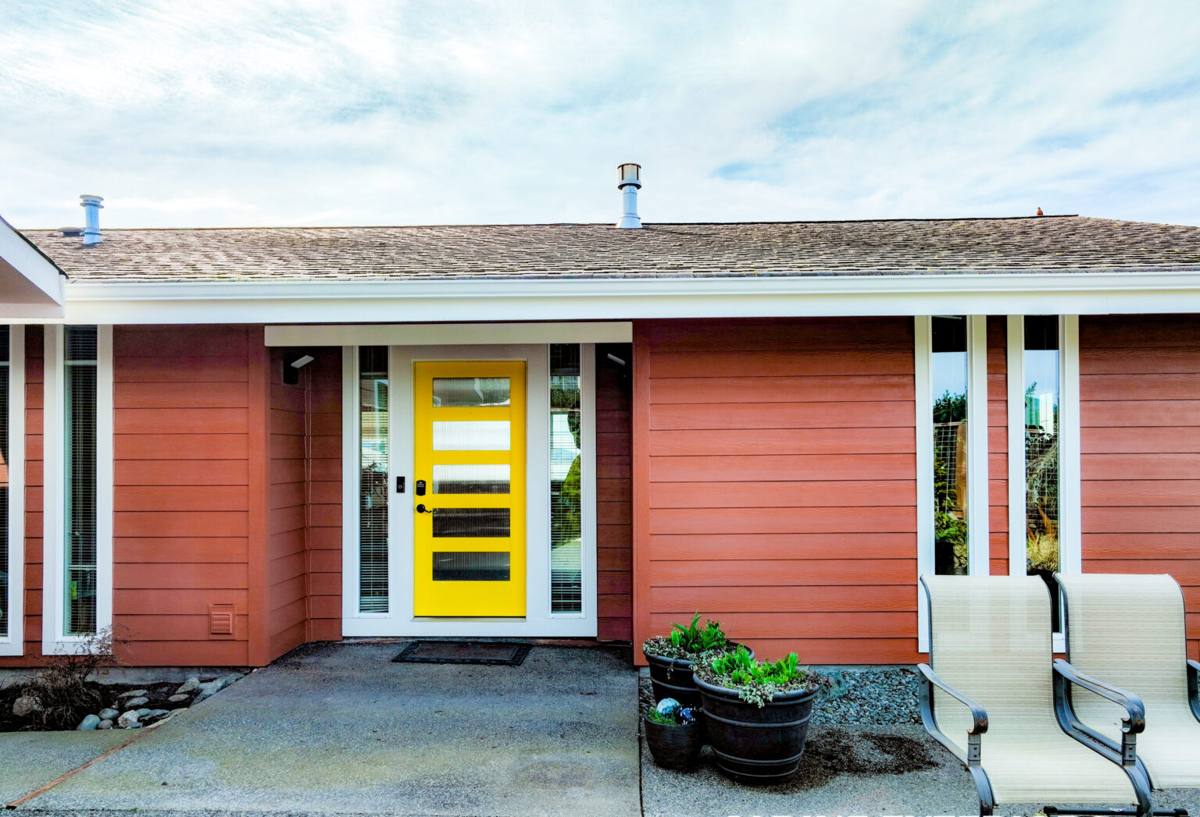
Why We Standardized on James Hardie for Homes Like These
We install James Hardie fiber cement siding exclusively. We don't install vinyl, LP SmartSide, Cemplank, Allura, or bare wood siding, and on a lot like a shaded Sudden Valley property, the reasons are practical, not brand loyalty. Fiber cement doesn't rot, swell, or feed fungal growth the way wood-based or wood-fiber products can when they stay damp. It's also non-combustible, which matters in a heavily treed, semi-rural setting where wildfire exposure is a real consideration for insurers and homeowners alike.
James Hardie also builds region-specific product lines rather than a single one-size-fits-all board. For Western Washington, including Whatcom County, that means the HZ5 engineered line — formulated and tested for damp, temperate climates with frequent freeze-thaw cycling and extended moisture exposure. That's a meaningfully different product than what gets shipped to a dry climate, and it's the version we spec for every job here, including Sudden Valley.
What a Correct Installation Actually Requires Here
Fiber cement siding is only as good as the installation behind it. On a shaded, moisture-prone lot, the installation details matter more than on an easy, sun-exposed lot, because there's less natural drying to bail out a mistake. A correct job includes:
- A continuous weather-resistive barrier behind the siding, lapped correctly so water sheds outward, not into the wall cavity
- Properly flashed windows, doors, and any deck or roof intersections, including kick-out flashing where a roofline meets a wall
- Correct clearance from grade, decks, patios, and roof surfaces so the bottom edge of the siding never sits in standing water or leaf debris
- Factory-cut or properly sealed field cuts, since exposed raw edges are the most common place moisture gets into fiber cement over time
- Fastener placement and spacing that matches Hardie's published specifications for the panel or plank style used
- Expansion gaps at trim and panel joints sized correctly for the product, not just eyeballed
On tree-covered lots, we also pay close attention to gutter and downspout performance during the estimate, because clogged gutters near overhanging branches are a common source of water running down behind siding at rooflines — a problem the siding material itself can't fix if the water management around it is wrong.
The HZ5 Line and ColorPlus Finish: Why Both Matter for Moss Season
Two parts of the Hardie system do most of the work in a climate like this. The first is the HZ5 substrate itself, engineered to hold up under repeated wetting and drying without the fiber cement absorbing moisture the way a lower-spec product might. The second is the ColorPlus factory finish — a baked-on coating applied under controlled conditions before the siding ever reaches the job site, rather than field-painted after installation.
That factory finish matters directly for moss and algae exposure. A field-applied paint job on any siding material is only as good as the weather conditions on the day it was painted and tends to break down at cut edges and laps first — exactly where moisture gets in on a shaded lot. ColorPlus finish resists fading, chalking, and peeling far longer, and because it's more uniform and durable, moss and algae buildup can typically be washed off without stripping paint or exposing bare material underneath.
Our Process for a Sudden Valley Project
Every home is different, but the sequence we follow doesn't change:
- Site and access assessment — including gate access, staging area, and any community requirements specific to the property before we schedule anything
- Existing wall inspection — checking sheathing condition, especially on shaded or north-facing walls where hidden moisture damage is more likely to have built up over time
- Tear-off and repair — removing old siding and repairing or replacing any compromised sheathing before anything new goes up
- Weather barrier and flashing — installed and inspected before a single piece of siding goes on
- Hardie installation — HZ5 panels or planks installed to manufacturer spec, with correct fastening, clearances, and joint treatment
- Trim, color, and final detailing — including caulking only where Hardie's specifications call for it, not as a substitute for correct flashing
- Final walkthrough and warranty registration — so the manufacturer's transferable warranty is properly on file for the homeowner
What Drives Cost on a Job Like This
Pricing depends on the specific home, but a few factors consistently move the number up or down on shaded, lakeside lots like the ones common around Sudden Valley:
| Cost Factor | Why It Matters Here |
|---|---|
| Tree canopy and site access | Limited staging space and overhead branches can slow tear-off and material handling |
| Sheathing condition | Shaded walls with a history of moisture exposure are more likely to need repair before siding goes on |
| Home size and wall complexity | Dormers, multiple gables, and tall walls common on hillside lots add labor and detail work |
| Siding profile chosen | Lap siding, shingle-style panels, and board-and-batten all install differently and price differently |
| Gate or community coordination | Scheduling deliveries and crew access through a gated community takes advance planning |
Why a Crew That Already Works in Sudden Valley Matters
Sudden Valley is a private, gated community, and that changes the logistics of a siding project in ways a contractor unfamiliar with the area often doesn't plan for. Getting a crew, a dump trailer, and material deliveries through gate access smoothly takes prior coordination. Many homes here also fall under a community association with its own review process for exterior changes, including siding color and style — a crew that's worked in the neighborhood before knows to check that early, not after materials are ordered.
There's also the practical matter of terrain. Steep, wooded lots require different staging, scaffolding, and material handling than a flat in-town lot, and a crew that's done it before doesn't lose a day figuring that out on-site. And because we stand behind our own installation with the manufacturer's transferable warranty, being an established local crew means we're still here — and still reachable — years after the job is done, not a name from out of the area that did one job and moved on.
Before You Hire: A Practical Checklist
- Ask whether the contractor is a certified James Hardie installer and how many Hardie jobs they've completed locally
- Confirm they'll pull the required building permit, not skip it
- Ask specifically how they'll handle flashing at rooflines, decks, and window/door openings — not just "we'll caulk it"
- Check whether existing sheathing will be inspected and repaired before new siding goes on, not just covered over
- Ask which Hardie product line and finish they're specifying, and confirm it's rated for this climate zone
- Get the manufacturer warranty terms in writing, including what voids it
- If you're in a community with an association, ask who handles that approval — you or the contractor
If you're weighing a siding project on a Sudden Valley home, we're happy to walk the property, look at what your walls are actually dealing with, and give you a straightforward, no-pressure estimate. There's a form below to get that started.