 Bellingham Exterior
 Metal Roofing in Happy Valley: What the Neighborhood Actually Needs
Happy Valley sits close enough to the water and the tree canopy that its roofs take a different kind of beating than roofs a few miles inland. Salt-laden air moves in off the bay, driving rain comes in sideways during winter storms, and the shade from mature trees keeps moss thriving on north-facing slopes almost year-round. A metal roof handles all three of those conditions well when it's specified and installed correctly for this specific setting — but "correctly for Happy Valley" is not the same as "correctly for a dry inland subdivision." Fastener choice, panel coating, underlayment, and even ventilation details all shift once salt exposure and near-constant moisture are part of the picture.
We work in this neighborhood regularly, which means we're not guessing at how a given roof will hold up here — we're basing the spec on what we've already seen fail, and what's held up, on homes just like the ones around it.
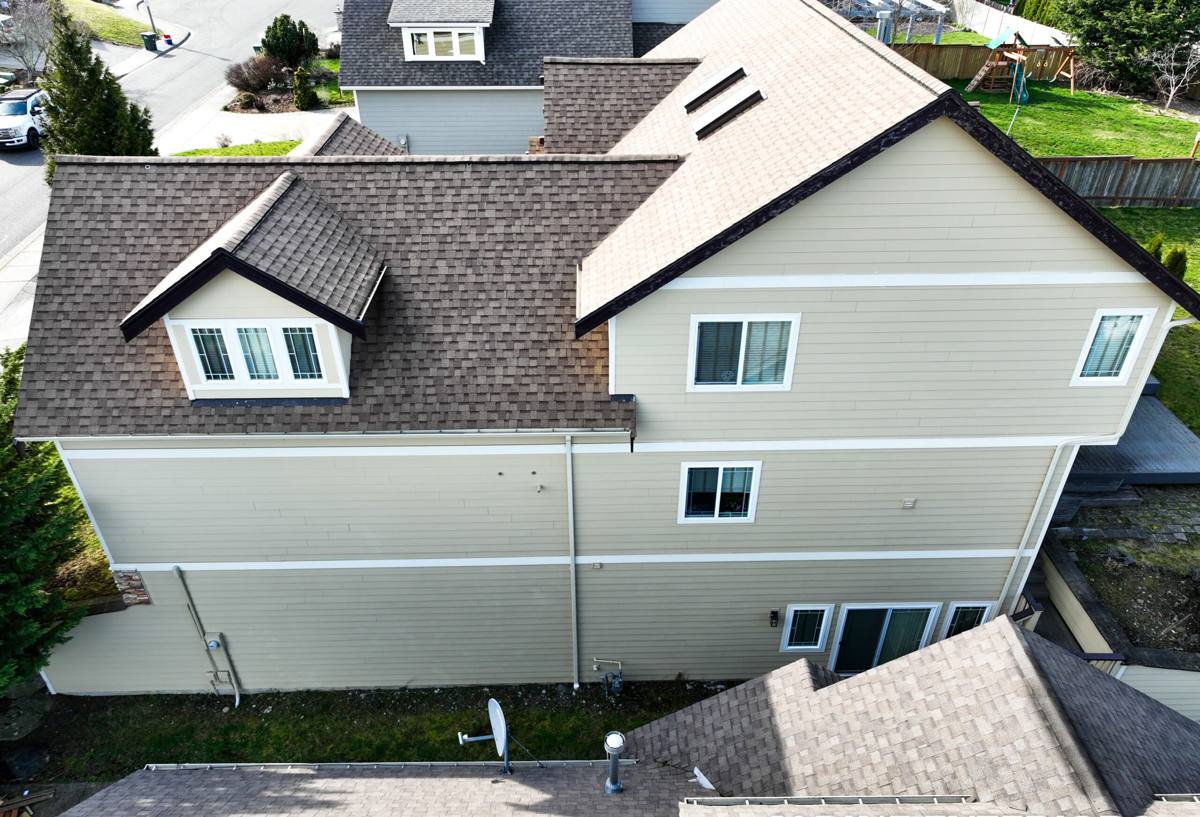
Why Metal Makes Sense for This Part of Bellingham
Metal roofing has a real advantage in a climate like Whatcom County's: it sheds water fast, doesn't absorb moisture into its surface the way organic shingle mats can, and gives moss and algae far less to grip onto compared to asphalt. That matters a lot in a shaded, damp pocket like Happy Valley, where a north-facing asphalt roof can start showing moss streaks within a couple of years of a fresh install.
It's not a magic material, though. Metal roofing still needs the right coating system for salt-air exposure, correct fastener metallurgy so panels and screws don't react with each other over time, and proper edge and flashing detailing so wind-driven rain never finds a path underneath the panels. Get any of those wrong and you trade one set of problems for another.
What Salt Air Does to the Wrong Metal Roof
Coastal-adjacent salt air accelerates galvanic corrosion wherever dissimilar metals touch — for example, the wrong fastener against the wrong panel alloy, or bare-cut edges left unsealed after trimming. Over several seasons that shows up as rust bleed streaks, pitting at cut edges, or fastener heads failing before the panel itself does. This is a coating and hardware selection issue, not a reason to avoid metal roofing — it's why we spec for it specifically rather than using a one-size-fits-all package.
What Constant Moss and Rain Do
Even on a roof that resists moss well, driving rain from winter storms will find any weak seam, lap, or penetration over enough years. On a metal roof the failure points aren't the field of the panel — they're almost always at valleys, chimney and vent flashing, and the eaves where wind can push water uphill under an edge that wasn't lapped correctly. Moss buildup in nearby gutters and on adjacent lower-pitch sections can also dam water right where it drains off the metal, so gutter condition and roof condition really are the same conversation here.
What a Correct Metal Roof Installation Involves
A metal roof is only as good as what's underneath it and how the details are handled. For Happy Valley homes, our process covers the same fundamentals every time, adjusted for each roof's exposure and pitch:
- Tear-off and deck inspection — checking for rot, soft spots, or prior moisture damage before anything new goes down
- Ice-and-water or synthetic underlayment at eaves, valleys, and penetrations, sized to the roof's actual rain exposure
- Panel and fastener selection matched to each other's metallurgy to avoid galvanic corrosion in salt air
- Proper panel overlap and fastening pattern for wind-driven rain, not just standard-spacing defaults
- Correctly lapped and sealed flashing at every valley, chimney, skylight, and vent penetration
- Ventilation checked and corrected where needed, since trapped moisture under metal causes deck problems even when the panels themselves are fine
- Gutter and drip-edge tie-in confirmed so water actually leaves the roof instead of backing up at the eaves
None of these steps are optional add-ons — they're what separates a metal roof that performs for decades from one that develops leaks and corrosion within a handful of years, especially in a damp, salt-touched setting like this one.
Choosing the Right Metal System for a Happy Valley Home
Not every metal roofing product is a good fit for every house, and we'd rather walk a homeowner through honest trade-offs than push whatever's easiest to install. The table below covers the systems we most often discuss with Happy Valley homeowners.
| System | Best Fit | Trade-offs to Know |
|---|---|---|
| Standing seam steel | Most homes; strong wind and rain performance | Higher upfront cost than exposed-fastener panels; needs a skilled crew for clean seams |
| Exposed-fastener panel (ribbed/corrugated) | Budget-conscious projects, outbuildings, simpler rooflines | Fasteners can loosen or leak over time and need periodic checking, especially with wind exposure |
| Stone-coated steel shingle/shake profile | Homes wanting a traditional look with metal's durability | More seams and detail work than standing seam; installation quality matters even more |
| Aluminum panel systems | Homes very close to salt air exposure | Costs more than steel; softer material needs careful handling during install |
For homes in Happy Valley specifically, we lean toward standing seam or aluminum where budget allows, simply because fewer exposed fasteners means fewer future points where salt air and rain can start a problem. That's a professional judgment call based on the environment, not a claim that other systems are unusable — they just carry more long-term maintenance in this particular setting.
Cost Factors Homeowners Should Actually Weigh
We won't quote a number without seeing the roof, but the factors that move the price are consistent and worth knowing before you start getting estimates:
| Factor | Why It Matters |
|---|---|
| Roof pitch and complexity | More valleys, dormers, and penetrations mean more flashing detail and labor time |
| Tear-off vs. overlay | Full tear-off costs more upfront but lets us inspect and fix the deck — important on older, moisture-exposed homes |
| Panel material and gauge | Heavier gauge and coastal-grade coatings cost more but resist corrosion and denting longer |
| Underlayment upgrade | Full ice-and-water coverage instead of standard synthetic adds cost but matters in a high-rain area |
| Access and staging | Steep pitches, mature trees, or tight lots can add time and equipment needs |
As a broad range, metal roofing typically costs more upfront than asphalt shingles, but the gap narrows considerably when you factor in asphalt's shorter lifespan and higher moss-related maintenance in a shaded, damp neighborhood. We'll walk through the real numbers for your specific roof during an estimate rather than quoting a figure that doesn't apply to your home.
Our Process, Start to Finish
1. On-Site Assessment
We look at the whole roof system — pitch, existing material, deck condition where visible, ventilation, gutters, and how exposed the roof is to prevailing wind and rain direction. We also check the tree canopy and shading pattern, since that drives how much moss pressure a given slope will face.
2. Straight-Talk Proposal
You get a written scope covering material, underlayment, flashing detail, and what happens to your existing roofing — no vague "roof replacement" line item. If tear-off reveals deck damage, we tell you before we proceed, not after the fact on the invoice.
3. Installation
Tear-off, deck repair as needed, underlayment, panel installation, and flashing — done in that order, with attention to the salt-air and rain details covered above at every step, not just on the parts that are easy to see.
4. Final Walkthrough
We walk the roof and the ground-level sightlines with you, confirm drainage at the eaves and valleys, and make sure you understand any maintenance items specific to your system, like periodic fastener checks on exposed-fastener panels.
Why a Local Crew Matters for This Job
Metal roofing mistakes in a climate like this one don't usually show up right away — they show up two, three, or five winters later, after enough freeze-thaw cycles, wind-driven rain events, and moss buildup have had time to find the weak points. A crew that only occasionally works in Whatcom County doesn't get that feedback loop. We do, because we're back in this area regularly, seeing how roofs we've installed and roofs we've inspected have actually performed against Bellingham's rain and Happy Valley's specific mix of shade and salt exposure.
That's the real value of hiring local: not just faster response for an estimate, but a spec that's already been pressure-tested by this exact climate rather than adapted from a drier region's standard practice.
Simple Maintenance Checklist for Metal Roof Owners Here
- Clear moss and debris from valleys and gutters before the heavy fall rains arrive
- Check exposed fasteners annually on ribbed/corrugated panel systems and re-torque or replace as needed
- Look for rust streaking at cut edges or fastener heads, which signals a coating or hardware issue worth addressing early
- Confirm downspouts are clear and directing water away from the foundation, especially after wind storms
- Trim back overhanging branches where practical to reduce shading and moss pressure on north-facing slopes
If you're weighing a metal roof for a home in Happy Valley, we're glad to come take a look and give you a straightforward, no-pressure estimate based on what your specific roof and lot actually need. Use the form below to get started.