 Bellingham Exterior
 Ferndale's Climate Is Hard on Siding — Here's Why
Ferndale sits close to the Salish Sea, just north of Bellingham in Whatcom County, and that location shapes what happens to exterior siding here. Salt-laden air moves in off the water and settles on north- and west-facing walls, accelerating corrosion on fasteners and trim and slowly breaking down finishes that weren't built to handle it. Add in driving rain that comes sideways during fall and winter storms, and you get moisture pushed into joints, seams, and butt ends that would stay dry in a calmer climate.
Then there's moss. Whatcom County's long, wet, mild-temperature stretch from October through May is close to ideal moss and algae growing conditions, especially on shaded siding under trees or on the north side of a house that never gets direct sun. Moss holds moisture against the siding surface for weeks at a time. On the wrong material, or with a compromised finish, that constant dampness is exactly what causes rot, delamination, and paint failure. Siding repair in Ferndale isn't just about fixing what's visibly broken — it's about understanding why it broke in the first place, so the repair actually holds.
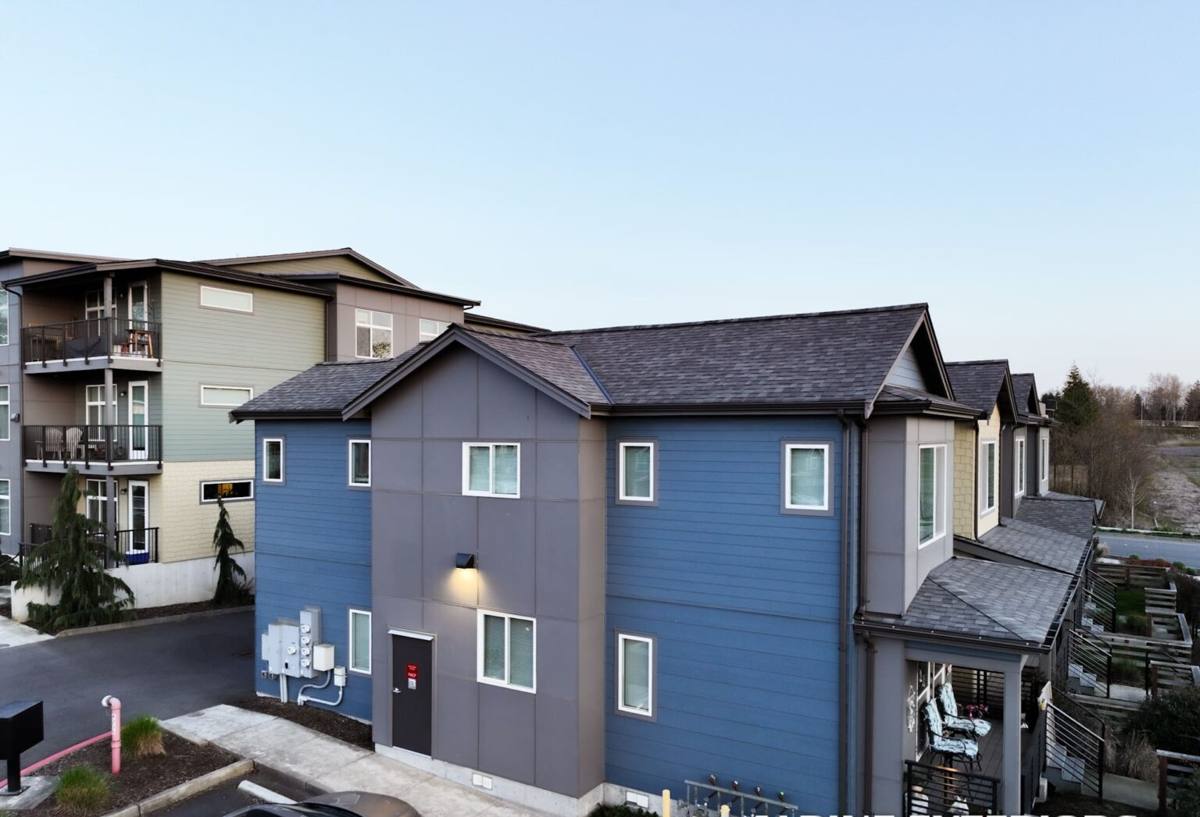
Signs Your Ferndale Home's Siding Needs Repair
Most siding problems don't show up as a hole in the wall. They show up as small, easy-to-dismiss details that add up over a season or two. Walk your exterior and look for:
- Soft or spongy spots when you press on a board, especially near the bottom edge or at butt joints
- Cracked, peeling, or bubbling paint that keeps coming back in the same spot after repainting
- Dark streaking or a persistent green-black film that doesn't wash off with a simple rinse
- Gaps opening up at caulked joints around windows, doors, or trim boards
- Visible warping, cupping, or separation between boards
- Nail heads popping out or rust stains bleeding down the face of a board
- A musty smell near an exterior wall on the inside of the house
- Woodpecker damage or insect activity concentrated in one area
Any one of these on its own might be minor. Several of them clustered in the same section of wall usually means moisture has been getting behind the siding for a while, and that's worth having looked at before it spreads.
The Repairs We See Most Often in Ferndale
Moisture Intrusion at Joints and Penetrations
Butt joints between siding boards, and the areas around hose bibs, light fixtures, and vents, are the most common failure points. If these weren't flashed and sealed correctly during the original install, driving rain finds its way behind the siding over time. The fix isn't just re-caulking the surface — it usually means pulling the affected boards, checking the water-resistive barrier and flashing underneath, and correcting whatever let water in before anything goes back up.
Impact and Physical Damage
Cracked or dented boards from storm debris, ladders, landscaping equipment, or general wear happen on every type of siding. Fiber cement handles this better than most materials, but it isn't indestructible. A cracked board that isn't sealed becomes a direct path for water, so even damage that looks cosmetic should get addressed before the next wet season.
Caulk and Sealant Failure
Caulk is a wear item — it's not meant to last the life of the house. In a climate with as much rain and temperature swing as Whatcom County sees, sealant at trim boards, corners, and window flanges typically needs attention well before the siding itself does. Left too long, failed caulk lets water track down behind the boards even when the siding is otherwise sound.
Moss and Algae Staining
Cosmetic staining is one thing; moss that's been left to establish itself for a season or more is another. It holds water against the surface continuously, which is a slower but real threat to any siding material's finish and, on some products, the substrate underneath. Repair work in shaded, moss-prone sections often needs to address drainage and airflow, not just clean the surface.
Repair or Replace? How We Make That Call
Not every problem needs a full re-side, and we're not going to tell you it does. But there's a point where patching stops being the economical choice. Here's the general framework we use when we're standing in front of a Ferndale home:
| Factor | Repair Usually Makes Sense | Replacement Usually Makes More Sense |
|---|---|---|
| Extent of damage | Isolated to one or two sections/elevations | Spread across multiple walls or the whole exterior |
| Underlying cause | Identifiable and fixable (bad caulk, one failed flashing) | Systemic — original install lacked proper moisture barrier |
| Siding age | Well within expected service life | Nearing or past the material's realistic lifespan |
| Material match | Matching material/color is available or acceptable | Discontinued product, no reasonable match possible |
| Recurrence | First time this section has had an issue | Same spot has been "fixed" more than once already |
We'll always give you the honest read on which column your house falls into, even if that means telling you a repair is all you need.
What a Correct Siding Repair Actually Involves
A repair that's done right takes more steps than most homeowners expect, and skipping any of them is how the same spot ends up needing fixed again in two years.
- Diagnose the cause, not just the symptom. We find out why that section failed before we touch it — otherwise we're just delaying the same problem.
- Remove the affected boards carefully. This lets us inspect the sheathing, house wrap, and flashing underneath, which is where the real damage usually is.
- Address the underlying moisture path. Replace or correct flashing, seal penetrations properly, and confirm the drainage plane behind the siding is intact.
- Install matching material correctly. Proper fastening, clearances, and joint treatment matter as much on a repair as they do on a full install.
- Finish and blend. Whether that's factory-finished ColorPlus material or a field-applied match, the goal is a repair that doesn't stand out.
Why Matching Matters More Than People Expect
One of the trickiest parts of siding repair is color and profile matching, especially on homes finished with a factory-applied coating system. Field-painted repairs on a factory-finished product rarely match perfectly, and mismatched profiles or exposures are obvious the moment the light hits them at an angle. This is one reason we're selective about what we install and repair — a consistent, well-documented product line makes it far more likely we can source a true match years after the original install, rather than guessing at a paint formula.
If Your Siding Is Past the Point of Repair
Sometimes a homeowner calls about a repair and what we find is a house where the siding has been patched more than once, the original moisture management was never right, or the material itself — vinyl, LP SmartSide, cedar, or an older fiber cement product — is simply at the end of what it can give. In those cases we'll tell you plainly, and we'll explain why, when it comes time to replace rather than patch, we install James Hardie fiber cement exclusively. It's non-combustible, holds up to the salt air and driving rain typical of this part of Whatcom County, and its ColorPlus factory finish is built to hold color and resist the moss-and-moisture cycle far longer than field-applied paint. That's a conversation for a replacement estimate, though — not something we push on every repair call.
Our Process for Ferndale Repair Calls
We keep this straightforward:
- An in-person inspection of the affected area and a look at the surrounding sections, since siding problems rarely stay isolated
- A clear explanation of what caused the damage, in plain language
- A written estimate that separates the repair scope from any additional recommendations, so you're never guessing what's required versus optional
- Scheduling that accounts for our wet-season workload — repair work often needs a dry window, and we plan around that
- A cleanup and final walkthrough before we consider the job done
Why a Crew That Already Works Ferndale Matters
Siding repair isn't just carpentry — it's knowing what this specific stretch of coastline does to a house. A crew that works Ferndale regularly already knows which elevations take the worst of the salt air, where moss tends to establish first, and how driving rain off the water behaves differently than a straight-down rainstorm inland. That local pattern recognition is what separates a repair that lasts from one that's just a patch on a problem that's about to come back.
If you're seeing early signs of trouble, or you've already got a section that needs attention, we're happy to take a look. Reach out for a free, no-pressure estimate — the form below gets you started.