 Bellingham Exterior
 Why Ferndale's Climate Is Hard on Windows
Ferndale sits close enough to the water that salt air is a real factor in how fast a window ages, not just a coastal talking point. Combine that with the driving rain that comes through Whatcom County off Puget Sound and the long, damp moss season that follows it, and you've got three separate stressors working on every window in a house at the same time. Most windows aren't destroyed by one storm — they're worn down gradually by salt-laden air corroding hardware, wind-driven rain finding its way past aging seals, and moisture sitting in shaded corners long enough for moss and mildew to take hold.
Salt Air and Corrosion
Salt in the air accelerates corrosion on window hardware — hinges, locks, balance systems, and exposed fasteners — faster than it would inland. Cheaper hardware finishes pit and seize up years before the glass or frame shows any wear, which is why hardware quality matters as much as the frame material itself on a Ferndale job.
Driving Rain and Water Intrusion
Wind-driven rain doesn't just fall on a window, it gets pushed sideways into every gap in the flashing and sealant. A window that would be fine in a calmer climate can leak in Ferndale simply because it wasn't detailed for wind-driven water at installation.
Moss Season
Whatcom County's extended wet season means moss and algae get a long runway to establish themselves anywhere moisture lingers — window sills, mullions, and the trim around a frame. Left alone, that moisture retention slowly breaks down wood components and finishes, even on frames that are otherwise sound.
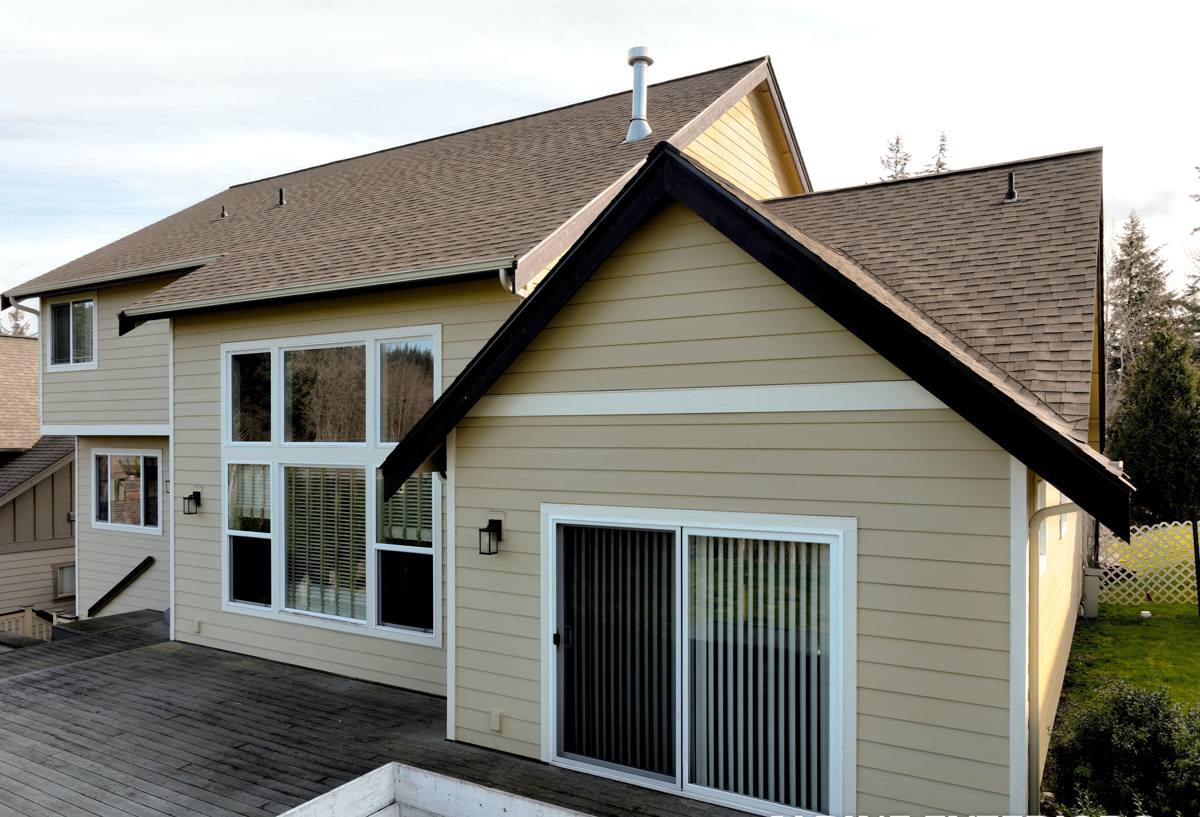
What Makes a Window Job "Custom" in Ferndale
Ferndale's housing stock spans a wide range of ages and styles, from older farmhouses and post-war homes to newer construction, and that variety is exactly why "custom" matters here. Rough openings are rarely a perfect standard size once a house has settled for a few decades, trim profiles vary from one era of construction to the next, and older homes often have wall assemblies that need extra attention during removal to avoid hidden rot or unexpected framing conditions. A true custom approach means every opening gets measured and evaluated on its own, not fitted to a catalog size and shimmed until it looks right.
Custom also means matching the home's existing character where that matters to the homeowner — grille patterns, sightlines, and trim details that keep a older home looking like itself rather than like it just got a modern window dropped into it.
Choosing the Right Frame Material
Frame material is the single biggest factor in how a window holds up to salt air and constant moisture. There's no universally "best" option — the right choice depends on budget, maintenance tolerance, and how exposed the window is to weather.
| Frame Material | Moisture & Salt Resistance | Maintenance | Typical Fit |
|---|---|---|---|
| Vinyl | Good — won't rot or corrode | Low; occasional cleaning | Budget-conscious replacements, rental properties |
| Fiberglass | Very good — dimensionally stable in wet/dry cycles | Low | Homes wanting durability without wood upkeep |
| Wood-clad | Good on the exterior clad face; interior wood needs protection from moisture | Moderate to high | Historic or traditional-style homes prioritizing interior wood appearance |
| Aluminum | Fair — prone to condensation and corrosion near salt air without thermal breaks | Moderate | Contemporary designs, larger openings |
We steer most Ferndale homeowners toward vinyl or fiberglass for anything with direct weather exposure, and reserve wood-clad for homes where the interior wood look is a priority worth the extra upkeep. It's a trade-off we lay out honestly rather than a one-size answer.
Glass Packages Worth Paying For
Glass and gas fill matter as much as frame material in a climate like this. A few upgrades consistently pay off in Whatcom County:
- Dual-pane, low-E glass — cuts heat loss and reduces the temperature swing that leads to interior condensation on cold, damp days.
- Argon gas fill — a low-cost upgrade over a standard air-filled unit that improves insulating performance with no visible difference.
- Warm-edge spacers — reduce condensation right at the glass edge, which is exactly where moisture problems tend to start on humid coastal days.
- Impact-rated or laminated options — worth considering for windows that take the brunt of wind-driven storms, since they add durability against debris impact.
None of these are gimmicks — each one addresses a specific way this region's weather stresses a window, and we'll tell you plainly which upgrades are worth the money for your particular exposure and which aren't necessary for a sheltered window that rarely sees direct weather.
How We Install Windows to Actually Keep Water Out
Most window failures trace back to installation, not the product itself. A correct install in a wet, salt-exposed climate follows a specific sequence, and skipping any step is where leaks start:
- Remove the old unit and inspect the rough opening for hidden rot or moisture damage before anything new goes in.
- Install a sloped sill pan flashing so any water that gets past the window sheds outward, not into the wall.
- Apply flashing tape in the correct shingle-lap order — sides over the sill pan, top flange over the sides — so water always drains down and out.
- Set the window level, plumb, and square, then fasten per manufacturer spec rather than "close enough."
- Insulate the gap between frame and rough opening with low-expansion foam or backer rod, never left empty or overpacked.
- Seal the exterior perimeter with a sealant rated for this climate, and finish interior air sealing before trim goes back on.
Every one of these steps takes extra time compared to a quick drop-in job, but in a place where wind pushes rain sideways for months at a stretch, it's the difference between a window that lasts decades and one that's leaking behind the trim within a few years.
Signs Your Ferndale Home's Windows Need Attention
Windows rarely fail all at once — they give warning signs first. Worth checking for:
- Visible fogging or a haze between the panes of a dual-pane window, which means the seal has failed and the gas fill is gone.
- Soft or discolored wood trim around the frame, especially at the bottom corners where water collects.
- Moss or persistent green staining on the sill or exterior trim that keeps coming back after cleaning.
- Noticeable drafts or a cold spot near the window even when it's fully latched.
- Hardware that's stiff, corroded, or won't lock smoothly anymore.
- Paint or finish that's bubbling or peeling specifically around the window opening, not the wider wall.
Any one of these on its own might just mean routine maintenance. Several at once, especially on a home over 15-20 years old, usually means it's time to talk about replacement before the surrounding wall structure gets involved.
Our Process, Start to Finish
- On-site assessment — we look at every opening individually, check for existing moisture or rot, and measure for a true custom fit.
- Material and glass selection — we walk through frame and glass options honestly, matched to your budget and each window's actual exposure.
- Scheduling around the weather — we plan install days with Whatcom County's rain patterns in mind so openings aren't left exposed longer than necessary.
- Removal and inspection — old units come out carefully, with any hidden framing issues flagged before we proceed, not discovered after the fact.
- Installation — flashing, sealing, and fastening done to spec, with attention to the same water-management details every time.
- Final walkthrough — we check operation, sealing, and finish work with you before considering the job done.
Why a Crew That Already Works in Ferndale Matters
A contractor who regularly works in Ferndale already understands the local building department's expectations, knows what kind of window failures show up most often in this area's housing stock, and isn't guessing at how much weather exposure a given wall actually sees. That familiarity shows up in small decisions — how much sealant to use, which sill flashing detail suits an older farmhouse versus a newer build, how to schedule around a wet forecast — that add up to a window that performs correctly for years instead of one that just looks right on installation day.
It also means faster, more accurate estimates, since we're not learning the area's quirks on your project. We know the difference between a window that just needs to look good and one that has to stand up to real wind-driven rain and salt air, and we build accordingly.
Caring for Custom Windows After Installation
A properly installed window still benefits from basic seasonal care in this climate:
- Rinse salt residue and grime off exterior glass and frames periodically, especially after storms.
- Clear moss or debris from sills and tracks before it holds moisture against the frame.
- Check exterior sealant annually for cracking or separation and have it addressed before it becomes a leak path.
- Lubricate locks and hardware occasionally to keep salt-air corrosion from seizing moving parts.
- Keep gutters and downspouts clear nearby so overflow isn't running down onto window heads.
None of this is difficult, but skipping it is how a good installation slowly turns into a maintenance problem a few years down the road.
If your Ferndale home has windows showing any of the wear signs above, or you're planning a custom window project and want an honest read on materials, glass, and cost before committing, we're happy to take a look. Request a free, no-pressure estimate using the form below and we'll walk the property with you.