 Bellingham Exterior
 New Roof Installation in Edgemoor
Edgemoor sits close to the water, which means its homes take a different kind of beating than houses further inland in Whatcom County. Salt-laden air off Bellingham Bay, driving rain that comes in sideways during winter storms, and a moss season that can run eight months out of the year all work against a roof at the same time. When it's time for a new roof in this neighborhood, the installation needs to account for all three, not just meet code minimums.
This page covers what a correctly installed roof looks like for Edgemoor specifically, what our process involves from first look to final walkthrough, and why it matters to hire a crew that already understands this stretch of Bellingham rather than one working from a generic checklist.
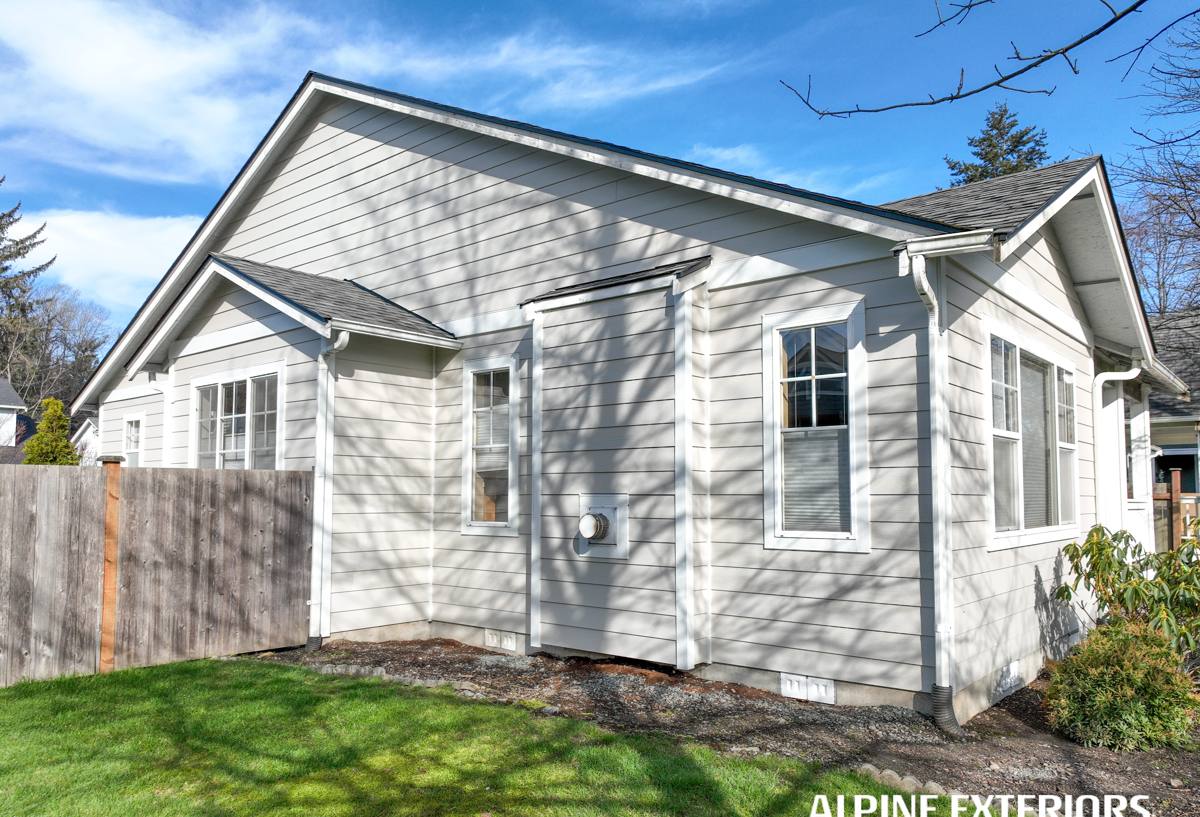
What Edgemoor's Climate Actually Does to a Roof
Salt Air and Metal Fasteners
Homes close to the shoreline see accelerated corrosion on exposed metal — nails, flashing, vent stacks, and gutter hardware age faster here than they would ten miles inland. A roof that skimps on corrosion-resistant fasteners or uses mismatched metals (galvanic corrosion between dissimilar metals in contact) will show rust streaks and failed fasteners years before a comparable roof on the east side of Bellingham.
Driving Rain and Wind-Driven Water
Storms coming off the Strait of Georgia and Bellingham Bay don't just drop rain straight down — wind pushes water sideways and up under shingle edges, around chimneys, and into valleys. Underlayment and flashing details that would be "good enough" in a drier climate aren't good enough here. Water finds the gaps.
Moss, Shade, and Slow-Drying Roof Decks
Edgemoor has a lot of mature tree cover, which is part of what makes the neighborhood attractive — and part of what shortens a roof's life. Shaded, north-facing slopes stay damp for days after a storm, which is exactly what moss and algae need to take hold. Moss growth isn't just cosmetic: it lifts shingle edges, traps moisture against the roof deck, and accelerates granule loss.
What a Correct Installation Involves Here
A new roof isn't just shingles nailed to plywood. For a coastal Bellingham home, the components below matter as much as the visible roofing material — arguably more, since they're the parts that actually stop water.
- Tear-off and deck inspection: Full removal of old roofing so the deck can be checked for soft spots, rot, or delamination — problems that get covered up (not fixed) if you roof over an old layer.
- Ice-and-water shield at vulnerable points: Self-adhered waterproof membrane at eaves, valleys, and around penetrations, sized for our rain volumes rather than the code minimum.
- Synthetic underlayment across the field: A water-resistant barrier under the whole roof, not just the high-risk areas, given how often this area sees sustained rain.
- Corrosion-resistant flashing and fasteners: Stainless or coated hardware around chimneys, skylights, and roof-to-wall transitions, chosen with salt exposure in mind.
- Balanced attic ventilation: Proper intake and exhaust venting to keep the deck dry from underneath and control condensation, which matters as much as the roofing surface above.
- Algae-resistant shingle or roofing material where appropriate: Products formulated to resist moss and algae growth on the shaded slopes common in this neighborhood.
Material Options for Edgemoor Homes
| Material | How It Handles Salt Air & Moisture | Moss Resistance | Typical Lifespan Here |
|---|---|---|---|
| Architectural asphalt shingle (algae-resistant) | Good, with corrosion-resistant fasteners and flashing | Good on treated products; needs periodic cleaning on shaded slopes | 20-30 years |
| Standing seam metal | Very good with marine-grade coatings and proper fastener selection | Excellent — sheds moss and debris much more easily | 40-50+ years |
| Composite/synthetic shake | Good; doesn't absorb moisture like wood | Good, especially versus real cedar shake | 30-50 years |
| Cedar shake (untreated) | Prone to moisture retention near the coast | Poor without diligent maintenance | Shorter here; high upkeep in shaded, damp settings |
We'll walk through these trade-offs honestly during your estimate. There isn't one "best" material for every Edgemoor roof — it depends on your home's exposure, roof pitch, shading, and budget. What we won't do is put a moisture-sensitive product on a heavily shaded slope and call it a day; that's setting a homeowner up for early problems.
Our Process for a New Roof Installation
1. On-Site Assessment
We look at the whole system — deck condition, ventilation, existing flashing, tree cover, and how water currently moves off the roof and away from the house. In Edgemoor specifically, we also note proximity to the water and existing corrosion on metal components, since that tells us a lot about what the next roof needs to hold up against.
2. Written Scope and Straightforward Pricing
You get a scope of work that spells out tear-off, decking repairs (if needed), underlayment, flashing, ventilation, and the roofing material itself — not a vague one-line estimate. Broad cost ranges depend heavily on roof size, pitch, current layer count, and material choice, so we price your specific roof rather than quoting a flat number that doesn't reflect the job.
3. Tear-Off and Deck Repair
Old roofing comes off, the deck gets inspected, and any soft or rotted sheathing is replaced before anything new goes down. This is also when we catch issues that don't show up from the ground — vent stack corrosion, old flashing that was patched instead of replaced, or ventilation gaps.
4. Waterproofing Layer by Layer
Ice-and-water shield at the eaves and valleys, synthetic underlayment across the field, then flashing at every penetration and transition. This is the part of the job that determines whether your roof actually keeps water out during a real Bellingham winter storm, not just a light rain.
5. Roofing Material Installation
Installed to manufacturer spec and local wind/rain conditions, with attention to nailing patterns, exposure, and fastener corrosion resistance — details that matter more here than in a drier inland climate.
6. Cleanup and Final Walkthrough
Magnetic sweep for stray fasteners, full site cleanup, and a walkthrough where we show you what was done and answer questions before we consider the job finished.
Signs an Edgemoor Roof Needs Full Replacement (Not Just a Repair)
- Granule loss heavy enough that shingles look bald or gutters are full of grit
- Persistent moss growth that comes back within a season of cleaning
- Soft spots or sagging in the roof deck when walked
- Multiple layers of prior roofing already in place
- Recurring leaks around chimneys, skylights, or valleys despite past patch repairs
- Visible rust streaking from fasteners or flashing
- Roof is nearing or past its material's expected lifespan and shows widespread wear rather than isolated damage
If only one or two of these apply and the deck is sound, a repair may still be the right call — we'll tell you that rather than pushing a full replacement you don't need yet.
Why a Crew That Knows Edgemoor Matters
A roofing crew that only works dry, inland jobs doesn't think about galvanic corrosion between mismatched flashing metals, because it's never been a problem for them. A crew that hasn't dealt with heavy tree cover doesn't plan for ventilation and algae resistance the way they should. Working Whatcom County's coastal neighborhoods regularly means we've already seen how roofs here age — where they fail first, and what installation details actually prevent it — rather than learning it on your house.
We also know the practical side of working in an established, tree-lined neighborhood like Edgemoor: staging materials without damaging landscaping, protecting driveways and walkways during tear-off, and working around mature trees safely during a multi-day install.
What to Expect During the Project
| Stage | What Happens | What You'll Notice |
|---|---|---|
| Assessment & estimate | On-site inspection, written scope, pricing | No pressure, clear answers to your questions |
| Scheduling | Materials ordered, weather window planned | A realistic start date, not a guess |
| Tear-off & install | Old roof removed, deck repaired, new system installed | Noise and activity for the duration of the job; property protected |
| Cleanup & walkthrough | Debris and fastener sweep, final inspection with you | A finished roof and a clear explanation of what was done |
Maintaining a New Roof in Edgemoor
Even a well-installed roof needs some upkeep in this climate. Keep gutters clear of needles and debris so water has somewhere to go, especially before winter storms. Have moss buildup addressed before it spreads rather than after it's established. And if you notice granule buildup in gutters, rust streaking, or a slope that seems to stay damp longer than the rest of the roof, it's worth a look before it becomes a bigger repair.
If you're weighing a new roof for your Edgemoor home, we're happy to take a look and give you a straightforward assessment — no pressure, no inflated scope. Use the form below to request a free estimate.