 Bellingham Exterior
 Metal Roofing Built for Edgemoor's Coastal, Wooded Setting
Edgemoor sits close to the water and under a heavy canopy of mature trees, which is part of what makes it one of Bellingham's most established residential areas. It's also a tough combination for a roof to live under. Salt air drifting off Bellingham Bay, wind-driven rain rolling in off the Sound, and long stretches of shade that never quite dry out all work against asphalt shingles over time. Metal roofing holds up to that combination better than almost any other material, but only when it's specified and installed correctly for this specific setting. This page is about that: what Edgemoor homes actually need from a metal roof, what a correct installation looks like, and why local experience matters more than it does in drier, more open parts of Whatcom County.
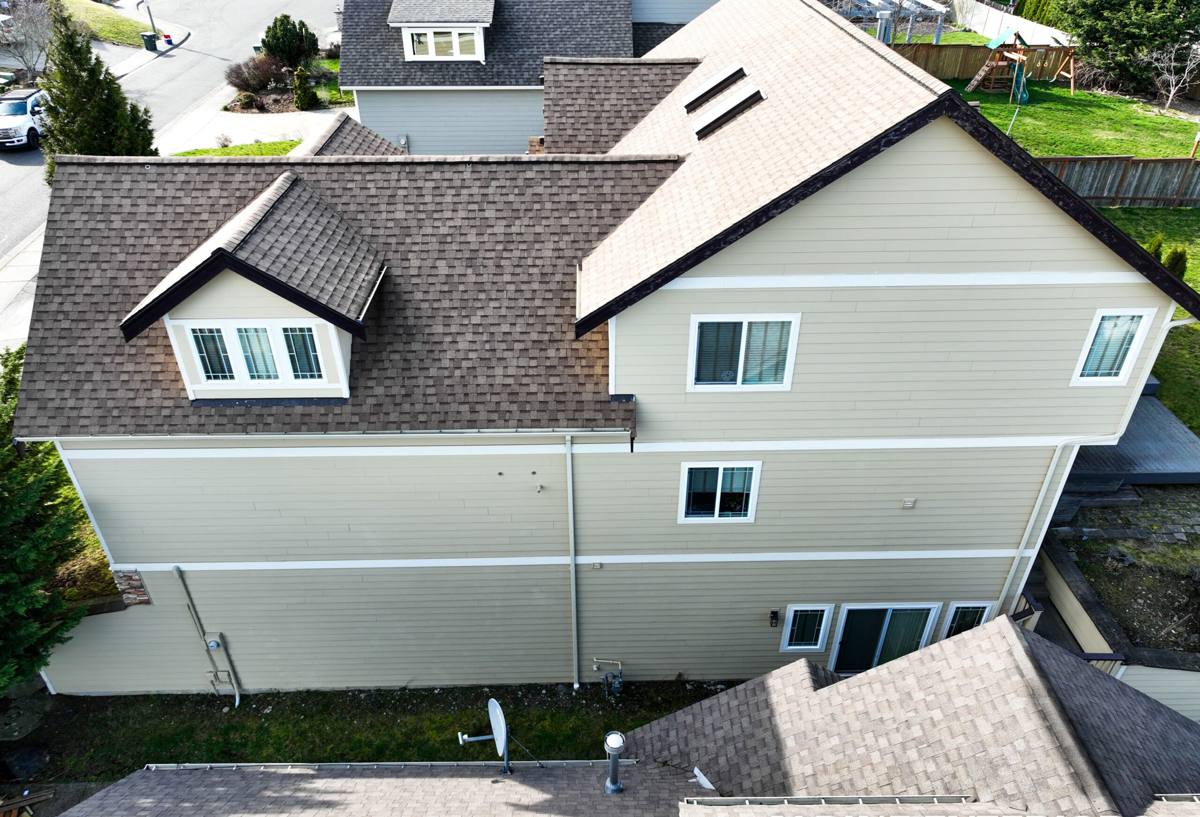
What Bellingham's Climate Does to a Roof Over Time
Salt Air and Corrosion
Homes closer to the water pick up airborne salt that settles on roofing, flashing, and fasteners. On lower-grade or improperly coated metal, that salt exposure accelerates surface corrosion and can cause premature rusting at cut edges, fastener heads, and flashing seams. It's not usually dramatic — it's slow, and it shows up years later as streaking, pitting, or a fastener that's given out before the panel around it has.
Driving Rain and Wind-Driven Moisture
Storms coming off the water don't just drop rain straight down — wind pushes it sideways and up under laps, at ridge caps, and around penetrations. A roof that only handles vertical rainfall well will eventually leak at these details during a real Bellingham storm. This is a detailing problem more than a material problem, and it's where a lot of roof failures actually start.
Moss, Shade, and Trapped Moisture
Edgemoor's tree cover means shaded roof sections that stay damp long after the rest of the roof has dried. On organic roofing materials, that combination grows moss quickly, and moss holds moisture against the surface, which shortens the material's life. Metal doesn't give moss the same foothold, but debris still needs to be kept off it, and valleys still need to shed water cleanly.
Why Metal Roofing Makes Sense in Edgemoor
Metal isn't the right choice for every home or every budget, but for a wooded, near-water lot like the ones common in Edgemoor, it addresses several problems at once:
- Moss resistance: a smooth, hard, non-porous surface gives moss and lichen far less to grip onto compared to shingles.
- Fire exposure: heavier tree canopy raises wildfire and ember exposure risk over time; metal roofing is noncombustible and doesn't contribute fuel to a roof-level ignition.
- Longevity under moisture load: a correctly installed metal roof with the right coating system is built to handle decades of wet-dry cycling without the granule loss and curling that shortens shingle life.
- Runoff performance: steeper metal panel profiles shed heavy rain fast, which matters on roofs that see sustained driving rain rather than light, even showers.
The tradeoff is upfront cost and the need for a crew that understands metal-specific detailing — this is not a material where a shingle-trained crew can simply substitute panels and expect the same result.
Choosing the Right Metal Roofing System
Not all metal roofing is the same product wearing different clothes. The systems differ in how they're fastened, how they handle expansion and contraction, and how long they're built to last before maintenance is needed.
| System | How It's Fastened | Best Fit | Considerations |
|---|---|---|---|
| Standing seam | Concealed clips, no exposed fasteners on the field | Homes wanting the longest service life and cleanest look | Higher upfront cost; needs experienced installation for panel expansion |
| Exposed-fastener panel | Screws through the panel face into decking or purlins | Budget-conscious projects, outbuildings, simpler rooflines | Fasteners and washers need periodic inspection and eventual replacement |
| Metal shingle or shake profile | Interlocking panels, fasteners concealed by the next course | Homes wanting a traditional look with metal's durability | More seams and details than standing seam; installation quality matters more |
For a home under heavy tree cover with real salt exposure, we generally steer clients toward standing seam or a quality interlocking shingle profile with a marine-grade coating, and away from exposed-fastener systems on the main house — the long-term maintenance burden of exposed fasteners isn't worth the upfront savings this close to the water.
What a Correct Metal Roof Installation Involves
A metal roof is only as good as the details underneath and around it. The panels themselves are rarely where problems start — the underlayment, flashing, and fastening choices are.
- Full synthetic underlayment across the deck, with ice-and-water membrane at eaves, valleys, and around penetrations where wind-driven rain is most likely to intrude
- Fastener and clip spacing matched to the panel manufacturer's specification, not a generic default — this affects both wind uplift resistance and long-term panel movement
- Proper separation between dissimilar metals (galvanic isolation) at flashing transitions, so two incompatible metals in contact don't accelerate corrosion at that joint
- Ridge, hip, and valley flashing sized and lapped to shed sideways, wind-driven rain — not just straight-down rainfall
- Ventilation planned into the design so the roof deck can dry out between the wet stretches that are normal here
- Coating system rated for coastal or near-coastal salt exposure, appropriate for Edgemoor's proximity to the bay
Skipping any one of these doesn't usually cause an immediate failure — it shows up two, five, or ten years in, as a leak, a corroded fastener, or a panel that's started to work loose. That's the real argument for hiring carefully rather than cheaply.
Cost Factors for Edgemoor Metal Roofing Projects
Metal roofing costs more than asphalt shingles up front, and the range on any given home depends on several project-specific factors rather than square footage alone.
| Factor | Why It Matters |
|---|---|
| Panel profile and gauge | Standing seam and heavier-gauge material cost more than exposed-fastener panels but need less long-term maintenance |
| Roof complexity | Valleys, dormers, and multiple roof planes add flashing work and labor time |
| Tear-off vs. overlay | Removing old roofing and inspecting the deck adds cost but is usually the honest choice on an older roof |
| Tree cover and access | Dense canopy and tighter driveways common in Edgemoor can affect staging, dump trailer placement, and crew setup time |
| Coating and warranty tier | Marine-grade or premium coatings cost more but matter more directly this close to the water |
| Gutter and flashing integration | Tying new metal roofing cleanly into existing gutters, chimneys, and skylights takes extra detailing |
We'll walk through which of these actually apply to your roof during the estimate — broad ranges without seeing the roof aren't useful to you, and we won't pretend otherwise.
Our Process, From Estimate to Cleanup
On an Edgemoor property, access and tree protection usually shape the plan as much as the roof itself does.
- On-site assessment: we look at the existing roof, deck condition, tree exposure, drainage paths, and any problem areas you've already noticed.
- System recommendation: we walk you through which metal system and coating fits your home, your budget, and this specific site — not a one-size answer.
- Written estimate: a clear scope of work and price, with the reasoning behind material and detailing choices spelled out.
- Site protection and staging: landscaping, driveways, and tree roots get protected before any tear-off or material staging begins.
- Tear-off and deck inspection: old roofing comes off and the deck is checked for rot or soft spots before anything new goes down.
- Installation: underlayment, flashing, and panels installed to manufacturer spec, with attention to the wind and moisture details specific to this area.
- Final walkthrough and cleanup: magnetic sweep for debris, full site cleanup, and a walkthrough so you know how the new roof works and what, if anything, needs periodic attention.
Maintenance in a Moss-Prone, Salt-Air Environment
Metal roofing needs far less maintenance than shingles, but "less" isn't "none," especially in this setting.
- Clear needles, leaves, and debris from valleys and gutters at least twice a year — trapped organic debris holds moisture against any roof surface, metal included
- Rinse road film and salt residue off periodically if the home is close to the water or a well-traveled road
- Have flashing, sealant, and any exposed fasteners checked every few years rather than waiting for a visible leak
- Keep overhanging branches trimmed back — beyond reducing debris, it cuts down on abrasion against the panel finish during wind
- Address any scratched or exposed coating promptly, since bare metal is where corrosion gets started
Why a Crew That Already Works in Edgemoor Matters
Edgemoor's combination of mature trees, established homes, and proximity to the water isn't something every roofing crew deals with regularly. Crews used to open, sunny rooflines elsewhere in Whatcom County can under-detail for wind-driven rain or specify a coating that isn't built for salt exposure, and the difference doesn't show up until years later. A crew that already works in this neighborhood knows to plan around tree cover and tighter access, knows which coating systems actually hold up this close to the bay, and knows how to detail flashing for storms that come in sideways rather than straight down. That local pattern-matching is worth more than it sounds like on paper — it's the difference between a roof that's still tight in fifteen years and one that needed a call-back in five.
If you're weighing metal roofing for a home in Edgemoor, we're glad to walk your roof with you and give you a straight, no-pressure estimate — including whether metal is even the right call for your situation. Use the form below to get started.