 Bellingham Exterior
 Why Ferndale Decks Wear Differently Than Decks Inland
Ferndale sits close to the water, low in the landscape, and squarely in the path of the marine weather that moves through Whatcom County most of the year. That combination is hard on decks in a way that homeowners further inland don't always deal with. Salt-laden air corrodes fasteners and hardware faster than dry air does. Driving rain off the Strait works its way into joints, end grain, and any spot where a board meets a ledger or post. And because Ferndale gets long stretches of overcast, damp weather, moss and algae get a real foothold on horizontal surfaces — not just in winter, but for a good chunk of the year.
None of that means a deck in Ferndale is doomed. It means a repair has to account for how the structure actually fails here, not how a generic repair guide assumes it fails. That's the difference between a fix that holds for another decade and one you're revisiting in two years.
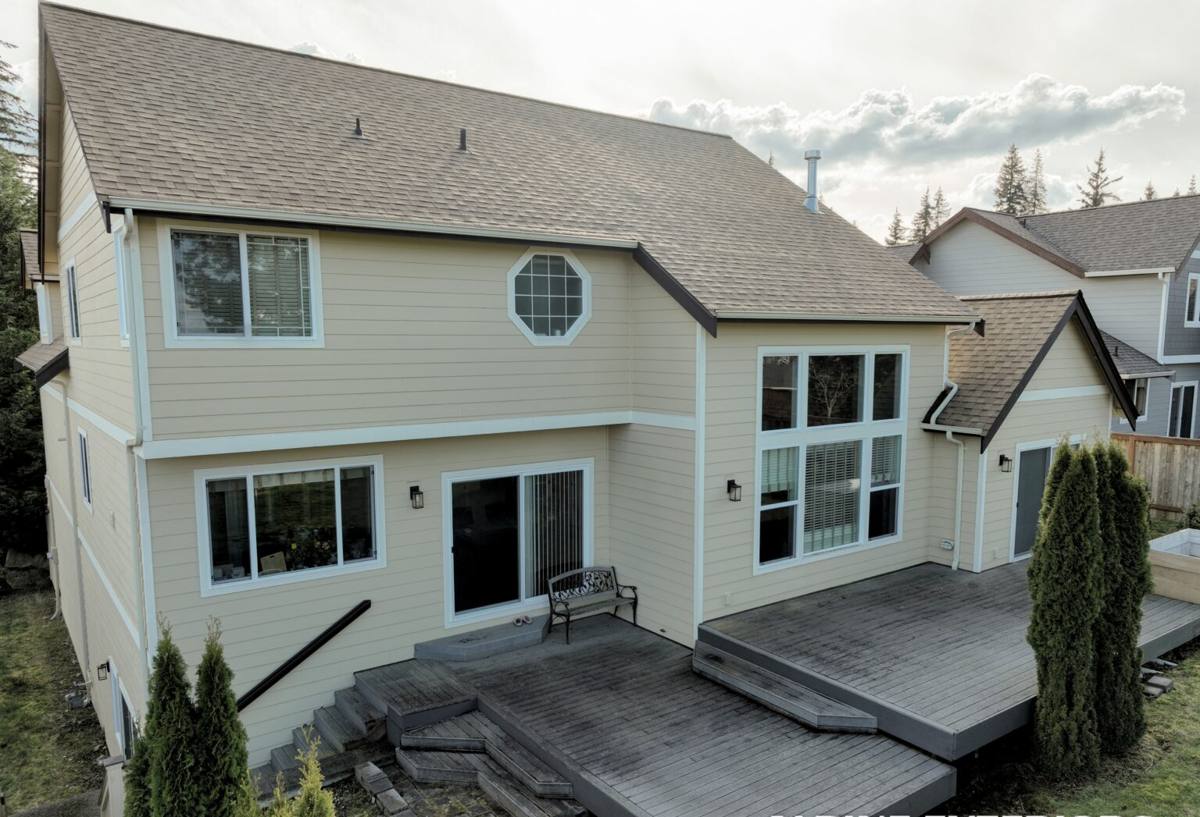
Signs a Ferndale Deck Needs Repair
Most deck problems don't show up as one dramatic failure — they show up as small signals that get ignored until they aren't small anymore. Here's what we look for, and what homeowners can check themselves before calling anyone out.
- Soft or spongy spots underfoot, especially near the house or at board ends
- Green or black staining that comes back within weeks of cleaning it off
- Rust streaks below screw heads or joist hangers
- Gaps opening up between the ledger board and the house siding
- Railing posts that wiggle when pushed, even slightly
- Stair stringers that flex or creak more than they used to
- Standing water that doesn't drain off within an hour or two of rain stopping
Any one of these on its own might just need attention. Several at once usually means moisture has been getting into the structure for a while, and it's worth a proper inspection rather than a patch job.
Repair vs. Replacement
We get asked this constantly, and the honest answer is that it depends on where the damage is, not how much of it there is. Surface-level rot on a few deck boards is a straightforward repair. Rot in the ledger board, the posts, or the main structural beams is a different conversation, because those are the pieces holding the whole deck up. A deck with failing structural members isn't a repair candidate anymore — it's a safety issue, and we'll tell you that directly instead of patching around it.
What a Correct Deck Repair Actually Involves
A lot of deck repair work in this region gets done as a surface fix — replace the bad boards, call it done. That approach ignores the parts of the deck you can't see, which are usually the parts that failed in the first place. A repair done right starts underneath.
Structural Check First
Before we touch a single board, we check the ledger connection to the house, the condition of the joists and beams, post bases, and any hardware that's exposed to weather. This is where rot usually starts in our climate — at connection points where water collects and doesn't dry out between rain events.
Flashing and Water Management
A huge share of deck failures near Bellingham and Ferndale trace back to missing or failed flashing at the ledger board, where the deck attaches to the house. If water has been running behind the ledger instead of off it, that's often the real repair, even if what you called about was a soft board six feet away.
Fasteners and Hardware
In a coastal, moisture-heavy environment, standard fasteners corrode faster and can fail well before the wood around them does. Correct repair work means matching hardware to the environment — not just replacing like-for-like with whatever was there before, especially if what was there before was already rusting out.
Board Replacement
Only after the structure and water management are sound do we move to replacing decking boards, railings, or stair treads. Matching existing material is part of doing this properly — mismatched boards age and weather differently, which shows within a season or two.
Common Deck Materials We Repair Around Ferndale
Most decks we work on locally are one of a handful of material types, and each has different failure patterns worth knowing about before you decide how to repair or replace sections.
| Material | How It Ages Locally | Repair Considerations |
|---|---|---|
| Pressure-treated lumber | Resists rot reasonably well if sealed and maintained; end grain and cut edges are the weak points | Re-sealing cut ends and refinishing on a schedule prevents most early failures |
| Cedar | Naturally rot-resistant but greys and softens with constant damp exposure over years | Sanding and refinishing can extend life significantly if caught before rot sets in |
| Composite decking | Doesn't rot, but can trap moisture underneath and develop mold/mildew on the surface in shaded, damp spots | Repairs usually focus on the substructure underneath rather than the boards themselves |
| Older or unknown-species decking | Variable — often shows uneven aging across the deck depending on sun and drainage | Requires board-by-board assessment rather than blanket treatment |
We don't push one material as the automatic answer. Each has real trade-offs in maintenance, moisture behavior, and appearance, and the right call depends on your existing deck, your budget, and how much upkeep you want to do going forward.
Our Deck Repair Process
- Inspection — we check the structure first: ledger, posts, beams, joists, and hardware, not just the visible boards
- Written scope — you get a clear breakdown of what's structural, what's cosmetic, and what's optional
- Water management fixes — flashing, drainage, and any grading or gutter issues feeding water onto the deck get addressed as part of the repair, not left for later
- Structural repair — ledger, framing, and post repairs happen before any surface work
- Surface repair or replacement — boards, railings, and stair components matched as closely as possible to what's staying
- Final check — we walk the deck with you and point out anything worth watching going forward
What Deck Repair Typically Costs
Costs vary a lot depending on how much of the problem is hidden versus visible, so we won't quote a number without seeing the deck. What we can tell you is what tends to drive the price up or down.
| Cost Factor | Why It Matters |
|---|---|
| Extent of structural damage | Ledger or framing repair costs more than board replacement because it involves the whole deck's support |
| Access to the deck | Decks over sloped ground, near the water, or with limited underside access take longer to work on |
| Material match | Matching older or discontinued decking can add cost versus a uniform replacement |
| Hardware upgrades | Moving to corrosion-resistant fasteners and connectors costs more upfront but reduces repeat repairs |
| Size of the repair area | Isolated repairs are cheaper per board than repairs spread across the whole deck surface |
Extending the Life of a Repair: A Maintenance Checklist
A repair is only as good as the upkeep after it. These are the basics we recommend to every Ferndale homeowner once the work is done.
- Clean moss and algae off the surface at least once a year, more often on shaded sections
- Keep gutters and downspouts clear so roof water isn't dumping onto or near the deck
- Reseal or refinish wood decking on the schedule the finish product calls for — don't wait until it looks bad
- Check fastener heads and hardware for early rust once a year
- Sweep standing water or leaf debris off the deck surface, especially in fall
- Look under the deck once a year for soft spots, staining, or gaps at the ledger
Why It Matters That We Already Work in Ferndale
A crew that repairs decks across Whatcom County sees the same failure patterns repeat — the same ledger flashing gaps, the same fastener corrosion, the same moss buildup in shaded corners. That familiarity means we're not guessing at what a coastal, high-rainfall climate does to a deck over time; we've seen it on the deck down the street. It also means we know which repairs actually hold up through a Ferndale winter and which ones just look fixed until the next wet season proves otherwise.
If you're dealing with a soft board, a wobbly rail, or you just want an honest read on whether your deck needs a repair or something more serious, we're happy to take a look. Reach out for a free, no-pressure estimate using the form below.