 Bellingham Exterior
 Building Decks for Sudden Valley's Wooded, Lakeside Setting
Sudden Valley sits back in the trees southeast of Bellingham, wrapped around its lake and laced with steep, wooded lots that most subdivisions closer to town simply don't have. That setting is a big part of why people live there — but it's also exactly why decks in this community age differently than decks out on open, sun-exposed lots. Heavy tree canopy, sloped ground, and long stretches of shade change what a deck needs from its framing, its decking material, and its finish schedule. A deck built the same way you'd build one on a flat, open lot in town will show problems here years earlier than it should.
We build and repair decks throughout Whatcom County, and Sudden Valley is one of the neighborhoods where the difference between a deck that lasts and one that doesn't usually comes down to decisions made before the first board goes down — not the decking brand on the label.
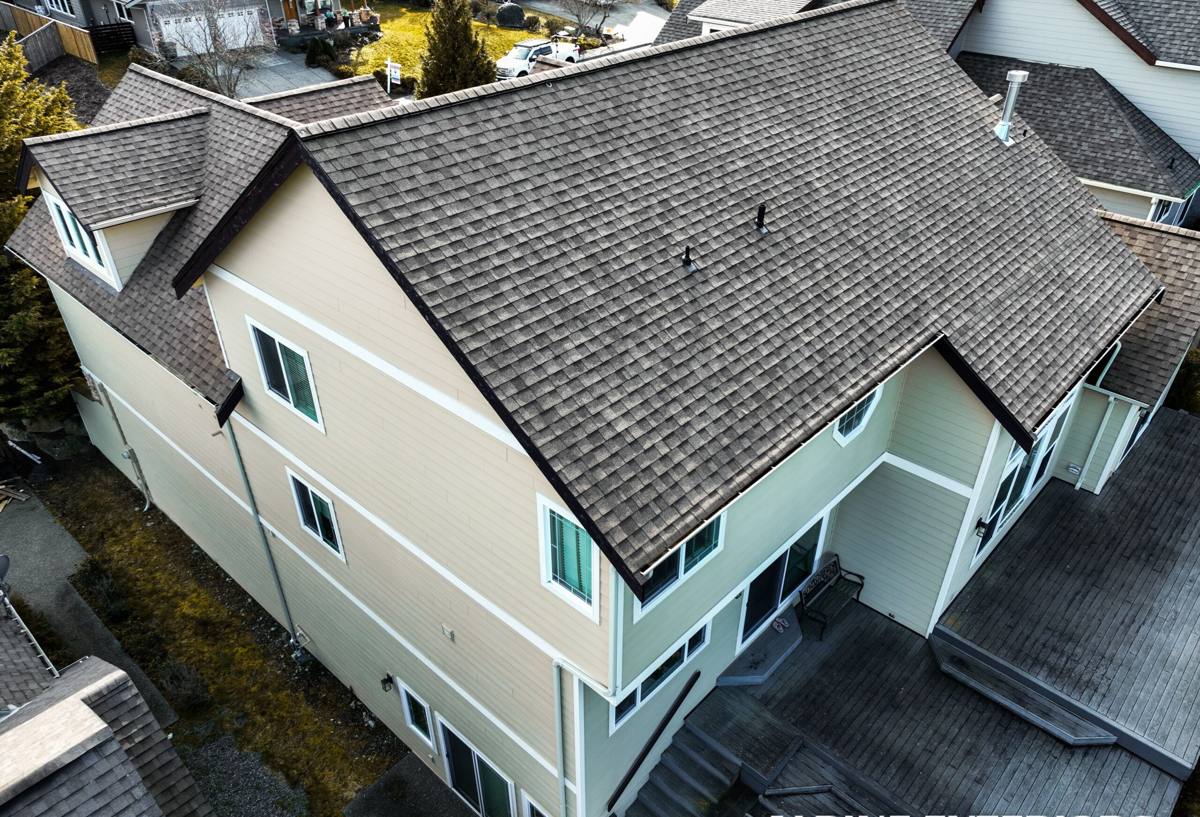
What Sudden Valley's Climate Does to a Deck
Bellingham's marine climate means long, wet winters and mild, humid summers almost everywhere in the county. Sudden Valley adds its own layer on top of that: dense tree cover that blocks sun and airflow, a lakeside setting that keeps humidity lingering longer than it would on a drier lot, and terrain that channels runoff across and under structures instead of straight to the street. Add in the region's occasional driving rain and salt-laden coastal air working its way inland, and you've got conditions that are hard on any exterior wood or metal component.
Shade and Slow Drying
A deck that never gets direct sun doesn't dry out between rains. Boards, ledger connections, and framing stay damp for days at a time through fall, winter, and spring. That constant moisture is the single biggest driver of rot, fastener corrosion, and coating failure on shaded lots.
Moss and Organic Buildup
Whatcom County has a long moss season in general, and shaded, humid lots like many in Sudden Valley make it worse. Moss and algae hold moisture directly against the decking surface, stain finishes, and make boards dangerously slick — especially on sloped stairs and landings, which are common on this terrain.
Debris and Drainage
Fir and cedar needles, leaves, and cones collect between boards and in framing gaps faster under heavy canopy. Left alone, that debris packs into joints, holds water like a sponge, and blocks the drainage gaps a deck needs to shed water properly.
Choosing the Right Decking Material for This Neighborhood
There's no single "best" decking material for every lot — it depends on how much sun and airflow your deck actually gets, how much maintenance you want to do, and your budget. For a shaded, humid lot like most of what we see in Sudden Valley, we weigh material choices differently than we would for an open, sunny lot closer to the water in town.
| Material | How It Handles Shade & Moisture | Maintenance | Typical Lifespan Here |
|---|---|---|---|
| Pressure-treated fir/pine | Prone to moss and mildew staining under canopy; needs regular cleaning and sealing to shed water | Annual cleaning, re-sealing every 1-2 years | 10-15 years with upkeep |
| Cedar | Naturally more rot-resistant, but still needs finish maintenance to keep that resistance working for you in constant damp | Cleaning and re-oiling/staining every 1-2 years | 15-20+ years with upkeep |
| Composite/PVC decking | Won't rot or absorb moisture, but still needs periodic cleaning — moss and algae will grow on the surface of any decking material in deep shade | Occasional washing; no sealing or staining | 25-30 years, per manufacturer warranties |
We don't push one product line over another as a rule — we walk the lot, look at how much sun and airflow the deck footprint actually gets, and talk through the honest maintenance trade-offs before recommending a direction. On the shadiest Sudden Valley lots, composite often makes sense because it removes the rot risk that constant dampness creates in wood; on lots with more seasonal sun, a well-finished cedar deck can perform very well and costs less up front.
Framing and Substructure: What's Different Here
The decking surface is what you see, but the framing underneath is what determines how long a deck actually lasts — and it's where sloped, wooded Sudden Valley lots create real differences from a flat in-town build.
- Footings on sloped ground: Many lots need deeper or stepped footings to reach stable soil, and posts of varying height that all still need proper bracing.
- Ledger flashing: Where a deck attaches to the house, correct flashing and a drainage gap behind the ledger board are non-negotiable in a climate this wet — this is the single most common failure point we find on older decks.
- Fastener and hardware grade: Constant humidity and any coastal salt influence call for corrosion-resistant, code-rated connectors and fasteners rather than standard hardware.
- Joist spacing and gapping: Tighter, correctly spaced deck boards with proper gapping let water and needle debris pass through instead of collecting.
- Under-deck drainage: On sloped lots, water needs a clear path away from posts and footings — grading and drainage details matter more here than on flat ground.
Our Deck Building Process
Whether it's a new build, a full rebuild, or a repair, we run the same basic process on every Sudden Valley project:
- On-site assessment: We look at sun exposure, tree cover, slope, drainage, and the condition of any existing structure before recommending anything.
- Design and material discussion: We walk through decking and framing options honestly, including maintenance trade-offs, based on what your specific lot needs.
- Permitting: We handle the permitting process with the relevant local jurisdiction and pull what's required before work starts.
- Demo and framing: Proper footings, ledger flashing, and code-rated hardware go in first — this is the part that determines how long the deck lasts.
- Decking, railing, and finish work: Installed to manufacturer spec with correct gapping and fastening.
- Walkthrough: We go over care and maintenance specific to your deck's exposure before we consider the job done.
Permits, Access, and Working Within Sudden Valley's Community
Sudden Valley is a private community with its own access points and, on many lots, its own architectural or covenant review in addition to standard county permitting. We factor that into scheduling from the start — coordinating access, respecting community rules around work hours and site conditions, and keeping the job site tidy on lots where neighbors are close by. We also plan around the practical realities of the terrain: narrow or sloped driveways, limited staging space, and getting equipment and material to a lot that isn't always a straight shot in from the road. None of that should be a surprise mid-project, and we make sure it isn't.
Maintenance Checklist for Sudden Valley Deck Owners
A deck built right for this climate still needs some seasonal attention, especially under tree cover. This is the routine we recommend:
- Sweep needles, leaves, and debris out of board gaps regularly through fall — don't let it pack in over winter.
- Clean visible moss and algae off the surface at least once a year, before it gets a foothold, using a deck-safe cleaner rather than a pressure washer alone.
- Check stairs and high-traffic areas for slickness after the first heavy moss growth each fall — this is a real slip hazard on shaded decks.
- Inspect the ledger board area and any visible flashing once a year for staining or soft spots.
- Re-seal or re-stain wood decking on the schedule your finish product calls for — don't stretch it because the deck "still looks fine" under a shade coating of moss.
- Keep gutters and downspouts near the deck clear so roof runoff isn't dumping extra water onto or under the structure.
- Trim back overhanging branches where practical to give the deck a little more sun and airflow.
Why Hire a Crew That Already Works in Sudden Valley
A deck contractor who mostly works flat, sunny lots in other parts of Whatcom County can still build a structurally sound deck — but they may not think through shade, moss, and slope the way a crew that regularly works this specific community does. We've seen what happens to decking material, framing, and hardware choices that weren't matched to conditions like these, usually a decade or so after the fact when it's a much bigger repair than it needed to be. Building it right the first time — correct flashing, the right material for the exposure, drainage that accounts for the slope — costs less over the life of the deck than fixing rot damage later.
If you're planning a new deck, replacing an aging one, or just want an honest read on whether yours needs repair or replacement, we're happy to take a look and walk you through your options — no pressure, no obligation. Use the form below to request a free estimate.