 Bellingham Exterior
 Storm Damage Roof Repair for Cordata Homes
Cordata sits in north Bellingham, close enough to Bellingham Bay and the Strait of Georgia that salt-laden air and driving Pacific rain are a fact of life, and far enough into the tree cover that moss has all winter to work on a roof. That combination — wind, wet, and moss — is what actually damages roofs here, more than any single dramatic storm. When a windstorm does roll through Whatcom County, it usually isn't starting the problem so much as finishing off a roof that was already weakened by months of moisture sitting where it shouldn't.
This page covers storm damage roof repair specifically as we handle it for Cordata homes: what typically goes wrong, what a repair should actually include, and how our process works when you call us after a storm.
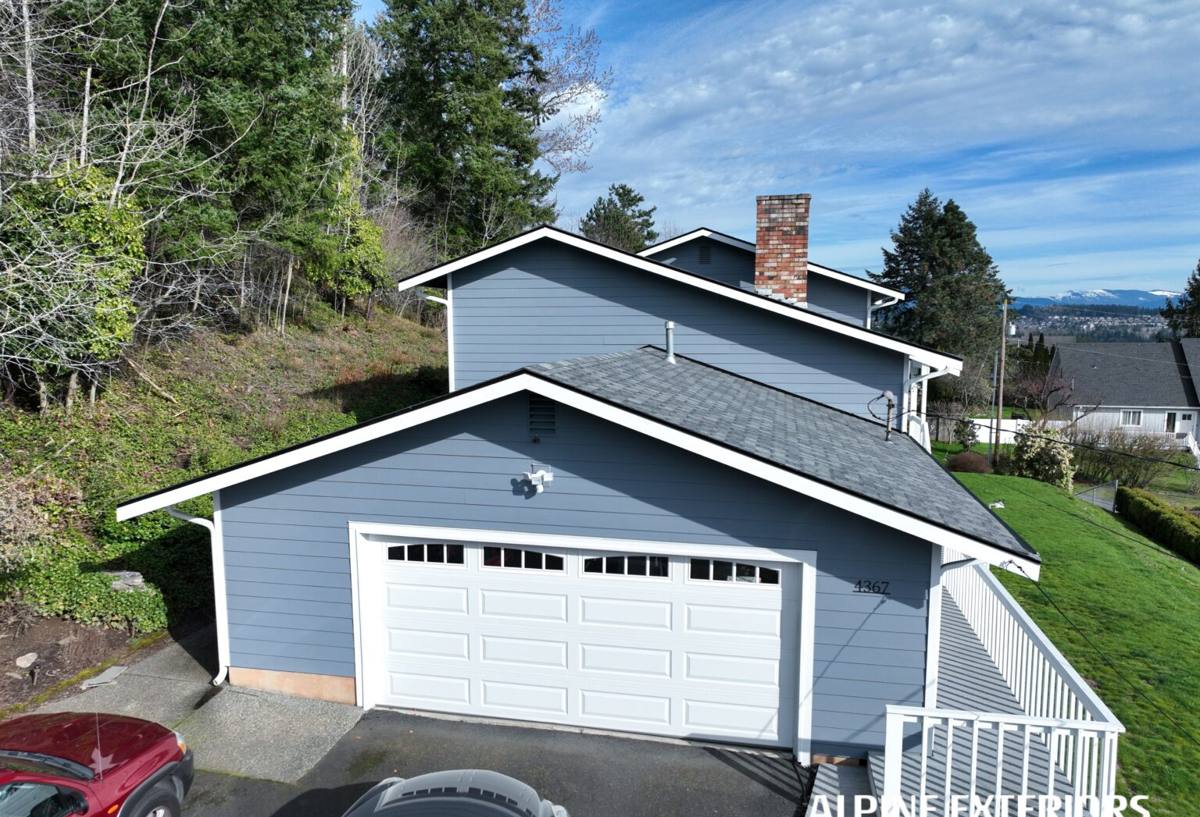
What Counts as Storm Damage — and What Doesn't
Not every roof problem that shows up after a storm was caused by that storm. Being honest about the difference matters, both for your wallet and for any insurance claim you file.
Wind Damage
Lifted, cracked, or missing shingles along ridges, hips, and exposed corners are the classic sign. Wind doesn't need to be a named storm to do this — a strong gust funneling across an open lot or through a gap in the tree line can lift a shingle edge just enough to break the seal, and from there every rain event pushes water further underneath.
Wind-Driven Rain and Water Intrusion
Bellingham's rain rarely falls straight down. Driving, sideways rain finds its way under shingle tabs, around chimney flashing, and into any gap that would be a non-issue in a calmer climate. This is often the real cause of an interior leak that homeowners blame on "the storm" when the entry point had been open for weeks.
Long-Term Moisture and Moss Damage
This is the one that isn't really "storm damage" at all, but storms expose it. Moss holds moisture against shingles, and shingles that stay wet for weeks at a time degrade faster than the manufacturer's warranty assumes. A roof that's been quietly losing granules and integrity under a moss mat for a couple of seasons is far more likely to fail during the next windstorm — not because the storm was unusual, but because the roof had less to give.
Impact Damage
Falling branches and debris are common in a neighborhood with mature conifers nearby. Impact damage is usually more obvious — a cracked or punctured section — but it should still be assessed by someone who can check the decking underneath, not just the shingle surface.
Why This Shows Up So Often in Cordata
Cordata's mix of mature tree cover and open exposure near roadways and commercial corridors creates a bit of a split personality for roofs in the area. Homes tucked under conifers get more shade, more debris, and a longer moss season because the roof surface never fully dries out between rains. Homes with more open exposure catch more direct wind. Either way, the underlying driver is the same: Whatcom County's wet season runs long, and a roof here spends far more time damp than a roof in a drier climate ever would. We don't treat "it's just how it is up here" as an excuse for skipping maintenance — it's exactly why maintenance and prompt repair matter more in this area than in most.
What a Correct Storm Damage Repair Actually Involves
A quick patch and a correct repair can look identical from the ground. The difference shows up two winters later. A repair done right addresses the entry point, the material underneath it, and the surrounding area — not just the visible symptom.
| Quick Patch | Correct Repair |
|---|---|
| Seals the visible gap or crack | Traces the actual water path, which is often several inches from where the leak shows up inside |
| Reuses existing flashing if it "looks fine" | Checks flashing for corrosion and proper lap, since salt air accelerates metal fatigue |
| Matches shingle color only | Matches shingle type and exposure so the patch weathers at the same rate as the rest of the roof |
| Skips the decking underneath | Checks decking for soft spots or rot before closing the repair back up |
| No underlayment consideration | Replaces underlayment in the repaired section so it performs as a system, not a patch |
The cost difference between these two approaches is usually modest — a proper repair might add an hour of labor and a few extra materials — but the difference in how long it holds up through another Whatcom County wet season is significant. A straightforward single-section repair typically runs in the low hundreds of dollars; a larger area involving decking or underlayment replacement climbs into the low thousands. Exact cost depends on the roof's pitch, material, and how much of the structure underneath needs attention, which is why we look before we quote.
Our Process for Cordata Storm Repairs
When you call after a storm, here's how we handle it:
- We schedule an inspection promptly — storm damage that sits exposed gets worse with every additional rain.
- We inspect from the roof surface, not just the ground or a photo, and we check the attic side when accessible, since that's often where the real extent of a leak shows up.
- We document what we find with clear notes and photos, which is useful whether you're paying out of pocket or filing an insurance claim.
- We give you a straightforward explanation of what's damaged, what's just aged or mossy, and what your repair options are — patch, section replacement, or in some cases a recommendation that a full roof replacement is the more honest long-term answer.
- We complete the repair to the standard described above, not the fastest version of it.
What our storm damage inspection actually checks:
- Shingle seal and lift along ridges, hips, and exposed edges
- Flashing condition at chimneys, vents, skylights, and valleys
- Decking integrity beneath any visible damage
- Moss and debris accumulation that may be trapping moisture nearby
- Gutter and downspout function, since a clogged gutter during a storm can force water back under the roof edge
- Attic-side signs of moisture, staining, or insulation damage where accessible
Insurance and Storm Claims: What to Know
Homeowners' policies generally cover sudden storm damage — wind-lifted shingles, impact from falling debris — but they typically don't cover damage that's classified as gradual wear, neglect, or moss-related deterioration that built up over time. That's part of why a clear, honest inspection matters: it tells you which category you're actually dealing with before you file a claim, rather than after an adjuster does. We'll give you our honest read on what we see. We're not a public adjuster and we don't inflate a scope of work to chase a bigger payout — we document what's actually damaged and let that stand on its own.
Materials We Use for Storm Repairs in This Climate
For repair work, matching your existing roofing material is usually the right call — mixing shingle types or brands on the same roof plane creates uneven wear and can look patchy as the roof ages. Where a section needs more than a patch, we lean toward materials with a track record in wet, mossy, coastal-influenced climates:
- Algae-resistant shingles for sections with heavy tree cover, since standard shingles in shaded, damp spots tend to develop moss and streaking faster.
- Synthetic underlayment over older felt products in repaired sections — it holds up better to the repeated wet-dry cycling typical of a Whatcom County winter.
- Corrosion-resistant flashing around chimneys and valleys, since salt-influenced air speeds up rust on lower-grade metal over the years.
We're straightforward about trade-offs rather than pitching one product as flawless. A cheaper shingle isn't a bad shingle, but it usually means a shorter interval before you're back to dealing with moss and granule loss — that's a maintenance-burden conversation we'd rather have up front than after the fact.
Why a Crew That Already Works Cordata Matters
After any regional storm, it's common to see unfamiliar trucks and door-knockers working neighborhoods like Cordata for a few weeks and then disappearing. A crew that's already local doesn't have that option — we're still here for the warranty call, the follow-up question, or the next storm season. Familiarity with how Bellingham's wet season actually behaves on a roof also means we're not guessing at what "storm damage" versus "moss damage" versus "just old" looks like in this specific climate. That distinction is the difference between a repair that solves the problem and one that just covers it up until the next windstorm finds it again.
If a recent storm left you with a leak, missing shingles, or just a nagging feeling you should have someone look at the roof, we're glad to come out for a free, no-pressure estimate. Use the form below to get started.