 Bellingham Exterior
 Composite Decking Built for Cordata's Climate, Not Just Its Curb Appeal
Cordata sits in a part of Bellingham that gets the full Whatcom County weather cycle: long wet winters, a spring and fall that never quite dry out, and enough shade from mature trees and close-set homes to keep moss and algae going for most of the year. A deck here isn't just outdoor furniture placement — it's a structure that has to shed water fast, resist organic growth, and survive freeze-thaw swings without the boards cupping, splitting, or turning slick underfoot. Composite decking, installed correctly, handles that better than wood does over the long run. Installed incorrectly, it can trap moisture and grow moss just as badly as a neglected cedar deck.
This page covers what we look at when we build or replace a composite deck for a Cordata home, why the details matter more here than they would in a dry climate, and what our process looks like from first call to final walkthrough.
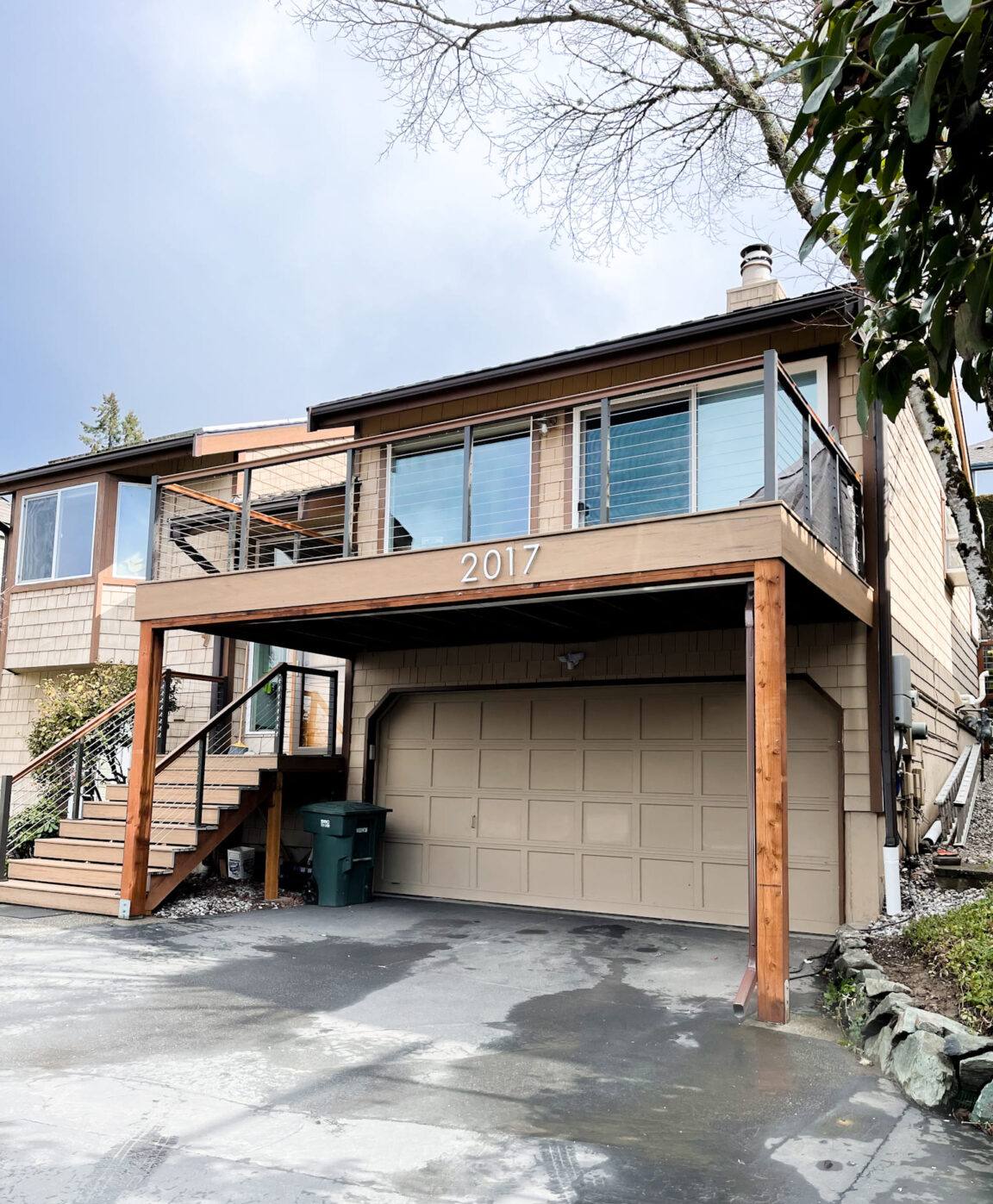
What Bellingham's Climate Actually Does to a Deck
Most homeowners underestimate how much of a deck's lifespan is decided by what's happening underneath it, not on top of it. In this region, the main stressors are:
Driving Rain and Standing Moisture
Whatcom County rain isn't always heavy, but it's frequent and often wind-driven, which pushes water sideways into board gaps, fastener holes, and end cuts. If a deck doesn't have proper slope and drainage built into the substructure, water sits under the decking surface instead of running off, and that's exactly the environment moss, algae, and wood rot need.
A Long Moss and Algae Season
Shaded, damp surfaces in this area can support moss growth nearly year-round, not just in winter. Decking that stays damp between rain events — because of poor airflow underneath, tight board spacing, or a north-facing, tree-shaded layout — will grow moss faster than a deck that's built to dry out between storms.
Salt Air and Coastal Moisture
Bellingham's proximity to the water means homes across the area, including inland neighborhoods, get some exposure to salt-laden air, especially during winter storms. Salt exposure accelerates corrosion on hardware and fasteners, which is why fastener choice and hidden connector quality matter more here than they would further inland.
Freeze-Thaw Cycling
Whatcom County doesn't get extreme cold, but it gets enough freeze-thaw swings each winter to stress any moisture that's already trapped in a structure. Water that's absorbed into a joist or post base and then freezes will expand and slowly work fasteners loose or crack wood fibers over several seasons.
Composite vs. Wood for a Cordata Deck
Both materials can work here. The honest answer is that composite trades a higher upfront material cost for lower long-term maintenance and better moisture resistance, which matters more in this climate than in a drier one.
| Factor | Composite Decking | Pressure-Treated Wood |
|---|---|---|
| Moss and algae resistance | Better on capped boards; textured surfaces still need occasional cleaning | Prone to moss retention in grain and checking |
| Moisture absorption | Low to none on capped products | Absorbs water, swells and shrinks seasonally |
| Maintenance routine | Periodic washing; no staining or sealing | Annual or biannual cleaning, sealing, or staining |
| Upfront material cost | Higher | Lower |
| Splintering / cupping risk | Very low | Increases with age and moisture cycling |
| Typical warranty structure | 25–50 year limited fade/stain warranties (varies by manufacturer) | Material warranty only; workmanship not covered |
Composite isn't maintenance-free — it's maintenance-different. It won't rot, but it still needs airflow underneath and periodic cleaning to keep moss from taking hold on the surface, especially in shaded Cordata yards.
What a Correct Composite Deck Installation Actually Involves
The composite board itself is only part of the job. Most of the failures we get called out to fix — soft spots, sagging, moss lines, mildew smell coming from underneath — trace back to substructure or drainage decisions made during the original build, not the decking material.
Substructure and Framing
Composite boards are heavier and behave differently under load than wood, so joist spacing has to match the manufacturer's span tables for composite specifically — not the wider spacing sometimes used for cedar or PT lumber. We also use joist tape or an equivalent moisture barrier on top of framing members, which matters in a climate where framing lumber rarely gets a chance to fully dry out between rain events.
Drainage and Ventilation
Every deck needs a slight slope away from the house and enough clearance underneath for air to move. Low-clearance decks or decks built tight to grade are the ones that stay damp longest and grow moss fastest in this climate. On ground-level or low-profile decks, we look at whether a drainage system or gravel bed is needed below to keep water from pooling under the structure.
Fasteners and Hardware
Given the salt air exposure across the Bellingham area, we use stainless steel or coated fasteners rated for coastal/marine environments rather than standard exterior-grade hardware. This is a small cost difference at install time and a significant difference in how the deck's hardware holds up over 10–15 years.
Board Spacing and Fastening Method
Hidden fastener clip systems, installed with the manufacturer-specified gap between boards, allow water to drain through the surface instead of sitting on top of it. Boards installed too tight — sometimes done to make a deck look seamless — actually work against drainage in a high-rainfall climate like this one.
Choosing the Right Composite Board for Cordata
Not all composite decking is built the same, and the right choice depends on how shaded and exposed the specific yard is.
Capped vs. Uncapped Composite
Capped composite boards have a protective polymer shell around a wood-plastic core, which resists moisture absorption and staining far better than older, uncapped composite. In a climate with this much rain and shade, we generally recommend capped composite as the standard, not the upgrade.
Color and Moss Visibility
Lighter, gray-toned boards tend to show moss and algae spotting more visibly than darker, streaked or multi-tonal colors. This isn't a durability difference, just a practical one worth discussing if the deck will be under tree cover for most of the day.
Surface Texture
Heavily embossed wood-grain textures can hold more moisture and organic debris in the grain pattern than a smoother, low-texture board. In consistently shaded yards, a smoother surface is often easier to keep clean.
Our Process, Start to Finish
- On-site assessment: We look at grade, drainage, sun/shade exposure, and the condition of any existing structure before quoting anything.
- Design and material selection: We walk through composite board options, colors, and layout based on how the space will actually be used and how much shade it gets.
- Written estimate: A clear scope covering substructure work, materials, fasteners, and any drainage or grading needed underneath the deck.
- Permitting: We handle the permit process where required for the scope of work and elevation of the deck.
- Demo and substructure build: Old decking and, if needed, old framing is removed and replaced or reinforced to current span and moisture-barrier standards.
- Composite installation: Boards, hidden fasteners, fascia, and trim are installed to manufacturer spec, including proper gapping for drainage.
- Final walkthrough: We go over the finished deck with the homeowner, including basic care specific to the board chosen.
Living with a Composite Deck in a Wet, Mossy Climate
Composite cuts out staining, sealing, and sanding, but it isn't a "never touch it" surface, especially under Cordata's tree cover. A simple seasonal routine keeps it looking and performing the way it should:
- Sweep off leaves, needles, and debris regularly — trapped organic matter is what feeds moss and algae growth.
- Wash the deck surface once or twice a year with a soft-bristle broom, mild soap, and water; avoid pressure washers on close settings, which can damage the board's cap layer.
- Keep gutters and downspouts clear so runoff isn't dumping directly onto or near the deck.
- Check underneath periodically for clogged drainage, standing water, or debris buildup against framing.
- Trim back overhanging branches where possible to reduce shade and speed up drying time after rain.
- Inspect fasteners and railing hardware yearly for corrosion, particularly on decks with any coastal exposure.
What Affects the Cost of a Composite Deck in This Area
| Cost Factor | Why It Matters Here |
|---|---|
| Deck size and layout complexity | Multi-level decks or those with angles/curves need more framing and cutting labor |
| Substructure condition | Homes with existing rot or undersized framing need substructure rebuilt, not just resurfaced |
| Drainage and grading work | Low-clearance or ground-level decks may need added drainage to manage this climate's rainfall |
| Board tier (capped vs. uncapped, brand line) | Higher-tier capped boards cost more but hold up better against moss and moisture |
| Railing and fastener specification | Corrosion-resistant hardware costs more upfront and matters more given regional salt air |
| Site access | Tight lots or backyard access issues common in established Cordata streets can add labor time |
We give exact numbers only after seeing the site — anyone quoting a firm price over the phone for a deck rebuild hasn't accounted for what's actually under the old decking.
Why Local Experience in Cordata and Bellingham Matters
A contractor who mostly works drier inland climates will often under-spec drainage and skip the coastal-grade fasteners because they've never had to deal with the moss and corrosion issues that show up here after a few wet winters. Building decks specifically in Whatcom County means we've already seen which shortcuts fail in this climate and which details actually hold up — proper joist spacing for composite, real drainage slope, hardware rated for salt air exposure, and board choices that don't turn into a moss farm under tree cover. That's the difference between a deck that looks good for one summer and one that still performs after ten wet Bellingham winters.
If you're weighing a new composite deck or replacing a tired wood one in Cordata, we're glad to come take a look, walk the site with you, and put together a straightforward, no-pressure estimate. Use the form below to get started.