 Bellingham Exterior
 Blaine's Waterfront Climate Puts Real Stress on Siding
Blaine sits right on the water at the northern edge of Whatcom County, and that location shapes what a house needs from its siding. Wind off the Strait of Georgia and Semiahmoo Bay carries salt spray onto exterior walls, especially on homes with any water exposure or elevation. Salt is corrosive to fasteners and hard on paint film, and it accelerates wear on materials that aren't built to handle it. Add in driving rain that comes sideways during winter storms, not just straight down, and siding here has to manage moisture at the face of the wall, not just shed water off the roof.
Then there's moss. Blaine's combination of mild temperatures, high humidity, and long stretches of overcast, damp weather creates a moss season that runs longer than most homeowners expect — often eight months or more on north-facing walls and shaded elevations. Moss and algae hold moisture against the siding surface, which is a problem for any material that isn't dimensionally stable or that relies on a coating rather than an engineered core to resist water intrusion.
None of this means Blaine homes are doomed to constant siding problems. It means the material and the installation both have to be matched to the environment, not just to a budget or a look.
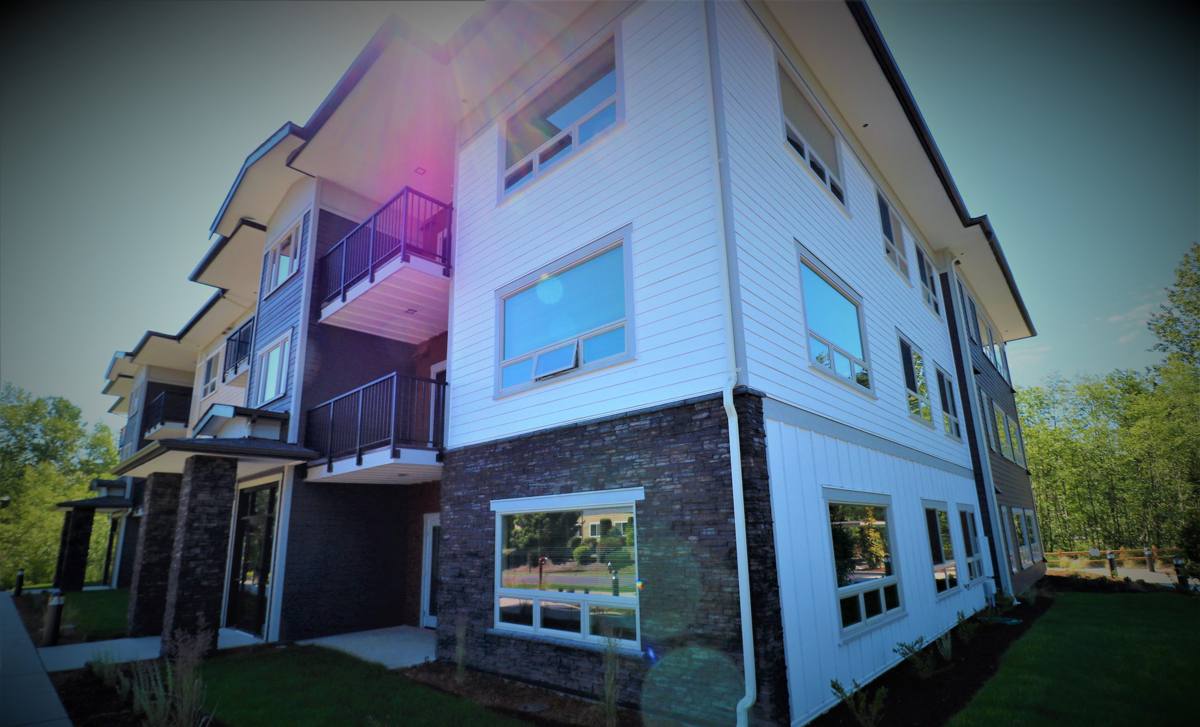
Why We Only Install James Hardie Fiber Cement in Blaine
We install James Hardie siding exclusively — no vinyl, no LP SmartSide, no Cemplank or Allura, no primed spruce or cedar. That's a deliberate standard, not a default. Hardie's fiber cement is engineered specifically for climates like this one. The HZ5 product line is formulated for the Pacific Northwest's wet, moderate-temperature conditions, which matters more in a coastal town like Blaine than it does further inland.
A few reasons Hardie holds up where other materials struggle here:
- Non-combustible core — fiber cement doesn't feed a fire the way wood-based products can, which matters for insurance and for peace of mind.
- Dimensional stability — it doesn't expand and contract with moisture the way wood or engineered wood products do, so caulk lines and paint film last longer instead of cracking and opening a path for water.
- ColorPlus factory finish — a baked-on finish applied under controlled conditions holds color and resists fading and chalking better than field-applied paint, which matters under salt air and UV exposure.
- Moisture resistance by design, not just by coating — the material itself doesn't rot, swell, or support the kind of fungal growth that wood and wood-composite sidings are prone to in a damp climate.
We back installations with Hardie's manufacturer warranty on the material itself, plus our own labor warranty, which is a combination you don't get with off-brand fiber cement or with materials Hardie doesn't manufacture.
What Happens When the Wrong Siding Meets Salt Air and Moss
We get asked fairly often why we don't offer cheaper alternatives. The honest answer is that we've seen what happens to them in this specific climate. Vinyl siding can warp and fade faster under sustained coastal UV and salt exposure, and it relies entirely on a drainage plane behind it — if that's not detailed correctly, water gets trapped with nowhere to go. Wood and engineered wood products absorb moisture at cut edges and fastener penetrations, and once moisture gets into the substrate, rot follows, especially with eight-plus months a year of damp, shaded conditions feeding moss and mildew. Primed spruce trim is particularly vulnerable at butt joints and end grain, which is exactly where Blaine's driving rain finds a way in.
None of these products are inherently defective — they're built for a range of climates and price points, and they perform reasonably well in drier or more sheltered environments. But installed on an exposed, salt-air, high-moisture site like Blaine, they demand more maintenance, fail sooner at the details, and cost homeowners more over the life of the house than a material engineered for exactly this kind of exposure. That's the trade-off we're not willing to install on someone's home.
Flashing and Moisture Management
Correct installation starts before the first plank goes up. That means checking the wall sheathing for existing moisture damage, installing a weather-resistive barrier correctly lapped, and flashing every penetration — windows, doors, hose bibs, light fixtures — so water is directed out and down, never trapped behind the siding. Kick-out flashing where a roofline meets a wall is a small detail that gets skipped constantly and causes some of the worst hidden rot we find on older Blaine homes.
Fastening and Clearance Standards
Hardie specifies fastener type, spacing, and placement, and those specs exist for a reason — improper fastening is one of the most common causes of premature siding failure, especially where salt air corrodes the wrong fastener type over time. We also hold proper clearance from grade, decks, and roof lines so the bottom edge of the siding isn't sitting in standing water or splash-back, which is a common problem on waterfront and near-waterfront lots.
What a Correct James Hardie Installation Involves
| Installation Step | Why It Matters in Blaine |
|---|---|
| Weather-resistive barrier, properly lapped | Backstops the siding against wind-driven rain that gets past the face |
| Corrosion-resistant fasteners, correct spacing | Salt air accelerates corrosion on the wrong fastener grade |
| Flashing at every penetration and roof-wall intersection | Prevents the hidden water intrusion that leads to rot behind the siding |
| Minimum clearance from grade, decks, and roofing | Keeps the bottom edge out of splash-back and standing moisture |
| Factory-finished ColorPlus panels, field touch-up only where cut | Preserves fade and salt resistance instead of relying on field paint |
- Confirm sheathing is dry and sound before any siding goes up
- Verify flashing at windows, doors, and roof intersections
- Use Hardie-approved fasteners and spacing, not generic substitutes
- Maintain proper clearance at grade, decks, and other siding terminations
- Caulk only where Hardie's install guide calls for it — not as a substitute for flashing
Factors That Affect Your Blaine Siding Project Cost
Every home is different, but the same handful of factors drive most of the cost variation we see on Blaine projects.
| Factor | Why It Affects Cost |
|---|---|
| Existing siding removal | Tear-off of old wood, vinyl, or damaged cladding adds labor and disposal |
| Hidden moisture or rot in sheathing | Common on wind- and rain-exposed elevations; repair is priced once uncovered |
| Home size and wall complexity | More corners, dormers, and trim details mean more cutting and detailing |
| Siding profile and color | Lap width, shingle-style panels, and specialty ColorPlus colors vary in material cost |
| Access and site conditions | Waterfront lots, slopes, and limited staging area affect labor time |
We won't know which of these apply to your home until we look at it in person, which is why every estimate starts with an actual walk-around, not a phone quote.
Our Installation Process
- On-site assessment — we inspect existing siding, trim, and visible sheathing condition, and talk through what you're seeing and what concerns you.
- Written estimate — a clear scope covering removal, repair allowances, siding profile and color, and timeline.
- Prep and repair — removal of old material, repair of any damaged sheathing or framing found underneath, and correction of any flashing that isn't doing its job.
- Installation to Hardie spec — proper barrier, flashing, fastening, and clearance at every step, not just the visible finish.
- Final walkthrough — we go over the finished work with you before we consider the job done.
Why a Crew That Already Works in Blaine Matters
Whatcom County permitting and inspection requirements aren't identical from town to town, and a crew that already pulls permits and schedules inspections in Blaine moves through that process without guesswork. More importantly, a crew that's worked waterfront and near-waterfront homes here already knows which elevations take the worst wind-driven rain, which lots see the heaviest moss growth, and where salt exposure is worst — that's the kind of judgment that comes from doing the work locally, not from a general install checklist. It also means we're a phone call away if a question comes up after the job is done, not a crew that drove in from out of the area for one project.
Living With Hardie Siding Through Moss Season
Hardie siding is low-maintenance compared to wood or engineered wood, but "low-maintenance" doesn't mean "no maintenance," especially in a climate with a moss season as long as Blaine's. A few habits keep it performing the way it should:
- Rinse siding gently once or twice a year to clear moss and algae buildup, especially on shaded, north-facing walls
- Keep gutters and downspouts clear so overflow isn't running down the siding face
- Trim back vegetation and landscaping so walls get airflow and sun exposure where possible
- Check caulk lines at trim and penetrations periodically and touch up if they've opened
- Avoid high-pressure washing directly at panel seams and joints, which can force water behind the siding
If you're weighing a siding replacement or dealing with a home that's already showing what salt air and moss season can do to the wrong material, we're glad to take a look and give you a straight answer about what your house actually needs. Reach out for a free, no-pressure estimate using the form below.